Your Fleet, Your AI: How FieldFix Connects Equipment to Intelligent Agents
The gap between fleet data and actionable insights has always been time—time to log in, time to navigate dashboards, time to interpret numbers. FieldFix's new AI agent integration eliminates that gap entirely.

The promise of fleet management software has always been visibility—knowing where your equipment is, what it costs to operate, and when it needs service. But visibility alone isn’t value. Value comes from acting on that visibility, and that’s where most fleet software falls short.
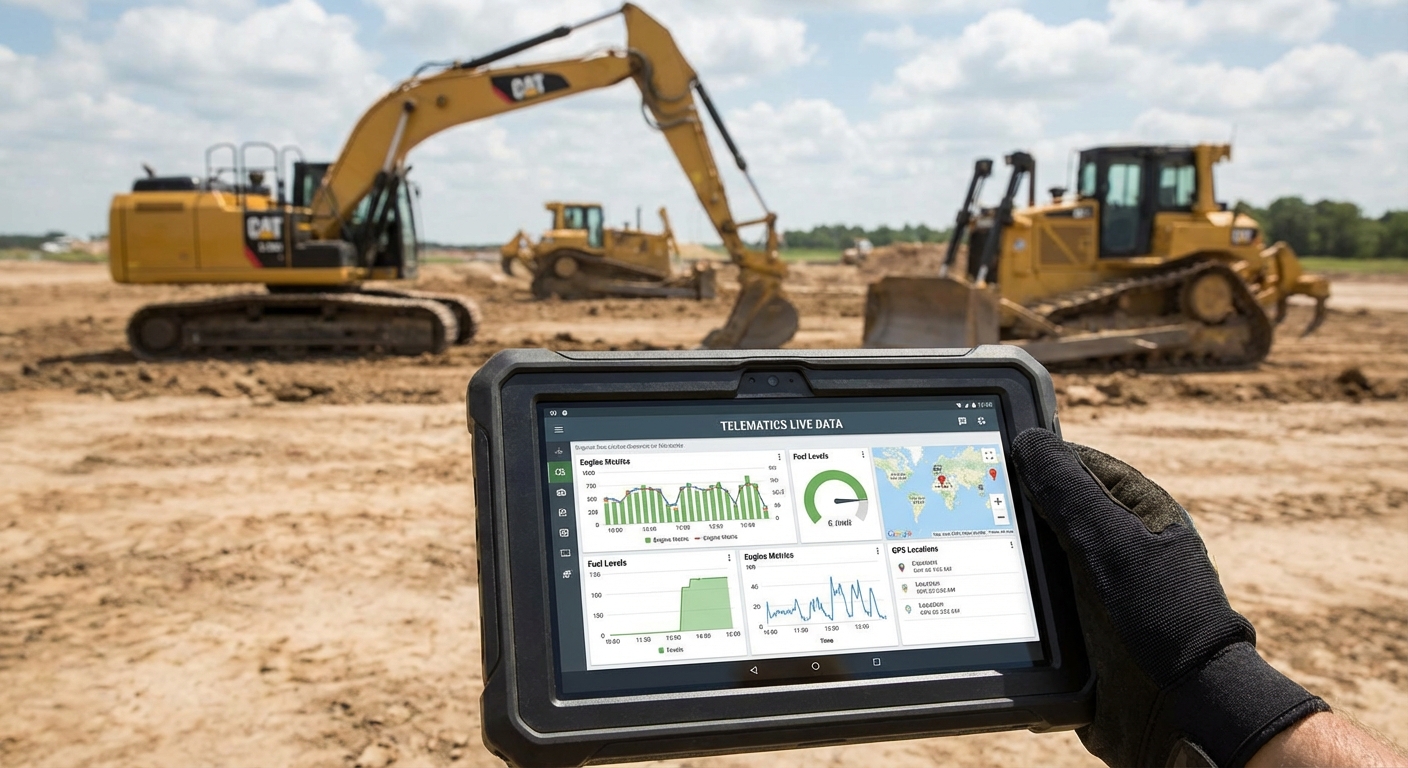
You can have the best data in the world, but if accessing it requires logging into a dashboard, navigating menus, and interpreting charts, you’ve created friction. And friction means the data doesn’t get used when it matters most—in the field, on the phone with a customer, or at 6 AM when you’re planning the day’s work.
FieldFix, the fleet management platform built for heavy equipment operators, has taken a different approach. Their new AI agent integration doesn’t just store your fleet data—it makes that data conversational.
What AI Agent Integration Actually Means
When we talk about “AI agents,” we’re not talking about chatbots that spit out canned responses. We’re talking about AI systems that can take actions on your behalf—querying databases, analyzing patterns, and delivering insights in natural language.
FieldFix’s integration uses the Model Context Protocol (MCP), an open standard that lets AI assistants securely connect to external data sources. Through MCP, an AI agent can access your FieldFix fleet data directly, without you ever logging into a dashboard.
Here’s what that looks like in practice:
You ask: “What’s my cost per hour on the T770?”
Your AI responds: “Your Bobcat T770 is running $47.82 per operating hour. That breaks down to $31.50 in fuel, $12.40 in maintenance, and $3.92 in other expenses across 342 logged hours.”
No dashboard. No login. No menu navigation. Just the answer you needed, delivered in the context of whatever conversation you’re already having.
Beyond Simple Queries
The real power isn’t in answering simple questions—any database can do that with the right interface. The power is in contextual intelligence.
Because the AI agent has access to your complete fleet data, it can connect dots that would take you minutes or hours to connect manually:
-
Pattern recognition: “Your FAE mulcher has had three hydraulic issues in the last 60 days. That’s unusual—the average interval is 180 days. Might be worth a deeper inspection.”
-
Cost comparisons: “You asked about renting a skid steer for the Johnson job. Based on your T770’s operating costs and the job’s estimated hours, owning is $340 cheaper than the rental quote.”
-
Maintenance forecasting: “The Takeuchi is 12 hours from its scheduled service interval. If you’re running it on Monday’s job, you’ll want to schedule service this weekend.”
This isn’t the AI making decisions for you. It’s the AI surfacing information you’d want to know but might not have time to look up.
The Technical Foundation
For the technically curious, FieldFix’s MCP integration exposes a structured API that AI agents can query. The integration supports:
- Machine inventory: List all equipment with make, model, year, and current hour readings
- Service history: Complete maintenance logs with dates, descriptions, costs, and parts
- Expense tracking: Fuel, repairs, parts, and operating costs with full categorization
- Alerts: Overdue services, upcoming maintenance, and custom notifications
- Diagnostics: AI-powered troubleshooting that combines symptom analysis with machine-specific history
The protocol handles authentication securely—your API credentials are stored locally with your AI agent, never transmitted through third-party servers. The AI queries FieldFix directly, the same way you would through the web interface.
Who This Is For
This isn’t a feature for everyone. If you’re running a single machine and prefer pen-and-paper logs, that’s fine. The overhead of setting up an AI agent isn’t worth it for simple operations.
But if you’re running multiple machines, juggling maintenance schedules, tracking costs across a fleet, and making equipment decisions regularly—this changes the game.
Consider the owner-operator running three machines across different job sites. They’re already on their phone constantly, texting customers, checking weather, coordinating with subcontractors. Now their AI assistant—the same one helping with emails and scheduling—can also tell them which machine needs service, what their monthly fuel spend looks like, or whether that weird noise on the excavator matches any recent diagnostic patterns.
The data was always there. Now it’s accessible in the moments when it actually matters.
The Bigger Picture
FieldFix’s AI integration is part of a broader trend in industrial software: the shift from “tools you use” to “tools that work for you.”
Traditional software requires you to come to it—open the app, learn the interface, pull the reports. AI-native software meets you where you are. It fits into your existing workflows rather than demanding you create new ones.
For fleet management specifically, this matters because the people who need fleet data most—operators, foremen, owner-operators—are rarely sitting at desks. They’re in cabs, on job sites, driving between locations. Software that requires desk time to deliver value isn’t serving them well.
FieldFix’s approach flips that model. The data lives in the cloud. The AI agent lives on your phone, in your messaging apps, in whatever tools you already use. When you need fleet information, you ask for it the same way you’d ask a colleague.
Getting Started
FieldFix offers a free tier for operators with up to three machines—enough to test whether the platform fits your workflow. The AI agent integration works with any FieldFix account through a simple API key setup.
For operators already using AI assistants (Claude, ChatGPT, or custom solutions), the MCP integration means adding FieldFix data to your existing AI workflows takes minutes, not hours.
The future of fleet management isn’t more dashboards. It’s less friction between you and the information you need to make good decisions. FieldFix is betting that future looks like a conversation.
FieldFix is available at fieldfix.ai. The platform offers free accounts for fleets up to three machines, with paid tiers starting at $19/month for expanded features and unlimited equipment.