Bedrock Robotics Raises $270M to Make Your Excavator Drive Itself
The autonomous construction startup just became a unicorn, betting that retrofitting existing heavy equipment beats building from scratch.
The construction industry’s labor crisis just met its most well-funded solution yet. Bedrock Robotics, the autonomous construction technology company that retrofits existing heavy equipment with self-driving capabilities, announced this week it has closed a $270 million Series B funding round, catapulting the company to unicorn status with a $1.75 billion valuation.
The investment was co-led by CapitalG (Google’s growth equity fund) and the Valor Atreides AI Fund, with participation from an impressive roster including NVentures (NVIDIA’s venture capital arm), Xora, 8VC, Eclipse, Emergence Capital, Perry Creek Capital, Tishman Speyer, MIT, Georgian, Incharge Capital, and C4 Ventures. The round brings Bedrock’s total funding to over $350 million.
Editor’s Note: Fleet maintenance is the foundation of equipment uptime—whether your machines are human-operated or autonomous. FieldFix helps contractors track service intervals, log repairs, and calculate true cost-per-hour across their entire fleet. The future of construction runs on data.
The Retrofit Revolution
What makes Bedrock different from other autonomous equipment ventures isn’t what they’re building—it’s what they’re not building. Rather than designing autonomous equipment from the ground up (an approach that requires billions in R&D and manufacturing), Bedrock installs its autonomous technology onto existing excavators, bulldozers, and loaders already in contractors’ fleets.
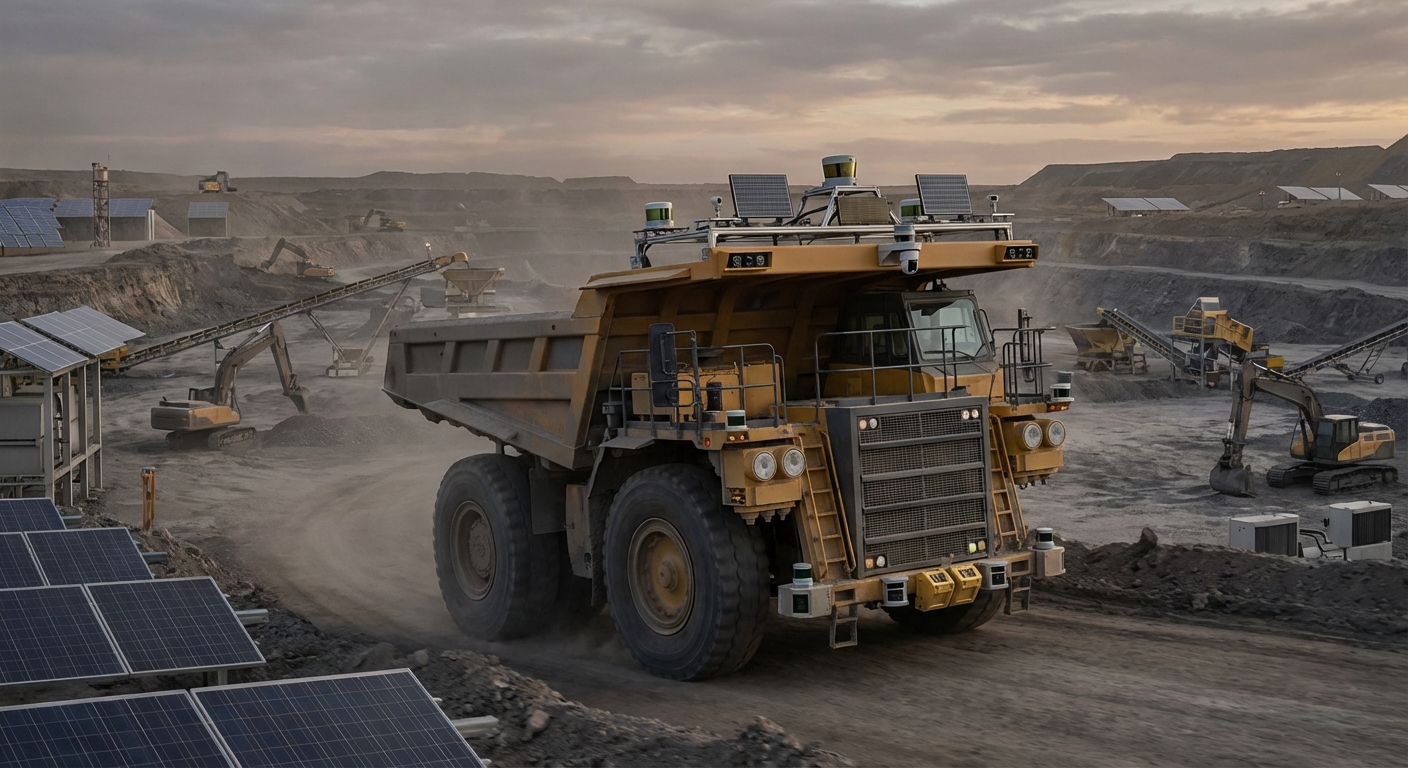
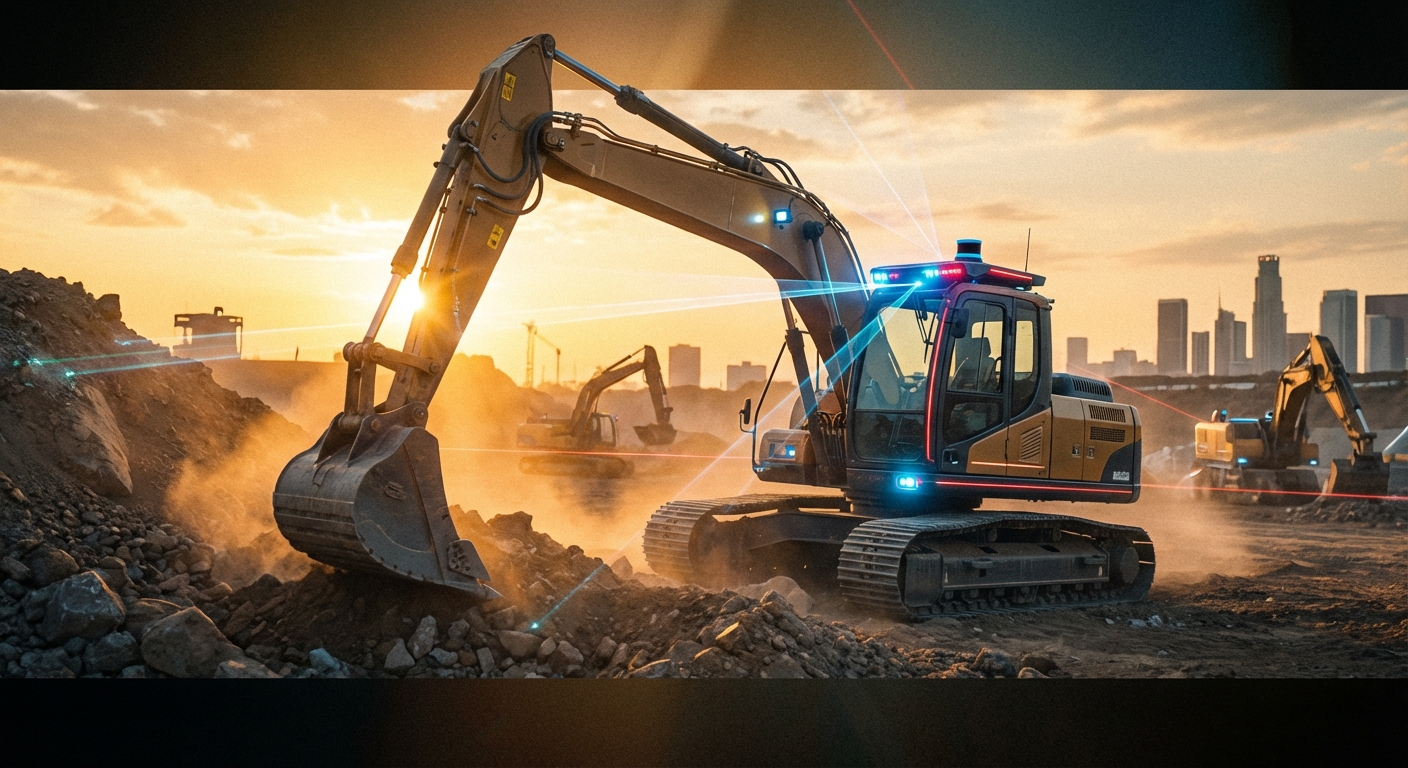
The company’s flagship product, the Bedrock Operator, uses a combination of lidar, GPS, and motion sensors to enable standard heavy equipment to navigate and perform work autonomously. According to the company, the retrofit can be installed in just a few hours without permanent modifications to the machine—meaning contractors can add autonomous capability to their existing Cat, Komatsu, or John Deere equipment rather than buying entirely new iron.
This approach solves one of the biggest barriers to autonomous construction adoption: the installed base problem. There are millions of pieces of heavy equipment already working on job sites around the world. Expecting contractors to replace their entire fleets with purpose-built autonomous machines was never realistic. Bedrock is betting that the path to autonomous job sites runs through existing equipment.
Why Now, and Why This Much Money?
The timing of this massive funding round aligns with a perfect storm of construction industry pressures.
The labor shortage in construction has reached crisis levels. Industry analysts estimate the sector needs to attract 349,000 net new workers in 2026 alone just to meet current demand—a target that seems increasingly unlikely given the industry’s ongoing challenges with recruitment and retention. Every gray-haired operator who retires takes decades of experience with them, and younger workers aren’t backfilling fast enough.
Meanwhile, infrastructure spending is surging globally. McKinsey estimates that $106 trillion in cumulative infrastructure investment will be required by 2040 to address global infrastructure needs. Someone has to move all that dirt, pour all that concrete, and grade all those roads. If there aren’t enough humans willing to do it, the machines will have to figure it out themselves.
The math becomes compelling: rather than competing for an ever-shrinking pool of experienced operators, contractors could potentially multiply the output of the operators they already have by deploying autonomous machines alongside human-operated ones. One skilled operator could potentially supervise multiple autonomous units working in tandem.
From Stealth to Scale in Record Time
Bedrock’s rise has been remarkably fast. The company emerged from stealth in July 2025 with $80 million in combined Seed and Series A funding. Within months, they had completed a significant proof of concept: a large-scale supervised autonomy deployment for mass excavation on a 130-acre manufacturing site.
That deployment demonstrated what autonomous mass excavation could look like at scale—not in a controlled test environment, but on a real job site with real dirt and real deadlines. The company reported the project was completed successfully, validating their retrofit-first approach.
The Series B funding will accelerate their push toward fully operator-less deployments. Bedrock has announced they are targeting their first fully operator-less excavator deployments with customers in 2026—meaning excavators working on active job sites with no human in the cab. If achieved, it would mark a significant milestone for autonomous construction equipment.
The Technical Approach
Bedrock’s system works by essentially adding a new brain to existing machines. Their retrofit kit includes:
Lidar arrays that create detailed 3D maps of the job site environment in real-time, detecting obstacles, grade changes, and work boundaries.
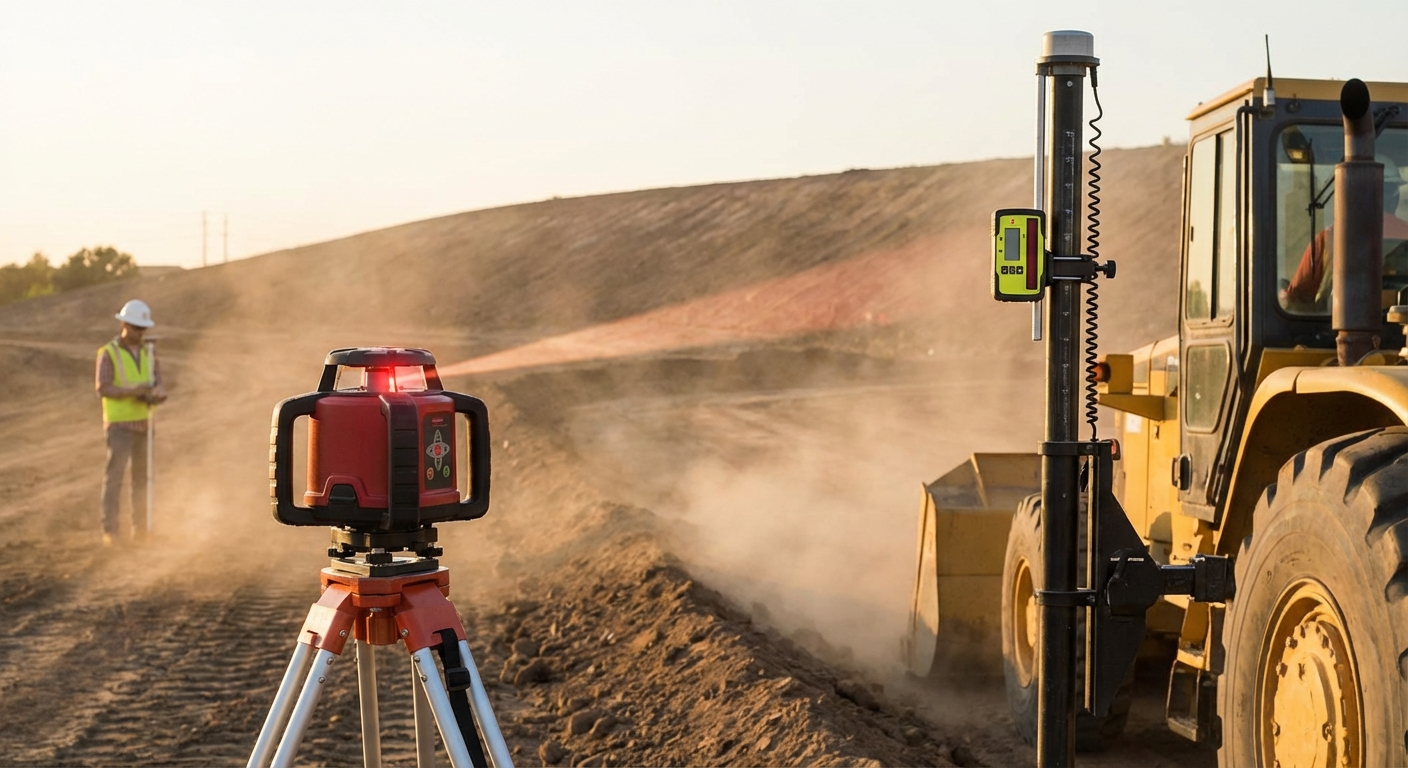
High-precision GPS that enables centimeter-level positioning, critical for grading work where inches matter.
Motion sensors that monitor the machine’s own movements and ensure operations stay within safe parameters.
Machine learning algorithms that interpret sensor data and make decisions about how to complete assigned tasks.
The key innovation is in the software layer that ties all these components together. Construction sites are far more dynamic than, say, a mining operation or agricultural field. Equipment has to work around other machines, respond to changing conditions, and adapt to the inevitable chaos of an active job site.
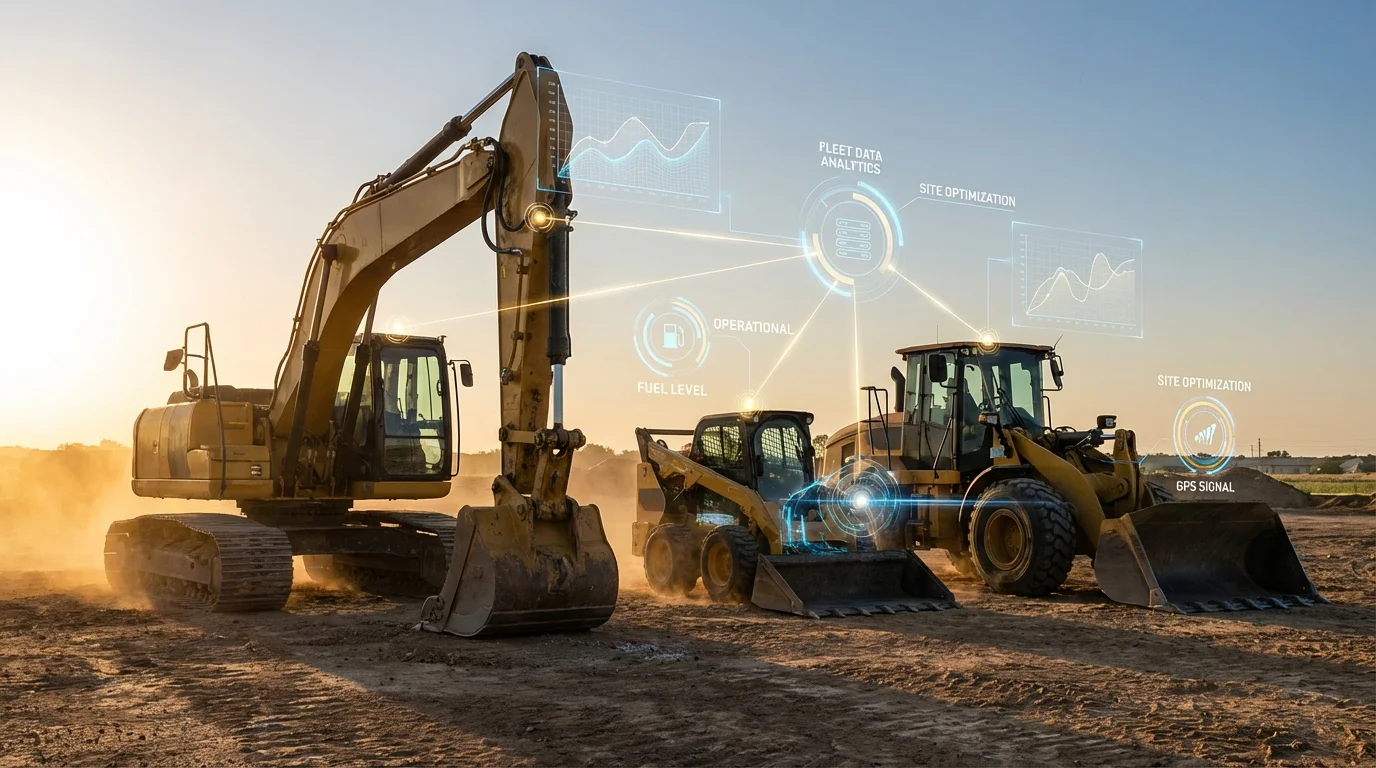
Bedrock’s approach treats each machine as part of a connected fleet rather than an isolated autonomous unit. Their long-term vision involves orchestrating multiple autonomous machines working together, coordinated by AI systems that can optimize task allocation and sequencing across the entire fleet.
What This Means for Equipment Owners
For contractors currently running conventional equipment, Bedrock’s approach presents interesting possibilities—and questions.
The retrofit model theoretically preserves existing equipment investments. Rather than scrapping a perfectly good excavator because it can’t drive itself, contractors could add autonomous capability and extend the machine’s productive life. This could fundamentally change equipment lifecycle calculations.
However, plenty of questions remain unanswered. What does the retrofit cost? (Bedrock hasn’t publicly disclosed pricing.) How does autonomy affect resale value? What happens to warranty coverage when you add third-party autonomous systems? How do insurance companies view autonomous construction equipment?
The maintenance implications are also significant. Autonomous systems add another layer of complexity to equipment that already requires skilled technicians to service. Sensors need calibration, software needs updates, and the integration between autonomous systems and machine controls needs monitoring.
For fleet managers already struggling to keep conventional equipment maintained and operational, adding autonomous systems could either simplify operations (fewer operator-dependent breakdowns, more predictable performance) or complicate them (new failure modes, specialized service requirements). Probably both.
The Competitive Landscape
Bedrock isn’t the only company chasing autonomous construction equipment. Built Robotics, which has been operating for several years, also offers retrofit autonomous solutions focused primarily on excavators and dozers. Caterpillar has been developing autonomous hauling systems for mining applications, with technology that could eventually migrate to construction applications.
Several major OEMs including Komatsu, Volvo, and Hitachi have made significant investments in autonomous and semi-autonomous technology, though their approaches tend toward integrated solutions in new equipment rather than retrofits.
What the Bedrock funding round signals is that investors see significant value in the retrofit approach specifically. The $1.75 billion valuation suggests confidence that Bedrock can scale rapidly by leveraging existing equipment rather than building new machines from scratch.
The Bigger Picture
Autonomous construction equipment isn’t just about replacing operators—it’s about fundamentally changing how projects get built.
Human operators work shifts, need breaks, and can only focus on one task at a time. They have good days and bad days. They’re unavailable when they’re sick, on vacation, or stuck in traffic. These aren’t criticisms—they’re simple facts about human limitations that affect every construction project.
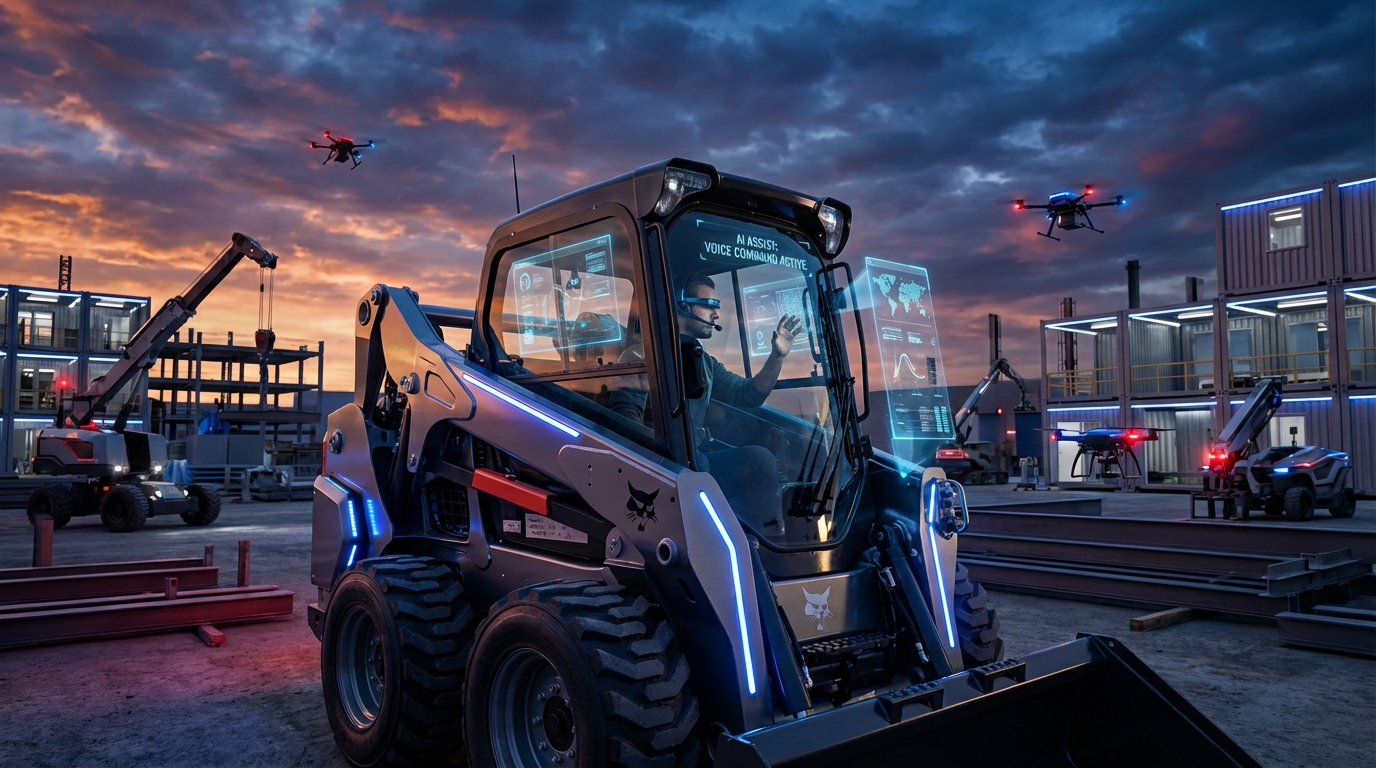
Autonomous equipment could theoretically operate continuously, maintain consistent performance, and work in conditions too dangerous for human operators. Night work, hazardous environments, repetitive tasks—these could become the domain of autonomous machines, freeing human workers for tasks that require judgment, creativity, and adaptability.
Of course, we’re still in the early stages. Fully autonomous operation on complex construction sites remains a significant technical challenge. Regulatory frameworks for autonomous construction equipment are still developing. And the industry’s acceptance of autonomous technology will likely be gradual, with supervised autonomy (human oversight with machine execution) serving as a bridge to fully autonomous operations.
Looking Forward
Bedrock’s $270 million raise sends a clear signal about where construction technology is heading. The massive investment, the unicorn valuation, and the accelerated deployment timeline all suggest that autonomous construction equipment is moving from “someday” to “soon.”
For equipment owners, the practical implications may still be a few years out. But the smart move now is to start thinking about how autonomous technology might integrate with existing fleets and operations. Understanding the technology, tracking its development, and preparing for eventual adoption will separate contractors who are ready for the future from those caught flat-footed.
The 349,000 workers the construction industry needs this year aren’t materializing. The equipment that can fill that gap is. And with $270 million in fresh funding, Bedrock Robotics is betting they can make it happen faster than anyone expected.
The funding round was announced February 4, 2026. Source: PR Newswire, Construction Dive, The Robot Report.