
HD Hyundai and Palantir Forge Multi-Hundred Million Dollar AI Partnership to Transform Fleet Management
The construction equipment giant partners with the data analytics powerhouse to bring AI-driven decision making to jobsites, signaling a new era for fleet intelligence.
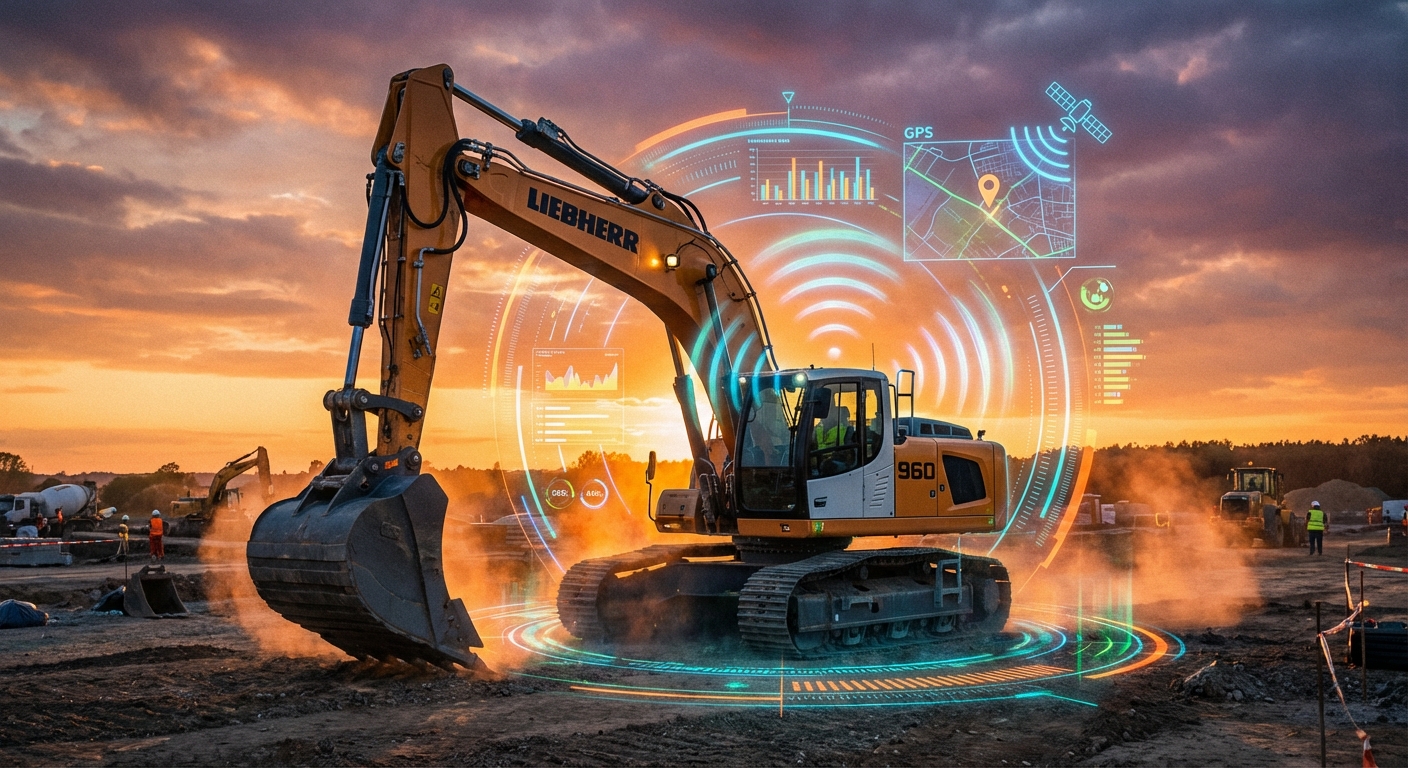
In a move that signals the construction equipment industry’s aggressive pivot toward artificial intelligence, HD Hyundai has expanded its strategic partnership with data analytics giant Palantir Technologies in a deal reportedly worth hundreds of millions of dollars. The partnership aims to fundamentally transform how construction fleets operate, maintain equipment, and make decisions on the jobsite.
The expanded agreement, announced following a meeting between HD Hyundai leadership and Palantir CEO Alex Karp, positions HD Hyundai’s construction equipment division at the forefront of what many industry observers are calling the most significant technology shift since GPS machine control revolutionized earthmoving operations two decades ago.
FieldFix Editor’s Note: The integration of AI into fleet management represents exactly the kind of operational intelligence that modern equipment operators need. At FieldFix, we’re building similar predictive capabilities into our fleet tracking platform—helping operators move from reactive maintenance to proactive decision-making. The HD Hyundai-Palantir partnership validates what we’ve been seeing in the market: contractors want their equipment data to actually tell them something useful, not just pile up in dashboards.
The Data Problem in Construction
Today’s construction equipment runs on software. Telematics systems constantly ping updates. Fault codes accumulate. Multiple dashboards compete for attention. Fleet managers often spend more time hunting for answers across disconnected systems than actually acting on insights.
The promise of telematics—real-time visibility into equipment health, location, and utilization—has largely delivered on the data collection front. What’s been missing is the intelligence layer that connects the dots and surfaces actionable recommendations at the right moment.
HD Hyundai’s partnership with Palantir directly addresses this gap. Rather than simply adding another dashboard to the mix, the companies are building what they call a “Center of Excellence” focused on two core Palantir platforms: Foundry, which serves as a central platform for data-driven decision-making, and AIP, Palantir’s Artificial Intelligence Platform.
Why Palantir?
Palantir Technologies has built its reputation on making sense of complex, messy data at scale. Originally known for its work with government and defense agencies, the company has expanded into healthcare, telecommunications, and industrial operations. The company’s software integrates disparate data sources, identifies patterns humans might miss, and presents actionable intelligence rather than raw numbers.
For HD Hyundai, Palantir offers something most equipment manufacturers can’t build internally: proven expertise in large-scale data analytics and artificial intelligence deployment. The relationship isn’t new—HD Hyundai has used Palantir software since 2021, starting with HD Hyundai Oilbank, the company’s petroleum and refinery arm. The current expansion brings those capabilities across the entire HD Hyundai organization, with construction equipment as a primary focus.
What AI-Driven Fleet Management Actually Looks Like
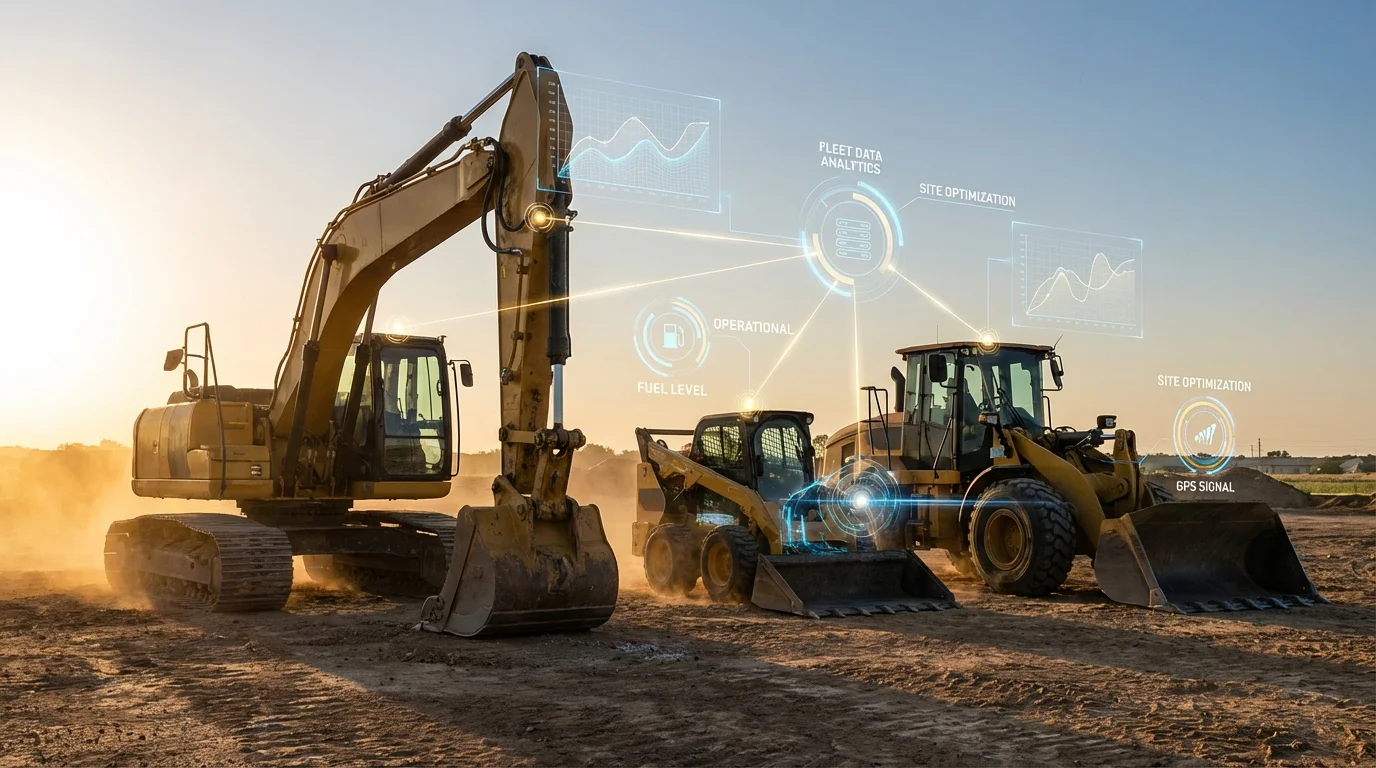
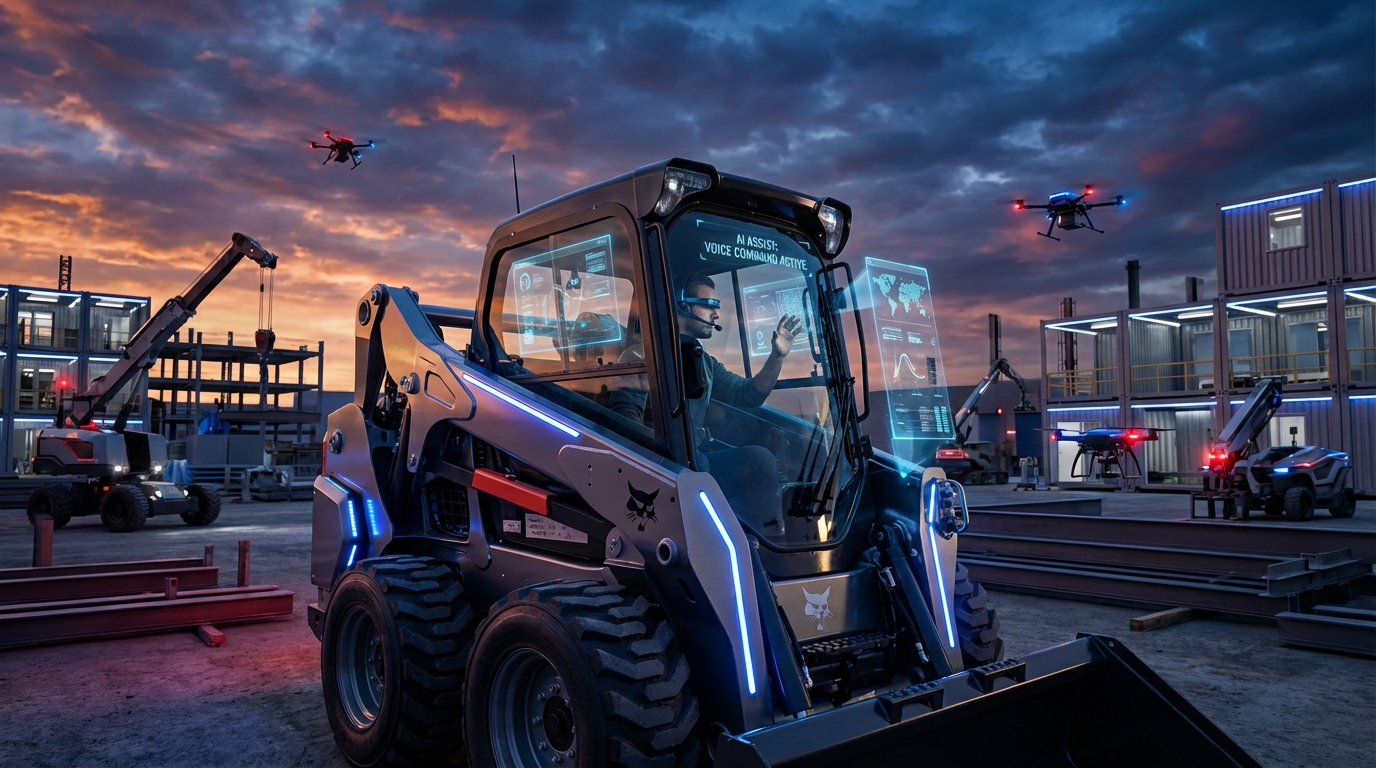
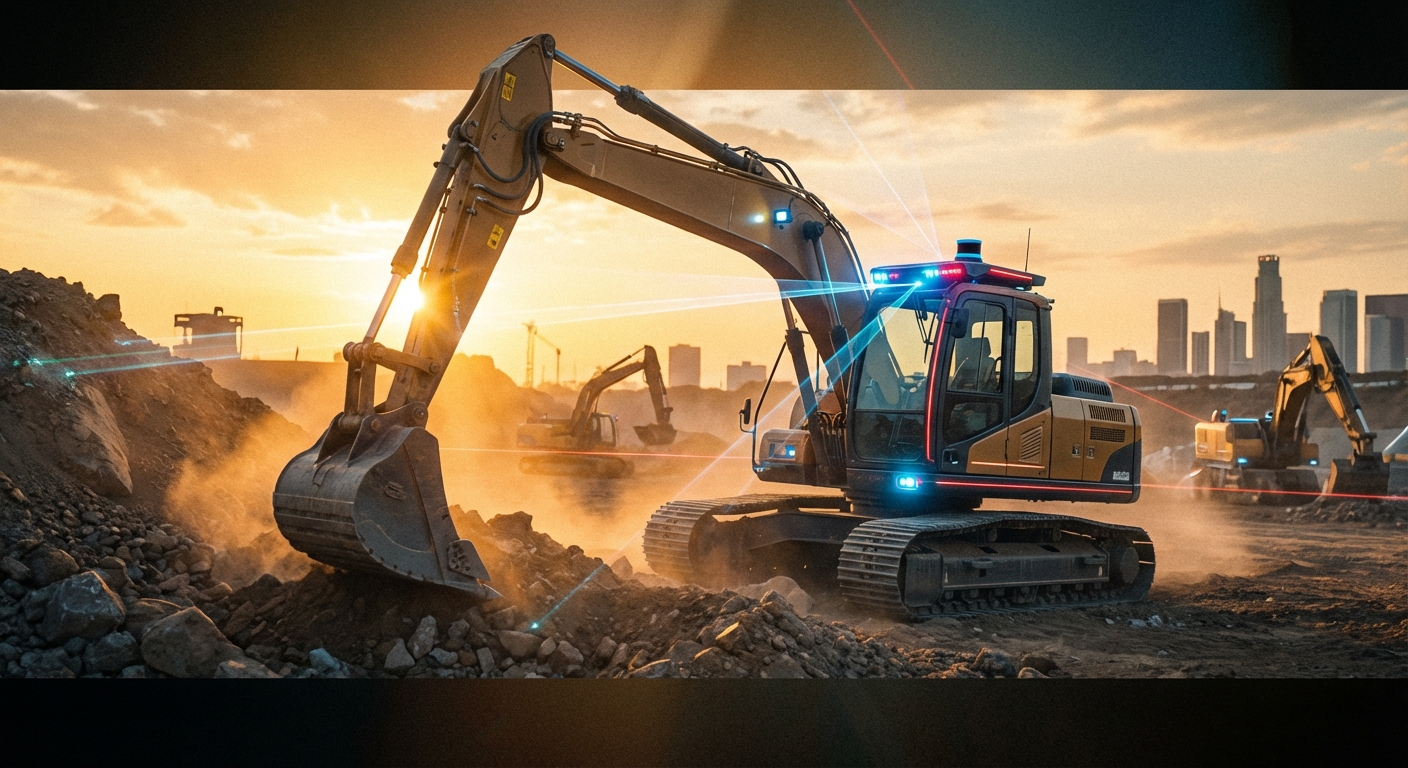
The vision extends far beyond better dashboards. When artificial intelligence and telematics work together effectively, the result is a connected, predictive fleet where machines function as integrated production assets rather than standalone equipment.
Consider a typical fleet management scenario today: a site supervisor notices an excavator underperforming, checks the telematics dashboard, sees a fault code, contacts the dealer, schedules a service visit, and waits for parts. The machine sits idle for days.
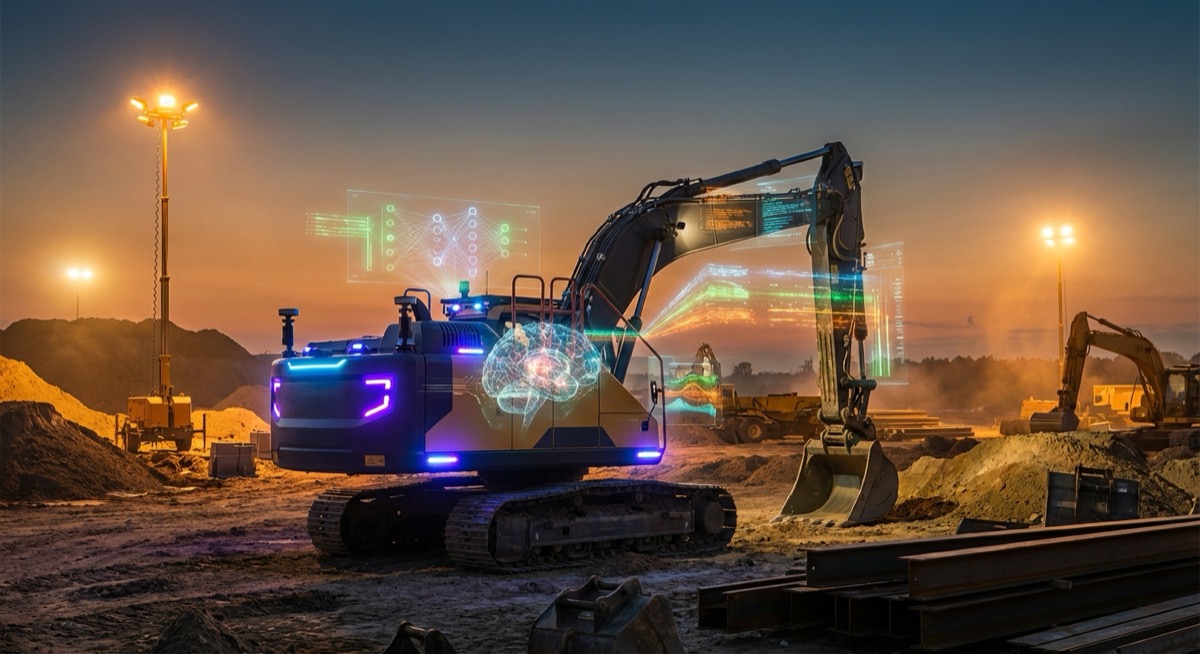
Now imagine an AI-augmented version: the system detects subtle performance degradation weeks before a fault code triggers, cross-references the pattern against the machine’s maintenance history and similar units in the field, predicts the likely failure point, automatically schedules preventive maintenance during a planned downtime window, and ensures the right parts are on-site before the technician arrives. The machine never stops working unexpectedly.
This isn’t science fiction. The component technologies exist today. What’s been missing is the integration layer that brings equipment data, maintenance records, parts inventory, scheduling systems, and operational context together in a way that enables truly predictive decision-making.
The Broader HD Hyundai AI Strategy
The Palantir partnership is one piece of a larger artificial intelligence push across Hyundai’s various divisions. At CES 2026, Hyundai Motor Group showcased AI-driven robotics developed with Boston Dynamics, including plans to mass-produce Atlas robots for deployment across global manufacturing plants starting with phased validation in 2028.
HD Hyundai’s construction equipment division has been particularly aggressive in demonstrating AI capabilities. At CES 2024, the company partnered with Amazon Web Services to showcase HD Hyundai XiteSolution, a platform combining artificial intelligence, virtual reality, and automation for what the company calls “unmanned autonomous sites.”
The XiteSolution platform connects machines to a broader system that coordinates operations, enables remote monitoring and control, and lays groundwork for increasingly autonomous jobsite operations. The Palantir partnership adds the analytical backbone that can make these connected systems genuinely intelligent rather than just connected.
Implications for the Equipment Industry
HD Hyundai’s AI investment signals where the broader industry is headed. For years, equipment manufacturers have competed primarily on machine specifications—horsepower, dig depth, lift capacity. The next competitive battleground is increasingly about the intelligence layer that makes fleets more productive.
Several trends converge to make this shift inevitable:
Labor constraints. The construction industry faces persistent skilled labor shortages. Technology that amplifies human decision-making capability—or automates routine decisions entirely—helps contractors do more with available workforce.
Data maturity. Most major fleets now generate substantial telematics data. The question has shifted from “how do we collect data” to “how do we extract value from data we already have.”
AI accessibility. Cloud computing and modern AI platforms have dramatically reduced the cost and complexity of deploying sophisticated analytics. What required a dedicated data science team five years ago can now be deployed through platforms like Palantir’s offerings.
Customer expectations. Contractors increasingly expect their equipment purchases to include intelligent capabilities. A machine that doesn’t connect to fleet management systems or provide predictive maintenance insights feels incomplete.
The Robotics-as-a-Service Model
An intriguing aspect of Hyundai Motor Group’s broader AI strategy involves Robotics-as-a-Service (RaaS)—shifting from one-time equipment sales to subscription-based solutions that lower upfront costs and deliver faster ROI.
While this model applies initially to factory robotics rather than construction equipment, the implications for the heavy equipment industry are worth noting. Subscription and pay-per-use models for construction equipment have gained traction in recent years, particularly for technology-intensive attachments and machine control systems. AI-powered fleet management capabilities could follow a similar path—offered as ongoing services rather than one-time purchases.
This model aligns with how contractors actually use equipment. A fleet’s intelligence requirements evolve as the business grows, as new machines join the fleet, and as AI capabilities improve. A subscription model allows those capabilities to scale and improve over time without requiring major capital expenditures.
The Competitive Landscape
HD Hyundai isn’t the only equipment manufacturer investing heavily in AI and data analytics. Caterpillar’s Cat Command system enables remote operation and autonomous functionality. John Deere has pushed autonomous technology across its agricultural and construction lines. Komatsu’s intelligent Machine Control has set benchmarks for automated earthmoving.
What distinguishes HD Hyundai’s approach is the scale of investment in data infrastructure. Partnering with Palantir—a company valued at over $50 billion and known for enterprise-grade data analytics—signals serious commitment to building AI capabilities that extend beyond individual machine features to encompass fleet-wide intelligence.
The question for competing manufacturers is whether they can build or buy comparable analytical capabilities. The AI talent market is intensely competitive, and building internal data science teams capable of matching dedicated analytics companies like Palantir requires significant time and investment.
Practical Considerations for Fleet Owners
For contractors evaluating equipment purchases, the AI capabilities embedded in new machines increasingly matter. Several questions worth asking:
Data portability. Does the manufacturer’s telematics system integrate with third-party fleet management platforms, or does it lock you into a proprietary ecosystem?
Predictive capabilities. Beyond fault codes and alerts, does the system offer genuine predictive analytics that help you avoid problems before they occur?
Actionable insights. Does the data actually connect to your decision-making processes, or does it create yet another dashboard to monitor?
Scalability. As your fleet grows and AI capabilities evolve, will the system grow with you?
The HD Hyundai-Palantir partnership suggests that the answers to these questions will increasingly differentiate equipment brands. Machines that connect to genuinely intelligent systems may command premium prices and deliver superior total cost of ownership through reduced downtime, optimized maintenance, and improved operational efficiency.
Looking Ahead
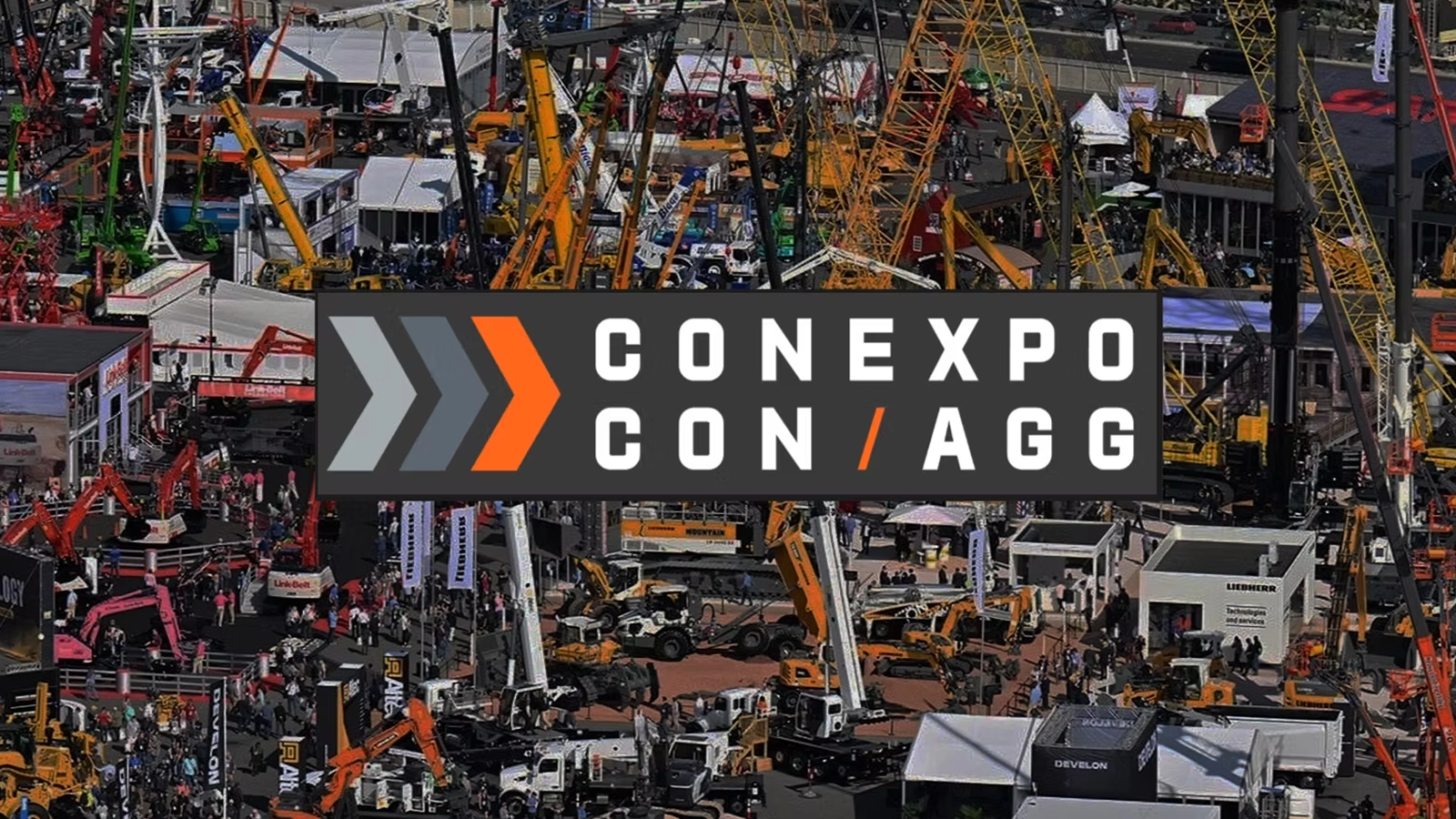
CONEXPO 2026, scheduled for March 3-7 in Las Vegas, will likely showcase multiple AI and autonomous technology announcements from major manufacturers. HD Hyundai and its Develon brand will certainly highlight their expanded Palantir partnership capabilities.
For the construction equipment industry, the message is clear: the future belongs to fleets where data doesn’t just accumulate—it actively improves operations. HD Hyundai has placed a significant bet that Palantir’s AI capabilities can deliver on that promise. How competitors respond in the coming months will shape the next chapter of construction technology evolution.
Equipment Insider provides independent analysis of the heavy equipment industry. We have no financial relationship with HD Hyundai, Palantir, or any equipment manufacturer mentioned in this article.