Caterpillar and NVIDIA Expand AI Partnership: Autonomous Equipment, Voice Assistants, and the Digital Factory
From CES 2026 demos of operator-free excavators to Siri-like voice assistants in the cab, Caterpillar's deepening NVIDIA partnership is reshaping what's possible in heavy equipment.
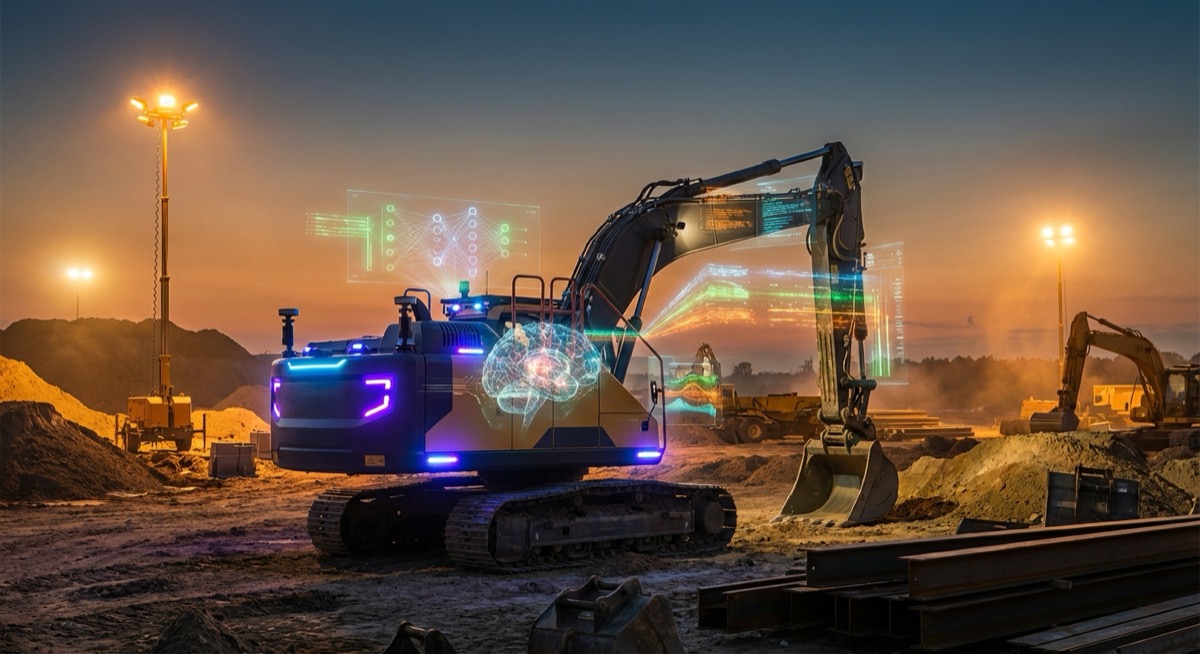
The relationship between heavy equipment and artificial intelligence just entered a new era. Caterpillar, the world’s largest construction equipment manufacturer, has announced a sweeping expansion of its partnership with NVIDIA, the semiconductor giant whose GPUs have become synonymous with AI computing. The collaboration aims to transform everything from how operators interact with machines to how factories are designed and managed.
Announced in conjunction with CES 2026, the expanded partnership puts Caterpillar at the forefront of an industry-wide race toward intelligent, connected, and increasingly autonomous equipment. For fleet managers, contractors, and equipment dealers, the implications are profound—and the timeline may be shorter than many expect.
Editor’s Note: Managing equipment hours effectively is crucial for fleet operations. Tools like FieldFix help operators track equipment usage in hours rather than miles—a game-changer for heavy equipment businesses.
Five Autonomous Equipment Lines: The CES 2026 Showcase
The most dramatic reveal from Caterpillar’s expanded partnership came at CES 2026, where the company demonstrated automated versions of five core equipment categories operating without human operators:
Automated Excavators: Capable of autonomous trenching operations, these machines use real-time sensor data and AI inference to navigate variable soil conditions, adjust digging depth, and avoid obstacles—all without an operator in the cab.
Autonomous Wheel Loaders: Demonstrated performing continuous loading cycles, moving material from stockpiles to trucks with precision that matches experienced operators, while operating around the clock without fatigue-related productivity decline.
Self-Driving Haul Trucks: Building on Caterpillar’s existing autonomous hauling systems deployed in mining operations, the updated platform brings more sophisticated AI for mixed-fleet environments common in construction applications.
Automated Dozers: Performing grading operations with GPS-guided precision, these machines maintain specified grade tolerances while adjusting blade angle and depth based on real-time terrain analysis.
Autonomous Compactors: Completing rolling operations in predetermined patterns, tracking coverage automatically to ensure consistent compaction without over-rolling or missed areas.
“As AI moves beyond data to reshape the physical world, it is unlocking new opportunities for innovation—from jobsites and factory floors to offices,” said Joe Creed, CEO of Caterpillar, in a statement accompanying the announcement. “Caterpillar is committed to solving our customers’ toughest challenges by leading with advanced technology in our machines and every aspect of business.”
The Brain Behind the Machines: NVIDIA Jetson Thor
Powering this autonomous transformation is NVIDIA’s Jetson Thor platform, designed specifically for robotics and edge computing applications. The platform enables real-time AI inference directly on the machine—critical for operations where milliseconds matter and cloud connectivity may be unreliable.
The Jetson Thor architecture provides several key capabilities for construction applications:
Real-time processing: The platform can process sensor data from multiple cameras, LIDAR units, radar systems, and IMU sensors simultaneously, creating a comprehensive environmental model updated many times per second.
Edge computing independence: Unlike systems that rely on constant cloud connectivity, Jetson Thor performs AI inference locally. This means machines can continue operating intelligently even when cellular or Wi-Fi connections are unavailable—a common scenario on remote jobsites.
Scalable deployment: The same platform architecture works across equipment sizes and types, from compact track loaders to 400-ton mining trucks. This standardization simplifies software development and maintenance across Caterpillar’s entire product line.
“For a century, Caterpillar has built the industrial machines that shaped the world,” said Jensen Huang, founder and CEO of NVIDIA. “In the age of AI, NVIDIA and Caterpillar are partnering across the full spectrum—from autonomous construction fleets to the AI data centers powering the next industrial revolution.”
Cat AI Assistant: Your Voice-Activated Co-Pilot
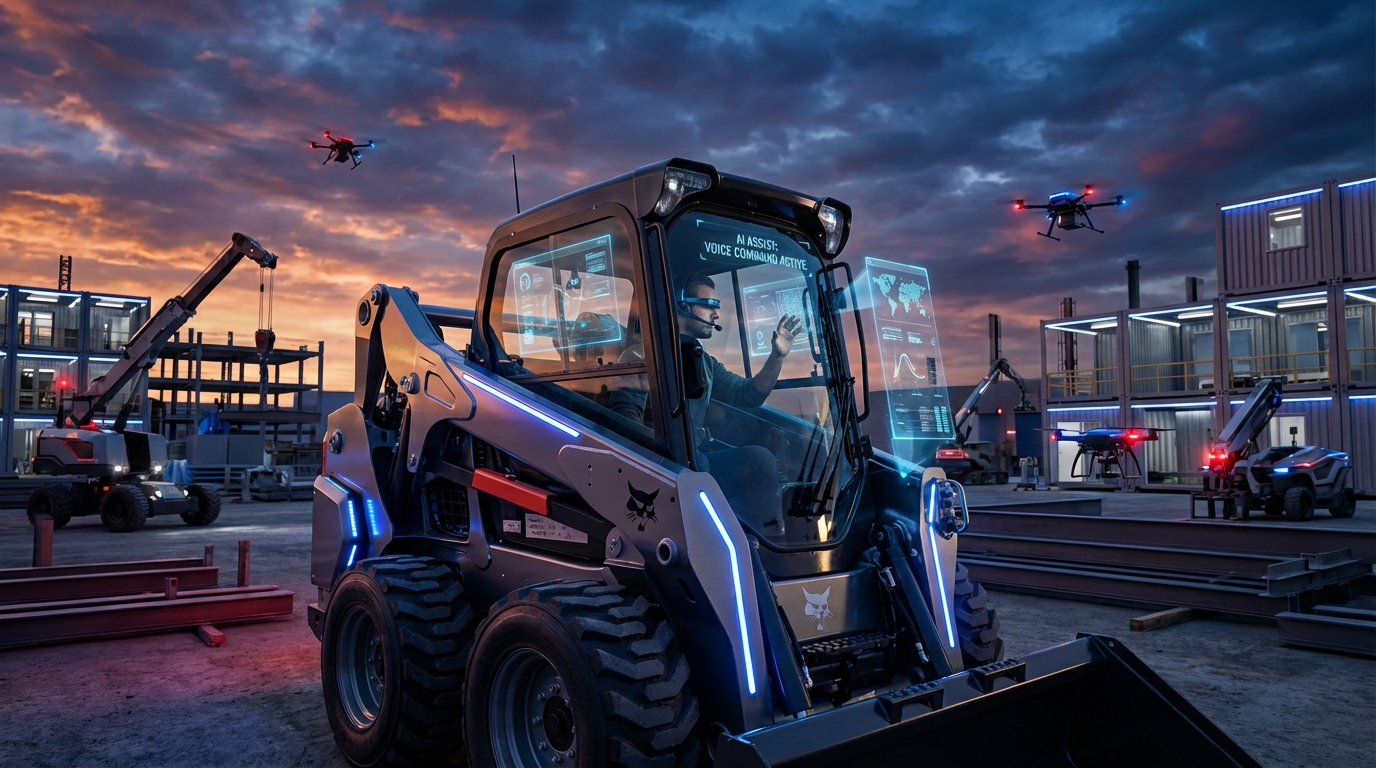
Beyond autonomous operation, the partnership introduces a more immediate innovation that will reach operators sooner: the Cat AI Assistant. Debuting at CES 2026, this voice-activated system brings conversational AI directly into the equipment cab.
Built on NVIDIA’s Riva speech models—known for their high accuracy and natural-sounding voices—the Cat AI Assistant functions as an intelligent co-pilot. The system can:
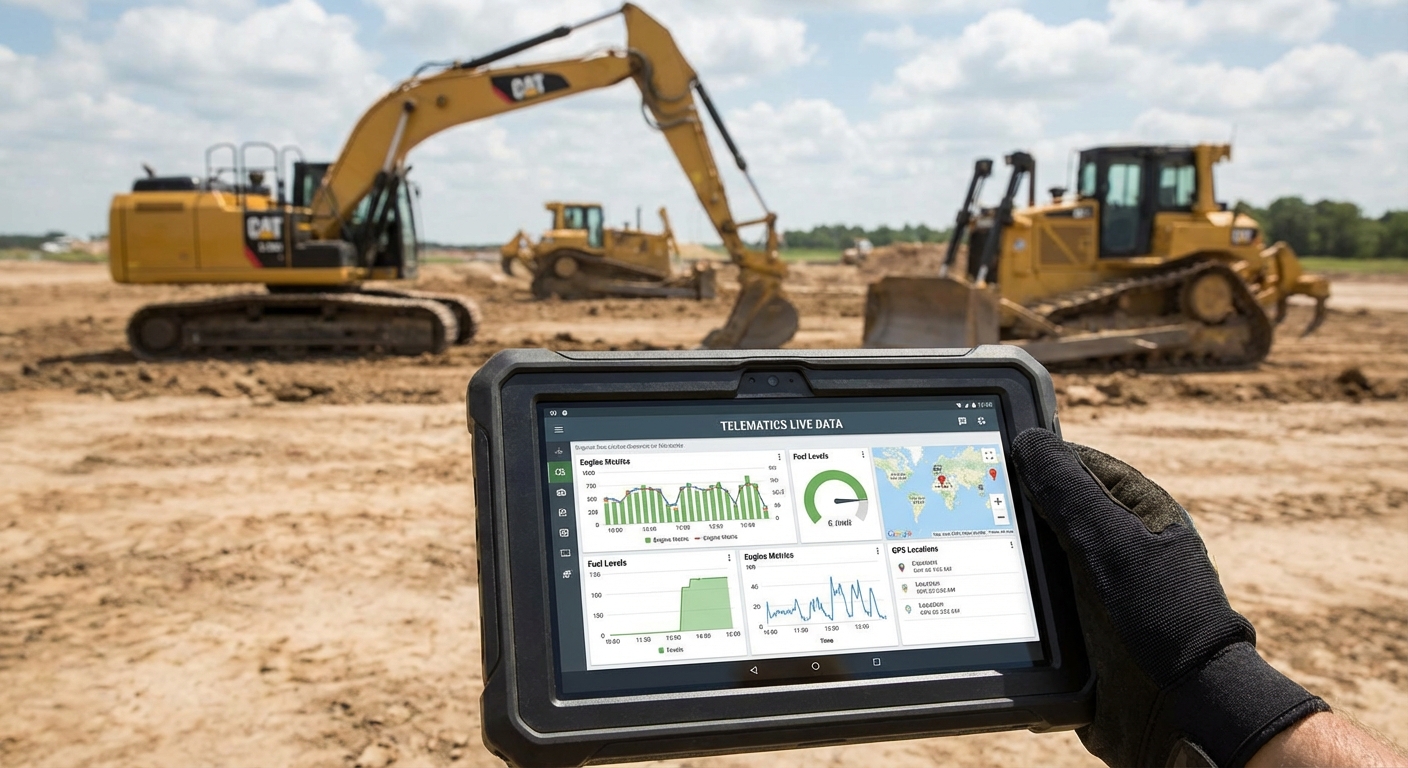
Provide personalized coaching: Based on machine telemetry and operator behavior, the assistant offers real-time tips to improve fuel efficiency, reduce wear, or increase productivity. An operator might receive suggestions like, “Try lowering your RPM during transport—you’ll save about 8% on fuel.”
Guide troubleshooting: When warning lights illuminate or machines behave unexpectedly, the assistant can walk operators through diagnostic steps, explain potential causes, and recommend actions—potentially avoiding costly downtime.
Answer questions naturally: Operators can ask questions about machine specifications, maintenance procedures, or operating techniques in plain language, receiving immediate, contextual answers without leaving the cab.
Connect to broader ecosystems: The assistant integrates with Cat apps, websites, and dealer resources, serving as a unified interface for accessing everything from parts catalogs to service scheduling.
The voice activation aspect is particularly significant for construction environments. Operators working in challenging conditions—bouncing over rough terrain, working in dust or rain, wearing heavy gloves—often can’t easily interact with touchscreens. Voice commands provide a natural, hands-free alternative.
The Digital Factory: Manufacturing Transformed
The NVIDIA partnership extends beyond equipment to transform how Caterpillar designs and operates its manufacturing facilities. Using NVIDIA Omniverse and OpenUSD (Universal Scene Description) standards, Caterpillar is building “digital twins” of its factories—comprehensive virtual replicas that mirror physical operations in real-time.
These digital twins enable several powerful capabilities:
Virtual prototyping: Before breaking ground on factory expansions or layout changes, teams can design, simulate, and test configurations in the digital environment. Virtual workers move through the space, identifying bottlenecks, safety hazards, or inefficiencies before any physical construction begins.
Process optimization: Real-time data from factory sensors flows into the digital twin, allowing managers to visualize operations, identify variations from optimal performance, and test improvements virtually before implementing them on the production floor.
Training and planning: New employees can familiarize themselves with factory layouts and procedures in virtual environments. Production planners can simulate different scheduling scenarios to optimize throughput.
The AI Factory approach also accelerates manufacturing forecasting and scheduling. Machine learning models analyze historical production data, supplier lead times, demand patterns, and dozens of other variables to predict optimal production schedules—reducing inventory costs while maintaining the ability to meet customer orders.
What This Means for Fleet Operators
For construction companies and fleet managers, Caterpillar’s AI push creates both opportunities and considerations:
Productivity potential: Autonomous and semi-autonomous operation could address chronic labor shortages while enabling extended operating hours. Machines that can work safely through darkness or in conditions uncomfortable for human operators could dramatically increase project throughput.
Skill evolution: The role of equipment operators may evolve from direct machine control toward fleet supervision and exception handling. A single trained operator might oversee multiple machines, intervening only when situations exceed autonomous capabilities.
Data infrastructure requirements: Realizing the full benefits of connected, AI-powered equipment requires robust data infrastructure. Companies will need to consider connectivity solutions, data management practices, and cybersecurity measures as equipment becomes increasingly digital.
Maintenance paradigm shifts: AI-powered predictive maintenance could reduce unplanned downtime, but it also requires new approaches to service planning. Rather than fixed-interval maintenance, equipment may signal exactly when specific components need attention.
Investment considerations: Early adopters of AI-enhanced equipment may gain competitive advantages, but the technology premium and infrastructure requirements demand careful cost-benefit analysis. The business case will vary significantly based on application, scale, and local labor market conditions.
The Competitive Landscape
Caterpillar’s NVIDIA partnership represents a significant move in an increasingly competitive race toward intelligent equipment. Major competitors are pursuing similar trajectories:
Komatsu has deployed autonomous haul trucks in mining operations for years and continues expanding its autonomous equipment portfolio.
John Deere has invested heavily in AI and computer vision technology, with autonomous tractors and equipment guidance systems increasingly common in agricultural applications—technology that transfers readily to construction equipment.
Volvo CE has demonstrated autonomous wheel loaders and is expanding production capabilities to address growing demand for connected equipment.
Hitachi Construction Machinery has partnered with ABB for electrification and autonomous hauling solutions, particularly in mining applications.
The race isn’t just between traditional equipment manufacturers. Technology companies see construction automation as a massive market opportunity, and startups backed by significant venture capital are developing specialized autonomous solutions for specific applications.
Timeline and Availability
Caterpillar hasn’t announced specific production timelines for the autonomous equipment demonstrated at CES 2026. Historically, the path from demonstration to commercial availability spans several years as systems are refined, validated, and adapted for diverse operating conditions.
The Cat AI Assistant is expected to reach operators sooner, likely beginning with newer equipment models and potentially available as retrofit installations on recent machines.
What’s clear is that the pace of development is accelerating. The partnership with NVIDIA provides Caterpillar access to cutting-edge AI computing platforms and deep expertise in machine learning deployment—resources that could significantly compress development timelines compared to in-house efforts.
Looking Ahead: The Jobsite of Tomorrow
The Caterpillar-NVIDIA partnership offers a glimpse of construction’s technological future. Imagine a jobsite where excavators autonomously dig foundations while AI systems optimize bucket loads based on soil conditions. Haul trucks move material in coordinated patterns, managed by algorithms that minimize wait times and fuel consumption. Operators monitor multiple machines from climate-controlled command centers, stepping in only when human judgment is needed.
That vision remains years away from widespread reality, but the building blocks are falling into place. The question for industry professionals isn’t whether this transformation will happen—it’s how quickly it will arrive and how to prepare for it.
For now, the expanded Caterpillar-NVIDIA partnership underscores a fundamental truth: artificial intelligence is no longer a distant concept for the heavy equipment industry. It’s here, it’s accelerating, and it will reshape how machines are built, operated, and maintained in ways we’re only beginning to understand.
Stay tuned to Equipment Insider for continued coverage of AI and autonomous technology developments across the heavy equipment industry.