AI-Powered Predictive Maintenance Is Reshaping Heavy Equipment Fleets in 2026
The convergence of IoT sensors, cloud computing, and artificial intelligence is creating a new paradigm for equipment maintenance—one where failures are predicted weeks in advance.
The heavy equipment industry has long operated on a reactive maintenance model: run machines until something breaks, then scramble to fix them. Even preventive maintenance schedules—while an improvement—often result in either premature part replacements or unexpected failures between service intervals. But in 2026, artificial intelligence is fundamentally changing how fleet operators approach equipment health.
Predictive maintenance powered by machine learning isn’t just a buzzword anymore. It’s becoming the operational standard for forward-thinking contractors who understand that equipment uptime directly correlates with profitability. And the technology has matured to the point where it’s accessible to fleets of all sizes, not just enterprise operations with massive IT budgets.
Editor’s Note: Managing equipment hours effectively is crucial for fleet operations. Tools like FieldFix help operators track equipment usage in hours rather than miles—a game-changer for heavy equipment businesses.
The Data Foundation: Sensors and Telematics
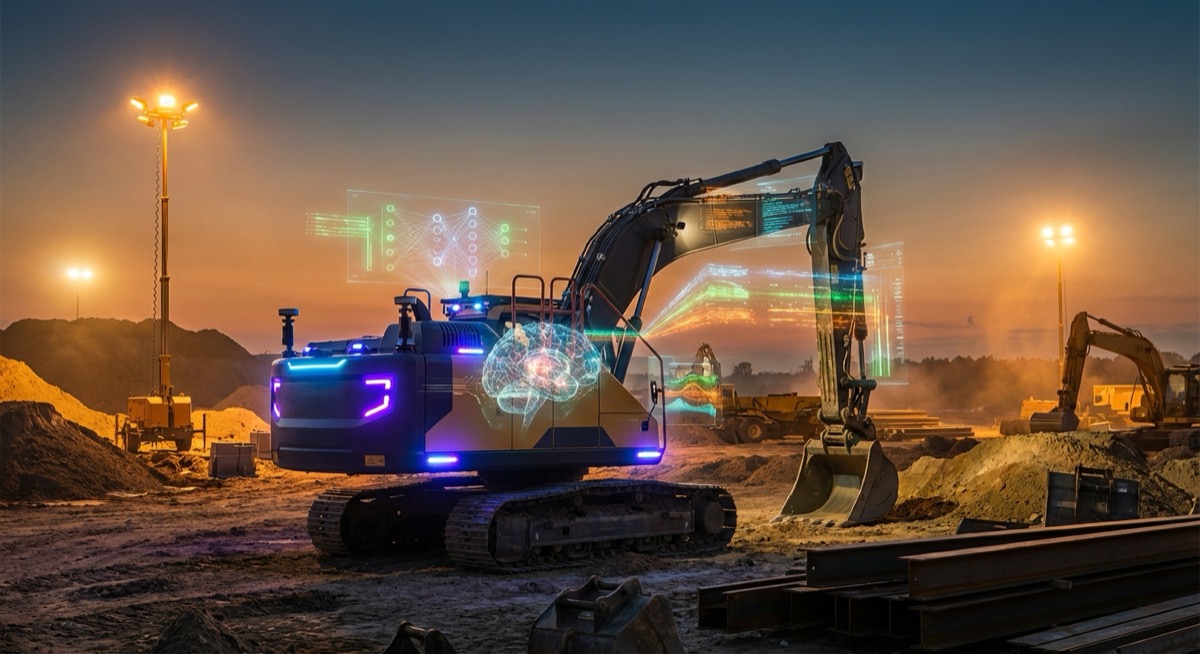
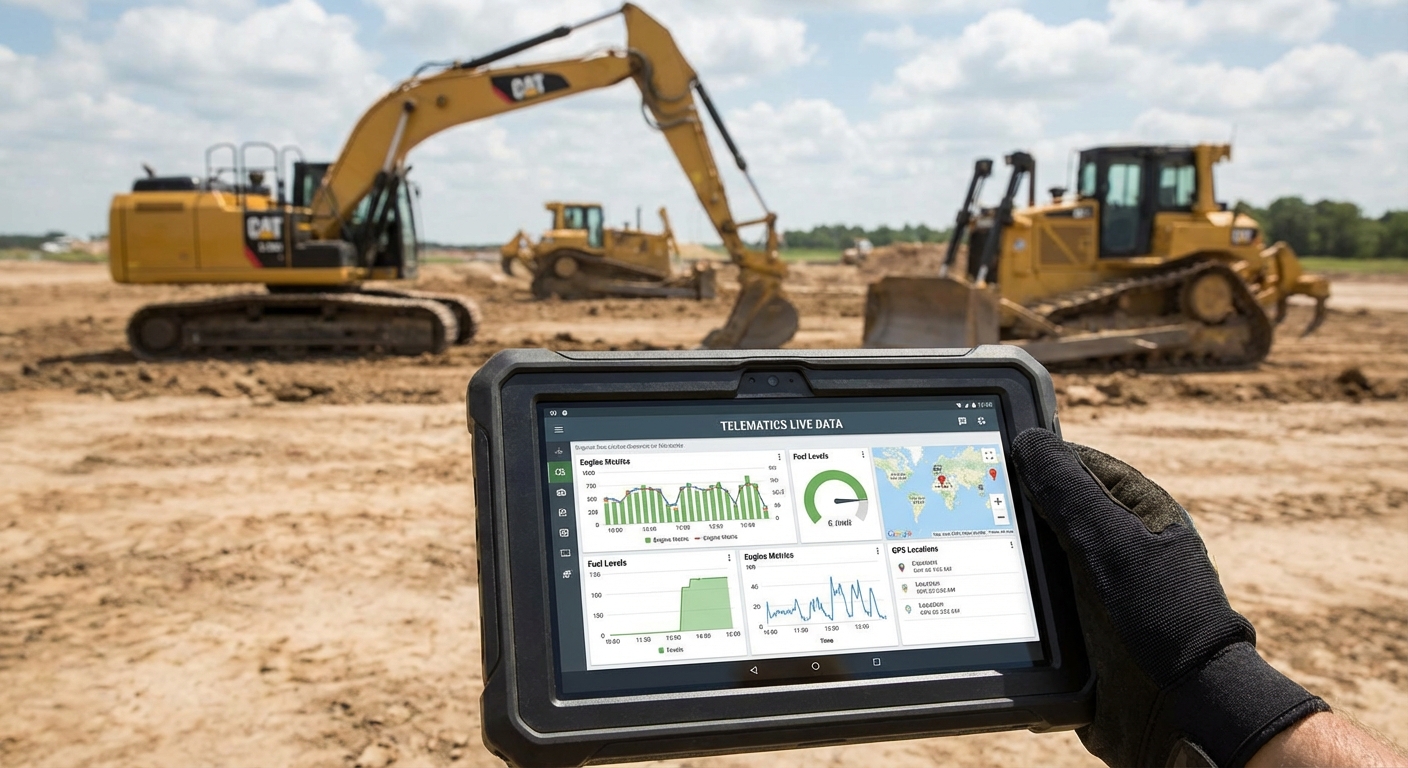
The predictive maintenance revolution begins with data—and lots of it. Modern heavy equipment comes equipped with hundreds of sensors monitoring everything from hydraulic pressure and engine temperature to vibration patterns and fuel consumption. This sensor data, transmitted through telematics systems, creates a continuous stream of information about equipment health.
What’s changed in 2026 is the sophistication of what happens to that data. Rather than simply triggering alerts when readings exceed predetermined thresholds, AI systems now analyze patterns across multiple data points simultaneously. They learn what “normal” looks like for each specific machine under various operating conditions and can detect subtle anomalies that human operators or traditional monitoring systems would miss entirely.
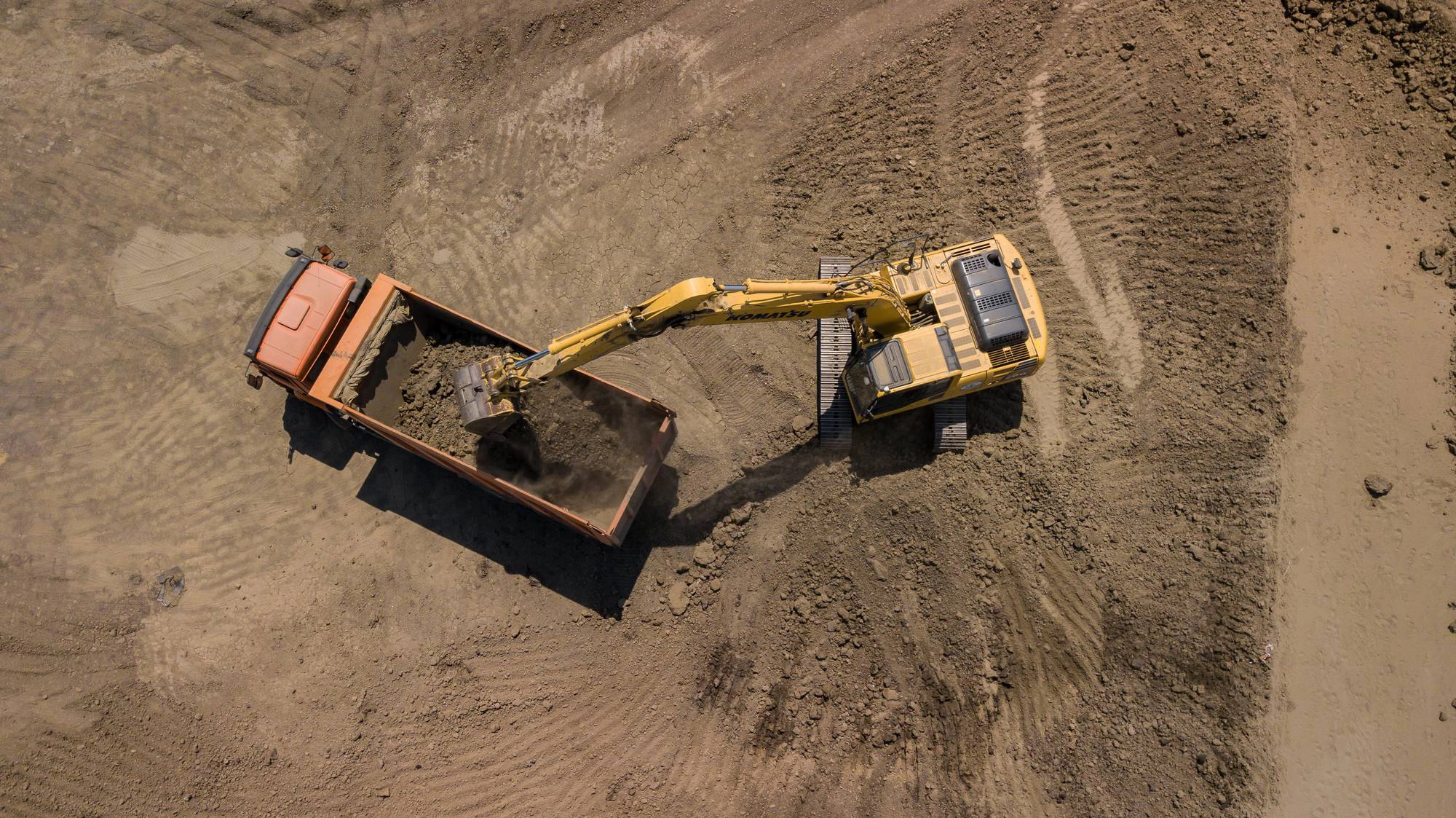
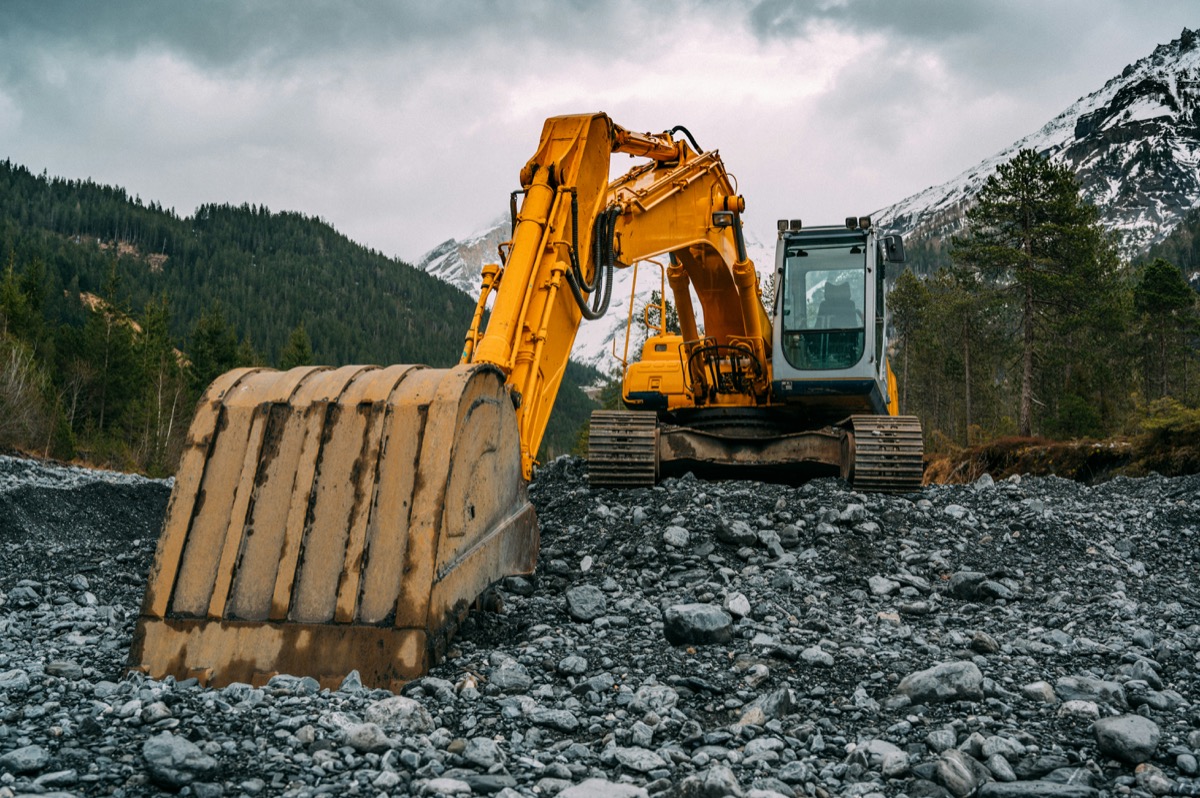
Consider a hydraulic excavator operating on a construction site. Traditional monitoring might alert an operator when hydraulic fluid temperature exceeds a certain level. But an AI system tracks the relationship between ambient temperature, work intensity, fluid temperature, pump pressure, and cycle times. It might notice that pressure fluctuations during certain movements have increased by 3% over the past two weeks—a pattern that, based on analysis of thousands of similar machines, indicates a developing seal failure that will become critical in approximately 45 days.
That kind of advance warning transforms maintenance from an emergency response into a planned activity that can be scheduled during off-hours with parts already on hand.
Machine Learning Models: Getting Smarter Every Day
The artificial intelligence driving these predictions isn’t static. Machine learning models continuously improve as they process more data, both from individual machines and from aggregate fleet data across the industry. This creates a compounding advantage for platforms that have been collecting and analyzing data longer.
Major OEMs including Caterpillar, John Deere, and Komatsu have invested heavily in building proprietary AI platforms trained on decades of equipment performance data. Cat’s flagship system now incorporates data from over 1.5 million connected assets worldwide, giving its algorithms an unprecedented understanding of failure patterns across different machine types, applications, and operating environments.
But third-party telematics providers have also entered the space with competitive offerings. Companies like Samsara, Geotab, and newer entrants specifically focused on heavy equipment are leveraging cloud computing power and open data sharing agreements to build robust predictive models. For fleet operators running mixed-brand equipment, these vendor-agnostic solutions often provide more comprehensive fleet-wide insights than OEM-specific systems.
The accuracy of these predictions has improved dramatically. Industry data suggests that leading AI maintenance platforms now achieve prediction accuracy rates above 85% for major component failures, with false positive rates below 10%. That means operators can trust the recommendations without wasting money on unnecessary repairs or replacement parts.
Beyond Breakdown Prevention: Optimizing Total Cost of Ownership
While preventing catastrophic failures is the most obvious benefit of predictive maintenance, the technology’s impact extends much further. AI systems are increasingly capable of optimizing the entire equipment lifecycle for minimum total cost of ownership.
Fuel efficiency is one example. Machine learning algorithms can analyze operator behavior patterns and identify inefficiencies—excessive idling, suboptimal gear selection, aggressive acceleration—that increase fuel consumption. Some systems now provide real-time coaching to operators through in-cab displays, while others generate management reports that inform training priorities.
Component replacement timing is another area where AI delivers value. Traditional maintenance schedules might specify replacing hydraulic hoses every 5,000 hours regardless of condition. But AI analysis might reveal that certain hoses on machines operating in moderate climates consistently last 7,500 hours, while those on equipment in extreme heat fail earlier. Dynamic maintenance scheduling based on actual condition data rather than arbitrary intervals reduces both parts costs and unnecessary downtime.
Equipment resale optimization represents an emerging application. AI platforms can now model the relationship between maintenance history, operating hours, and resale value to recommend optimal replacement timing. A contractor might learn that their wheel loader will lose value faster than maintenance costs increase for another 18 months, after which the economics flip—helping inform capital equipment decisions with data rather than gut instinct.
Implementation Challenges and Best Practices
Despite its promise, implementing AI-powered predictive maintenance isn’t without challenges. Many contractors have learned expensive lessons about the gap between vendor promises and operational reality.
Data quality remains the most common stumbling block. Predictive algorithms are only as good as the data feeding them, and heavy equipment operating in harsh environments frequently experiences sensor failures, connectivity interruptions, and data gaps. Successful implementations require robust data governance practices: regular sensor calibration, reliable cellular or satellite connectivity, and systematic processes for identifying and correcting data quality issues.
Integration with existing workflows presents another hurdle. A predictive maintenance alert is only valuable if it triggers appropriate action. That means integrating AI platforms with work order management systems, parts inventory databases, and technician scheduling tools. Without this integration, alerts become just another notification that gets ignored in the daily chaos of operations.
Personnel training is equally critical. Maintenance teams accustomed to traditional approaches may resist or ignore AI recommendations, particularly when predictions contradict their experience-based intuition. Successful organizations invest in change management, demonstrating the system’s accuracy over time and involving technicians in refining algorithms based on their ground-level observations.
The most effective implementations start small and expand. Rather than attempting to deploy predictive maintenance across an entire fleet simultaneously, leading contractors pilot programs on a subset of critical equipment. This allows teams to work out integration issues, build confidence in the technology, and demonstrate ROI before broader rollout.
The Competitive Landscape: Who’s Leading and What’s Next
The predictive maintenance market for heavy equipment has consolidated around several major players, but innovation continues at a rapid pace.
Among OEMs, Caterpillar’s Cat Digital platform remains the most comprehensive, offering not just predictive maintenance but integrated fleet management, productivity monitoring, and sustainability tracking. John Deere’s JDLink system has made significant strides in the construction equipment segment, while Komatsu’s SMARTCONSTRUCTION platform emphasizes integration between machine intelligence and site-wide optimization.
Third-party providers continue to challenge OEM dominance by offering cross-brand compatibility and often more flexible pricing models. Samsara has emerged as a leader for mixed fleets, while specialized platforms like HCSS and B2W have built strong followings among contractors who value integration with construction management software.
Looking ahead, several trends will shape the next phase of evolution:
Edge computing is bringing more processing power directly onto equipment, enabling real-time predictions without relying on cellular connectivity. This is particularly valuable for machines operating in remote locations with limited network coverage.
Digital twins—virtual replicas of physical machines—are becoming more sophisticated. These allow operators to simulate different maintenance scenarios and predict outcomes before committing to a particular approach.
Autonomous equipment integration represents perhaps the most significant near-term development. As semi-autonomous and autonomous machines become more prevalent, predictive maintenance systems must integrate with vehicle control systems to enable machines to respond automatically to developing issues—reducing power output to prevent overheating, for example, or returning to base for service when sensors detect imminent problems.
The ROI Reality Check
For contractors evaluating predictive maintenance investments, the return on investment question looms large. While vendor case studies typically show impressive numbers, real-world results vary significantly based on implementation quality and operational context.
Industry surveys suggest that well-implemented predictive maintenance programs typically achieve:
- 25-50% reduction in unplanned downtime
- 10-25% reduction in maintenance costs
- 15-30% reduction in parts inventory carrying costs
- 20-40% extension of major component life
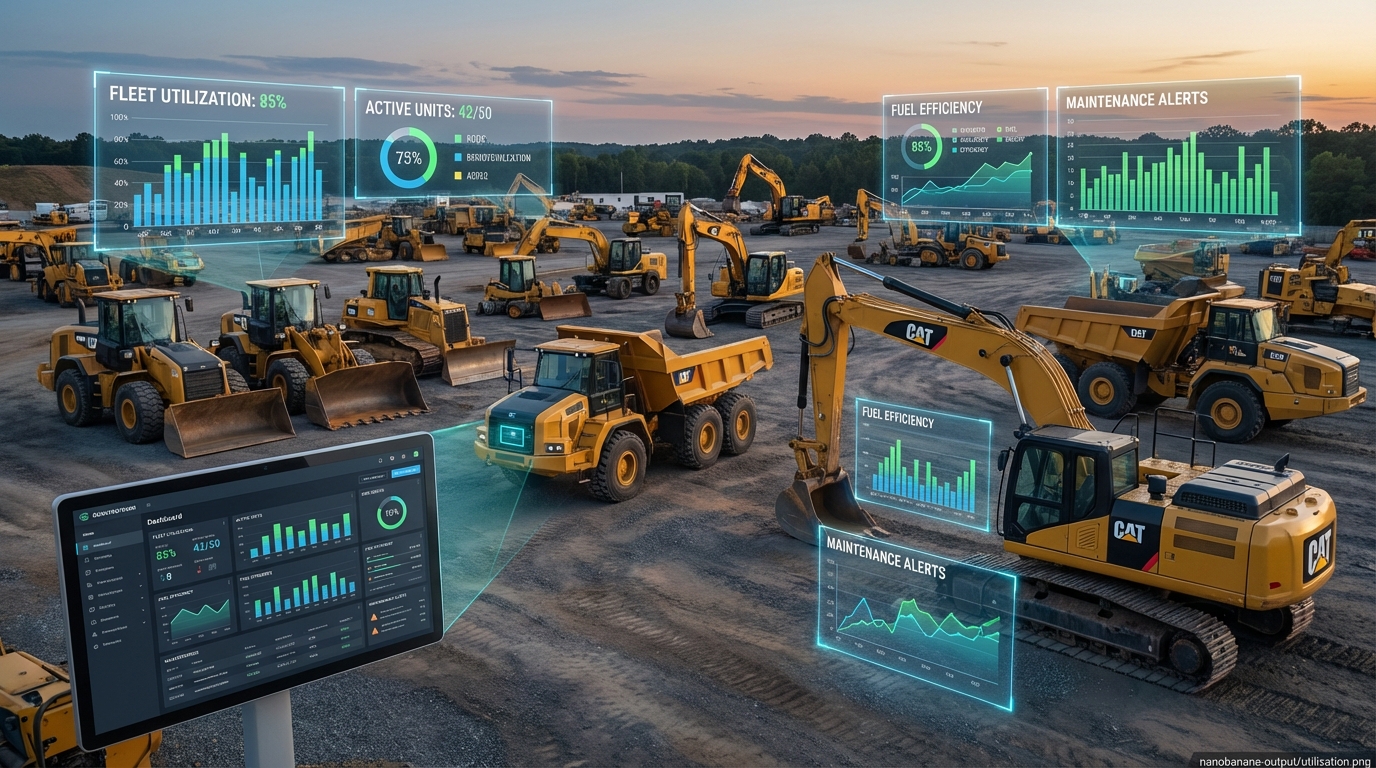
For a contractor operating a fleet of 50 pieces of heavy equipment, these improvements can translate to annual savings in the hundreds of thousands of dollars. But achieving these results requires sustained commitment to the technology, ongoing investment in data quality and integration, and organizational willingness to trust algorithmic recommendations.
The cost structures have also become more accessible. Cloud-based platforms have eliminated the need for on-premise servers and IT staff, while subscription pricing models spread costs over time rather than requiring large upfront investments. Entry-level predictive maintenance capabilities are now available for as little as $50-100 per machine per month, making the technology viable for smaller operations.
Looking Forward: The Maintenance-Free Future?
The ultimate vision driving much of this innovation is equipment that maintains itself—or at least manages its own maintenance with minimal human intervention. We’re not there yet, but the trajectory is clear.
Future heavy equipment will likely feature self-diagnosing systems that not only predict failures but automatically order replacement parts and schedule service appointments. Autonomous machines will route themselves for maintenance between shifts. Augmented reality systems will guide technicians through complex repairs using step-by-step visual overlays.
For fleet operators, the message is clear: predictive maintenance powered by artificial intelligence has moved from experimental technology to operational necessity. Those who embrace it gain advantages in uptime, cost efficiency, and equipment longevity. Those who don’t will increasingly find themselves at a competitive disadvantage as the industry’s best performers continue to raise the bar.
The era of reactive maintenance is ending. The question is no longer whether to adopt AI-powered predictive maintenance, but how quickly and effectively you can implement it across your fleet.
Have questions about implementing predictive maintenance in your fleet? Contact our editorial team at editor@equipmentinsiderhq.com.