John Deere Commits $20 Billion to US Manufacturing in Major Domestic Push
Heavy equipment giant announces decade-long investment including new excavator factory in North Carolina and distribution center in Indiana, reshoring production from Japan.
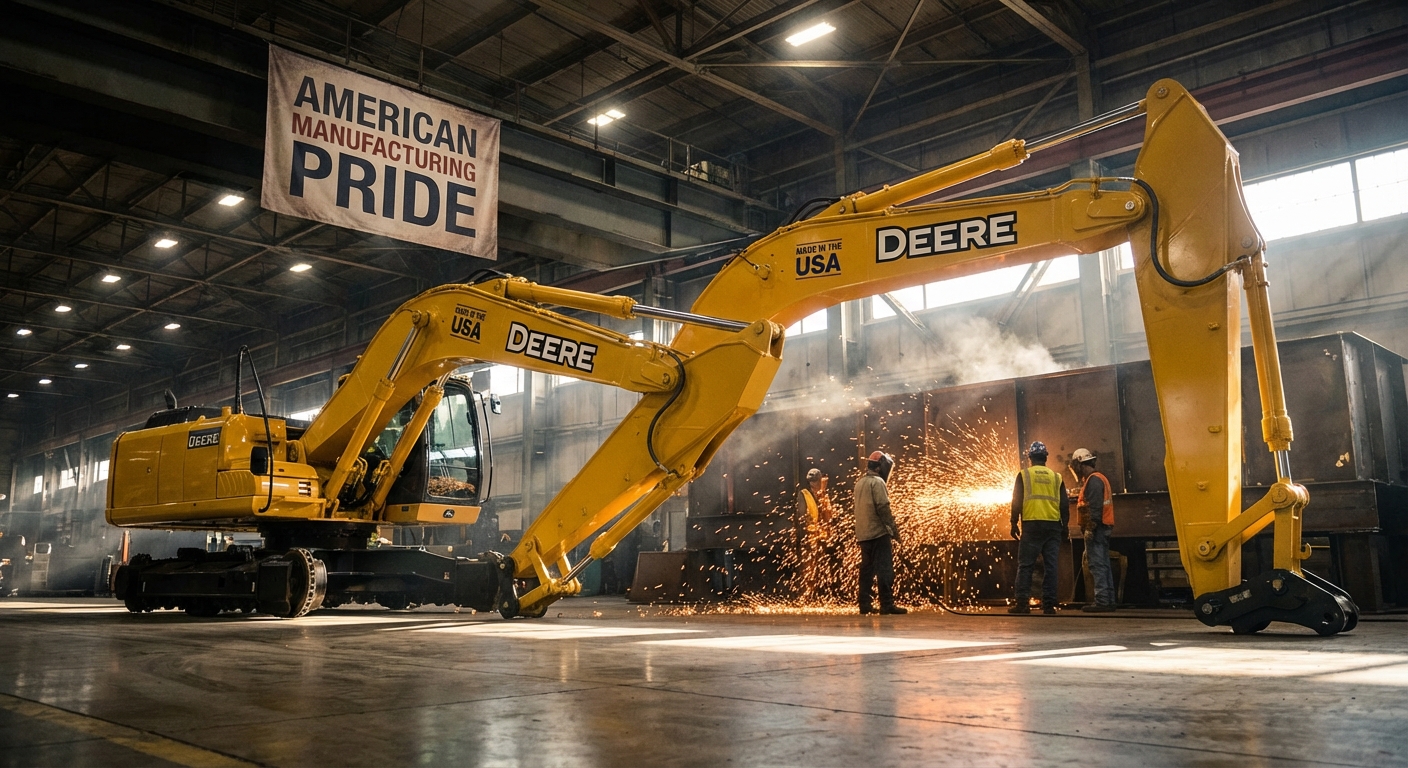
In what represents one of the largest domestic manufacturing commitments in the construction equipment industry’s recent history, John Deere has announced a staggering $20 billion investment in United States manufacturing operations over the next decade. The announcement signals a dramatic shift in the company’s production strategy and positions American workers at the center of the heavy equipment giant’s future.
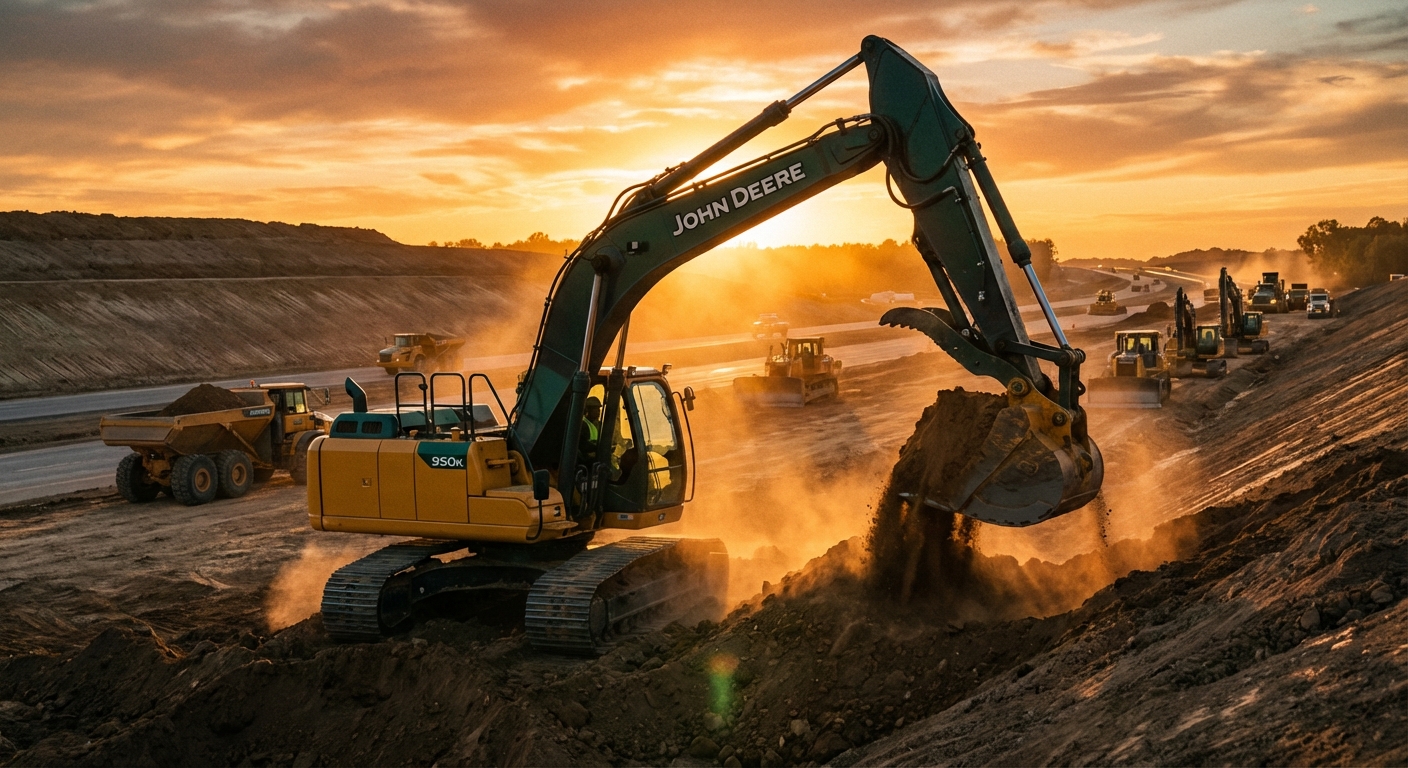
The investment package includes two major facility projects slated to come online within the next year: a new distribution center in Indiana and, perhaps more significantly, an excavator manufacturing facility in North Carolina. The North Carolina plant will produce next-generation excavators that were previously manufactured exclusively in Japan—marking a significant reshoring of high-value production to American soil.
Editor’s Note: Tracking equipment investments and maintenance across your fleet? FieldFix helps contractors monitor machine hours, maintenance schedules, and cost-per-hour metrics—essential data as equipment technology evolves.
The Scale of the Commitment
Twenty billion dollars over ten years works out to roughly $2 billion annually in sustained capital investment—a figure that dwarfs typical industry capital expenditure programs. To put this in perspective, this single commitment exceeds the combined annual capital spending of several mid-tier equipment manufacturers.
The investment arrives at a pivotal moment for American manufacturing. Supply chain disruptions over the past several years exposed vulnerabilities in overseas production dependencies. Rising shipping costs, geopolitical tensions, and increasing automation capabilities have shifted the economic calculus, making domestic production increasingly competitive with overseas alternatives.
For John Deere, a company with deep roots in American manufacturing history, the announcement represents both a return to tradition and a forward-looking strategic bet on American workers and infrastructure.
North Carolina: The New Excavator Hub
The excavator facility in North Carolina deserves particular attention. Excavators represent one of the most sophisticated and highest-margin product categories in the construction equipment portfolio. These machines require precision hydraulic systems, advanced electronic controls, and robust structural engineering—exactly the kind of high-value manufacturing that generates quality jobs and technological spillover effects.
By bringing excavator production from Japan to the United States, Deere accomplishes several strategic objectives simultaneously. First, it shortens supply chains and reduces exposure to shipping disruptions and currency fluctuations. Second, it positions the company to respond more quickly to North American market demands and regional customization requirements. Third, it creates a domestic center of excellence for excavator technology that can drive innovation cycles independent of overseas operations.
The “future-generation excavators” language used to describe the North Carolina facility’s output suggests these won’t simply be transplanted production lines. Rather, Deere appears to be using the transition as an opportunity to introduce next-generation machines—potentially incorporating advanced automation features, electrification technologies, or connectivity capabilities that would benefit from close integration with the company’s broader North American R&D infrastructure.
Indiana Distribution: The Logistics Backbone
While the excavator factory captures headlines, the Indiana distribution center represents equally critical infrastructure investment. Modern equipment distribution requires sophisticated logistics capabilities—parts availability, service support, and rapid delivery networks that can minimize machine downtime for customers whose operations depend on equipment uptime.
The Midwest location positions the facility to serve the heart of American construction and agricultural markets efficiently. Indiana’s central geography, established transportation networks, and manufacturing workforce make it an ideal hub for distribution operations that need to reach customers across multiple time zones quickly.
Distribution infrastructure often proves to be the hidden competitive advantage in equipment markets. A contractor whose machine goes down needs parts fast—the manufacturer that can deliver those parts fastest wins customer loyalty that transcends equipment specifications or price points.
Industry Context: A Competitive Response
Deere’s announcement doesn’t occur in a vacuum. The global construction equipment industry has entered a period of intense competition and rapid technological change. Caterpillar continues to invest heavily in North American operations. Komatsu has expanded its U.S. manufacturing footprint significantly. European and Asian manufacturers have increased their American production to serve the world’s largest equipment market more effectively.
The push toward equipment electrification adds another layer of competitive pressure. Electric and hybrid machines require different manufacturing capabilities than traditional diesel equipment—battery systems, power electronics, and thermal management components that benefit from proximity to growing domestic battery supply chains.
Deere’s $20 billion commitment positions the company to participate fully in this transition while maintaining its traditional strength in conventional equipment. The scale of investment suggests Deere intends not merely to keep pace with competitors but to establish manufacturing leadership that can sustain competitive advantage for decades.
Workforce Implications
A $20 billion manufacturing investment translates into thousands of jobs—both directly in the new facilities and indirectly through supply chain relationships with component manufacturers, service providers, and supporting industries.
North Carolina and Indiana will see significant employment impacts from the announced facilities. But the job creation extends beyond assembly line positions. Modern manufacturing requires engineers, technicians, quality specialists, logistics coordinators, and technology professionals. These facilities will likely become talent magnets that strengthen the broader industrial ecosystems in their regions.
The skilled trades pipeline deserves particular attention. Equipment manufacturing demands welders, machinists, electricians, and technicians with specialized skills. Investment announcements of this magnitude create demand signals that can help justify expansion of training programs, apprenticeships, and technical education offerings in affected regions.
Supply Chain Ripple Effects
When a company the size of John Deere commits to expanded domestic production, the effects ripple outward through entire supply networks. Component manufacturers, steel suppliers, hydraulic systems producers, and electronics vendors all face decisions about expanding their own domestic capabilities to serve a major customer with growing U.S. production.
This multiplier effect often generates economic impacts several times larger than the initial announced investment. A single excavator contains thousands of components from dozens of suppliers. Localizing final assembly creates incentives for those suppliers to establish or expand their own domestic production—particularly for heavy or bulky components where shipping costs matter.
The result can be industrial cluster development that strengthens American manufacturing capabilities across multiple industries. Skills developed for equipment manufacturing transfer to other sectors. Supplier relationships established for one program can support others. Regional industrial ecosystems become self-reinforcing in ways that sustain economic activity long after initial investments.
Looking Ahead to CONEXPO 2026
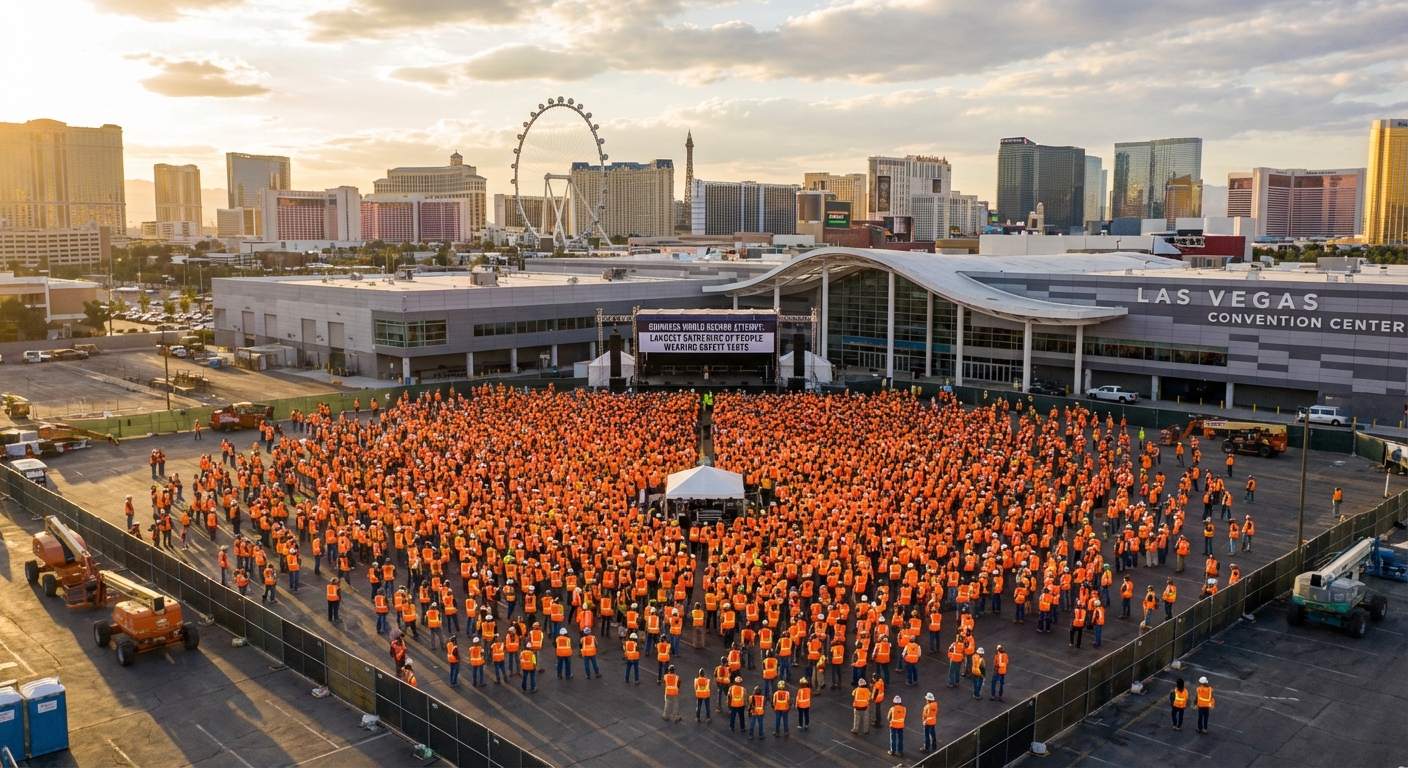
The timing of Deere’s announcement, coming just weeks before CONEXPO-CON/AGG 2026 in Las Vegas, seems unlikely to be coincidental. The industry’s largest trade show, scheduled for March 3-7, provides a natural platform for Deere to elaborate on its investment plans and potentially showcase technology that the new facilities will produce.
Industry observers should expect more details on the excavator program in particular. What technologies will differentiate “future-generation” machines from current offerings? What timeline for North Carolina facility construction and production ramp-up? How will the reshoring affect existing Japanese production and the broader Deere global manufacturing network?
These questions will shape competitive dynamics across the excavator segment for years to come. Competitors will need to assess whether Deere’s domestic production gambit changes the competitive equation in ways that require responses of their own.
The Broader Manufacturing Renaissance
Deere’s announcement fits within a broader pattern of manufacturing investment returning to the United States. Federal incentive programs, supply chain security concerns, automation advances that reduce labor cost differentials, and growing consumer preference for domestically produced goods have combined to shift investment patterns.
The construction equipment industry, with its heavy products, complex supply chains, and proximity-sensitive service requirements, represents fertile ground for this reshoring trend. Machines that weigh tens of thousands of pounds cost significant money to ship across oceans. Customers who need parts and service quickly benefit from geographically proximate support infrastructure.
Whether Deere’s $20 billion bet proves prescient will ultimately depend on factors beyond any single company’s control—trade policy, energy costs, workforce availability, and competitive responses. But the scale and confidence of the commitment suggests Deere’s leadership believes the fundamentals favor American manufacturing in the construction equipment industry’s future.
Conclusion
John Deere’s $20 billion domestic manufacturing investment represents a defining commitment to American production at a pivotal moment for the industry. The new excavator factory in North Carolina and distribution center in Indiana will create jobs, strengthen supply chains, and position one of the world’s leading equipment manufacturers for the technological transitions ahead.
For contractors, dealers, and industry professionals, the announcement signals continued innovation and investment in the equipment they depend on daily. For the broader American manufacturing sector, it demonstrates that world-class production of sophisticated industrial equipment can thrive domestically when companies commit the capital and strategy required.
The equipment will ultimately speak for itself—but the manufacturing foundations being laid today will shape what that equipment looks like for decades to come.