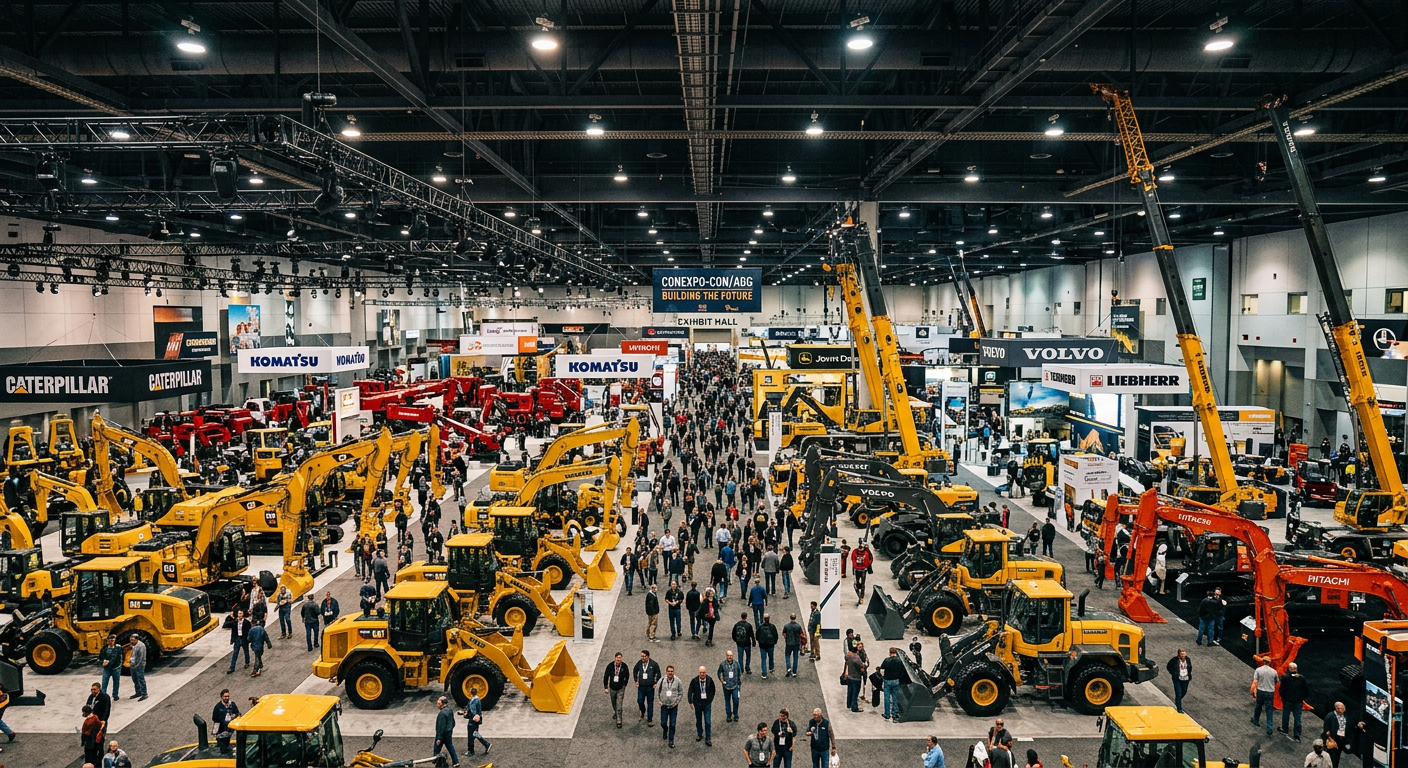
Autonomous Equipment Is No Longer a Concept — CONEXPO 2026 Proves It
Caterpillar, Dynapac, Bobcat, and Hitachi are all bringing autonomous machines or AI-powered tools to Las Vegas this week. The technology gap between demo and deployment is closing fast.
Three years ago at CONEXPO 2023, autonomous construction equipment was a novelty. OEMs wheeled out prototypes, gave polished stage demos, and talked about “the future.” Most contractors walked away thinking autonomous machines were still a decade out from their jobsites.
They were wrong. And CONEXPO 2026, which opens tomorrow in Las Vegas, is about to prove it.
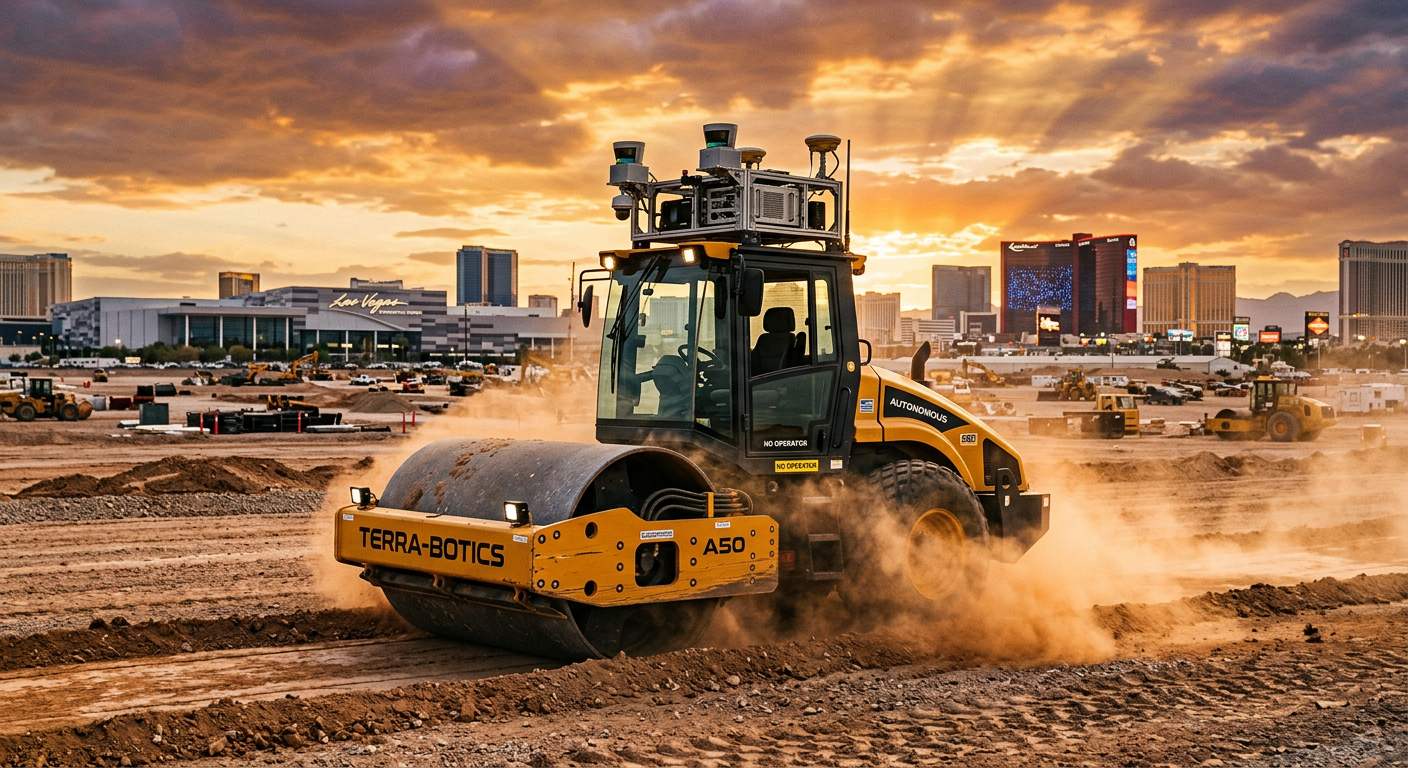
This year’s show floor tells a different story. Caterpillar isn’t showing a concept — it’s demonstrating its first autonomous soil compactor, the Cat CS12, running real passes without an operator. Dynapac partnered with Bluelight Machines to run live autonomous compaction demos using production-grade rollers. Bobcat is bringing the RogueX3, a fully electric autonomous loader. Hitachi is showing Assist Pro, an AI agent that reads equipment manuals, processes images, and gives operators real-time troubleshooting guidance.
These aren’t renders or artist impressions. They’re machines you can watch work.
Editor’s Note: Tracking Your Fleet in the Autonomy Era
As equipment gets smarter, so should your maintenance tracking. FieldFix helps contractors log service, track costs per hour, and get AI-powered diagnostics — whether your machines have operators or not. Free for up to 3 machines.
The Compaction Problem Got Solved First
It’s not a coincidence that compaction is where autonomous tech is hitting the market first. Compaction is repetitive, pattern-based work. A roller runs back and forth over the same area in overlapping passes. The variables are speed, number of passes, and coverage area. That’s exactly the kind of task that machines handle better than humans.
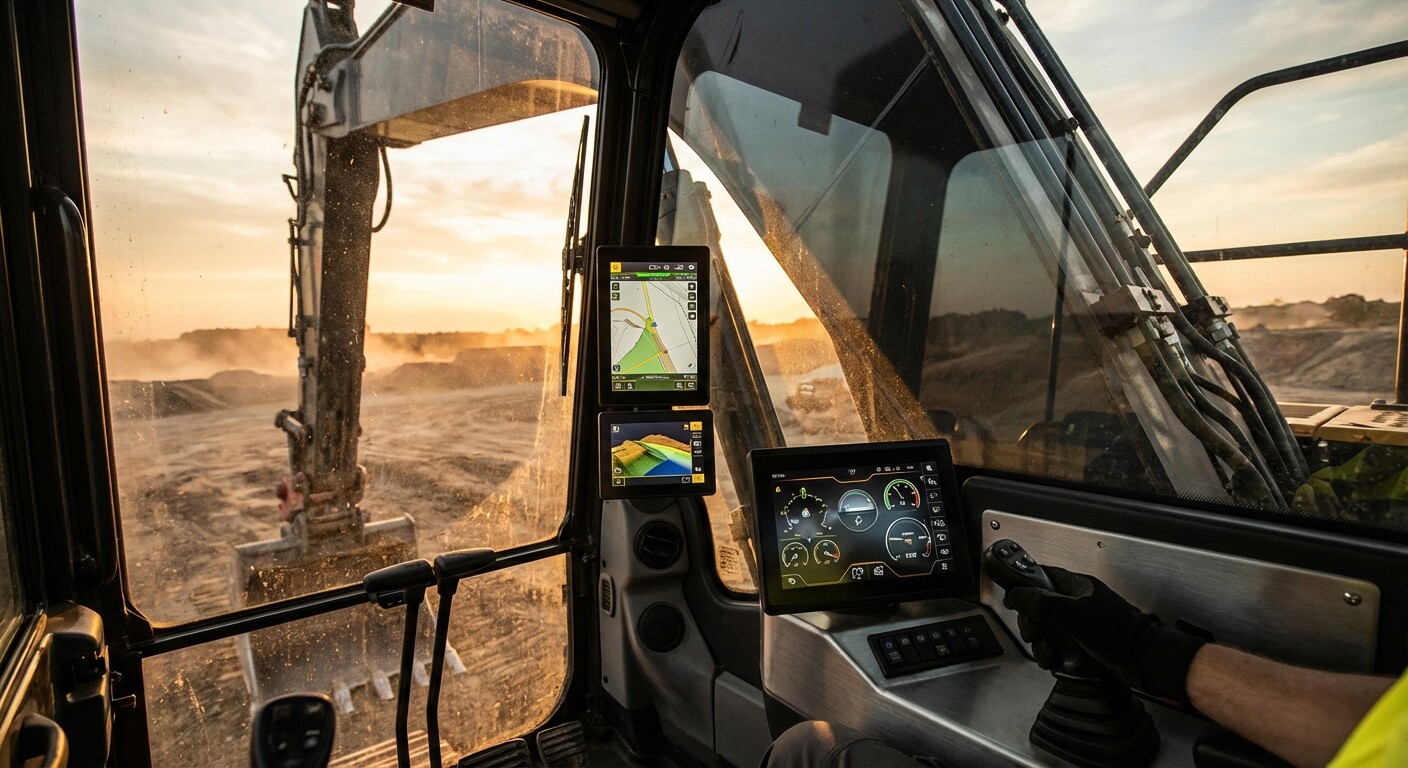
Caterpillar’s CS12 autonomous compactor uses GPS, machine control sensors, and onboard computing to execute compaction plans without a human in the cab. The operator sets the zone, defines the pass pattern, and the machine does the rest. The company has been testing this on real jobsites, not just demo pads, and the results are consistent: tighter pass overlap, more uniform density, and zero fatigue-related errors.
Dynapac took a different approach by partnering with Bluelight Machines, a Swedish autonomy startup. Their CONEXPO demo pairs a Dynapac CA2500D Seismic Soil Roller with Bluelight’s autonomy platform. The idea is that you don’t need to buy a purpose-built autonomous machine — you retrofit existing iron with autonomy software. That’s a big deal for contractors who aren’t ready to replace their fleet but want to test the technology.
The compaction use case works because the stakes are manageable. A compactor operates in a defined area at low speed. If something goes wrong, the consequences are a bad pass, not a catastrophic failure. That low-risk environment made it the ideal proving ground, and now the proofs are stacking up.
Bobcat Bets Big on Electric + Autonomous
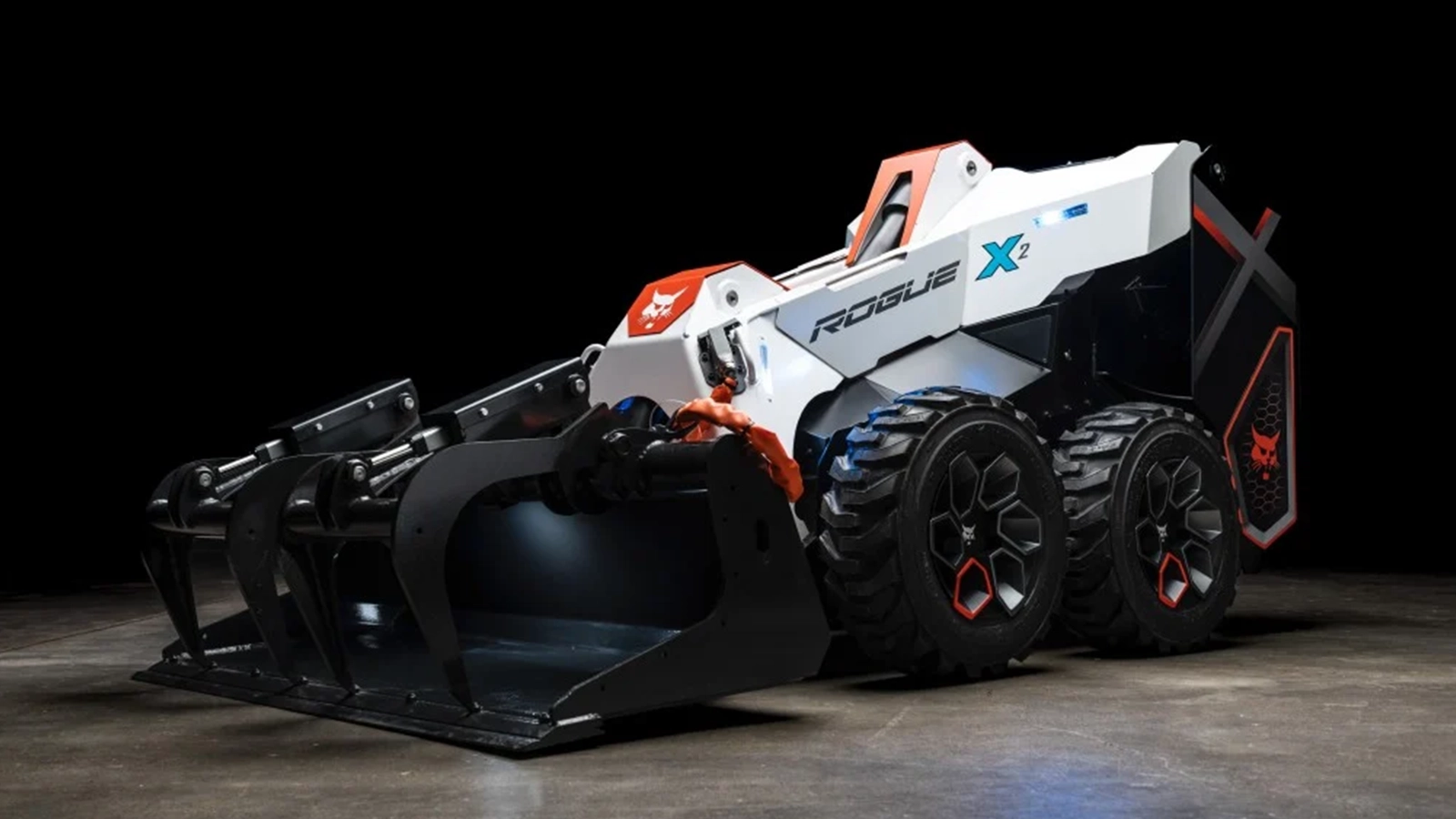
Bobcat’s RogueX3 is the most visually striking machine at the show, and the company knows it. The fully electric, fully autonomous concept loader looks like something from a construction equipment fever dream — no cab, no engine compartment, just a compact platform with tracks, a bucket, and a sensor array.
But the RogueX3 is more than a crowd-pleaser. It represents Bobcat’s bet that autonomy and electrification aren’t separate trends — they’re the same trend. Electric drivetrains are simpler than diesel, with fewer moving parts and more precise motor control. That simplicity makes autonomous operation easier to implement and maintain.
Bobcat has also been investing in AI and connectivity across its existing product line. The CONEXPO booth will show how the company is layering intelligence into machines that contractors already own, from telematics upgrades to predictive maintenance alerts. The RogueX3 grabs headlines, but the real revenue play is making current machines smarter.
AI Moves From the Back Office to the Cab
Hitachi Construction Machinery’s Assist Pro might be the sleeper hit of CONEXPO 2026. It’s not a machine — it’s an AI agent that lives on a tablet or phone and helps operators solve problems in the field.
Feed it a photo of a warning light, a description of a strange noise, or a question about a service interval, and Assist Pro pulls from equipment manuals, service bulletins, and diagnostic databases to give you an answer. It can process images, read schematics, and suggest next steps.
This matters because the construction industry’s labor shortage isn’t just about operators. It’s about experienced mechanics, service technicians, and fleet managers who know what that grinding sound means without looking it up. Every year, more of those people retire, and their institutional knowledge walks out the door with them. AI tools like Assist Pro don’t replace that experience, but they make it accessible to less experienced workers who need answers fast.
Procore is hitting a similar theme at the show. Their CONEXPO session, “Iron, Data, and Dust: The Real Future of Automation and the Workforce,” focuses on how automation should handle the repetitive administrative work — scheduling, documentation, risk flagging — that eats up skilled workers’ time. The argument is straightforward: don’t automate the work that requires judgment. Automate the busywork that prevents people from using their judgment.
The Labor Math That’s Driving All of This
Every conversation about autonomous equipment eventually comes back to one number: the construction industry needs an estimated 500,000+ additional workers in the U.S. alone to meet current demand. That number has been climbing for years, and nothing — not higher wages, not recruitment campaigns, not immigration policy — has made a meaningful dent.
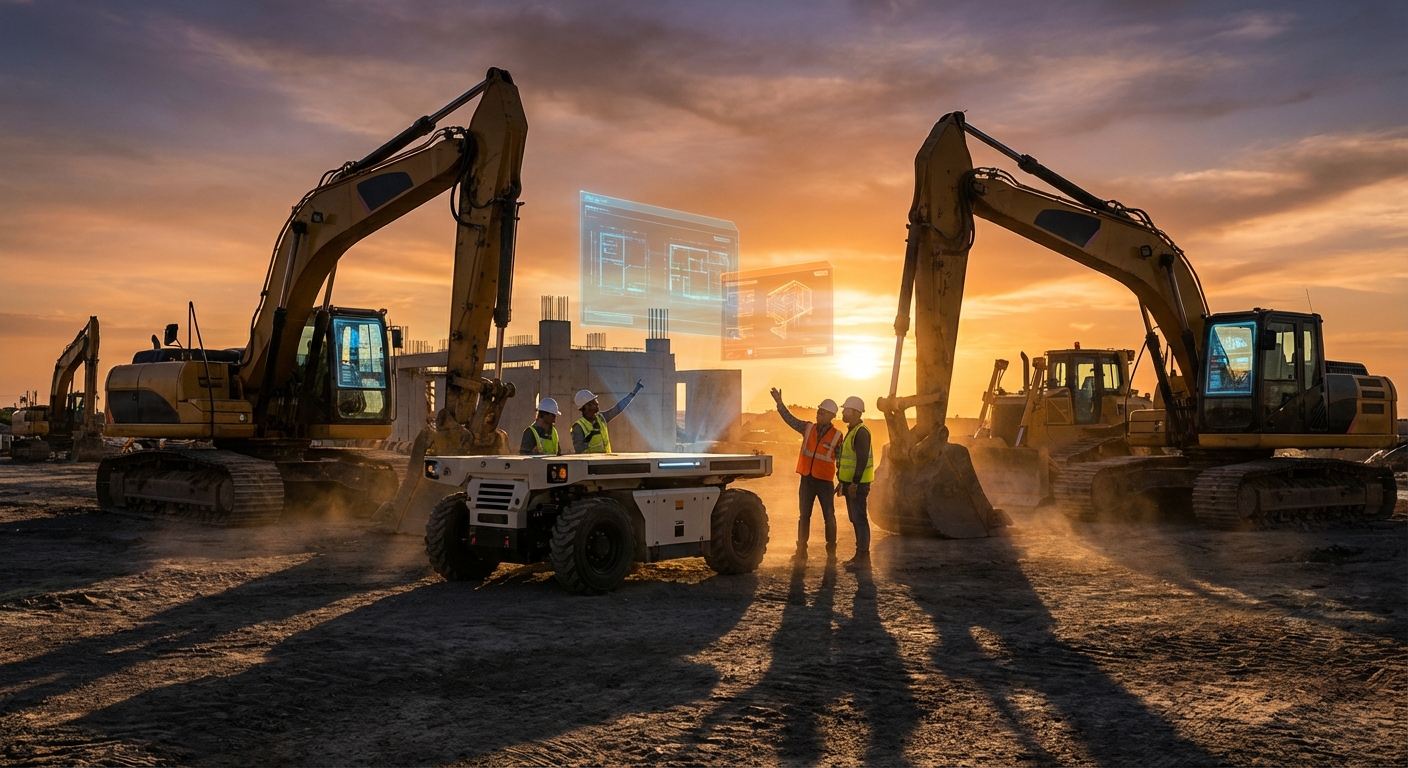
Autonomous machines don’t solve the labor shortage directly. They change the math. One operator monitoring three autonomous compactors produces more output than three operators each running one machine manually. A fleet manager using AI diagnostics can oversee more equipment with less downtime. A project manager with real-time automated reporting spends less time in spreadsheets and more time solving problems.
The OEMs at CONEXPO aren’t selling robots that replace workers. They’re selling tools that let a shrinking workforce handle more work. That distinction matters, because it’s what will actually get contractors to buy in.
What’s Holding It Back
For all the progress on display this week, autonomous equipment still has real barriers to widespread adoption.
Cost is the obvious one. Autonomous-capable machines carry a price premium, and retrofit kits aren’t cheap either. For small and mid-size contractors running tight margins, the ROI calculation has to be compelling before they’ll commit.
Regulation is murky. There’s no unified federal framework for autonomous construction equipment in the U.S. State and local regulations vary. Insurance carriers are still figuring out how to underwrite autonomous operations. Until the regulatory picture clears up, larger contractors will move first while smaller operations wait and watch.
Trust takes time. Operators who’ve been running iron for 20 years aren’t going to hand the controls to a computer overnight. The transition will happen machine by machine, task by task. Compaction first, then grading, then excavation. Each step builds confidence for the next one.
Connectivity on remote sites is still spotty. Many autonomous systems rely on GPS, cloud connectivity, or real-time data links. Jobsites in rural areas or dense urban canyons don’t always have reliable coverage. Until connectivity improves — or machines get better at operating with intermittent connections — deployment will be uneven.
The Three-Year Window
If CONEXPO 2023 was the concept show for autonomous equipment and CONEXPO 2026 is the proof-of-concept show, then CONEXPO 2029 will likely be the deployment show. The companies demonstrating in Las Vegas this week aren’t doing it for press coverage. They’re doing it because they have production timelines.
Caterpillar’s autonomous compactor isn’t a prototype — it’s a product roadmap item. Dynapac and Bluelight are actively selling retrofit solutions. Bobcat is building toward a future where autonomy is a standard feature, not an option package.
For contractors watching from the sidelines, the window to “wait and see” is getting shorter. The early adopters won’t just have newer machines — they’ll have operational data, refined workflows, and a workforce trained on the technology. That head start compounds.
The machines at CONEXPO 2026 aren’t the future of construction. They’re the present, running on a three-year delay for most of the industry. How fast that gap closes depends on cost, regulation, and trust. But the technology question — “can it actually work?” — got answered this week in Las Vegas.
The answer is yes.