CASE Just Bought Its Way Into the Grader Game — And It Might Actually Work
CASE Construction Equipment partnered with South Africa's Bell Equipment to launch three motor graders above 200 HP. Here's why this deal matters for the North American grader market.
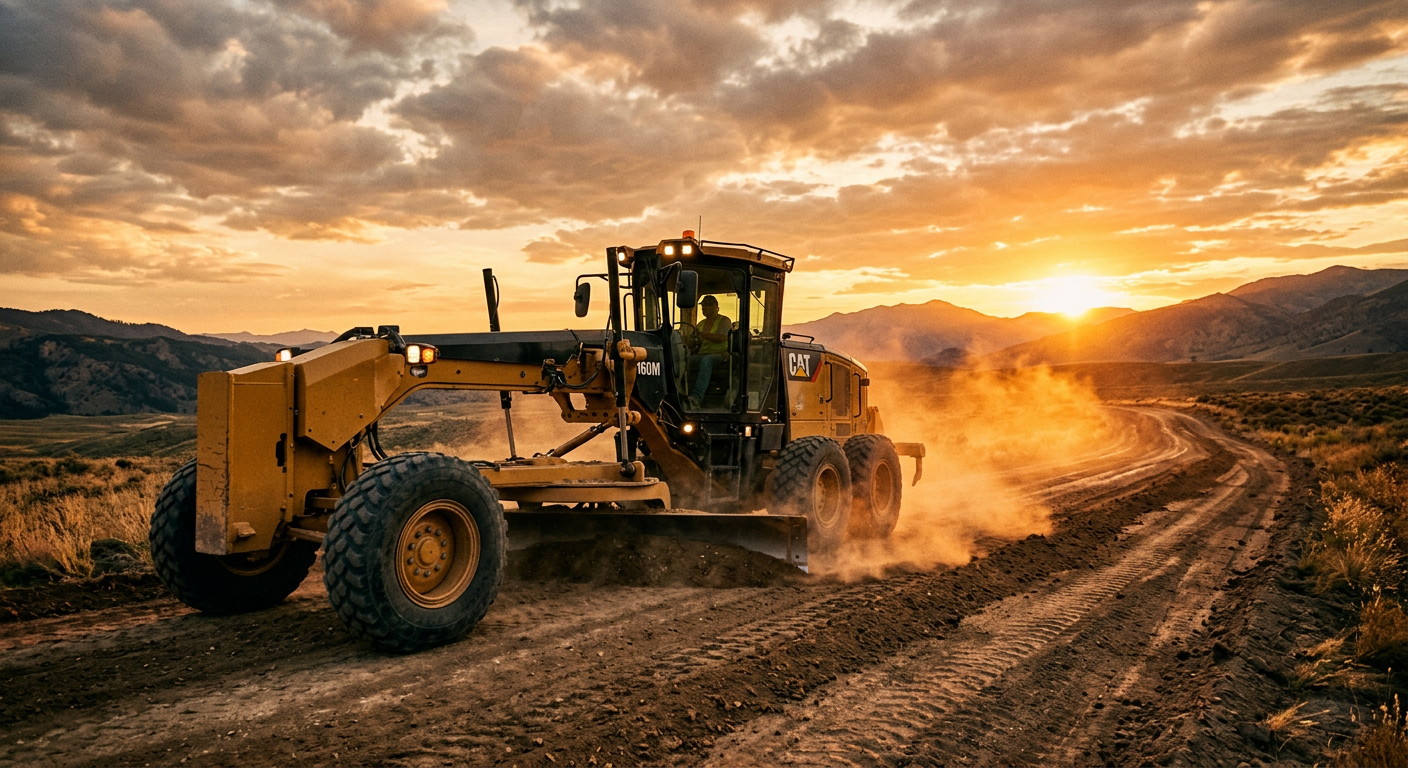
CASE Construction Equipment just made one of the more interesting moves at CONEXPO 2026. Instead of spending years and hundreds of millions developing a new line of large motor graders in-house, they went and partnered with Bell Equipment — a South African manufacturer most American contractors have barely heard of — to bring three new graders above 200 HP to the North American market.
The biggest of the bunch is the 325-horsepower GR935, which CASE showcased on the show floor in Las Vegas. First deliveries are expected in Q4 2026, with CASE holding exclusive distribution rights across the U.S. and Canada.
It’s a shortcut. And it might be a smart one.
Editor’s Note: Whether you’re running graders or mulchers, tracking your fleet’s real costs is the difference between profit and guesswork. FieldFix helps equipment operators log maintenance, calculate cost-per-hour, and get AI diagnostics on any machine in their fleet. Free for up to three machines.
Why CASE Needed This
CASE has been selling motor graders for a long time. Their D-series machines — the 836D and 856D — are solid units. But they’ve been limited to the sub-200 HP range, which keeps them out of the big-dollar government and DOT contracts where the serious grader money lives.
The problem is straightforward: state and county road departments buy graders in the 200-350 HP range. If your dealer doesn’t carry anything in that class, you don’t even get invited to bid. CASE has been watching Cat, John Deere, and Komatsu split that market while their dealers had nothing to offer.
Building a new grader line from scratch would take years and cost a fortune. The R&D, the tooling, the testing — you’re looking at a five-year timeline minimum before you have a production-ready machine. By partnering with Bell, CASE gets market-ready machines by the end of this year.
Who Is Bell Equipment?
If you work in North America, you probably know Bell for their articulated dump trucks. The company is headquartered in Richards Bay, South Africa, and they’ve been building heavy equipment since 1954. They’re one of the few African-born OEMs that compete globally.
Bell’s motor grader line includes the G140, G160, and G200 — machines built for everything from road maintenance to mining. They run Cummins engines and ZF transmissions, which is important because it means parts and service support already exist in North America. No proprietary powertrains that leave you waiting six weeks for a part from Durban.
Bell showed their grader range at Bauma in 2024 and started rolling them into developing markets in 2025. The CASE deal gives them a way into the most competitive equipment market on earth without building their own dealer network from scratch.
The Three New Models
CASE hasn’t released full spec sheets yet, but here’s what we know:
The GR935 is the flagship at 325 HP. This is a machine aimed at heavy construction and large-scale road projects. At that power class, it competes directly with the Cat 16 and the Deere 872GP.
The other two models fill out the 200-250 HP and 250-300 HP ranges, though CASE hasn’t confirmed exact model designations. All three will be manufactured at Bell’s facilities and distributed exclusively through CASE dealers in the U.S. and Canada.
The Cummins engine and ZF transmission combo is a deliberate choice. Contractors and fleet managers care about serviceability. A proprietary powertrain on a machine from a manufacturer you’ve never used before is a tough sell. Cummins and ZF eliminate that objection — every diesel shop in the country can work on these components.
What This Means for the Grader Market
The North American motor grader market has been a three-horse race for decades. Caterpillar dominates, John Deere holds steady, and everyone else fights for scraps. Komatsu and Volvo have pieces of the market, but nobody’s seriously threatened the top two.
CASE entering the 200+ HP segment doesn’t flip the table overnight. But it does something important: it gives CASE dealers a complete lineup. A county road department that already buys CASE backhoes and wheel loaders now has a reason to look at CASE graders too. That’s how market share shifts — not through one machine, but through a full product line that makes single-source purchasing possible.
For contractors, more competition in this segment is good news. Grader pricing has been climbing steadily, and lead times haven’t improved much since the supply chain mess of 2022-2023. Another serious player in the market puts pressure on pricing and availability.
The Risks
This deal isn’t without questions.
First, Bell Equipment has limited brand recognition in North America outside of their ADT business. Contractors buying a $500,000+ motor grader want to know the manufacturer will be around in 10 years and that parts support won’t dry up. Bell has been in business for 70 years, but that history is mostly in Africa, Europe, and Australia. They need to prove themselves here.
Second, the machines are manufactured in South Africa. That introduces currency risk, shipping logistics, and potential tariff exposure — especially given the current trade environment. CASE will need to manage the supply chain carefully to keep lead times competitive with domestically manufactured alternatives.
Third, dealer readiness is a real concern. CASE dealers will need training on machines they’ve never touched before. Service manuals, parts inventories, technician certification — all of that has to be in place before Q4 deliveries start. Dealers who fumble the launch will create exactly the kind of bad first impression that kills a new product line.
The Bigger Picture
This partnership is part of a broader trend: OEMs buying or licensing their way into product gaps rather than developing everything internally. It’s faster, cheaper, and lower risk than ground-up R&D. We’ve seen it with Kubota licensing Ariat dozers, DEVELON (formerly Doosan) expanding through acquisitions, and now CASE bringing in Bell graders.
The equipment industry is consolidating and cross-pollinating at the same time. Companies are getting more willing to admit they can’t build everything themselves. That’s not a weakness — it’s practical. If Bell builds a better grader than CASE could design in-house for twice the cost and half the timeline, the partnership makes sense for everyone involved.
CNH Industrial, CASE’s parent company, reported strong construction equipment revenue in 2025. They have the dealer network and the financial backing to support a proper grader launch. The question is execution.
What to Watch
Q4 2026 deliveries. The timeline is ambitious. Any slippage will hurt credibility with dealers and customers who’ve been promised machines.
Pricing. CASE needs to come in competitive with Cat and Deere. If the Bell-manufactured machines carry a price premium because of shipping and import costs, the value proposition falls apart.
Parts availability. The Cummins/ZF powertrain helps, but there are hundreds of other components on a motor grader. CASE needs robust parts support from day one.
Government bids. The real test is whether state DOTs and county road departments will spec CASE graders into their bids. That takes time, relationships, and a track record — which Bell doesn’t have in North America yet.
The Bottom Line
CASE made a calculated bet that partnering with an experienced but relatively unknown grader manufacturer is better than spending five years and a few hundred million dollars building their own. The logic is sound. Bell builds proven machines with common components. CASE has the dealer network and the market access.
If they execute the launch well — competitive pricing, reliable parts support, trained dealers — this could meaningfully change the grader market within a few years. If they stumble on any of those fronts, it becomes another cautionary tale about why shortcuts don’t always work in heavy equipment.
Either way, Cat and Deere just got something they haven’t had in the grader segment for a while: a reason to pay attention to CASE.