JCB's New 250T Compact Track Loader Has a Side Door — And That Changes Everything
JCB brought a new 74-hp compact track loader to CONEXPO 2026 with their signature side-entry cab and single-arm boom. Here's why it matters for contractors shopping the mid-size CTL market.
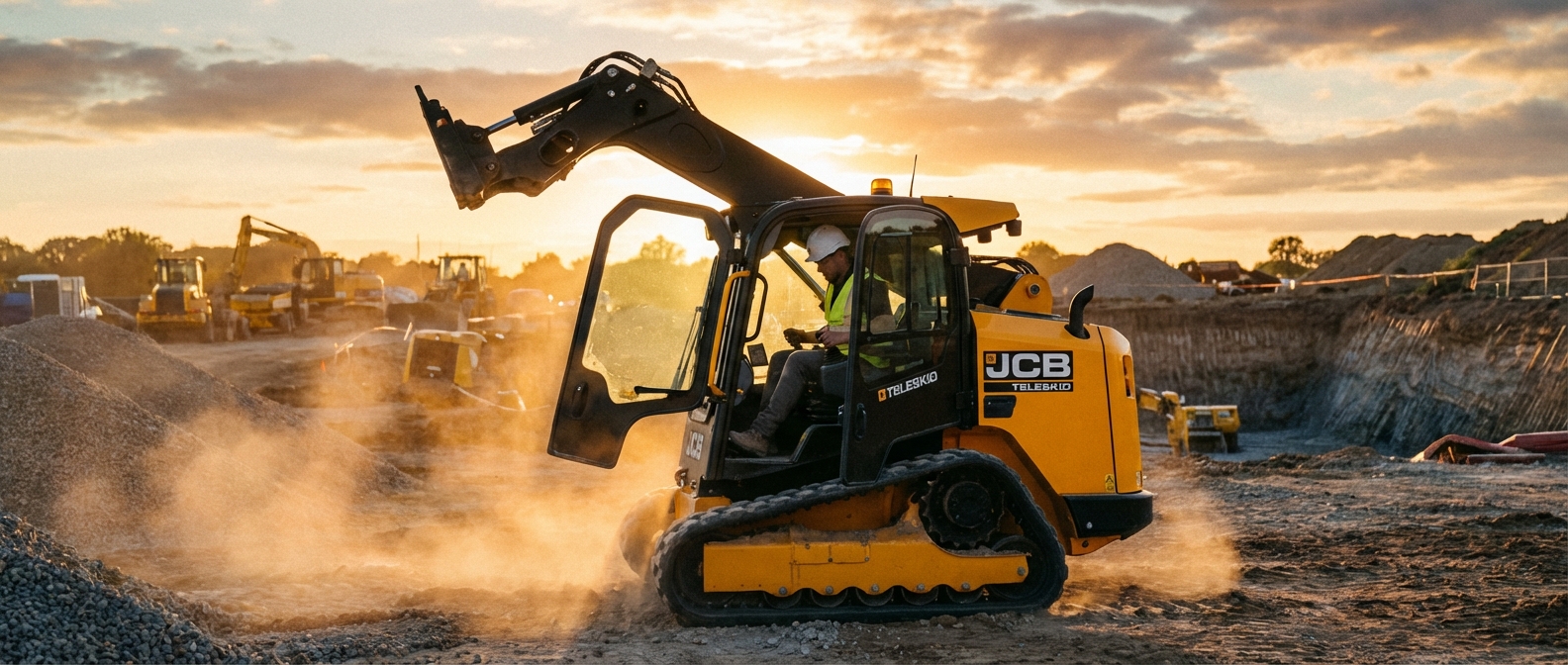
JCB just dropped a new compact track loader at CONEXPO 2026, and it’s not trying to out-spec the competition on paper. The 250T is a 74-horsepower, vertical-lift CTL with a 2,429-pound rated operating capacity. Those numbers put it squarely in the mid-size category where Bobcat, Cat, John Deere, and Case all have strong options.
But the 250T has something none of those machines have: a side door.
Editor’s Note: Tracking machine specs, service intervals, and cost-per-hour across your fleet? FieldFix makes it simple — log maintenance, monitor expenses, and get AI diagnostics for your heavy equipment. Free for up to 3 machines.
The Side-Entry Thing Isn’t a Gimmick
If you’ve ever watched someone climb over a bucket to get into a skid steer, you already know why JCB’s approach is different. The standard way into a CTL or skid steer is over the front — step on the tire or track, swing over the attachment, and drop into the seat. It’s awkward, it’s slow, and it’s one of the most common causes of operator injuries in the compact equipment world.
JCB’s 250T has a door on the left side of the cab. You open it and step in, like getting into a truck. No climbing over a grapple bucket. No slipping on a muddy track frame.
This isn’t new for JCB — they’ve used side-entry cabs on their compact loaders for years. But every new model they put it on is a reminder that the rest of the industry still hasn’t copied the idea. Lee Tice, JCB’s senior product manager for compact equipment, has pointed out that stepping over front attachments is one of the most common causes of skid steer injuries. The side door removes that risk entirely.
The Single-Arm Boom Gives You Eyes
The other half of JCB’s design philosophy is the single-arm boom. Instead of two lift arms framing the cab (the standard design on every other CTL), the 250T runs one boom up the right side.
The practical result: 270-degree visibility from the operator’s seat. There’s no arm blocking your view to the left, and the side door means you have glass or open air on that whole side of the machine. For operators working around crews, traffic, or obstacles, that visibility is a real advantage.
It also means the cab itself is bigger. JCB says the 250T’s cab is 46% larger than competitive CTLs in its size class. That’s a big claim, but anyone who’s sat in a JCB compact loader knows the cab feels roomier than most.
What’s Under the Hood
The 250T runs a JCB Diesel by Kohler engine — 74 horsepower, Tier 4 Final compliant. The important detail here: no DPF and no DEF. The engine meets emissions standards without a diesel particulate filter or diesel exhaust fluid.
For contractors, that means two fewer things to worry about. No regen cycles interrupting your work. No DEF tank to keep filled. No DPF to eventually clog and need service. The Kohler-based engine handles emissions through a simpler exhaust system, and that’s a legitimate selling point for anyone who’s dealt with DPF headaches on other machines.
Specs That Matter
Here’s where the 250T sits in the market:
Operating weight: 9,870 pounds. That’s light enough to tow with a ¾-ton pickup on a standard trailer. No CDL required. For contractors running multiple jobsites, that portability is worth something.
Hinge-pin height: 9 feet 11 inches. The vertical-lift design is built for loading trucks and handling palletized materials. If your work is mostly grading and pushing, a radial-lift machine might suit you better, but for loading and lifting, vertical is the way to go.
Hydraulic flow: 18.5 gpm standard, with a high-flow option up to 30.4 gpm. That high-flow option opens the door to running mulching heads, cold planers, and other demanding attachments. The standard flow handles buckets, pallet forks, augers, and most everyday tools without issue.
Travel speed: 7.8 mph. Not the fastest in class, but adequate for getting around a jobsite.
Ground pressure: 5 psi. With 15.7-inch tracks, you’re putting minimal pressure on soft ground. Good for working in wet conditions or on finished surfaces where you don’t want to tear things up.
The Cab Gets an Upgrade
Beyond the side entry, JCB put some work into the operator experience on the 250T.
The new touchscreen display is mounted on the upper right side of the cab — a better position than knee-level screens that force you to look down. Operators can adjust joystick sensitivity through the touchscreen, set reversing-fan intervals, and use a new job timer. It’s not the most advanced display system in the CTL world (Cat’s system is hard to beat), but it covers the basics and puts the controls where you can actually see them.
Other cab features include a standard backup camera, a choice of ISO or H-pattern controls, and a radio with an auxiliary port. The ISO/H-pattern option is worth noting — some operators have strong preferences, and being able to switch without hardware changes is table stakes at this point, but not every manufacturer offers it cleanly.
The cab tilts forward for service access, and JCB says one person can operate the tilt mechanism. Ground-level service points and a large rear service door make daily maintenance checks straightforward.
How It Stacks Up
The 250T competes directly with machines like the Bobcat T64 (the new Classic lineup), Cat 259, Case TV370B, and Deere 331G. At 74 horsepower and 2,429 pounds ROC, it’s right in the middle of the pack on raw specs.
Where it stands apart is the cab design. No other manufacturer in this class offers side entry or a single-arm boom. That’s been JCB’s calling card for years, and it remains a genuine differentiator.
The no-DPF, no-DEF engine is another advantage, though Bobcat’s new Classic lineup also emphasizes simplified maintenance and lower fluid costs. The trend toward simpler, more serviceable machines is real, and JCB has been on that track longer than most.
The trade-off? JCB’s dealer network in North America is smaller than Bobcat, Cat, or Deere. Parts availability and service turnaround times vary by region. For contractors in areas with strong JCB dealer coverage, the 250T is a compelling option. For those without a JCB dealer nearby, that’s a real consideration that specs alone can’t overcome.
The Quick-Coupler Question
The 250T comes with a quick coupler compatible with JCB’s attachments and other brands’ universal-mount tools. JCB uses a skid steer universal quick-attach plate, so your existing buckets, forks, and attachments should bolt right on.
The Powerboom design routes hydraulic hoses inside the boom structure, protecting them from impact and snags. It’s a small detail, but anyone who’s caught a hose on a tree limb or piece of rebar knows how expensive and annoying a blown hose can be.
Bottom Line
The JCB 250T isn’t trying to win a horsepower war or claim the highest rated operating capacity in its class. It’s betting that operators care more about getting in and out of the machine safely, seeing what’s around them, and not dealing with DPF problems.
That’s a bet worth watching. The compact track loader market is crowded and competitive, with CONEXPO 2026 bringing new entries from almost every major manufacturer. But JCB’s side-entry design remains unique in the industry, and the 250T packages it with enough capability to handle the work most contractors need done.
If you’re in the market for a mid-size CTL and you have a JCB dealer in your area, the 250T deserves a demo. Get in through the side door once, and climbing over a bucket on any other machine will feel like going backwards.
The JCB 250T was unveiled at CONEXPO 2026 in Las Vegas. Pricing has not been announced. Contact your local JCB dealer for availability.
Sources: Equipment World, JCB