CNH Is Shopping Its Construction Business Around — Here's What That Means
After a 60% drop in construction segment profits, CNH Industrial is openly looking for a partner to prop up the Case CE and New Holland Construction brands. The question is who bites.
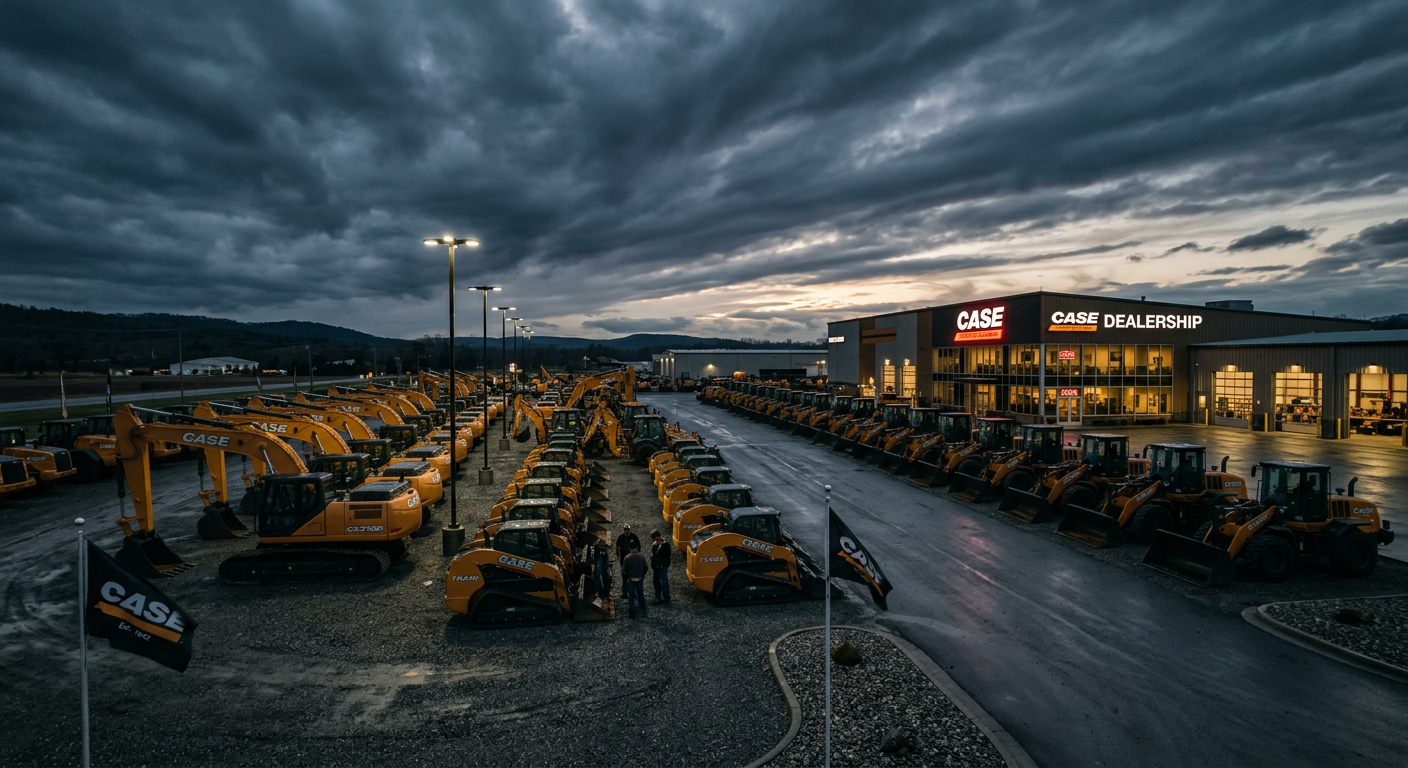
CNH Industrial just told Wall Street what a lot of industry watchers had already suspected: the company’s construction equipment business isn’t pulling its weight, and leadership is actively looking for outside help.
During its recent earnings call, CNH CEO Gerrit Marx confirmed that the company has “restarted discussions with several players about partnering options” for its construction segment, which includes both Case Construction Equipment and New Holland Construction. The announcement came alongside full-year 2025 numbers that paint a rough picture — construction net sales dropped 3% to just under $3 billion, and adjusted EBIT cratered 60% year-over-year to $68 million.
FieldFix Editor’s Note: Whether you’re running Case, New Holland, or any other brand, knowing your true cost-per-hour matters more than the logo on the door. FieldFix tracks maintenance, fuel, and operating costs across your entire fleet — no matter who made the iron.
The Numbers Tell the Story
Let’s not sugarcoat it. CNH’s construction division had a brutal 2025.
Fourth-quarter construction sales hit $853 million, up 19% from the prior year quarter. That sounds decent until you look at the details. Volume gains of $25 million and favorable pricing of $9 million got wiped out by $43 million in higher product costs and tariff impacts. The result: adjusted EBIT in Q4 dropped 72% to just $5 million.
Five million dollars in operating profit on $853 million in sales. That’s a margin so thin you could read a newspaper through it.
For the full year, construction brought in roughly $3 billion in revenue on $68 million in adjusted EBIT. That’s a 2.3% margin. Compare that to Caterpillar’s Construction Industries segment, which typically runs operating margins in the 15-20% range. Or Deere’s construction and forestry division, which has historically delivered double-digit margins. CNH’s construction arm isn’t just underperforming — it’s barely breaking even.
What “Partnership” Actually Means
Marx was careful with his language on the call. He said “partnering options” and emphasized there was “no urgency or pressure for outcome.” He also said CNH will “always offer a full suite of Case and New Holland construction equipment” through its dealer network.
But let’s read between the lines.
This isn’t the first time CNH has explored options for its construction business. The company looked at similar moves in 2023 and 2024 before pulling back. Now they’re at it again, this time with worse numbers and a CEO who’s publicly signaling to potential partners that the door is open.
The realistic options break down into a few categories:
Joint venture with a non-competing manufacturer. Think a company strong in markets or product lines where Case and New Holland are weak. A partnership with a manufacturer that has a strong excavator lineup but limited loader or backhoe presence, for example, could fill gaps for both sides.
Strategic equity investment. A private equity firm or industrial conglomerate takes a minority stake, injects capital, and helps restructure the business. This keeps the brands under CNH’s umbrella but brings in outside money and operational pressure.
Partial or full divestiture. The most dramatic option, and the one CNH seems least interested in publicly. But if the right buyer showed up with the right price, it’s hard to imagine the board saying no to a division running 2.3% margins.
Who Could Be on the Other End?
This is where it gets interesting. The construction equipment market isn’t exactly overflowing with companies looking to bolt on two mid-tier brands. But there are a few logical candidates.
Kubota has been expanding aggressively in construction, especially in the compact space. They’ve got the capital and the ambition, but Case and New Holland’s heavy equipment lines might be more than Kubota wants to chew on right now.
Sany or other Chinese manufacturers looking for established Western brands and dealer networks could see this as a shortcut into North American and European markets. The political headwinds around Chinese ownership of American industrial brands are real, though, especially in the current tariff environment.
Doosan/Develon’s parent company HD Hyundai just went through its own rebrand and expansion. Adding Case CE’s North American dealer network could be valuable, but the overlap in product lines might create more problems than it solves.
A large dealer group or consortium could theoretically take a stake to secure their franchise long-term. This has happened in automotive (think Penske and its manufacturer relationships) but would be unusual in heavy equipment.
The most likely scenario, at least in the near term, is a joint venture or technology-sharing agreement that lets CNH keep the brands while bringing in a partner to share development costs and expand the product range.
What This Means for Case and New Holland Owners
If you’re running Case or New Holland iron, don’t panic. Marx made it clear that the company will continue to support both brands and their dealer networks regardless of what partnership structure they land on. Your dealer isn’t going anywhere tomorrow.
But there are some things worth paying attention to:
Parts and service continuity. Any major ownership change takes years to filter down to the parts counter. Even in a worst-case divestiture scenario, aftermarket support for existing machines would continue. No manufacturer walks away from parts revenue.
Resale values. This is the real risk. Brand uncertainty can put downward pressure on used equipment values. If the market starts pricing in the possibility that Case CE gets sold to a company with a weaker service network, used Case machines could take a hit. It’s not happening yet, but it’s worth watching.
New product development. CNH’s construction R&D budget has likely been under pressure given these margins. A well-capitalized partner could actually be good news here — more investment in new models, better technology integration, and faster product cycles.
Dealer consolidation. Many CNH dealers carry both agriculture and construction lines. If the construction business ends up with a different owner, dealer agreements could get messy. Some dealers might have to choose between their ag and construction franchises.
The Bigger Picture
CNH’s situation isn’t happening in a vacuum. The construction equipment market is going through a period of consolidation and realignment that hasn’t been seen since the 2008-2012 era.
Deere just acquired Tenna to bolster its fleet management technology. Caterpillar is pouring money into digital services, autonomy, and its rental business. HD Hyundai rebranded Doosan to Develon and is investing billions in expanding its construction equipment lineup. Even smaller players like LiuGong and XCMG are making aggressive moves in international markets.
In this environment, running a construction equipment brand on razor-thin margins isn’t sustainable. CNH has to do something. The status quo — a $3 billion business generating $68 million in profit — doesn’t justify the management attention, capital allocation, or dealer network resources it requires.
Marx framed the partnership search as opportunistic. “When there is news to share, we will include those in our earnings calls in 2026 or 2027,” he said. That timeline suggests this isn’t an emergency sale. It’s a deliberate process to find the right fit.
Flat Road Ahead
CNH’s own forecast doesn’t offer much hope for a quick turnaround. The company expects construction equipment demand to remain flat in 2026, with strength in nonresidential segments offset by continued weakness in residential construction. Construction net sales are projected to land roughly where they did in 2025.
That means another year of low margins, which puts more pressure on the partnership search. Every quarter that passes with single-digit millions in EBIT makes the case for change harder to argue against.
For the broader market, CNH’s move is a reminder that even major OEMs aren’t immune to the math. If you can’t make money building equipment, eventually someone else will — or they’ll find someone who can help them figure it out.
We’ll be watching the earnings calls. If CNH announces a deal in the back half of 2026, it could reshape the competitive landscape for compact and mid-size construction equipment in North America. And if they don’t? That 2.3% margin becomes a lot harder to defend heading into 2027.
Sources: CNH Industrial Q4 2025 Earnings Call, Equipment World, Fusable EDA data