
Werk-Brau Is Selling the Attachment Business Contractors Actually Need
Werk-Brau is not chasing flashy iron. The Findlay, Ohio attachment maker has built its case around buckets, couplers, thumbs, forks, and the kind of dealer support that matters when a machine is waiting on the right tool.
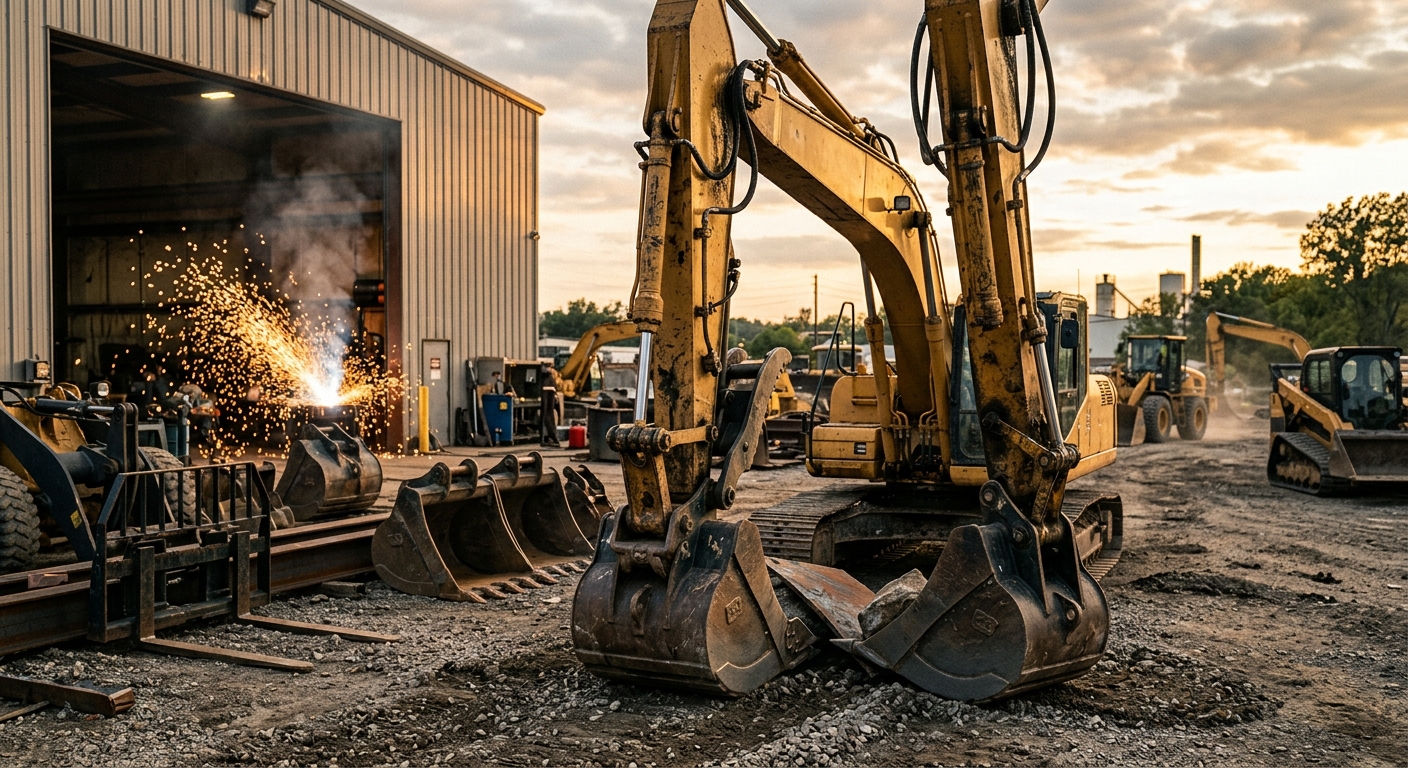
A bucket is easy to ignore until the wrong one is on the machine.
That is the quiet part of the attachment business. Contractors will spend months shopping excavators, wheel loaders, skid steers, compact track loaders, and backhoes. They will compare horsepower, hydraulics, cab comfort, financing, emissions systems, dealer support, resale, and every spec on the sales sheet. Then the machine shows up and the job still depends on steel at the end of the arm.
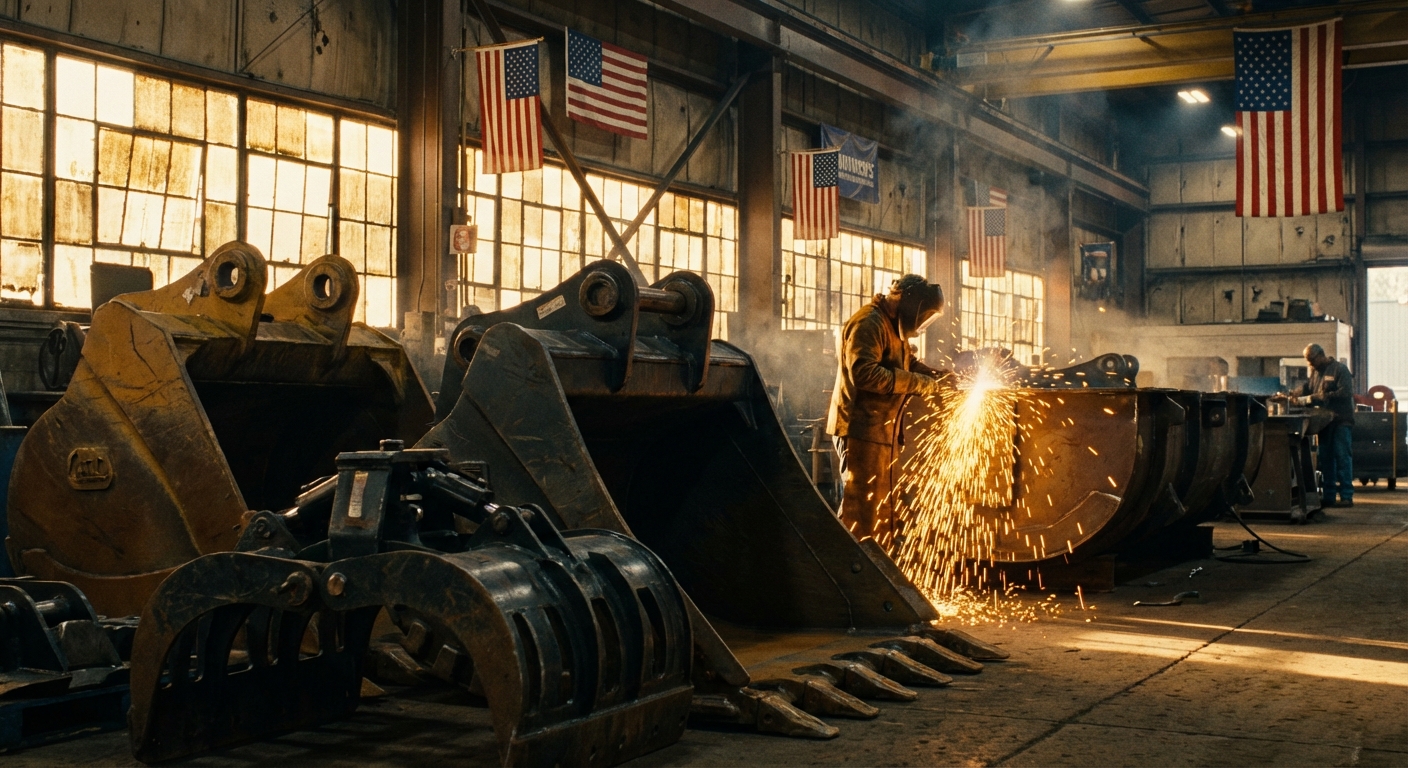
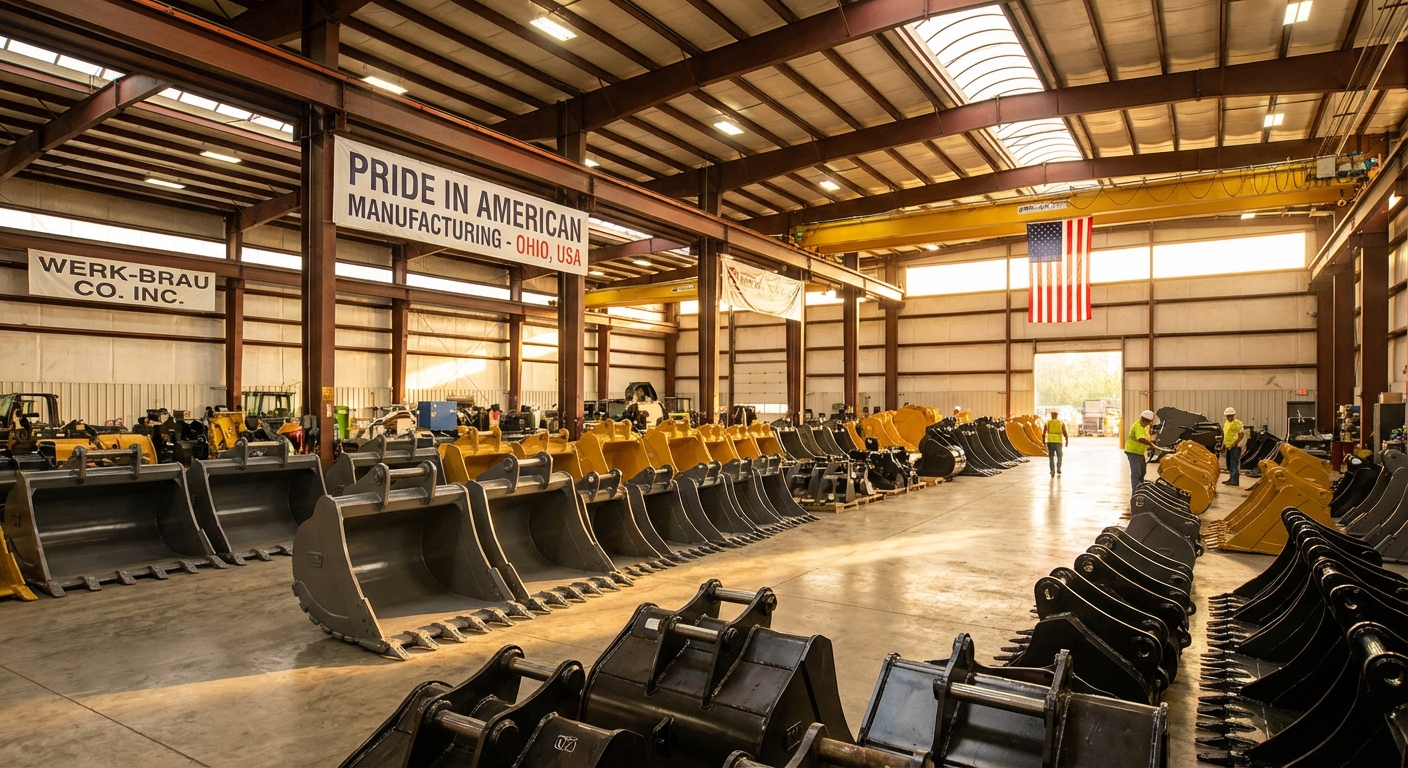
Werk-Brau has built a long business around that less glamorous truth. The Findlay, Ohio manufacturer traces its attachment work back to 1947 and now sells across excavator, compact excavator, wheel loader, skid steer, and backhoe categories. Its own site says it produces about 50,000 attachments per year, burns roughly 1 million parts per year, and welds about 20,000 miles of wire annually. You can read the company’s overview here.
Those numbers are not the interesting part by themselves. The interesting part is what they say about the market. Attachments are no longer side items that get thrown into a machine deal at the end. For a lot of owners, they are the difference between a machine that works and a machine that just sits on the yard looking expensive.
FieldFix Editor’s Note: Attachments are part of machine cost, even when owners track them casually. FieldFix helps contractors log service history, downtime, expenses, and cost per hour so the bucket, coupler, thumb, mower, or fork decision can be tied back to actual production instead of gut feel.
Werk-Brau’s lane is practical, not flashy
Werk-Brau is not trying to look like a Silicon Valley equipment company. That is probably a good thing.
The company’s public product lineup is built around the stuff crews use every day: excavator buckets, heavy-duty buckets, ditching and grading buckets, thumbs, hydraulic couplers, wheel loader buckets, forks, brooms, compact attachments, and specialty tools. Its excavator attachment page lists 33 results across buckets, couplers, thumbs, specialty attachments, and mulchers, shredders, and mowers. Its wheel loader attachment page lists 23 results, including general purpose buckets, high tip buckets, couplers, light material buckets, forks, brooms, and specialty tools. The skid steer page is smaller, with eight listed products, but it includes Brushhound mowers and forestry mulchers.
The product pages are here: excavator attachments, wheel loader attachments, and skid steer attachments.
This is not a product strategy built on one hero item. It is a coverage strategy. That matters because contractors rarely have one attachment problem. They have a chain of them.
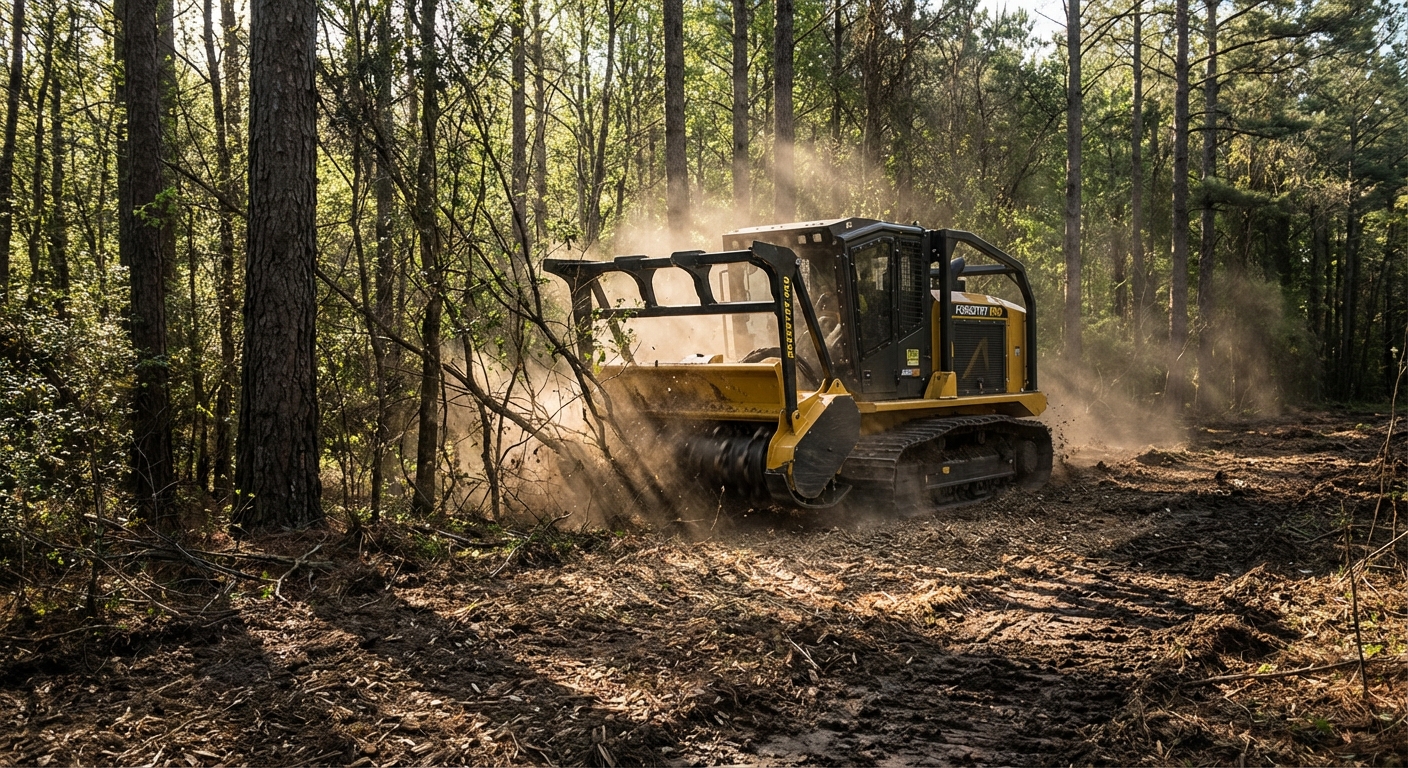
A site contractor may need a trenching bucket, a grading bucket, a thumb, and a coupler for one excavator. A municipal department may need loader forks, snow tools, and a bucket that survives winter abuse. A land clearing outfit may care less about the carrier than whether the mower, mulcher, rake, or grapple can stay together in brush, rock, and junk wood. A quarry or recycling yard may need heavy buckets, forks, and purpose-built tools that take daily punishment.
The attachment company that wins those customers is usually not the one with the prettiest rendering. It is the one that can answer fitment questions, quote without playing games, ship on a realistic schedule, and stand behind the product when a weld, pin, cylinder, edge, or bracket becomes the bottleneck.
The fitment problem is bigger than people admit
Every contractor has seen a machine bought with an attachment that technically fits but does not really work.
Maybe the bucket is too wide for the machine’s hydraulic power and soil conditions. Maybe the coupler changes geometry enough to make the operator hate it. Maybe the thumb does not grab cleanly. Maybe the loader bucket is too light for the material. Maybe the forks are fine on paper but wrong for how the yard actually moves pallets, pipe, block, brush, or scrap.
That is why attachment manufacturing is more complicated than outsiders think. The steel is visible. The fitment knowledge is the harder asset.
Werk-Brau’s site leans into that reality. The company repeatedly tells buyers to send machine and application details if they do not see the exact item they need. That is a normal sales message, but in attachments it matters. A machine model alone does not answer enough questions. The job, material, carrier size, coupler type, expected abuse, hydraulic flow, and operator habits all change what the attachment should be.
This is where dealers can either create value or create expensive annoyance.
A dealer who treats attachments like a line item at closing leaves the buyer to figure out the hard part later. A dealer who understands the application can make the machine more profitable before it ever leaves the lot. Werk-Brau’s catalog depth gives dealers more ways to solve that problem without sending the customer into a custom fabrication rabbit hole.
That is the unsexy advantage: fewer dead ends.
Transparent pricing is a smart move
Most attachment websites are allergic to price. Werk-Brau is less coy.
The company’s pricing page explains why exact prices are hard to publish across every configuration, but it still shows pricing ranges for common categories such as excavator buckets, couplers, thumbs, and wheel loader attachments. The page says attachment pricing varies because no two configurations are the same, then gives buyers a way to ballpark the investment before asking for a firm quote. You can see that page here.
That may sound minor. It is not.
Contractors are tired of submitting forms into the void just to learn whether a product is even in the budget. Dealers are tired of quote cycles that turn simple attachment decisions into weeklong back-and-forth. A published range will not replace a real quote, but it helps owners sort options faster.
It also forces a more honest buying conversation. A severe duty bucket costs more than a light bucket because it should. A hydraulic coupler costs more than a manual solution because speed and safety are worth money if the machine changes tools often enough. A cheap attachment that bends, cracks, eats pins, or slows the operator is not cheap. It is just a delayed invoice.
The hard part is matching spend to the job.
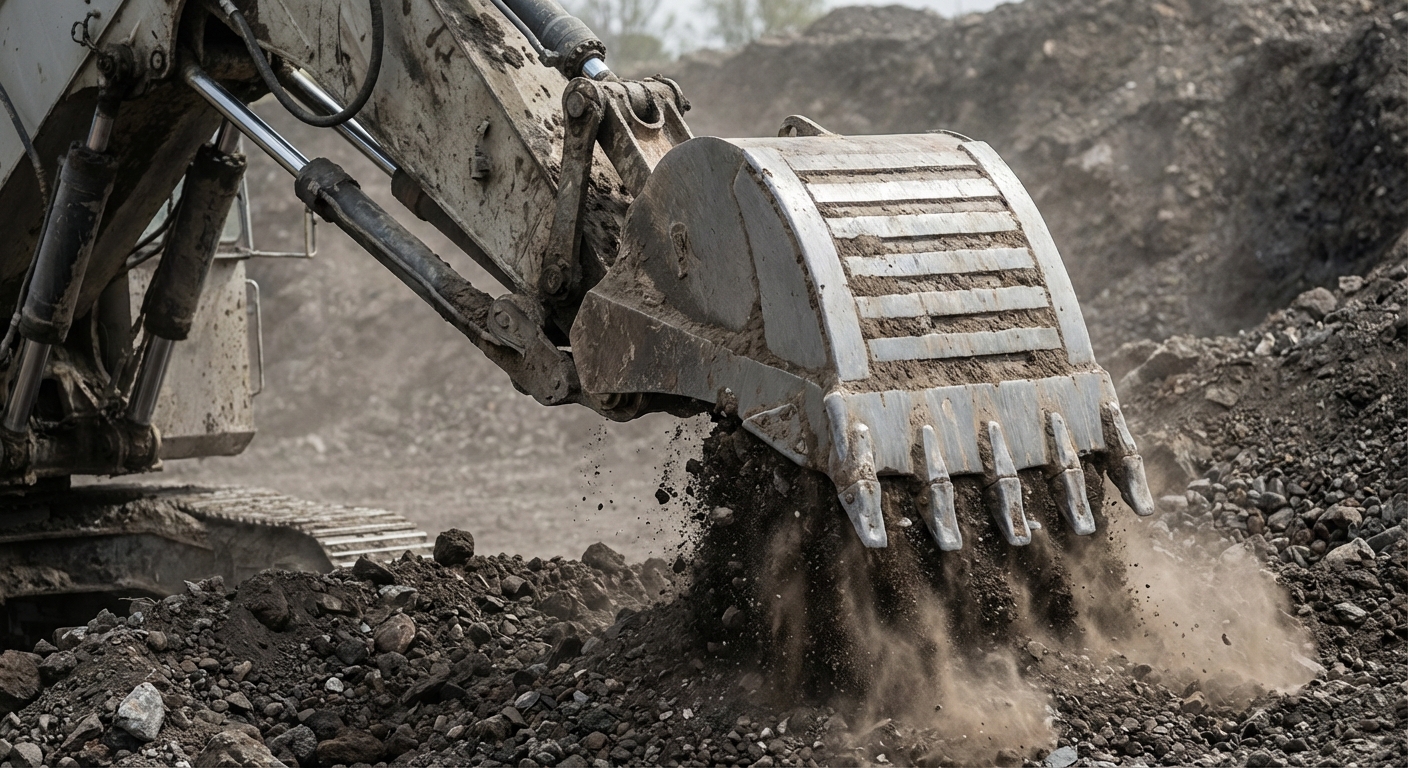
If a contractor buys extreme duty steel for light grading, that is wasted capital. If he buys light steel for demolition, quarry work, land clearing, or rocky excavation, the savings disappear fast. The right attachment is not always the strongest one. It is the one strong enough for the real work, priced in a way that still lets the machine make money.
Warranty language tells you what the company thinks matters
Werk-Brau’s warranty page says the company warrants attachments and non-hydraulic components against defects in materials, faulty design, and workmanship for two years or 2,000 hours, whichever comes first. It also says purchased subassemblies such as teeth assemblies, forks, cylinders, auxiliary edges, hydraulics, and electrical components may fall under the original manufacturer’s warranty rather than Werk-Brau’s own coverage. The warranty page is here.
That language is worth reading because it is where the sales shine comes off and the operating reality shows up.
Attachments fail in messy ways. Sometimes the weld or design is the problem. Sometimes the operator used the wrong tool for the work. Sometimes a wear part, cylinder, tooth system, edge, or hydraulic component is the issue. Sometimes the attachment was fine until the machine got pushed into a job it should not have been doing.
A clear warranty does not eliminate arguments. It gives dealers and buyers a starting point.
For contractors, the bigger lesson is to track attachment use the same way they track machines. Hours, applications, repairs, cracked welds, bent edges, worn pins, failed cylinders, downtime, and parts spend all tell a story. Without that record, every warranty conversation becomes memory against memory. Nobody wins that.
Why this profile matters now
The equipment market is stuck between expensive new machines and contractors trying to squeeze more production out of the fleet they already own. That makes attachments more important.
A new machine is a big decision. A better attachment can be a smaller, faster way to unlock production. Add a coupler and the excavator can switch jobs faster. Add the right thumb and the machine can handle demo, clearing, and cleanup work it struggled with before. Put the right bucket on a loader and cycle times improve. Put the wrong one on and the operator fights it all day.
This is especially true for small and mid-size contractors. They do not have unlimited iron. One excavator may trench Monday, grade Tuesday, load brush Wednesday, and clean up a demo job Friday. One loader may handle dirt, snow, pallets, pipe, mulch, aggregate, and whatever else shows up. Attachments are how those machines stretch.
That flexibility is not free. More attachments mean more capital tied up, more maintenance, more storage, more tracking, and more chances for something to be missing when the job starts. But the alternative is worse: owning a machine that can only do part of the work available to it.
Werk-Brau’s business sits right in that tension. The company is selling steel, but the deeper pitch is uptime and fit. Get the right tool. Get it when the job needs it. Keep the carrier productive.
The dealer channel is still the center of gravity
Werk-Brau’s website points buyers toward dealers, including a dealer locator and a path for companies that want to become dealers. That makes sense. Attachments need distribution close to the work.
An online catalog can educate a buyer, but a dealer still has the local context. Which contractors are hard on buckets. Which municipalities are buying snow and utility tools. Which rental houses need durable, simple attachments. Which excavator coupler standards dominate a region. Which brands and models are common enough to justify stocking inventory.
Good dealers can turn that knowledge into a better attachment sale. Bad dealers can turn it into dust collecting on the lot.
This is where attachment manufacturers have to support the dealer without hiding behind the dealer. Lead times, fitment help, warranty handling, documentation, parts, and honest answers all flow through that relationship. If the dealer cannot get answers quickly, the customer feels it.
Werk-Brau’s public message is built around delivery, quality, and support. The market will judge that the only way it can: when the machine is down, the job is waiting, and somebody needs an answer that is more useful than “we’re checking on it.”
The boring companies deserve more attention
Equipment media spends a lot of time on the carrier. Big excavator launches. New compact track loaders. Autonomous prototypes. Electric machines. Trade show concepts. All of that matters.
But the work often comes down to the attachment.
A $200,000 excavator with the wrong bucket is just an expensive compromise. A wheel loader without the right bucket or forks is underused. A compact track loader without the right mower, broom, or fork setup is leaving money on the table. The carrier gets the attention because it has the engine, cab, hydraulics, and payment book. The attachment decides what the machine can actually do today.
That is why a company like Werk-Brau is worth watching. It is not the loudest story in equipment. It is a useful one.
The best attachment makers do not need to convince contractors that steel is exciting. They need to make sure the right piece of steel shows up on time, fits the machine, survives the job, and helps the owner bill more hours with the iron already sitting in the yard.
That is not flashy. It is exactly where a lot of money gets made.