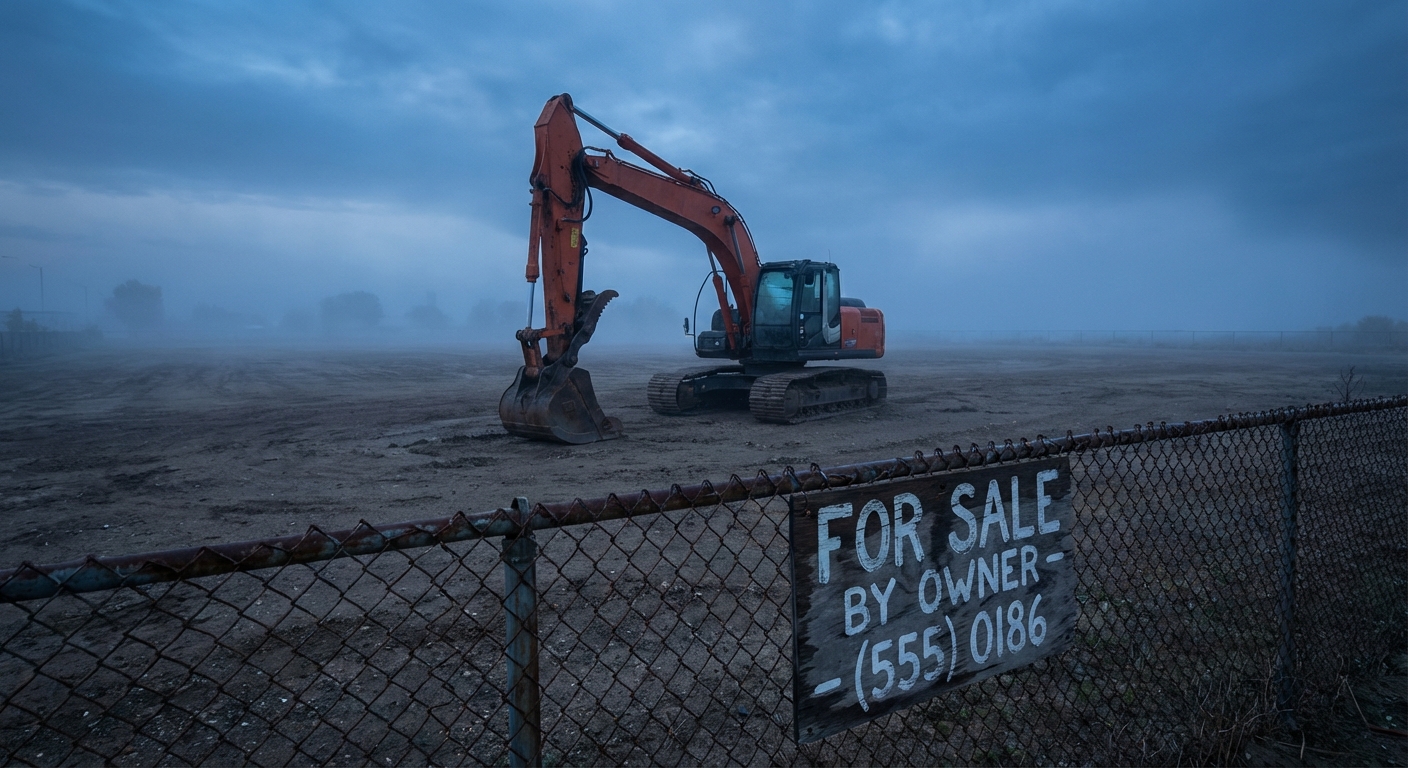
OPINION: Most Contractors Still Have No Idea What an Hour of Downtime Costs
A breakdown does not cost what the repair invoice says. It costs production, crew momentum, customer trust, and often the margin on the whole job. Too many operators are still making buying and maintenance decisions without knowing that number.
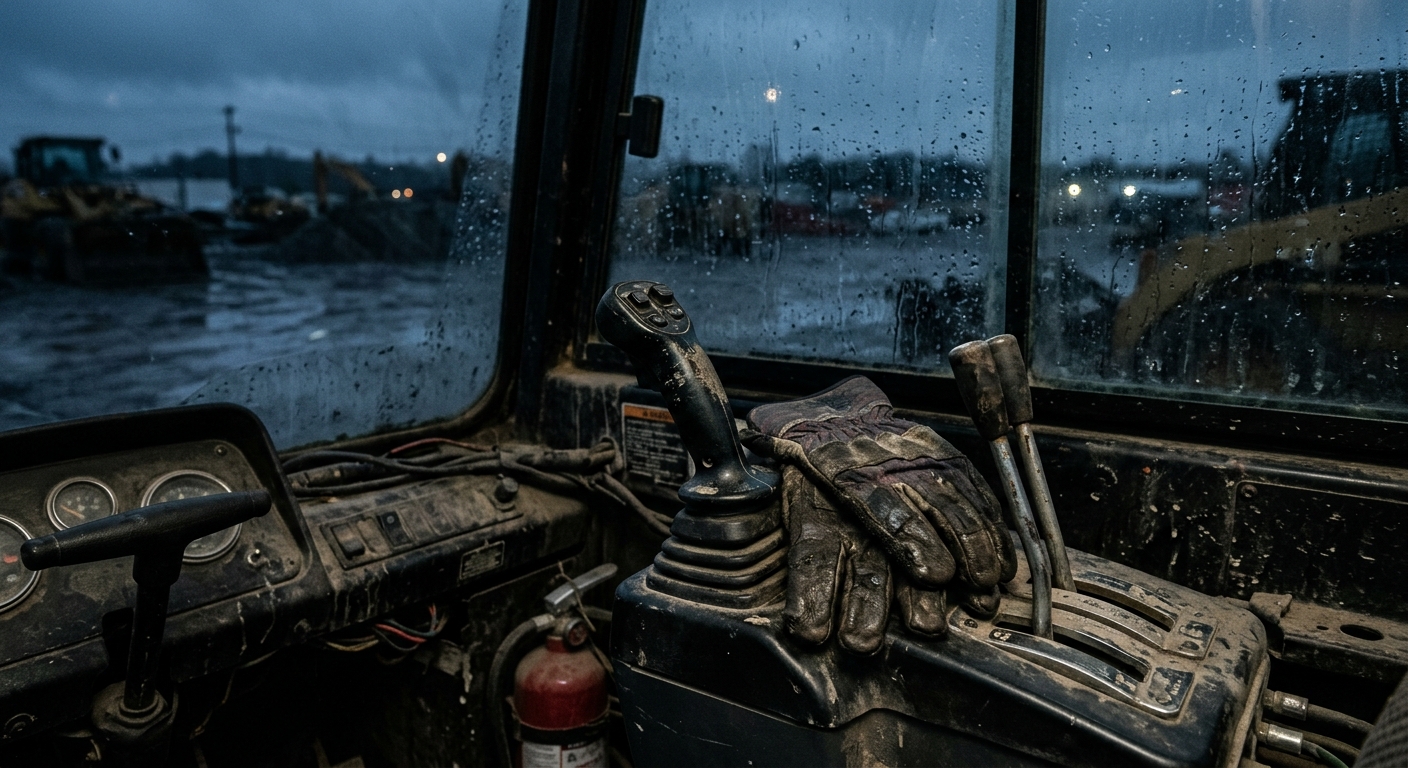
I think one of the dumbest habits in this business is how casually people talk about downtime.
Guys will argue for an hour over fuel prices, machine payments, and whether a mulcher head should have carbide or steel. Then the same guy will shrug at a breakdown like it is just part of the game. The hose blew. The DEF issue came on. The truck would not start. The trailer lost brakes. The final drive started talking back. Dealer cannot look at it until next week. That is equipment, brother.
No. That is not a personality trait of the industry. That is a cost. A big one. And most contractors still do not know what it actually is.
I run a land clearing company in Ohio. We move compact track loaders, mulchers, excavators, trucks, trailers, attachments, and crews. We work jobs where the machine is the business. If the iron does not run, the whole day changes shape fast. That is why I have gotten more aggressive about how I think about downtime. I do not care what the repair bill says by itself. I care what the lost hour cost me while the machine sat there acting stupid.
That is the number more people need to know.
Most owners still look at downtime like a repair event. I think that is way too narrow. Downtime is not just a bad alternator or a hydraulic leak. Downtime is a chain reaction. It starts with a mechanical problem and then spreads into labor, scheduling, transport, customer communication, rental decisions, and usually your mood for the rest of the day.
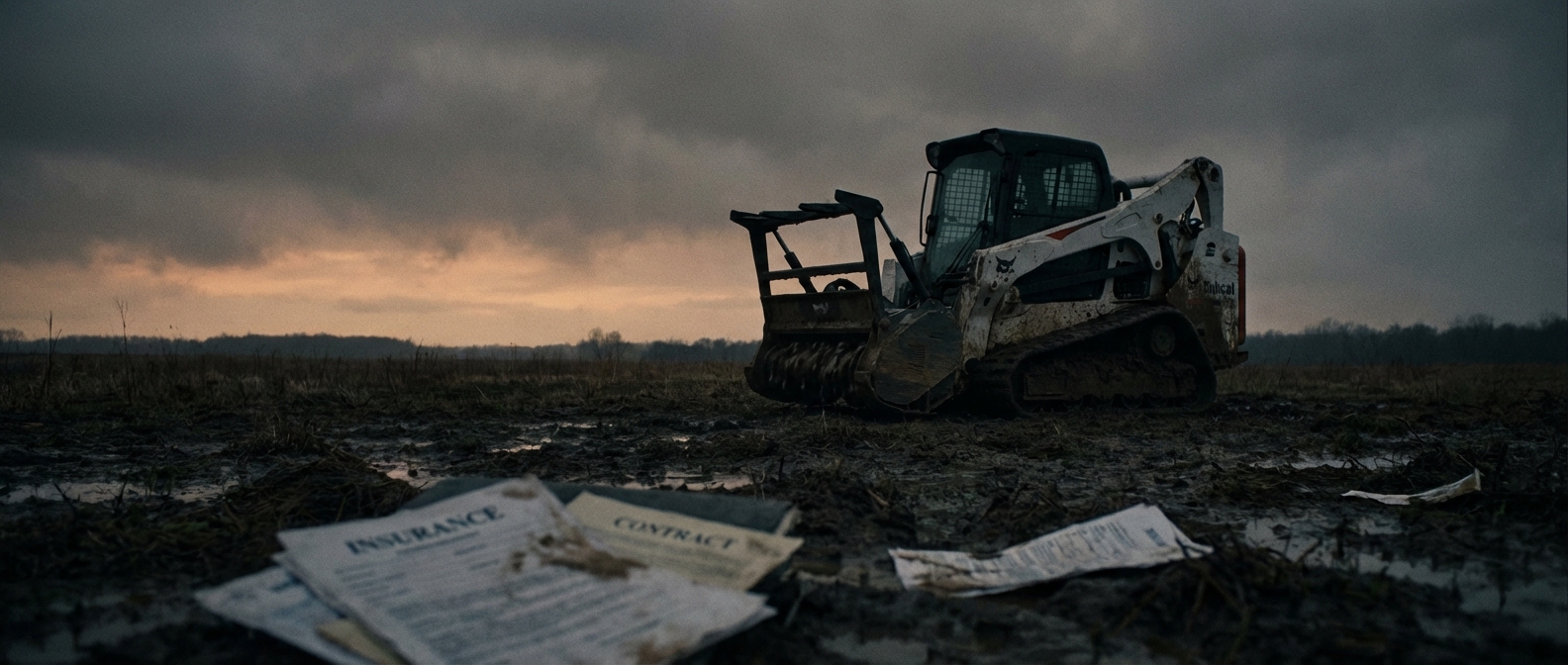
Take a simple example. Say I have a compact track loader with a mulcher head on a brush clearing job. Maybe I have two guys on site, a truck and trailer on the road, fuel already burned to get there, and a customer expecting visible progress by the end of the day. If that machine goes down at 10:30 in the morning, I did not just lose the part that failed. I lost production in the best weather window of the day. I lost labor efficiency because my crew is now waiting, troubleshooting, or switching to slower backup work. I might lose the afternoon because I need to haul another machine in. If I cannot swap fast, the customer sees a jobsite sitting still and starts wondering whether I overpromised.
That cost is a lot bigger than a $600 repair.
For a lot of small operators, one dead machine can turn a profitable day into a break-even day before lunch.
Let me make it more concrete. If a crew and machine setup normally needs to bill somewhere around $250 to $350 an hour to make sense after labor, fuel, hauling, overhead, and maintenance, then four lost productive hours is not some minor inconvenience. That is real money gone. If the failure also forces a rental, emergency hauling, or overtime later in the week to catch back up, the hit gets bigger. If the job was scheduled tightly and the delay pushes the next project, now the same breakdown is spreading across multiple customers.
That is why I laugh when people say they are saving money by avoiding preventative maintenance or putting off a repair they already know is coming.
No you are not. You are borrowing against future production, and the interest rate is ugly.
I learned this the hard way, same as a lot of owners do. In the early years, I mostly thought about whether I could keep equipment moving. If the machine started, drove off the trailer, and made money that week, I felt pretty good. That is a decent survival mindset when you are small and hungry. It is not enough once you have real volume, more crews, and tighter scheduling.
At some point I had to get more honest about what a bad machine does to the whole operation. A machine with a pattern of nuisance failures is not just annoying. It steals management attention. It interrupts the crew. It forces you to keep mental bandwidth open for whatever stupid thing it might do next. It makes dispatch harder. It makes customers less confident. It makes every next job feel shakier than it should.
That drag is real even before the next breakdown lands.
The other mistake I see is owners treating downtime like bad luck instead of a data point.
If a machine breaks once, fine. Machines break. If the same unit keeps eating hoses, electrical work, undercarriage, sensors, pins, track issues, and weird little shutdowns that burn half a day at a time, that is not random anymore. That machine is telling you something. Either it is being used outside the lane it should be in, maintained poorly, operated badly, or it is just entering the stage of life where it cannot be trusted the way your schedule needs it to be trusted.
Too many guys keep arguing with that reality because the machine is paid off.
Paid off does not mean cheap.
That might be the opinion that bothers people the most, but I believe it. A paid-off machine that keeps wrecking your week can be more expensive than a financed machine that shows up and works. Owners love saying they do not have a payment. Fine. What they do have is surprise downtime, scramble costs, extra labor drift, and a shop bill that never seems outrageous in one visit but gets disgusting when you zoom out six months.
If you cannot tell me what a machine cost in repairs, lost days, rented backup, and headache last quarter, then you do not know whether “paid off” is helping you or fooling you.
I have also seen the opposite mistake. Somebody gets burned by downtime and decides the answer is to buy new iron across the board. That can be just as dumb. New machines are great right up until the payment schedule and insurance renewal show up. Reliability matters. So does capital discipline. The answer is not to panic-buy your way out of maintenance problems. The answer is to know your downtime number well enough that you can compare it honestly against replacement cost, rental cost, and expected utilization.
That is a much less emotional way to run a fleet.
Here is the simple version of how I think owners should look at it.
First, figure out what a productive hour is actually worth in your business. Not the fairy tale number. The real one. Include labor burden, fuel, hauling, overhead, insurance, and what the machine needs to earn. If the machine stops for three hours, what revenue or progress did you really lose?
Second, track downtime by machine, not by memory. Memory lies. It rounds down on the stuff we want to ignore and rounds up on the stuff that pissed us off last week. Put the hours somewhere. Put the cause somewhere. Put the repair cost somewhere. If the machine ruined two mornings in a month, that should not vanish because it eventually came back to life.
Third, separate catastrophic failures from recurring drag. A major failure is obvious. Recurring drag is what kills more margin in my opinion. The dead battery, sensor fault, hose rub, bad connection, trailer light issue, cutting edge problem, or small leak that keeps stealing ninety minutes at a time can do a shocking amount of damage across a season.
Fourth, stop pretending the crew waits for free. I hear owners talk about downtime like only the machine clock matters. Meanwhile two employees are standing around, the truck is idling, and somebody is spending the best part of the morning calling the dealer, hunting parts, or driving for a fitting. That is not neutral time. That is paid time with bad output.
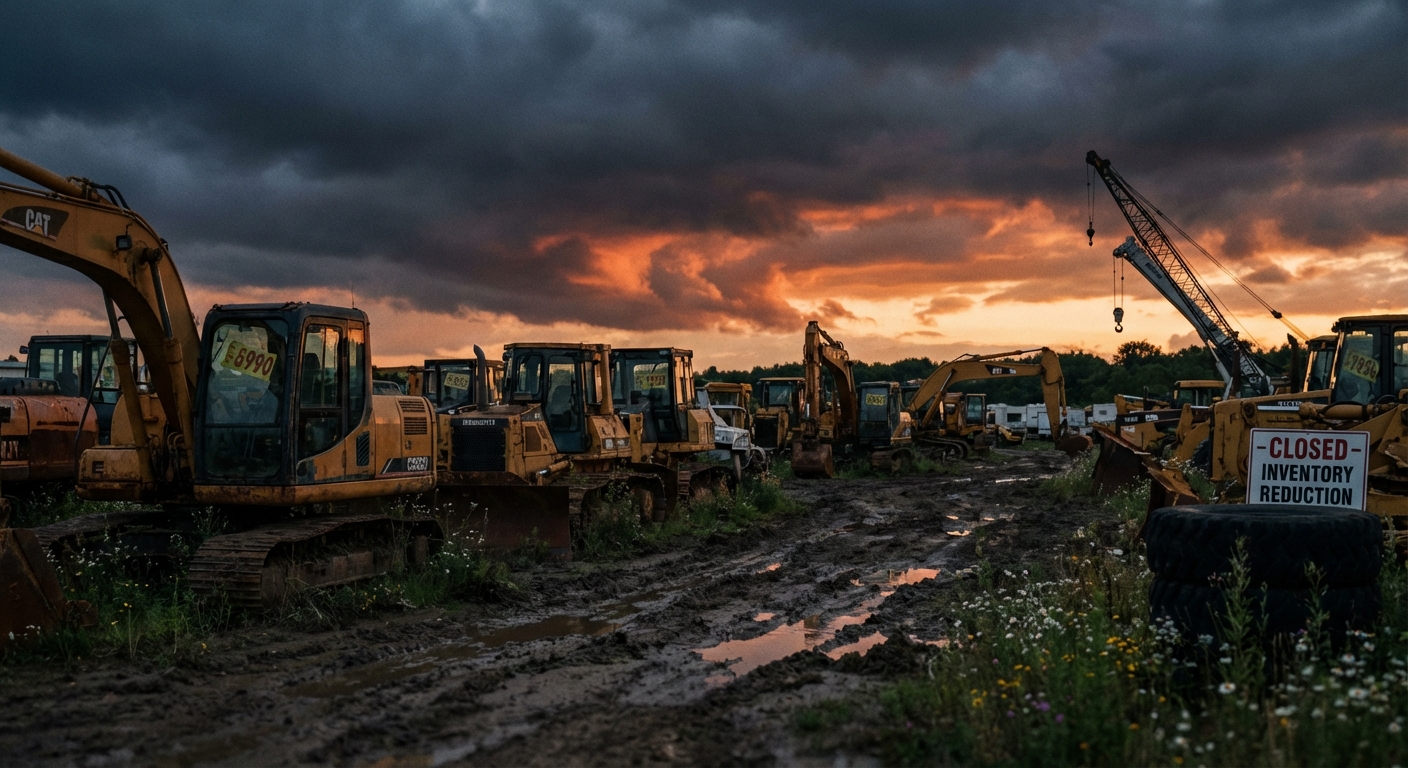
Fifth, make peace with retiring problem children. Every fleet has one machine people defend out of habit. It has history. It made a lot of money in its day. Everybody knows its quirks. Great. If it still produces, keep it. If it is now basically a character in the company instead of a productive asset, sell the damn thing and move on.
I know why operators resist this. Pride is part of it. We all like feeling resourceful. There is a certain badge-of-honor culture in construction and land clearing where keeping old iron alive feels noble. Sometimes it is noble. Sometimes it is just undisciplined.
Another reason is that downtime has been normalized for so long that people build businesses around it without admitting it. They keep extra days in the schedule because they expect things to go wrong. They under-promise because the equipment is unpredictable. They keep a backup machine they barely need because the main one cannot be trusted. They avoid certain jobs because failure risk is too high. That all looks like caution on the surface. Underneath, it is often just the business adapting to unreliable equipment.
That adaptation costs money too.
The best operators I know are not the ones who never break. Nobody gets that clean of a run in heavy equipment. The best operators are the ones who know exactly what a lost hour does to them and act like it matters. They service machines before the season gets stupid. They fix small things when they are still small. They stock common wear parts. They train operators to report issues early instead of hiding them. They know when a repair is maintenance and when it is denial.
Most of all, they stop making fleet decisions from the repair invoice alone.
That invoice is only the visible part. The bigger cost usually happened before the machine ever made it into the shop.
If you are an owner, here is my advice. Over the next month, pick your top three revenue machines and get brutally honest. How many hours did each one lose in the last ninety days? What did those lost hours do to job timing? How much labor sat still? What rentals, hauling, or emergency service did the issue create? Which machine would you trust tomorrow on a must-finish job with a good customer watching?
If you cannot answer that cleanly, that is the problem to fix first.
Because downtime is not just a maintenance issue. It is a pricing issue, a scheduling issue, a customer trust issue, and eventually a growth issue. Plenty of contractors think they need more leads, more work, or another machine. Some do. A lot of them just need to stop losing good hours to equipment they are managing by feel.
One hour of downtime is never one hour. That is the point.
Treat it that way, price it that way, and make fleet decisions like you actually believe it. The operators who do that are going to look a lot smarter over the next few years than the ones still calling breakdowns “part of the business.”