OPINION: The Real Cost of 0% Dealer Financing — They're Not Doing You a Favor
That shiny 0% financing deal looks like free money. It isn't. Here's the math dealers don't want you to do.
I’m going to tell you something that might make a few dealer reps mad at me. But I’ve watched too many operators get burned by “0% financing” deals to stay quiet about it anymore.
Last year, a buddy of mine—good operator, been in the game about eight years—called me excited about a deal he was about to sign. Brand new skid steer, 0% financing for 60 months. “Free money,” he said. “Why would I pay cash when I can let them give me an interest-free loan?”
I asked him one question: “What’s the cash price?”
Dead silence.
He didn’t know. He’d never asked. He was so focused on the monthly payment and that magical 0% that he forgot to do the most basic math in equipment buying.
When he finally got back to me with the numbers, the “0% deal” skid steer was priced at $78,500. The same model, same options, cash price from a competing dealer? $68,000. The 0% financing was costing him $10,500.
That’s not 0%. That’s 15% hidden in the purchase price.
The Shell Game Nobody Talks About
Here’s what the dealer advertising people don’t want you to understand: 0% financing isn’t free. It’s never free. The manufacturer and dealer have to make that money somewhere, and that somewhere is usually the MSRP.
When Cat or John Deere or Kubota offers 0% financing, they’re subsidizing that rate. That subsidy comes from somewhere. Either the manufacturer eats it (they don’t), the dealer eats it (they really don’t), or you eat it through an inflated sticker price.
I’ve tracked equipment pricing for years—both for my own business and because I’m obsessive about this stuff. Here’s what I’ve found: On average, the “0% financing price” on equipment runs 8-15% higher than the negotiated cash price on the same machine. On a $100,000 piece of equipment, that’s $8,000 to $15,000 in hidden interest.
Let me put that in perspective. If you financed $100,000 at 8% for 60 months, your total interest paid would be about $21,600. If you “save” that interest with a 0% deal but pay $12,000 more upfront, you’ve saved $9,600.
That’s still a win, technically. But it’s not the win you thought it was. And it gets worse.
The Trade-In Trap
The second place dealers make up for 0% financing is your trade-in. And this is where I’ve watched operators get absolutely destroyed.
I had a guy work with me a few years back who traded in his 2019 compact track loader on a new machine with 0% financing. The dealer offered him $45,000 for his trade-in. He was thrilled—that’s what he owed on it.
What he didn’t do was check the wholesale value. Similar machines were selling for $58,000 to $62,000 at auction. The dealer was going to turn around and retail that machine for $70,000.
He gave up $15,000 to $20,000 in trade value to get his “0% financing” deal. Add that to the inflated purchase price, and his “free” financing cost him close to $30,000.
I’m not saying all dealers do this. But the structure of 0% financing deals creates massive incentive to lowball trades. The salesperson isn’t lying when they tell you the rate is 0%. They’re just not telling you the whole truth about where the money comes from.
The Forced Maintenance Package
Here’s a newer trick I’ve been seeing: 0% financing that requires you to buy an extended maintenance package through the dealer.
On paper, it sounds reasonable. “We’re offering you free financing, so we need you to commit to maintaining it with us.” In practice, it’s a profit center that can add $3,000 to $8,000 to your total cost.
I got quoted one of these deals last year on a mulching head attachment. The 0% financing required a $4,500 maintenance agreement covering the first three years. When I priced out the same maintenance items à la carte—oil changes, filter kits, inspections—it came to about $1,800.
That $4,500 “maintenance package” was a $2,700 markup. Suddenly, my 0% financing was costing me the equivalent of 6% APR.
Always ask: Is this maintenance package required for financing? What does it actually cover? What would these services cost individually? Most of the time, you’re paying double.
When 0% Actually Makes Sense
I’m not saying 0% financing is always a scam. There are scenarios where it genuinely works in your favor. But you have to do the math—every single time.
Scenario 1: The cash price is the same.
This is rare, but it happens. Some manufacturers run genuine 0% promotions where the price stays constant regardless of payment method. I’ve seen this on end-of-year inventory clearances and manufacturer-subsidized deals to hit sales quotas.
If you can verify—get it in writing—that the cash price and the 0% price are identical, take the financing. Use your cash for something that generates return. That’s actual free money.
Scenario 2: The price difference is less than your cost of capital.
If you’d be financing anyway at 8-10%, and the 0% deal only inflates the price by 5%, you come out ahead. But you have to run the numbers. Total cost of 0% deal versus total cost of negotiated cash price plus traditional financing. Whichever number is smaller wins.
Scenario 3: Cash flow matters more than total cost.
Sometimes, especially when you’re scaling, predictable payments matter more than optimizing total spend. If a 0% payment lets you take on a profitable job you couldn’t otherwise, the math changes. Money now can be worth more than money later.
But these scenarios require you to actually know the numbers. Most operators don’t. They see 0% and sign.
The Questions You Should Always Ask
Before you sign any 0% financing deal, get answers to these questions:
“What’s the cash price?” Not the “list price” or “MSRP”—the actual, negotiated, check-in-hand price if you paid today. Make them write it down.
“What’s this exact machine selling for at other dealers?” Do this research before you walk in. Check auction results. Call three dealers. Know what the machine is actually worth.
“What’s my trade-in worth at auction?” Don’t rely on the dealer’s number. Look up recent auction results for similar machines on Machinery Trader, Purple Wave, or IronPlanet. Know your trade’s real value.
“What’s included in the 0% deal?” Required maintenance packages? Insurance requirements? Prepayment penalties? Early payoff terms? Get everything in writing.
“What’s the total amount financed?” This sounds obvious, but dealers will sometimes roll in fees, delivery charges, and setup costs that inflate the financed amount beyond the purchase price.
Run these numbers yourself. If the 0% deal costs you $5,000 more than paying cash, and you could get a loan at 7% for 60 months, your break-even is at about $18,000 in interest savings. On a $100,000 loan, 7% for 60 months is about $18,800 in interest. So you’re saving maybe $13,000.
That’s still a good deal. But it’s not the $18,800 you thought you were saving. And if that price inflation is higher—or the trade-in value is lower—the deal can flip to negative fast.
The Bigger Picture
What frustrates me about 0% financing isn’t that it exists. It’s that it’s marketed to operators like it’s charity. “We’re giving you free money!” No, you’re not. You’re giving me a different payment structure that may or may not work in my favor depending on half a dozen variables you’re hoping I don’t examine.
The equipment industry runs on information asymmetry. Dealers know what machines cost them. They know what your trade is worth. They know the true cost of capital. They know the markup on maintenance packages. Most operators don’t know any of this.
0% financing isn’t evil. But it is a tool that sophisticated sellers use on unsophisticated buyers. And the way to stop being an unsophisticated buyer is to do the math.
Every time. Without exception.
What I Do Now
These days, I approach every equipment purchase the same way:
- I determine what I need the machine to do and what models fit.
- I research actual transaction prices—not list prices—through auctions, forums, and dealer calls.
- I get my trade appraised independently before talking to dealers.
- I ask for both the cash price and the 0% price on every deal.
- I calculate total cost of ownership both ways.
- I pick whichever number is smaller.
Sometimes, 0% wins. More often, negotiating hard on cash price and using my bank or credit union for financing beats the dealer deal. My credit union has done equipment loans at 6-7% with no prepayment penalty. Clean and simple.
The point isn’t that 0% financing is bad. The point is that you can’t know if it’s good unless you do the work. The dealer’s not going to do it for you. They’re not on your side. They’re trying to make money—which is fine, that’s their job—but it means you have to advocate for yourself.
Nobody else is going to.
The Bottom Line
Next time a dealer tells you about an amazing 0% financing deal, don’t get excited. Get curious. Ask the questions. Run the numbers. Make them show you the cash price.
If they won’t give you a straight answer on cash price, walk. If the numbers actually work in your favor, sign the deal. But make that decision based on math, not marketing.
The operators who stay profitable in this industry are the ones who treat every transaction like it matters—because it does. A $10,000 mistake on financing compounds over years. It’s the difference between building equity and treading water.
0% financing sounds too good to be true because it usually is. But occasionally, it isn’t. Your job is to figure out which one you’re looking at.
Do the math. Every time.
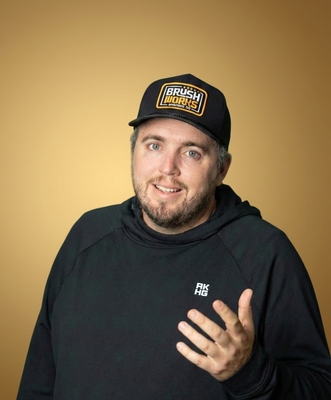
Alex Boyd owns and operates Brushworks Services Co., a forestry mulching company based in Ohio. He writes about the business side of equipment ownership at Equipment Insider.