OPINION: The Used Equipment Bubble Is Coming and Nobody's Prepared
Supply chains have normalized, financing rates are brutal, and fleet turnover cycles are converging. The used equipment market is about to get ugly—here's what smart operators should do now.
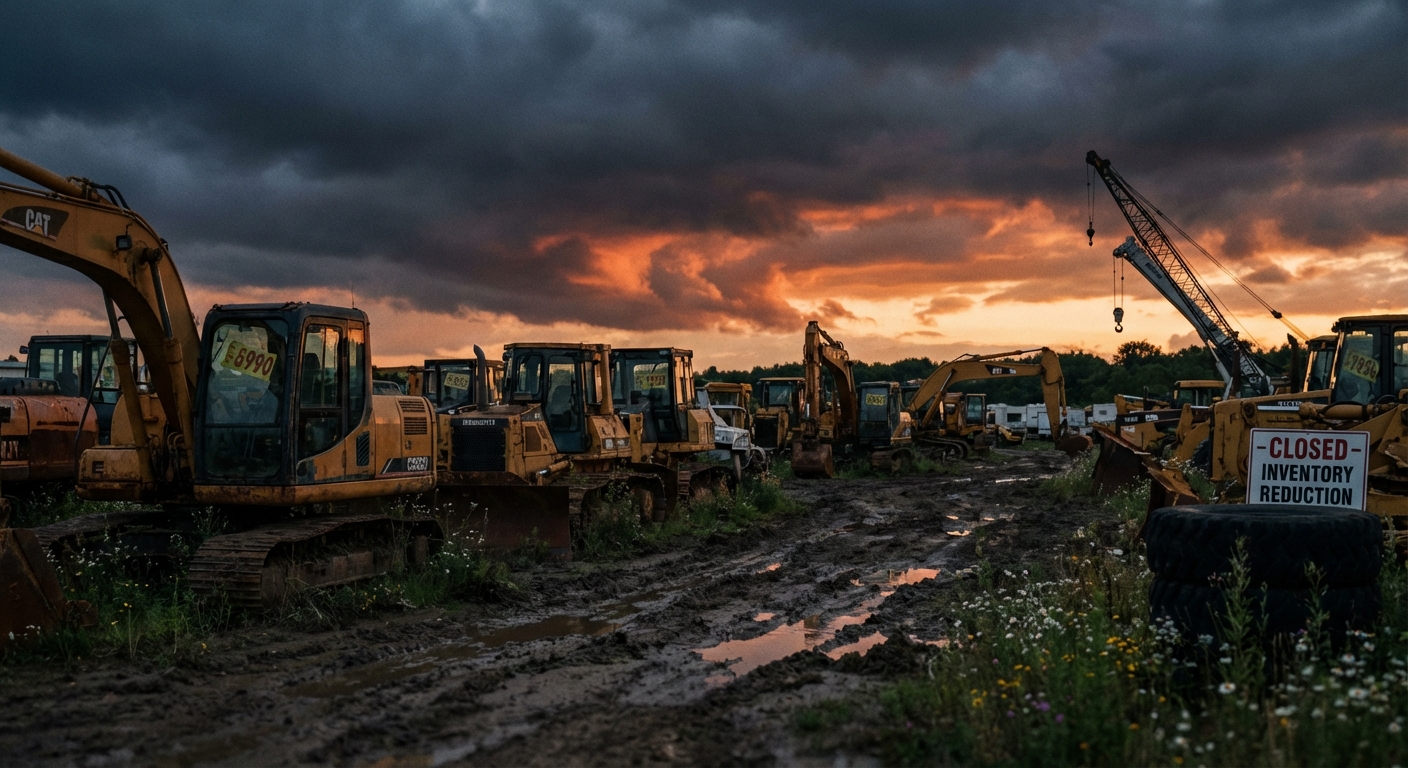
I’ve been in this industry long enough to know that when everyone’s moving in the same direction, it’s usually time to look the other way.
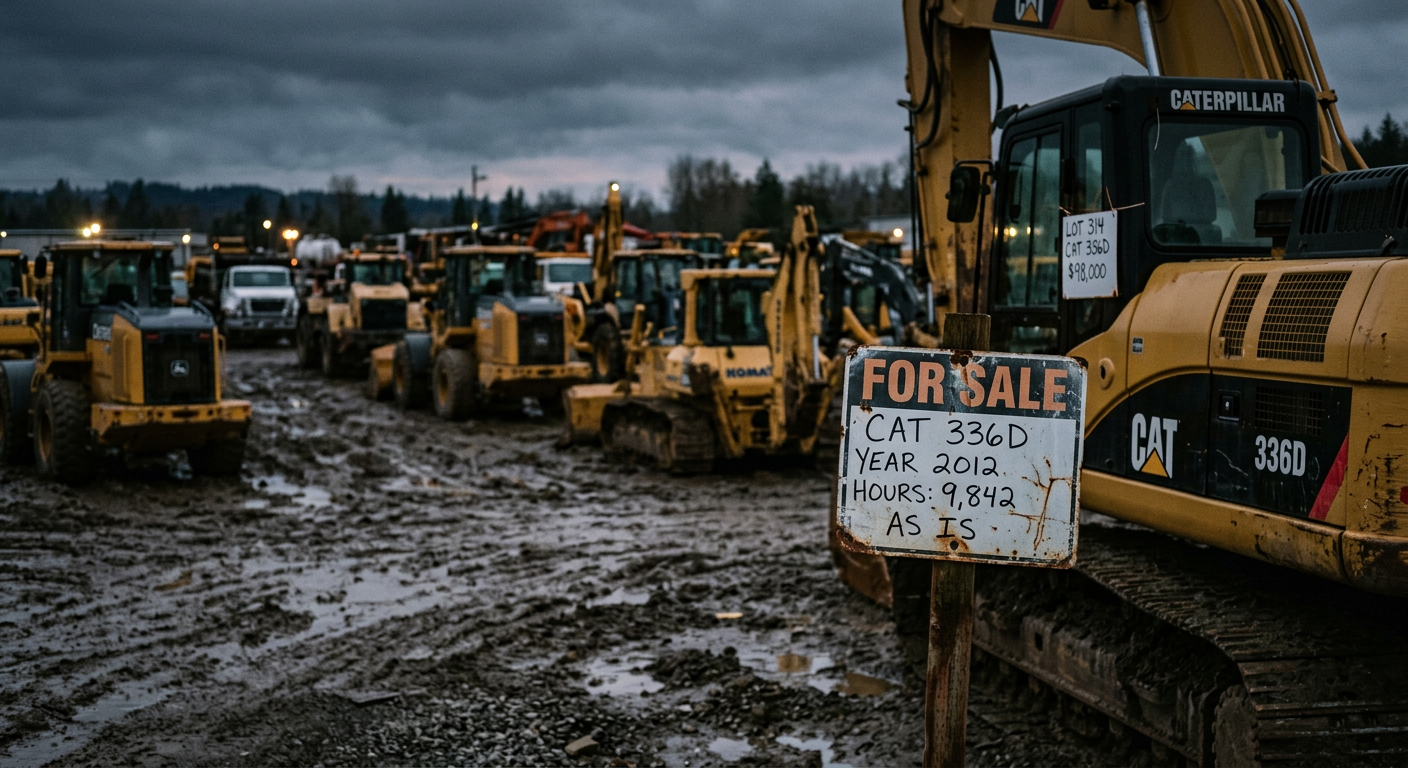
Right now, everyone’s still paying stupid money for used equipment. I get messages every week from guys bragging about what they paid for a 2019 skid steer with 3,000 hours. They think they got a deal because it was $15K under retail. They didn’t. They just caught the tail end of a market that’s about to flip on them.
The used equipment bubble is coming. And from where I sit—running crews, watching auction results, talking to dealers every week—it’s not a matter of if. It’s a matter of when. My bet? We start seeing real cracks in the second half of 2026, with a full correction by mid-2027.
Here’s why I think that, and more importantly, what I’m doing about it.
The Perfect Storm That Built This Bubble
Let’s rewind. Between 2020 and 2023, we had a once-in-a-generation convergence of factors that absolutely wrecked used equipment pricing:
Supply chain chaos. New equipment lead times went from weeks to years. I ordered a track loader in early 2021 and didn’t take delivery until late 2022. That’s not an exaggeration—that was standard. When you can’t buy new, you buy used. Simple as that.
PPP money flooding the market. A lot of operators suddenly had cash they weren’t expecting. What do equipment guys do with extra cash? They buy equipment. Demand spiked while supply was already constrained.
Low interest rates. When money’s cheap, payments feel manageable. A $150K machine at 4% APR is a different decision than the same machine at 10%. More buyers entered the market who probably shouldn’t have.
Construction and infrastructure boom. Federal spending, pandemic-driven land development, the whole remote work real estate shuffle—everyone needed dirt moved, trees cleared, foundations dug. Utilization rates went through the roof.
The result? Used equipment prices jumped 30-50% depending on the category. A 2018 excavator that would have been $85K in 2019 was suddenly going for $120K+ at auction. Somehow that became normal.
It was never normal. It was a distortion. And distortions correct.
The Three Forces About to Pop This Thing
Here’s what changed, and why the math is about to get ugly.
1. Supply Chains Have Normalized
This is the big one. New equipment is available again. Not everywhere, not every model, but the days of 18-month lead times are largely over. The major OEMs have caught up. Dealers have inventory on lots for the first time in years.
When you can actually buy new, the pressure on used pricing evaporates. Why pay $110K for a beat-up 2020 model when you can get a 2026 with warranty, better features, and dealer support for $130K? The gap closed because used got expensive, but new stayed roughly flat. That math doesn’t work anymore.
2. Financing Rates Are Brutal
Prime rate sits around 7.5% right now. Equipment financing for most operators is prime plus 2-4%, putting real rates in the 9-12% range. Some guys are seeing higher depending on credit.
This changes everything about buying decisions. At 4% financing, a $100K machine costs you about $4,000/year in interest. At 10%, that’s $10,000/year. That’s not nothing—that’s a crew member’s weekly wages.
High rates do two things: they push marginal buyers out of the market entirely, and they make everyone else more price-sensitive. The guys who are still buying are negotiating harder. They have to.
3. The Fleet Turnover Wave
Here’s the piece nobody’s talking about. During the boom, a lot of operators held onto equipment longer than they normally would. They couldn’t get new machines, so they kept running the old ones. Deferred trades. Extended service intervals. Made it work.
Now those chickens are coming home to roost. All those machines that should have been traded in 2021-2023 are hitting the market simultaneously. The equipment that operators bought during the boom with 1,500 hours? It’s now at 4,000 hours and ready to move.
We’re about to see a surge of supply hitting a market with reduced demand. That’s the textbook definition of a price correction.
What the Auction Data Already Shows
I’ve been tracking auction results religiously for the past six months. Not the headline numbers—the actual hammer prices on comparable machines.
Here’s what I’m seeing:
- Compact track loaders (2019-2021 models): Down 8-12% from peak pricing as of Q4 2025
- Mid-size excavators (15-25 ton): Down 10-15% from peak, with days-on-lot increasing
- Forestry equipment: Still elevated but softening, especially on mulching heads
- Skid steers: Mixed, but high-hour machines getting hammered
The correction isn’t uniform. Low-hour, well-maintained machines from major brands are holding better than average. But the overall trend line is clear: we’ve already started moving down.
The guys who are going to get hurt are the ones who bought at peak pricing in 2022-2023 with high leverage. They’re underwater right now. Some just don’t know it yet.
Why Most Operators Will Get This Wrong
I talk to operators all the time who think they’re insulated from market movements. “I don’t flip equipment,” they tell me. “I run it till it dies. Market prices don’t affect me.”
That’s wrong, and here’s why.
Your equipment is collateral. It’s balance sheet value. It affects your borrowing capacity, your insurance, your ability to scale. When used prices drop, your net worth drops. That might not matter day-to-day, but it matters a lot when you’re trying to finance your next machine or get bonded for a bigger project.
It also affects your exit strategy. Most operators eventually sell everything and retire. If you bought equipment at bubble prices and try to sell into a corrected market, you’re leaving money on the table. Real money. Retirement money.
And here’s the psychological trap: when prices start dropping, the natural instinct is to hold. “It’ll come back up.” Maybe. But what if it doesn’t? What if we’re returning to something closer to historical norms? What if the 2015-2019 pricing band was actually correct, and 2020-2024 was the anomaly?
That’s what I think is happening.
What Smart Operators Should Do Right Now
Okay, enough doom and gloom. Here’s my actual playbook for the next 18 months:
If You’re Buying: Wait, or Buy Ugly
If you don’t absolutely need a machine right now, hold off. Every quarter you wait, pricing likely gets better. Set price alerts. Watch the auctions. The deals are coming.
If you must buy, buy ugly. Cosmetic issues, weird configurations, unpopular colors—anything that scares off casual buyers without affecting function. I picked up a Cat 299D3 last year that had been repainted by the previous owner in this hideous custom green. Scared everyone off at auction. Mechanically perfect. I got it for $22K under market.
If You’re Selling: Accelerate Your Timeline
If you have equipment you planned to move in 2027, move it in 2026. Seriously. Every month you wait from here, you’re probably losing value.
I’m accelerating my own trade cycles right now. Machines I would have run another 500 hours are going up for sale. Not because they’re broken—because the value I can capture today won’t exist in 18 months.
Deleverage If You Can
This is the boring advice, but it’s the most important. If you’re carrying a lot of debt on equipment that’s declining in value, you’re in a precarious position. Pay down what you can. Build cash reserves. Don’t add leverage right now unless you absolutely have to.
The operators who get crushed in corrections aren’t the ones who own equipment that dropped in value. It’s the ones who own equipment that dropped in value and owe more than it’s worth.
Renegotiate Your Leases
If you’re in operating leases, understand your residual assumptions. A lot of leases written in 2022-2023 have inflated residuals that assumed equipment values would hold. They’re not holding.
Talk to your lessors now, before end-of-term. Understand your options. You might be better off buying out and selling than turning equipment in and paying disposition fees.
Watch the Small Operators
The canary in the coal mine isn’t the big rental houses—they can absorb market volatility. It’s the small operators, the guys running 1-3 machines, who bought during the boom and are now seeing utilization drop.
When those guys start going under and their equipment hits the market, that’s when the correction accelerates. We’re not there yet, but I’m watching.
The Opportunity on the Other Side
Here’s the thing: corrections create opportunities. The same conditions that hurt overextended operators benefit disciplined ones.
If you have cash and patience, the next 18-24 months could be the best buying environment we’ve seen in a decade. Quality equipment at reasonable prices, with financing rates that will eventually drop again. The guys who are positioned to buy at the bottom will set themselves up for the next decade.
That’s what I’m positioning for. Selling machines that have peaked. Building cash. Waiting.
Will I time it perfectly? No chance. Nobody does. But I’d rather sell 6 months early than 6 months late. And I’d rather buy into weakness than chase strength.
The Bottom Line
The used equipment market is not going to crash overnight. This isn’t 2008. But we are entering a correction that will feel brutal for operators who aren’t prepared for it.
The guys who leveraged up during the boom, who paid peak prices with cheap debt, who assumed utilization and pricing would hold forever—they’re about to learn an expensive lesson.
The guys who stayed disciplined, who maintained cash reserves, who understood that markets cycle—they’re about to have options.
Which one are you?
The bubble is coming. What you do in the next 6 months will determine which side of it you’re on.
Alex Boyd is the owner of Brushworks Services Co., a forestry mulching and land clearing company in Ohio. He writes monthly opinion pieces for Equipment Insider covering market trends, business operations, and industry culture. Follow him on X @bprintco.