OPINION: The Used Equipment Market Is a Bubble Waiting to Pop
Used iron prices have lost touch with reality. When the correction comes, a lot of operators are going to be upside down on machines they overpaid for.
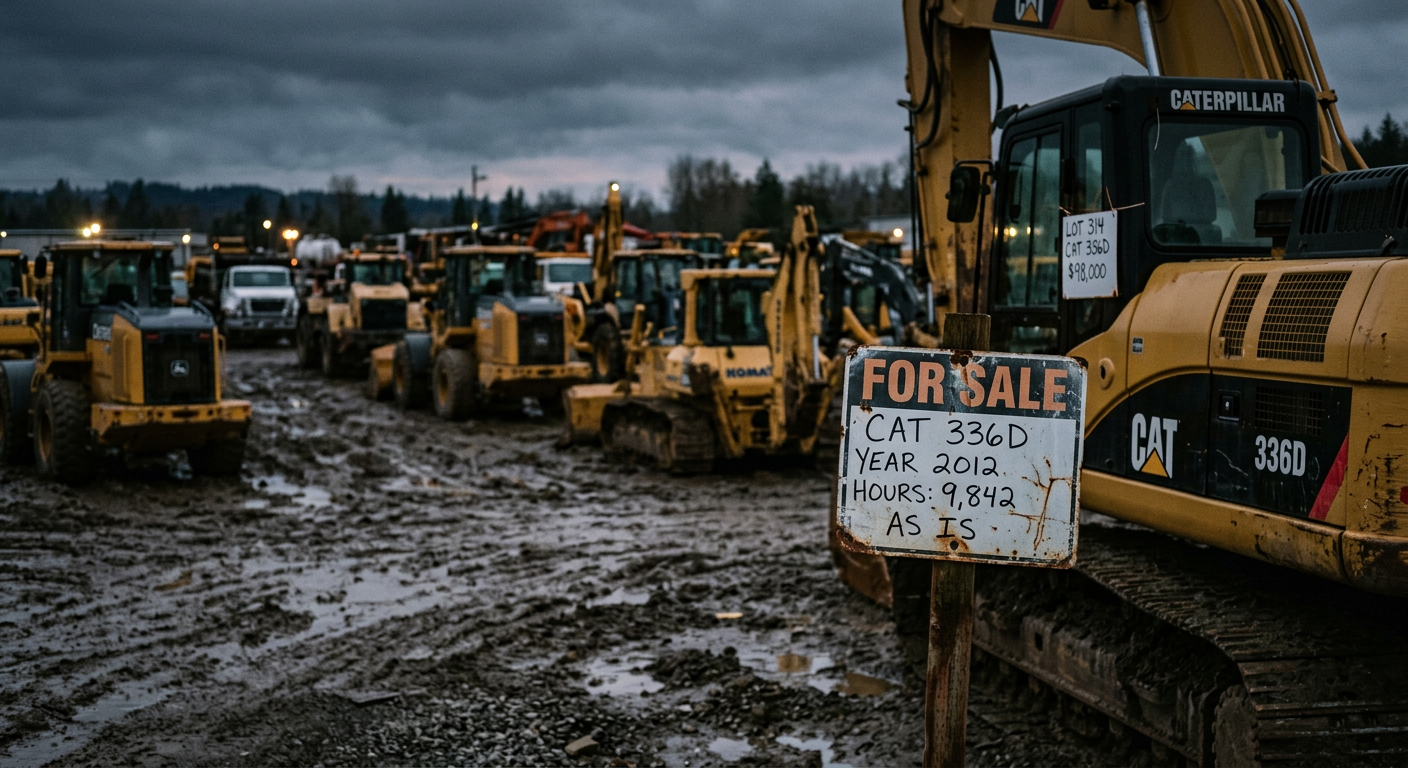
I bought a 2019 Bobcat T770 in late 2023 for $58,000. Decent hours, good shape, fair deal at the time. A buddy of mine just picked up a nearly identical machine last month. Same year, similar hours. He paid $72,000.
That’s a 24% jump in about two years on a machine that’s now two years older with two more years of wear on it. Someone explain to me how that makes sense.
It doesn’t. And I think we’re all going to pay for pretending it does.
How we got here
The story most people tell goes like this: COVID disrupted supply chains, new equipment got hard to find, so everyone went after used iron and prices went up. That’s all true. But COVID was five years ago now. Supply chains have recovered. Manufacturers are building and shipping machines. You can order a new compact track loader and have it in weeks, not months.
So why are used prices still climbing?
Part of it is habit. During the shortage years, guys got used to paying whatever it took to keep working. That mentality stuck around even after the shortage ended. Dealers figured out they could charge more, and buyers kept paying because they’d been conditioned to it.
Part of it is cheap money. Even with rates higher than they were in 2021, equipment financing is still accessible. When you can spread $75,000 over 60 months, the monthly payment doesn’t feel that different from $60,000. You’re not writing a check, so the sticker shock gets dulled. That’s how bubbles work. Easy credit makes irrational prices feel manageable.
And part of it is pure speculation. I know guys who buy used equipment not because they need it, but because they think they can flip it in six months for a profit. They’re treating skid steers like real estate in 2006. When equipment becomes an investment vehicle instead of a tool, something has gone wrong.
The numbers don’t work
Here’s what bothers me. I run a land clearing company. I know what a machine earns per hour, per day, per job. And at current used prices, the math is getting tight for a lot of operators.
Take a used mini excavator. A decent 8-ton machine that sold for $45,000 three years ago now goes for $60,000-$65,000. Your operating costs haven’t changed much. Fuel, insurance, maintenance, transport. But your acquisition cost just went up 40%.
If you’re billing $150 an hour for that machine, you need roughly 400 billable hours just to cover the price difference between what it cost three years ago and what it costs today. That’s about 10 weeks of full-time work. On a machine that might only run 800-1,000 billable hours a year, you just gave up almost half your season paying for inflated pricing.
Most operators I talk to haven’t raised their rates enough to account for this. They’re eating the difference on the back end and wondering why their margins are shrinking. The machine works the same, earns the same per hour, but costs 30-40% more to acquire. That gap has to come from somewhere, and it’s coming out of your pocket.
Auction prices tell the story
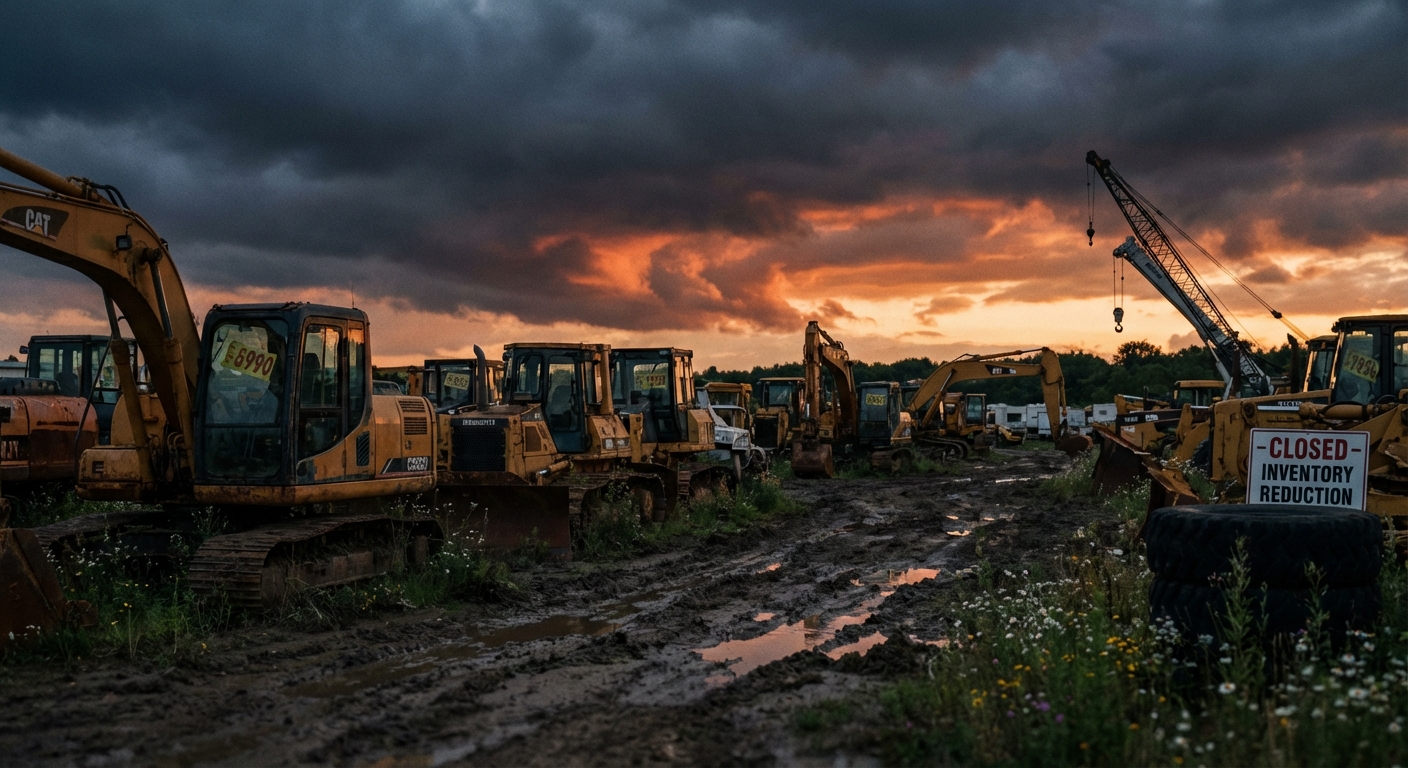
Watch any Ritchie Bros or Purple Wave auction right now. You’ll see machines with 5,000+ hours selling for prices that would have been high for a 2,000-hour machine three years ago. People are paying top dollar for iron that’s well into its second life.
I watched a 2018 CAT 259D3 with 4,800 hours go for $52,000 at auction last month. That machine was probably $65,000 new. At 4,800 hours, you’re past the easy part of its life. The next 2,000 hours are where the expensive repairs live. Tracks, final drives, hydraulic pumps. You might put $15,000-$20,000 into it over the next couple of years.
So your real cost isn’t $52,000. It’s $52,000 plus $15,000-$20,000 in repairs plus whatever you’re paying in monthly financing. You’re into that machine for $70,000-$75,000 all-in on a unit that’s past its prime. That’s new machine money for a used machine headache.
And the guy who bought it? He probably thinks he got a deal because the bidding started at $35,000 and he “won.” Auctions have a way of making you feel like you’re getting a bargain while you’re actually overpaying. The energy of the room, the competition, the fear of missing out. It’s all working against you.
What pops the bubble
Every bubble needs a catalyst to burst. I see three things that could do it here.
Oversupply of new machines. Manufacturers have caught up. CAT, Deere, Kubota, Bobcat, Takeuchi, they’re all building at full capacity. At some point, new machine availability pushes buyers back toward the dealer lot. When enough people start buying new again, used demand drops, and prices follow.
A construction slowdown. Infrastructure spending has kept demand high, but government budgets shift. If commercial construction dips or residential stays slow, there will be a lot of machines sitting. Guys who bought used iron at peak prices will try to sell, and they’ll discover their $70,000 machine is now a $45,000 machine.
Interest rates staying high. Cheap money inflated these prices. If rates stay elevated or tick up further, monthly payments on overpriced equipment start hurting. Guys who stretched to buy at the top will default or sell at a loss. Both push prices down.
My gut says it’ll be some combination of all three, and it’ll happen faster than people expect. Markets don’t deflate gradually. They correct in chunks. One bad quarter, a few big liquidation auctions, and suddenly everyone realizes the emperor has no clothes.
Who gets hurt
Not the dealers. They’ve already made their margin. They’ll adjust to whatever the market gives them.
Not the big contractors. They have cash reserves, lines of credit, and diversified revenue. They can absorb a hit.
The people who get hurt are small operators like me and you. The one-truck, two-machine outfits that stretched to buy a used excavator at $65,000 because they needed it for a contract. When that machine’s resale value drops to $40,000 and you still owe $50,000 on the note, you’re underwater. And unlike a house, you can’t just live in an excavator while you wait for values to recover.
I’ve seen this movie before. In 2008-2009, used equipment prices fell 30-40% in less than a year. Guys who had bought at the peak were stuck. Some rode it out. A lot didn’t.
What I’m doing about it
I’m not buying used right now unless the deal is genuinely exceptional. And by exceptional, I mean significantly below current market because the seller needs to move it fast. Divorce sale, business closure, estate liquidation. The kind of deal where there’s a motivated seller who isn’t checking auction comps.
When I do need another machine, I’m looking harder at new. Yes, the sticker price is higher. But you get a warranty, you get known hours (zero), and you get a machine at the beginning of its useful life. If used prices are 80-85% of new, the value argument for used disappears.
I’m also keeping my current machines longer and maintaining them better. This is the wrong time to trade up. Put money into the fleet you have. A $3,000 repair is better than a $70,000 replacement at bubble pricing.
And I’m keeping cash reserves higher than I normally would. When prices do correct, there will be deals. Real deals. Machines at 40-50 cents on the dollar from guys who need to liquidate. You want to be the buyer in that scenario, not the seller.
The uncomfortable truth
The used equipment market runs on confidence right now, not fundamentals. Prices are high because buyers believe prices will stay high. That circular logic works until it doesn’t.
I don’t know exactly when it breaks. Could be six months. Could be two years. But every month that used prices stay disconnected from the actual earning capacity of the machines, the correction gets bigger.
If you’re sitting on equipment you don’t need, now is the time to sell. If you’re thinking about buying, wait if you can. If you can’t wait, at least go in with your eyes open about what these machines are actually worth versus what the market says they’re worth right now.
The gap between those two numbers is how much the bubble has left to deflate.
I’d rather be early and wrong about the timing than late and upside down on a machine I overpaid for. You should too.