
Strong Planning Numbers Still Need Equipment Discipline
Construction planning and backlog data still point to real work ahead, but contractors should be careful about turning every positive indicator into another equipment payment.
Construction planning still looks strong. That does not mean every contractor should be shopping for another excavator.
Dodge Construction Network’s June 2026 Momentum Index fell 1.9% from May, but the reading was still 271.7 on its 2000 baseline. The detail matters more than the headline. Commercial planning dropped 6.8% while institutional planning rose 10.9%. Dodge said data center growth cooled from its record pace, but planning activity remained strong.
That is the kind of market signal equipment owners want to see. Planning work turns into bids. Bids turn into backlog. Backlog eventually turns into machine hours, rental demand, trucking, fuel, parts, attachments, and service calls. But the path is not clean. A hot planning index can hide timing problems, margin pressure, labor limits, financing costs, and the simple fact that not every planned project becomes a profitable job for the contractor holding the note on the machine.
The market is giving contractors opportunity. It is not giving them permission to buy blindly.
FieldFix Editor’s Note: Strong backlog can make a fleet feel safer than it really is. FieldFix helps equipment owners track service history, downtime, repair spend, and cost per hour by asset, so buying and replacement decisions are tied to machine-level numbers instead of the mood of the market.
Planning is still high, even when it cools
The Dodge Momentum Index is useful because it tracks nonresidential building projects that enter planning. It is not the same as construction starts, but it can give an early read on where work may land.
June’s 1.9% decline should not be read as a collapse. A reading above 270 is still elevated by historical standards. The important point is that the market is no longer moving as one simple story. Data centers have been one of the loudest drivers of planning activity, but Dodge’s June update said that growth cooled from its record pace. Institutional planning went the other way, rising sharply for the month.
For equipment owners, that split matters. A data center sitework package, a hospital expansion, a school project, a utility upgrade, and a road job do not ask the same things from a fleet. They need different iron, different schedules, different subcontractors, and different service support.
When planning is strong across uneven sectors, the equipment question gets harder. The answer is not just “buy more.” It is “buy for the work you can actually win, staff, service, and repeat.”
A contractor can be busy and still own the wrong fleet. That is one of the nastier ways a good market punishes sloppy planning. The machines are out. The calendar is packed. The phone keeps ringing. Then the real costs show up in low-margin work, emergency repairs, idle attachments, overtime, transport headaches, and jobs that stretch because the right machine was not available at the right time.
Starts can move fast
Planning is one side of the story. Starts are another.
Dodge reported that total construction starts improved 34.1% in May 2026, reaching a seasonally adjusted annual rate of $1.78 trillion. That is a big monthly move. It also came after several months of strength, including a 9% rise in April and a 13% rebound in March, according to Dodge’s construction news feed.
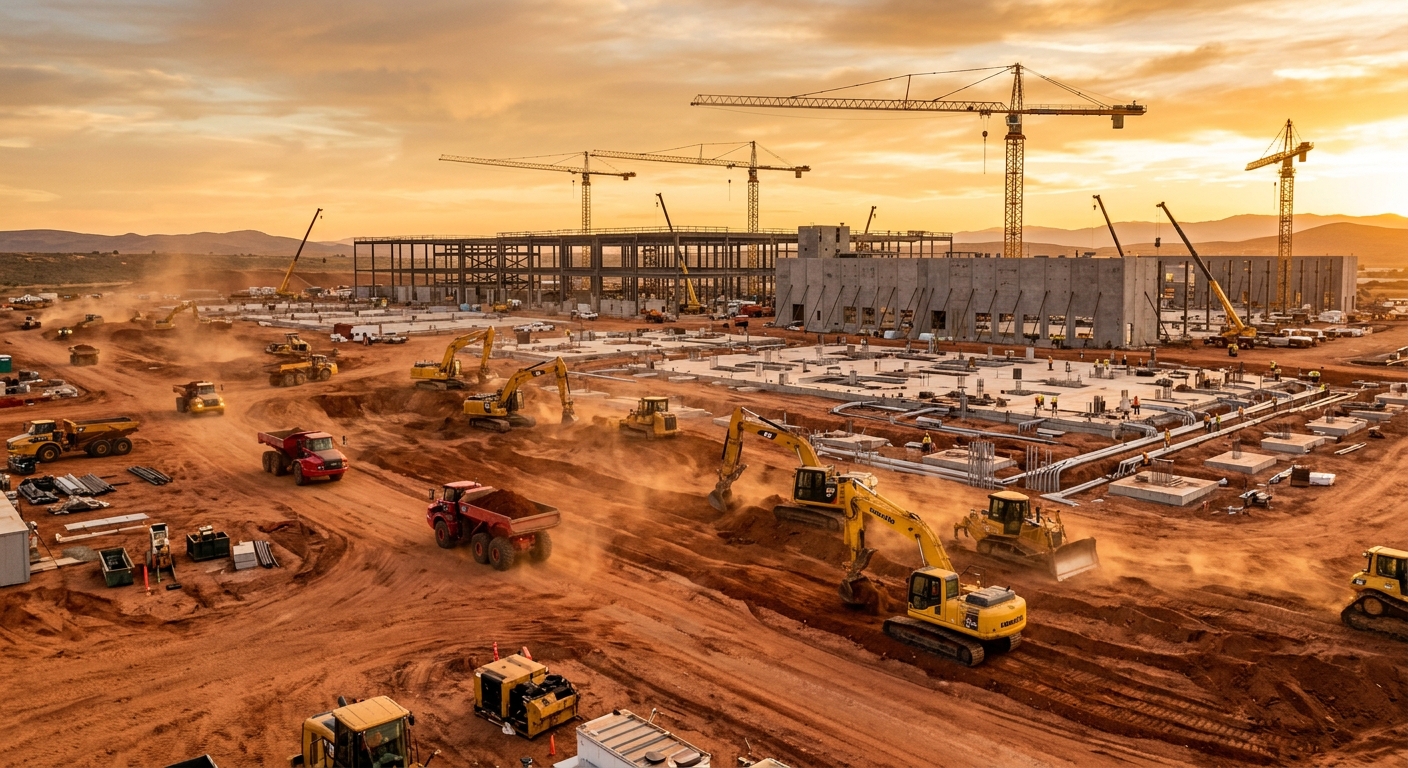
Those numbers help explain why contractors are still talking about capacity. There is real work moving into the field. Earthwork, utilities, concrete, site access, clearing, drainage, paving, and material handling do not happen on spreadsheets. They happen with machines, operators, trucks, mechanics, and parts.
But a fast jump in starts can create a bad buying environment. Contractors see work hitting at once and feel pressure to secure capacity before competitors do. Dealers know demand is there. Rental yards tighten up on popular classes. Used machines with clean histories get more attention. Finance payments still arrive whether the job goes smoothly or not.
That is where a contractor can mistake market urgency for business urgency.
There are good reasons to add equipment. If a contractor has signed work, healthy margin, operator capacity, shop capacity, and repeat demand for the machine after the current job, buying can be the right move. If the decision is based on fear that every job requires ownership, the machine can become a very expensive security blanket.
The difference is not academic. A compact track loader, mini excavator, dozer, telehandler, or wheel loader can look easy to justify during a busy season. The payment gets harder to love when the next phase of work changes, the operator pool gets thin, or the machine spends its best weeks waiting on a low-margin job to open up.
Backlog is better, but not evenly better
Associated Builders and Contractors reported that its Construction Backlog Indicator rose to 9.1 months in May 2026, up 0.3 months from April and 0.7 months from May 2025. That is a healthy reading. It says contractors, on average, had more work under contract than they did a year earlier.
The split by contractor size is the part fleet owners should pay attention to. ABC’s release said backlog was especially strong among larger contractors, while smaller contractors did not see the same lift. ENR’s coverage of the April reading noted that firms above $100 million in annual revenue reported much longer backlog than smaller firms, with companies under $30 million reporting the smallest backlog.
That matters because equipment decisions are not made by the average contractor. They are made by a specific company with a specific backlog, balance sheet, labor pool, customer base, and service setup.
A national backlog number can make the market sound safer than it feels in a smaller yard. A regional site contractor with a few crews may be living in a different world than a large civil contractor tied into major infrastructure and industrial work. The big contractor may be thinking about fleet standardization, project phasing, and long-term utilization. The smaller contractor may be deciding whether one more payment leaves enough room for payroll, fuel, insurance, and a bad month.
Both can be right. That is the point.
The market can be healthy while the wrong purchase still hurts.
Equipment demand follows the phase, not the headline
One reason broad construction data can mislead equipment buyers is that projects move through phases.
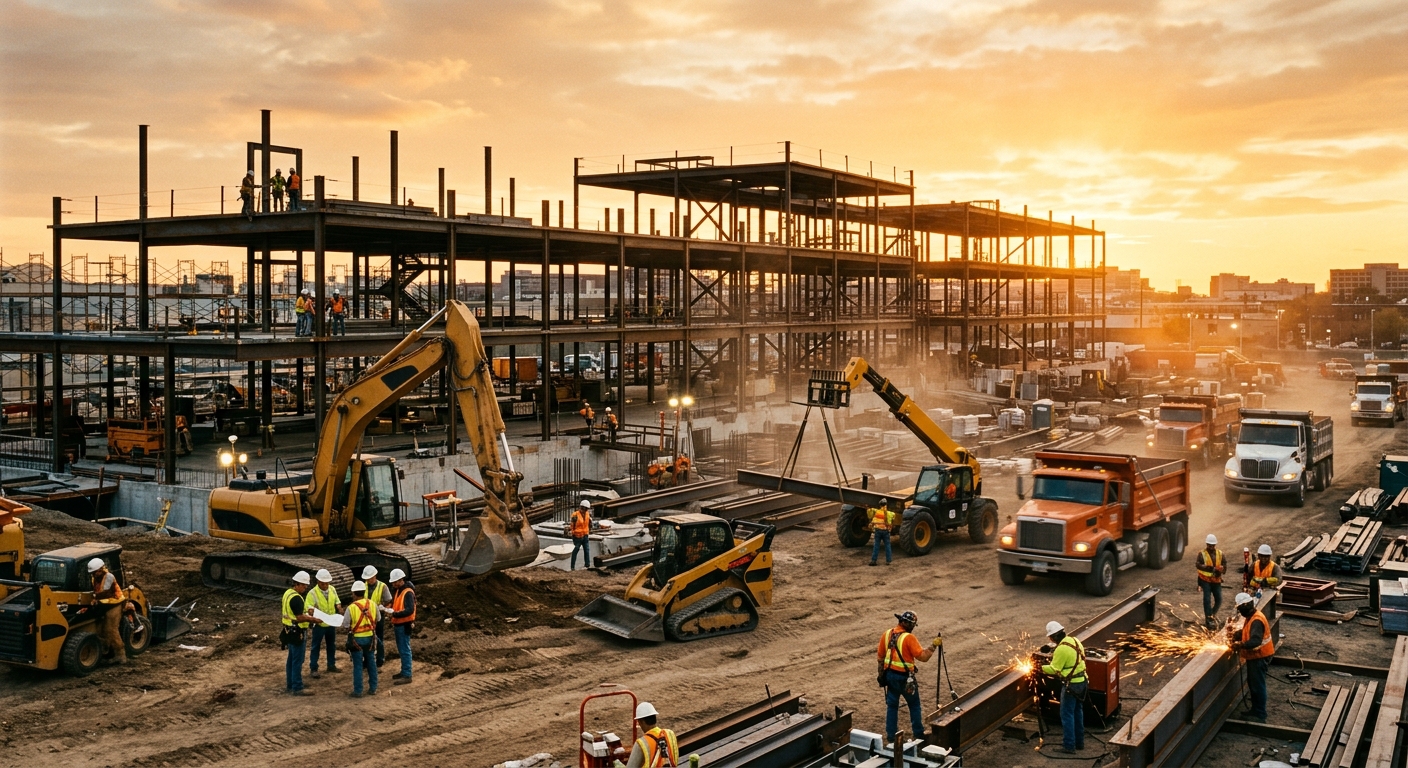
Early sitework pulls clearing crews, dozers, excavators, articulated trucks, compactors, grinders, mulchers, pumps, and trench safety equipment. Structural work shifts the demand mix. Later phases can lean harder on telehandlers, aerial lifts, forklifts, compressors, generators, light towers, brooms, sweepers, and smaller support machines.
If a contractor buys around one short phase, the machine may be useful for three months and awkward for three years. Rental exists for exactly that kind of mismatch. Owning makes sense when the machine has a clear second and third use after the first job. Renting makes sense when the job needs capacity without long-term commitment.
This is especially true in markets tied to large projects. Data centers, factories, hospitals, schools, transmission work, and infrastructure packages can pull a lot of equipment into a region. They can also change fast. A machine that is perfect for one project phase may not fit the next wave of work.
Contractors should be honest about that before signing another note.
Ask a few ugly questions. If this job vanished, where would the machine go? Who would run it? What work would it replace? What does it cost per hour after fuel, wear, insurance, service, transport, and finance? How many hours does it need to work before it is actually earning money? What repair would make the whole decision look stupid?
Those questions are annoying because they cut through the excitement. Good. Equipment payments are boring on purpose.
Service capacity is the hidden constraint
Backlog does not fix a weak shop.
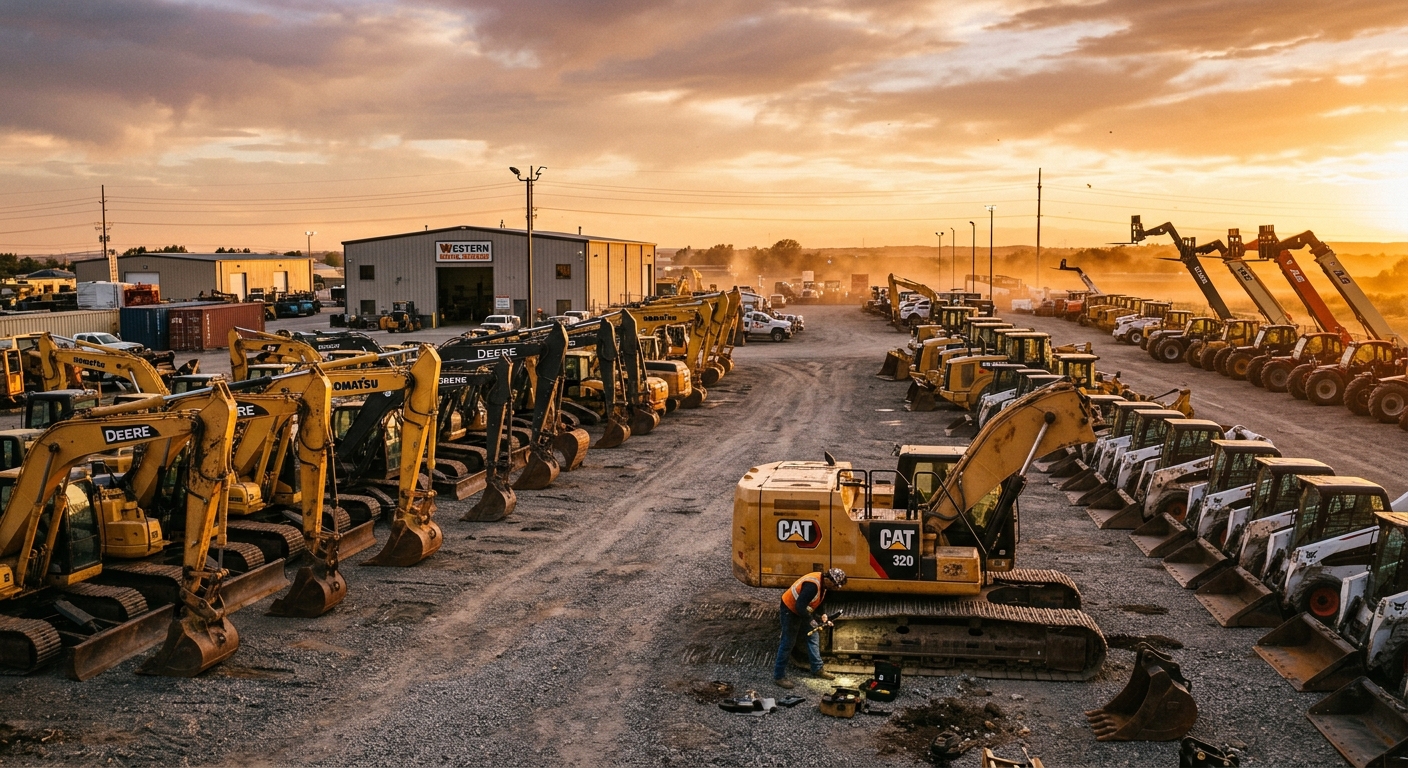
Every machine added to a fleet brings inspections, grease, filters, wear parts, tire or track decisions, fluid sampling, software updates, attachment checks, damage documentation, cleanup, transport coordination, and the occasional failure that happens at the worst possible time. If the service department is already behind, adding machines may add revenue and still lower the quality of the operation.
This is where fleet growth gets misunderstood. A company does not only need enough iron. It needs enough service capacity to keep the iron working. Mechanics, parts availability, field service, maintenance routines, and clear ownership of daily checks all decide whether the fleet is truly ready.
The technician shortage makes this worse. Contractors may be able to finance equipment faster than they can staff maintenance. That creates a lag. The fleet grows first. The repair backlog follows.
The better operators are measuring machines individually. They know which assets earn clean hours and which ones create drama. They know which older units are still worth keeping and which ones are eating shop time that should go to better equipment. They sell machines before the repair pattern becomes obvious to everyone else.
That discipline matters more in a busy market, not less. When work is slow, every machine gets questioned. When work is strong, bad machines get protected by activity. They stay in the fleet because they are “needed.” Then they fail when the schedule is tight and the customer is already impatient.
Financing should follow margin, not confidence
Contractor confidence readings have remained positive in recent ABC reports, even when they move month to month. That is encouraging, but confidence is not cash flow.
Equipment finance has a way of turning optimism into a fixed monthly obligation. The machine may be productive, but the payment does not care about weather, permitting delays, change orders, late-paying customers, underbid work, missing operators, or a surprise repair on another unit.
This is why the buying decision has to be tied to margin, not just backlog. A contractor with nine months of weak-margin work is not in the same position as a contractor with six months of profitable, repeatable work. Backlog gives visibility. It does not guarantee profit.
The cleanest test is simple: can the machine be paid for by work that is already sold at margins the company would be happy to repeat? If the answer depends on work that might close later, rental may be the smarter bridge.
There is nothing timid about renting. Renting can be disciplined. It keeps the company flexible while the market sorts out which sectors are durable and which ones are just loud for a quarter.
Ownership is still powerful. It gives control, availability, familiarity, and long-term cost advantages when utilization is real. The problem is buying for imaginary utilization.
The market is good enough to be dangerous
The current construction market is not dead. Far from it. Dodge planning data remains high, starts have shown big monthly gains, and ABC’s backlog reading improved in May. Contractors who have been waiting for demand signals have them.
That is exactly why discipline matters.
Weak markets scare contractors away from bad purchases. Strong markets talk them into it. The worst fleet decisions often happen when the numbers look good enough to justify anything.
The contractors who come out ahead will not be the ones who react to every planning headline with a purchase order. They will be the ones who match equipment to signed work, real margins, available operators, service capacity, and a believable second life for the machine.
Planning numbers tell contractors there may be work ahead. Backlog tells them some of it is already committed. Starts tell them machines are moving into the field.
None of those numbers answer the only question that matters at the company level: will this machine make money here?
That answer still has to come from the fleet.
Sources: Dodge Momentum Index, June 2026, Dodge Construction Network news feed, Associated Builders and Contractors 2026 news releases, ENR coverage of ABC backlog data.