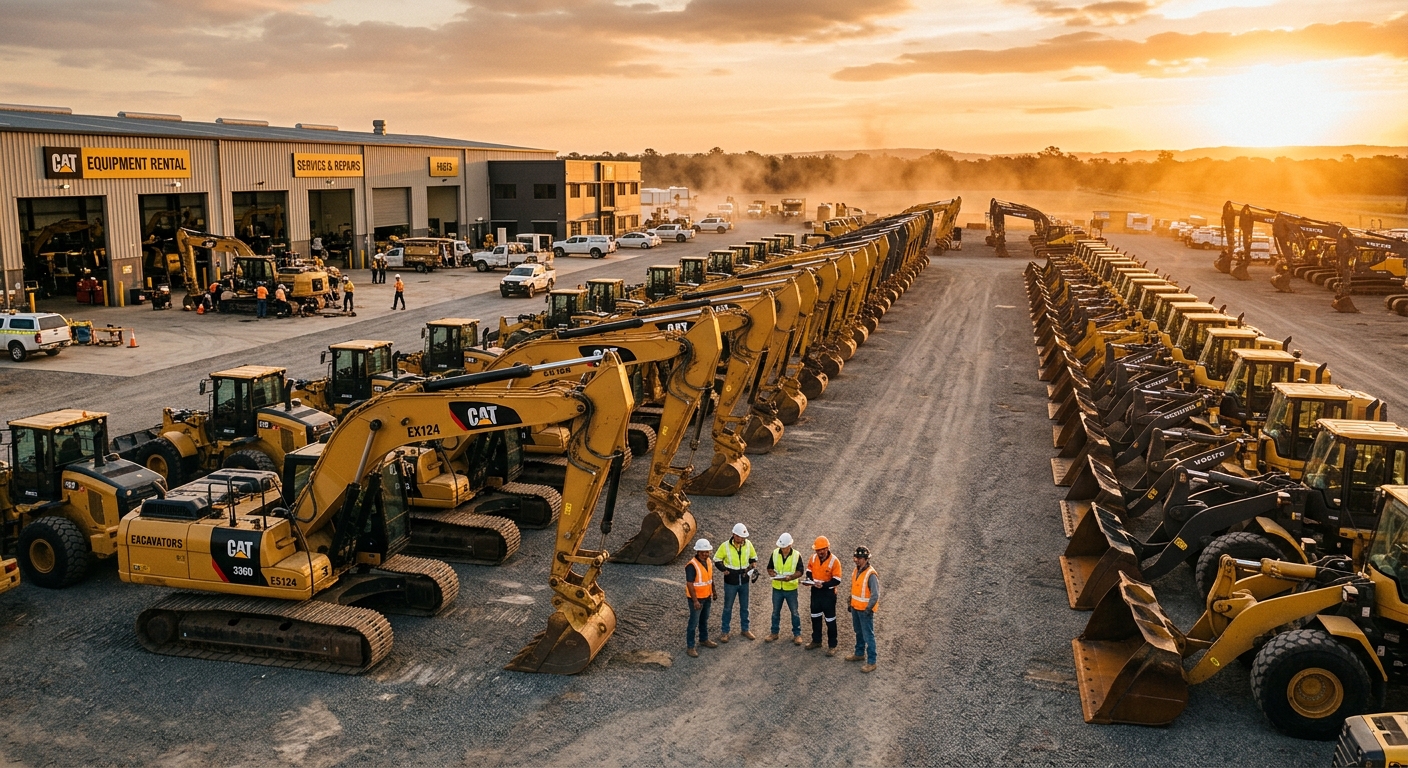

Equipment Financing Is Strong, But That Does Not Make Every Machine a Buy
Equipment finance volume is still healthy in 2026, but May's cooling demand and uneven construction spending argue for harder buying discipline before contractors add another payment.
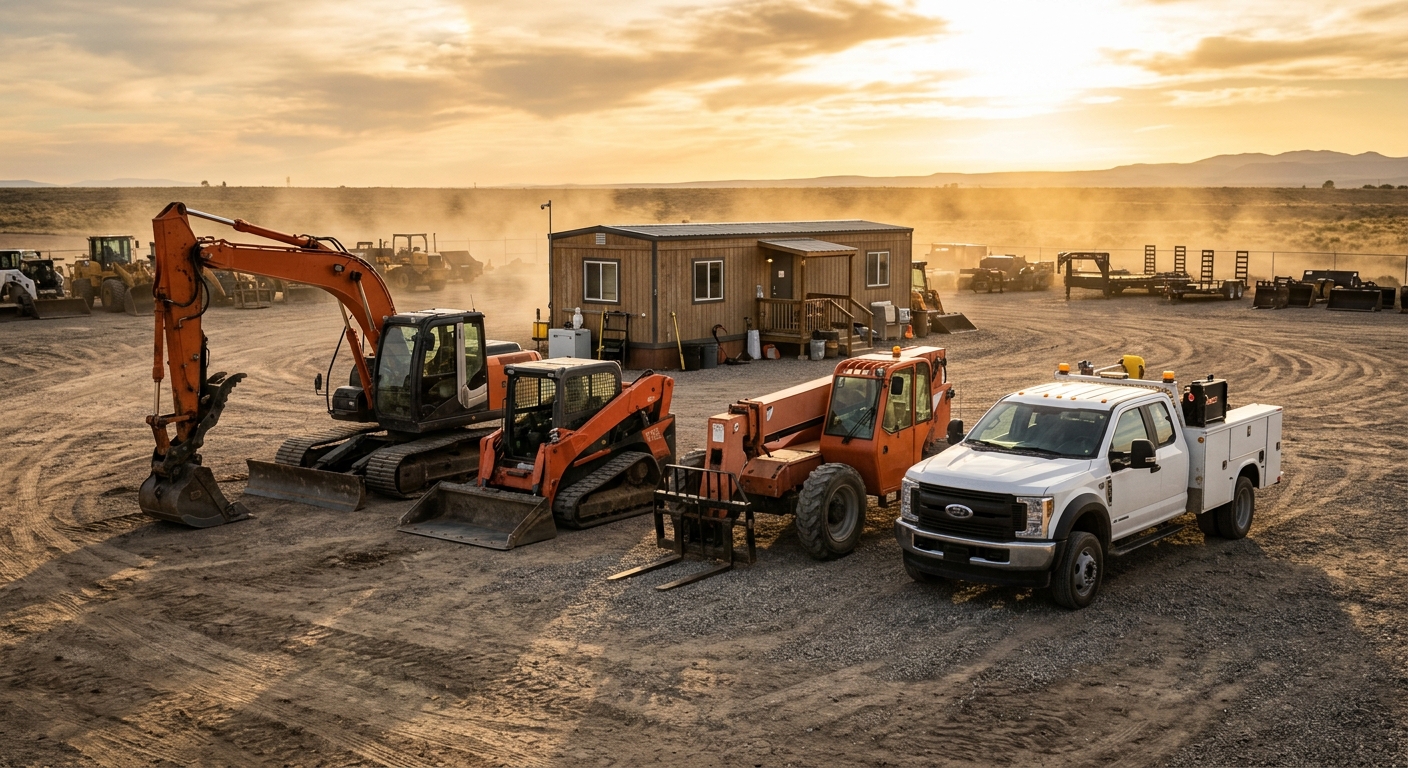
Equipment credit is available. That is good news. It is also how a lot of contractors talk themselves into buying machines they have not fully earned yet.
The latest equipment finance data is not weak. The Equipment Leasing and Finance Association reported that May 2026 CapEx Finance Index new business volume was $10.2 billion on a seasonally adjusted basis. Year-to-date volume was up 11.5% from the same period in 2025. ELFA’s separate June Monthly Confidence Index rose to 63.7, up from 59.9 in May.
That sounds like a green light. It is closer to a yellow one.
Finance activity is still running above last year’s pace, but May was the fourth straight monthly cooling in equipment demand. The construction market is also uneven. Public work, infrastructure, industrial jobs, utility work, and data centers are still pulling iron into busy regions. Smaller private work is less reliable. For contractors and rental yards, the danger is not that lenders vanish. The danger is that easy access to credit hides a weak machine case.
FieldFix Editor’s Note: A payment does not tell you whether a machine is paying for itself. FieldFix helps owners track service history, repair spend, downtime, and cost per hour by asset, so the next purchase is measured against real fleet economics instead of gut feel.
Finance volume is healthy, but it is not accelerating
ELFA’s May CapEx Finance Index gives the cleanest read on the credit side of the equipment market. New business volume among surveyed member companies was $10.2 billion on a seasonally adjusted basis. That was down 2.3% from April, but still above the 2025 monthly average of roughly $10 billion.
The year-to-date number is stronger. Through May, new business volume was up 11.5% from the same period last year. ELFA’s forecast also points to $128 billion of equipment demand in 2026, which would be the highest annual level recorded since the index began in 2006.
So, no, this is not a frozen credit market. Banks, captives, and independent finance companies are still putting money to work. Equipment sellers still have financing tools. Customers with decent businesses and usable collateral can still get deals done.
But the monthly direction matters. A market can be strong and still be past its easiest buying window. January came in hot. Demand has cooled since then. That does not mean the cycle is rolling over. It does mean owners should stop acting like every financed machine is automatically a growth asset.
There is a big difference between “the lender approved it” and “the machine deserves a place in the fleet.”
Confidence is up because the market is still functioning
The June confidence reading adds another useful piece. ELFA’s Monthly Confidence Index rose to 63.7 in June from 59.9 in May. In the same survey, 30.4% of executives expected business conditions to improve over the next four months, while 65.2% expected conditions to stay the same.
That is a decent lending environment. It says finance executives are not hiding under the desk. They still see activity. They still see enough credit quality and customer demand to keep the market moving.
For contractors, that can be useful. A company that delayed a replacement because it was waiting for credit to loosen may have options. A rental yard with proven utilization may still be able to add fleet. A dealer with customers on signed work may be able to structure packages around machines, attachments, warranties, and service.
But confidence on the finance side is not the same as confidence on the jobsite. Lenders look at portfolios. Contractors live inside individual machines. A lender can be right that the market is healthy while a contractor is wrong to buy a specific dozer, loader, or excavator.
That is the trap in 2026. The broad numbers are healthy enough to encourage activity, but not clean enough to excuse lazy math.
Construction spending is not giving everyone the same market
The construction side is more mixed. The Census Bureau estimated May construction spending at a seasonally adjusted annual rate of $2.210 trillion, up 0.1% from April but down 1.5% from May 2025.
Private construction was flat for the month. Private residential rose 0.3%. Private nonresidential fell 0.3% to a seasonally adjusted annual rate of $738.7 billion. Public construction rose 0.5%, and highway construction remained a major piece of demand.
That split matters for equipment. A contractor tied to public infrastructure can be busy while another contractor selling private commercial site work sees customers delay starts. A rental yard near a highway corridor may be short on rollers, excavators, and light towers while another yard in a softer metro is trying to keep compact machines moving. A dealer can have one branch fighting service backlog while another branch is pushing harder on used inventory.
National averages blur that reality. Machine payments do not.
If the work is public, funded, and scheduled, owning can still make sense. If the work is private, rate-sensitive, and still waiting on approvals, renting may be the better choice. If the work depends on one customer or one project, ownership needs a backup plan before the purchase order is signed.
Planning is high, but still concentrated
Forward-looking construction data also points to a selective market. Dodge Construction Network reported that its June Momentum Index fell 1.9% to 271.7 from an upwardly revised May reading of 277.1. Commercial planning declined 6.8%, while institutional planning rose 10.9%. Year over year, the index was still up 21.8%.
That is not bad. It is just not broad enough to treat as a universal fleet-buying signal.
Data centers remain a major force. Institutional work helped the June reading. Some traditional sectors are still moving. But many contractors are not building data centers or hospitals. They are clearing lots, grading subdivisions, replacing utilities, building pads, cutting access roads, hauling material, and chasing local commercial work that may be less predictable than the headline market.
This is where finance availability can become dangerous. A contractor sees national planning numbers, hears that equipment finance demand is headed for a record year, and assumes the next machine will find work. Maybe it will. But the machine does not need national demand. It needs local, paid utilization.
A 25-ton excavator bought for a six-month project has to earn after that project. A compact track loader added for a busy spring has to stay productive through winter. A telehandler that makes sense on a warehouse job has to find the next site. A low-hour used dozer with a good rate still has to survive repairs, transport, insurance, and downtime.
The smart owners are not asking, “Can I get financed?” They are asking, “What job pays for this after the first job?”
The payment is only one line in the cost
Equipment buying conversations still overfocus on the monthly payment. That is understandable. The payment is clear. It is also incomplete.
The real cost of ownership includes financing, depreciation, insurance, transport, attachments, wear parts, preventive maintenance, repairs, downtime, operator availability, fuel, theft risk, telematics, shop capacity, and resale timing. A machine can have an affordable payment and still be a poor fit.
The repair side is where many owners get surprised. A used machine with a friendly note can turn ugly if it needs undercarriage work, emissions repairs, hydraulic work, tires, tracks, pins, bushings, or electrical diagnosis. A new machine can be easier to budget, but the warranty does not make lost production free. If a machine is down during the wrong week, the cost is not just the repair invoice. It is the schedule disruption, the rental replacement, the idle crew, and the customer conversation.
Financing does not remove those costs. It can make them easier to ignore at the start.
That is why 2026 buying decisions need to include shop reality. If the current fleet is already behind on service, adding another machine may increase revenue and stress at the same time. If the mechanic is buried, the owner is still diagnosing problems by memory, and maintenance records live in text threads, more iron may not be the fix.
Sometimes the highest-return fleet decision is repairing the machines already earning. Sometimes it is selling the weak asset that keeps stealing time. Sometimes it is renting for three months instead of owning for five years.
Rental yards need discipline too
Rental companies are not immune. In a choppy market, contractors often rent instead of buy, which should help rental demand. But rental growth can still hide bad fleet mix.
If a large project pulls machines hard for a few months, utilization can look better than the underlying market. The yard buys around that surge, then the project phase changes. Earthmoving slows. Vertical work picks up. The next customer needs smaller equipment, different attachments, or more support gear. Suddenly the machine that looked scarce in March is sitting in August.
Small and mid-size rental yards should be especially strict. General-purpose fleet can move across customer types. Compact excavators, compact track loaders, skid steers, light towers, compressors, small rollers, pumps, and smaller generators tend to have more ways to earn. Specialized or larger machines can still be excellent assets, but they need a clearer customer base and a stronger maintenance plan.
The question is not whether rental demand exists. It does. The question is whether each unit can hit the right utilization and rate after the easy customer is gone.
That is a harder question, and it is the one that protects margin.
Dealers should sell the support case, not just the rate
Dealers have an opening in this market, but the pitch needs to mature.
Customers know payments matter. They can compare rates. They can look at used listings. They can shop brands. What many of them need is help understanding the full ownership case.
That includes service intervals, likely wear items, warranty coverage, attachment fit, financing options, resale history, parts availability, transport needs, and whether a rental backup is available if the machine goes down. The dealer that can explain those pieces honestly is more useful than the one pushing a monthly number.
This is also where dealers can protect long-term relationships. A customer who buys too much machine in a soft local market may become tomorrow’s delinquency problem, trade-in problem, or angry service customer. Saying “rent this first” or “wait until that contract is signed” may cost a short-term sale. It can save the account.
In a selective market, trust compounds. So does bad advice.
The better buying filter
Contractors do not need to stop buying equipment. That would be an overreaction. The finance market is still open, confidence is solid, and many categories of work remain active.
They do need a better filter.
Before adding a machine, owners should know the signed work behind it, the expected hours, the rate or revenue it supports, the operating cost, the service plan, the backup plan, and the exit plan. They should compare ownership against rental without pretending rental money is always wasted. They should price the machine against the jobs it will actually do, not the jobs they hope to win.
They should also be honest about whether the fleet has too many machines or too little control. A business with weak maintenance records, unknown cost per hour, and no clear utilization data does not need more optimism. It needs numbers.
The 2026 equipment market is not telling owners to hide. It is telling them to be precise. Credit is available. Demand is real. But the next machine still has to earn its keep one hour at a time.