
Heavy Equipment Is Growing. That Still Does Not Make Every Buy Smart.
Fresh market forecasts point to growth in heavy construction equipment, but used inventory, rental demand, and capital pressure tell contractors to stay disciplined.
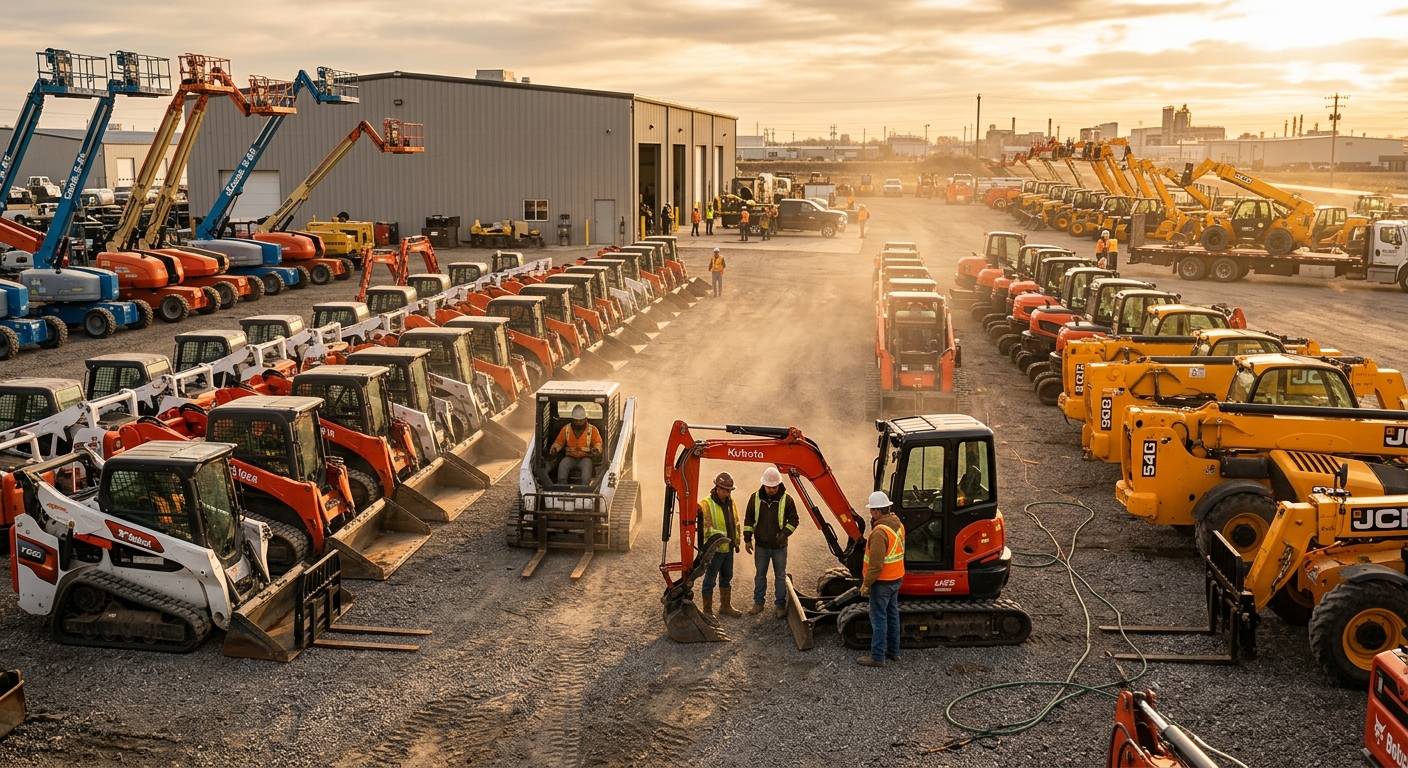
The heavy equipment market is getting a bullish headline again. MarketsandMarkets says the global heavy construction equipment market is projected to grow from $160.11 billion in 2026 to $226.91 billion by 2033, a 5.1 percent compound annual growth rate. The firm points to demand for heavy equipment across infrastructure, construction, and mining, with excavators, loaders, dozers, dump trucks, compactors, and cranes all part of the forecast. MarketsandMarkets
That is real demand. It is also easy to misread.
A growing market does not mean every contractor should buy more iron. It means the industry is moving through a cycle where equipment demand, public work, private construction, rental fleets, dealer inventory, financing costs, labor limits, and machine availability are pulling in different directions at the same time. The top-line forecast can be right while a small contractor still makes a bad purchase.
The smarter read is this: demand is there, but capacity has to be bought carefully. Contractors who treat 2026 as a green light to add machines without utilization discipline may end up with more payments, more maintenance, and the same crew bottleneck they had before.
FieldFix Editor’s Note: A growth forecast is not a fleet plan. Before adding another excavator, loader, skid steer, or truck, contractors should know current utilization, repair history, downtime, rental substitution, and cost per hour. FieldFix helps equipment owners track those numbers by machine, so growth decisions are based on the fleet they actually have.
The market can grow while buyers stay cautious
The forecast makes sense. Infrastructure work is still a major demand driver. Utilities, roads, bridges, site development, energy projects, warehousing, data centers, and municipal work all need machines. A contractor cannot build a subdivision, replace a water main, clear a right-of-way, or move aggregate with a spreadsheet.
Global Market Insights also sees growth, putting the global construction equipment market at $169.6 billion in 2026 and projecting $289.5 billion by 2035. Global Market Insights
Grand View Research uses a larger base and expects the global construction equipment market to reach $262.25 billion in 2026, with growth through 2033. Grand View Research
The numbers differ because research firms define markets differently. Some include a wider mix of equipment, regions, aftermarket categories, or related machinery. That is normal. The useful part is not one exact dollar figure. The useful part is the direction. Most serious forecasts expect construction equipment demand to keep expanding.
That does not erase the local contractor’s problem. A $160 billion global market does not help if the machine you bought sits three days a week. It does not help if the operator is already booked on another crew. It does not help if the dealer is two weeks out on service. It does not help if the payment starts before the work does.
This is where industry growth and contractor growth split apart. Industry growth is broad. Contractor growth is specific. It happens one crew, one schedule, one machine, and one cash-flow month at a time.
Used equipment is sending a different signal
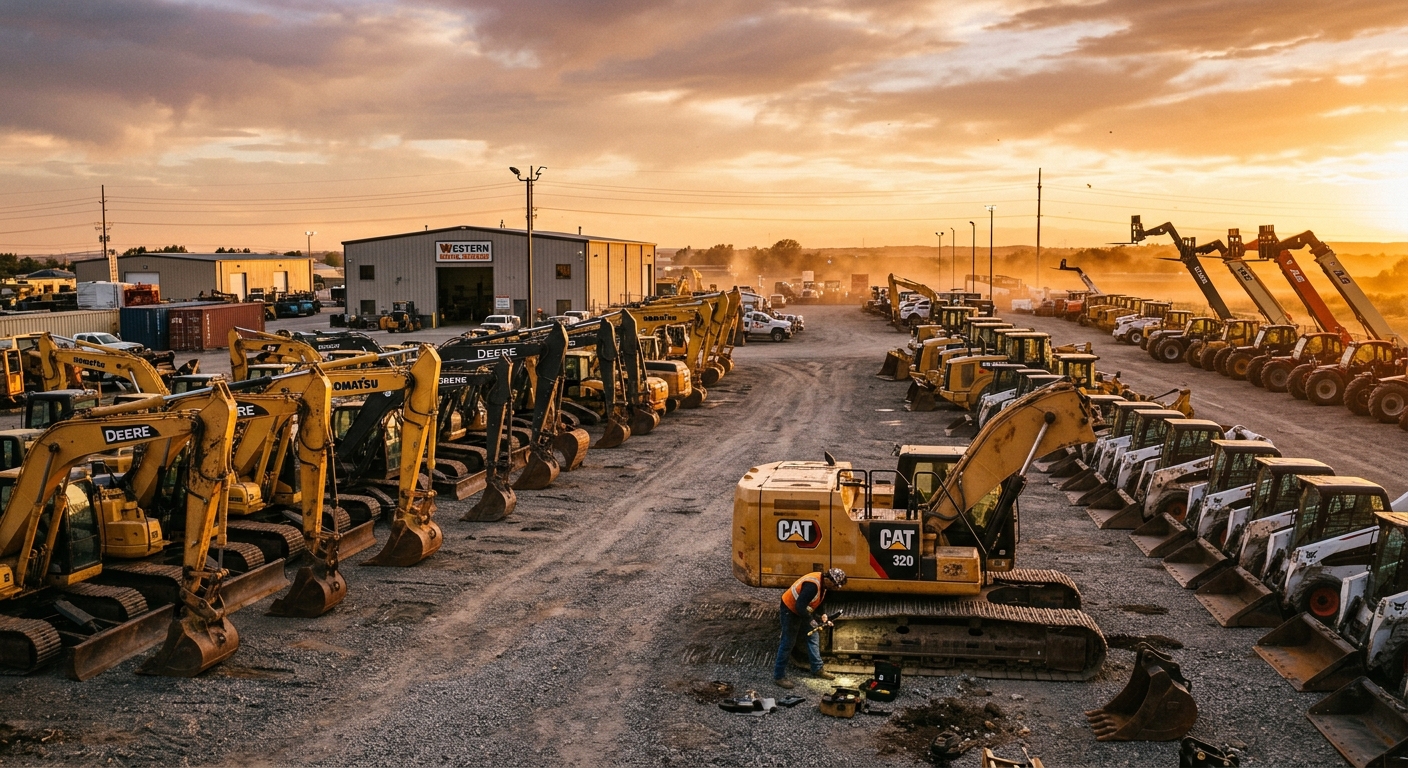
Sandhills Global reported that used construction equipment inventory levels declined again in May, with crawler excavators and wheel loaders leading the drop. The same June report said used equipment rentals remained strong as sales cooled. Sandhills Global
That combination matters.
Lower used inventory can support values, especially on clean machines with good hours and known maintenance. Strong rental demand also shows contractors still need capacity. But cooling sales suggest buyers are not blindly chasing every machine that hits the market.
There are a few reasons for that. Financing is still a real filter. Late-model used equipment is not cheap. Good attachments add up. Transport costs are not free. Insurance, wear parts, emissions repairs, tires, tracks, undercarriage, fluids, and service all follow the purchase home.
The used market also punishes vague thinking. A contractor may see a used wheel loader, dozer, or excavator that looks like a deal compared with new pricing. The question is whether that machine solves a repeatable problem. If it fills a proven production gap, protects a crew, or replaces rental spend that is already happening every month, it may be a smart move. If it only feels cheap because new iron got expensive, that is not enough.
Used machines are attractive because the depreciation curve can be kinder. They are dangerous because the repair curve can be less forgiving.
The best buyers are not asking, “Can I afford the payment?” They are asking, “Can this machine earn enough hours at the right margin after repairs, hauling, insurance, and downtime?”
Rental demand is more than hesitation
Rental gets framed as a fallback for contractors who do not want to buy. That is too simple.
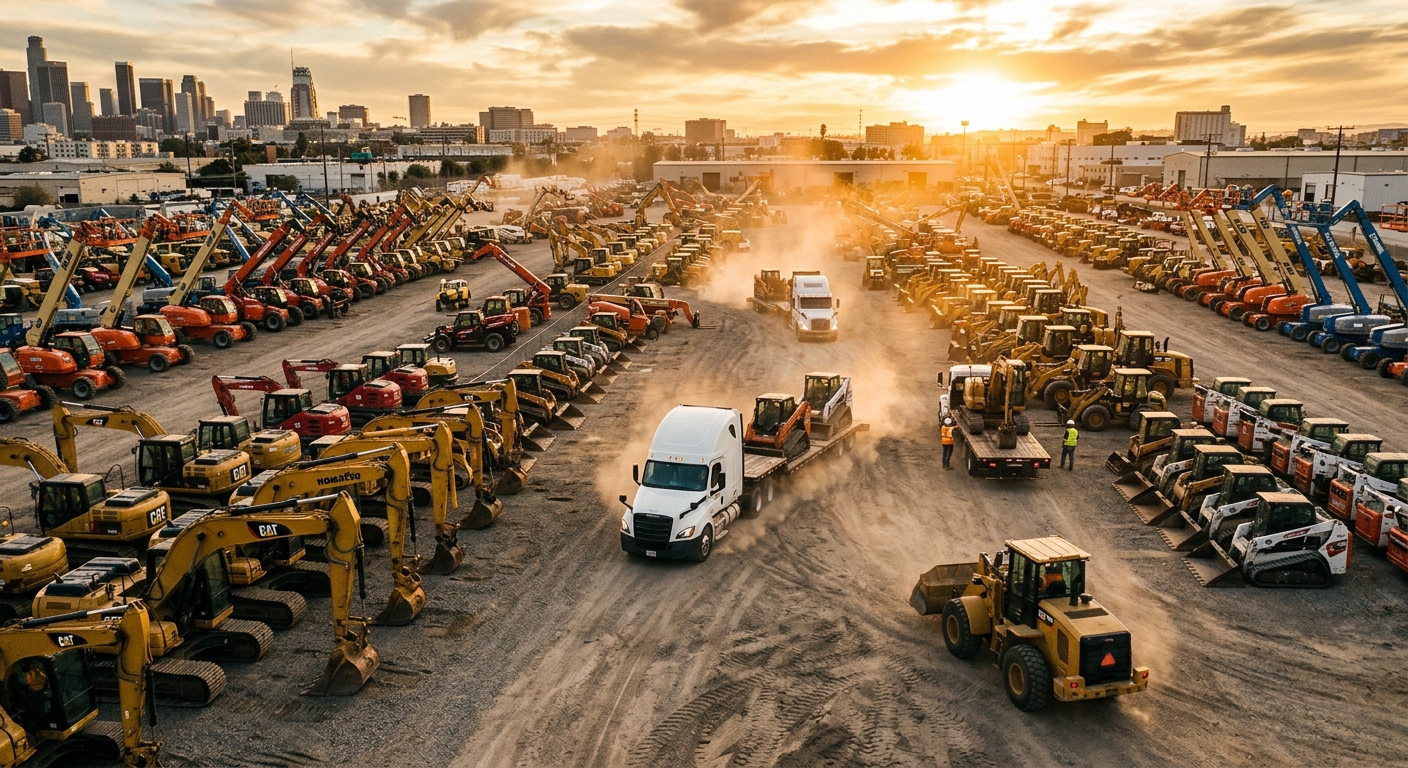
Rental is also a capacity tool. It lets a contractor cover a spike, take a job outside the normal machine mix, handle a breakdown, test a new class of equipment, or avoid owning a machine that only works a few months a year.
Grand View Research estimates the global construction equipment rental market at $213.68 billion in 2025 and expects it to reach $224.27 billion in 2026. Grand View Research
Global Market Insights puts the construction equipment rental market at $159.8 billion in 2025 and $168.7 billion in 2026, with earthmoving and roadbuilding equipment making up 57 percent of the market in 2025. Global Market Insights
Again, the exact market size depends on methodology. The direction is the point. Rental demand is not going away.
For contractors, that creates a better question than “buy or rent?” The real question is “which capacity should I own?”
Own the machines that define the business. Rent the machines that cover irregular demand. That sounds obvious, but plenty of fleets still drift into ownership because a machine was available, a dealer had a deal, or a job made the purchase feel urgent.
A land-clearing contractor probably needs to own core mulching capacity. A site contractor may need to own excavators, loaders, and compact track loaders that run most weeks. A utility contractor may need trenching and compact excavation equipment that fits the crew’s daily work.
But a machine that only supports unusual jobs deserves more scrutiny. If a contractor needs a larger excavator three times a year, rental may be cheaper than ownership even when the weekly rate looks painful. If a telehandler sits most of the winter, renting by project may beat carrying it. If a specialty attachment wins occasional work, rental can protect cash while the contractor proves demand.
Rental is expensive when it replaces a machine that should be owned. Ownership is expensive when it replaces a rental that was doing its job.
Forecasts do not solve the labor problem
Every equipment forecast has an assumption buried underneath it: someone can run the machines and someone can keep them working.
That is where contractors hit the wall.
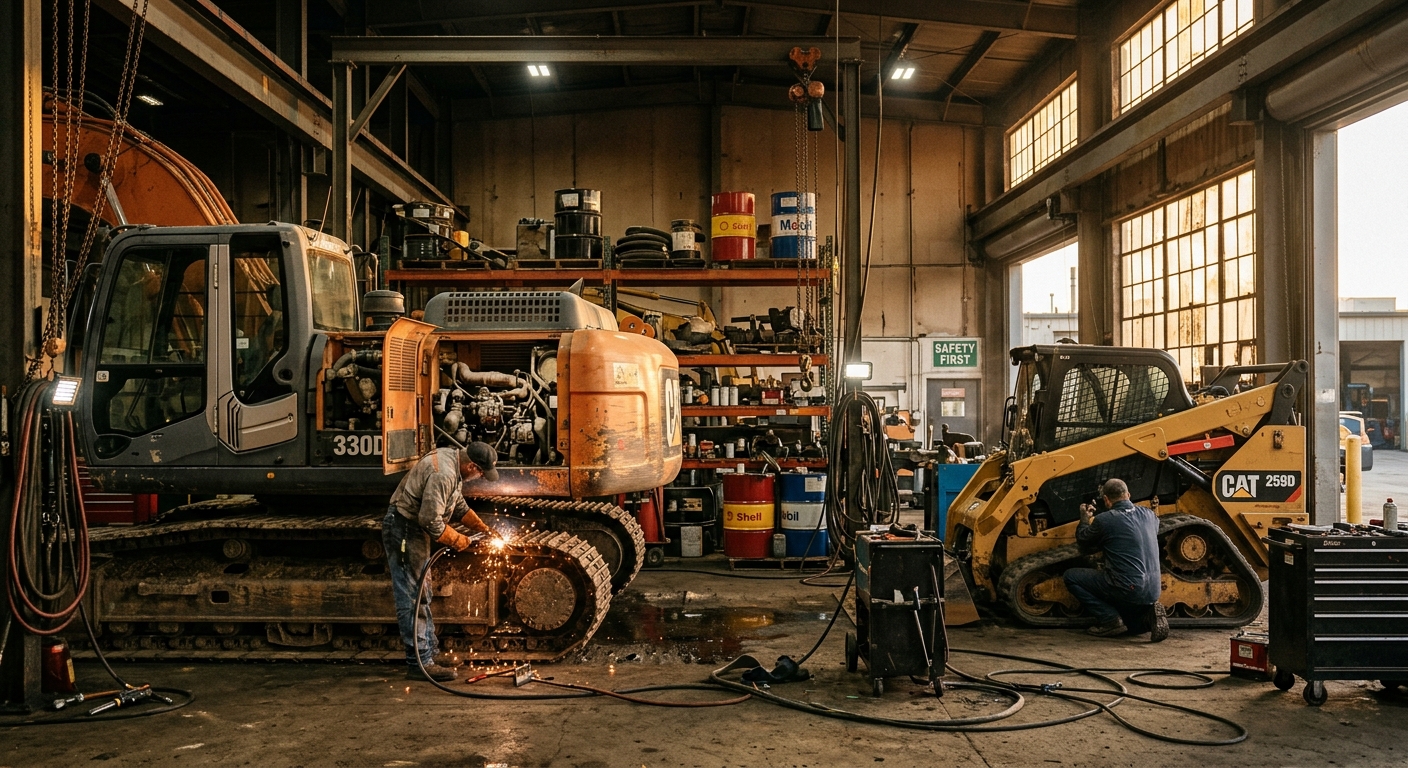
The U.S. Bureau of Labor Statistics projects heavy vehicle and mobile equipment service technician employment to grow 6 percent from 2024 to 2034, faster than the average for all occupations. It also projects about 21,700 openings per year over that period, many tied to workers leaving the occupation or retiring. BLS
The AED Foundation has warned that the equipment industry may need to fill up to 73,500 heavy equipment technician positions over five years. AED Foundation
That does not mean contractors should stop buying equipment. It means support capacity belongs in the buying decision.
A new machine with a strong dealer, good parts support, trained technicians, and clear diagnostic access is different from a machine that looks good on paper but has weak local support. A used machine with complete records and known issues is different from a mystery machine with fresh paint and no service trail.
The technician shortage also changes how contractors should think about fleet complexity. Every brand, engine family, emissions system, attachment interface, hydraulic setup, and control system adds training and support needs. A mixed fleet can make sense if the machines are clearly better for the work. It can also become a parts and service headache if the buying logic was mostly opportunistic.
The old line was “buy the best machine.” The better line in 2026 may be “buy the best supported machine for the work you actually sell.”
What contractors should do with a bullish forecast
A bullish market forecast should push contractors to sharpen their numbers, not loosen them.
The first move is to separate demand from capacity. Demand means customers are calling. Capacity means the company can do the work profitably with the people, machines, cash, and schedule it actually has. Many contractors confuse the two during busy seasons. The phone rings, the backlog grows, and the next machine starts to feel inevitable.
Before buying, a contractor should look at the last 90 to 180 days. How many times did a job wait because a specific machine was not available? How much rental spend went to the same category? How often did crews lose production because the owned fleet was down? Which machine has the highest repair cost per hour? Which machine is fully utilized but still profitable? Which one looks busy but barely pays for itself?
Those answers beat market headlines.
The second move is to price downtime. If a machine failure costs a crew day, rental substitution, customer delay, trucking, and overtime, the repair invoice is only part of the loss. A newer machine may be justified if it reduces those losses. An older paid-off machine may still be better if downtime is low and support is strong.
The third move is to use rental records as buying evidence. If a contractor rents the same size excavator every month, ownership deserves a hard look. If rentals are scattered across oddball categories, rental may already be doing the right job.
The fourth move is to keep the fleet simple unless complexity is clearly paying rent. Standardized brands, familiar controls, shared attachments, repeatable service intervals, and common parts can save real money. Variety is fine when there is a reason. Random variety is expensive.
The bottom line
The heavy equipment market has room to grow. The forecasts are not hard to believe. Infrastructure needs are large, machines are aging, rental demand is active, and contractors still need iron to turn backlog into revenue.
But growth does not forgive sloppy buying.
The contractors who benefit from this cycle will not be the ones who simply own more machines. They will be the ones who know which machines earn, which machines drain cash, which repairs are coming, when rental beats ownership, and where one more purchase actually expands profitable capacity.
The market can be bullish. The fleet still has to be honest.