
The Maintenance Backlog Is Now a Fleet Strategy Problem
Contractors keep talking about machine prices, but the harder 2026 problem may be keeping the fleet repaired, staffed, and ready when the schedule gets tight.
Contractors are still watching purchase prices, interest rates, and auction values. They should be. A bad buy can sit on the balance sheet for years.
But there is another problem pressing harder in 2026: keeping the iron already in the yard working.
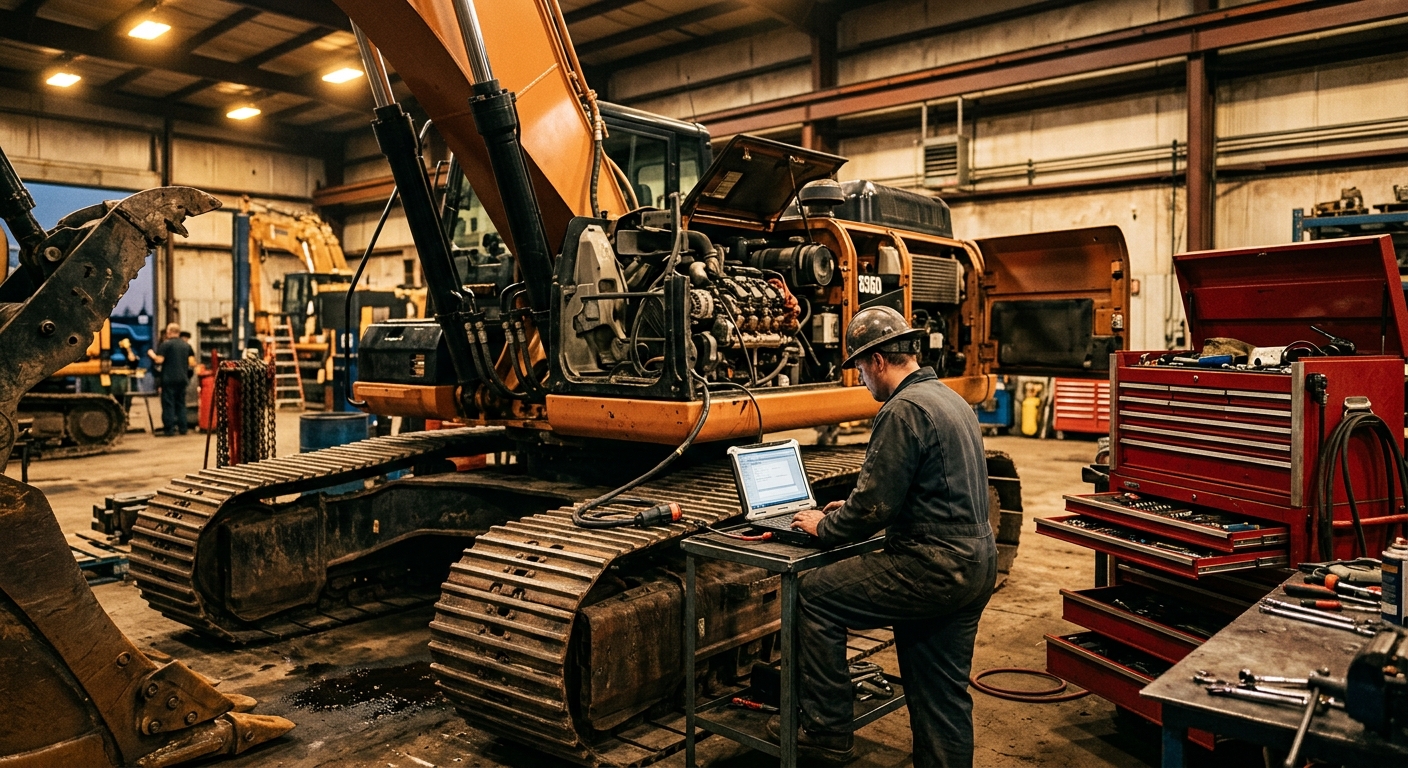
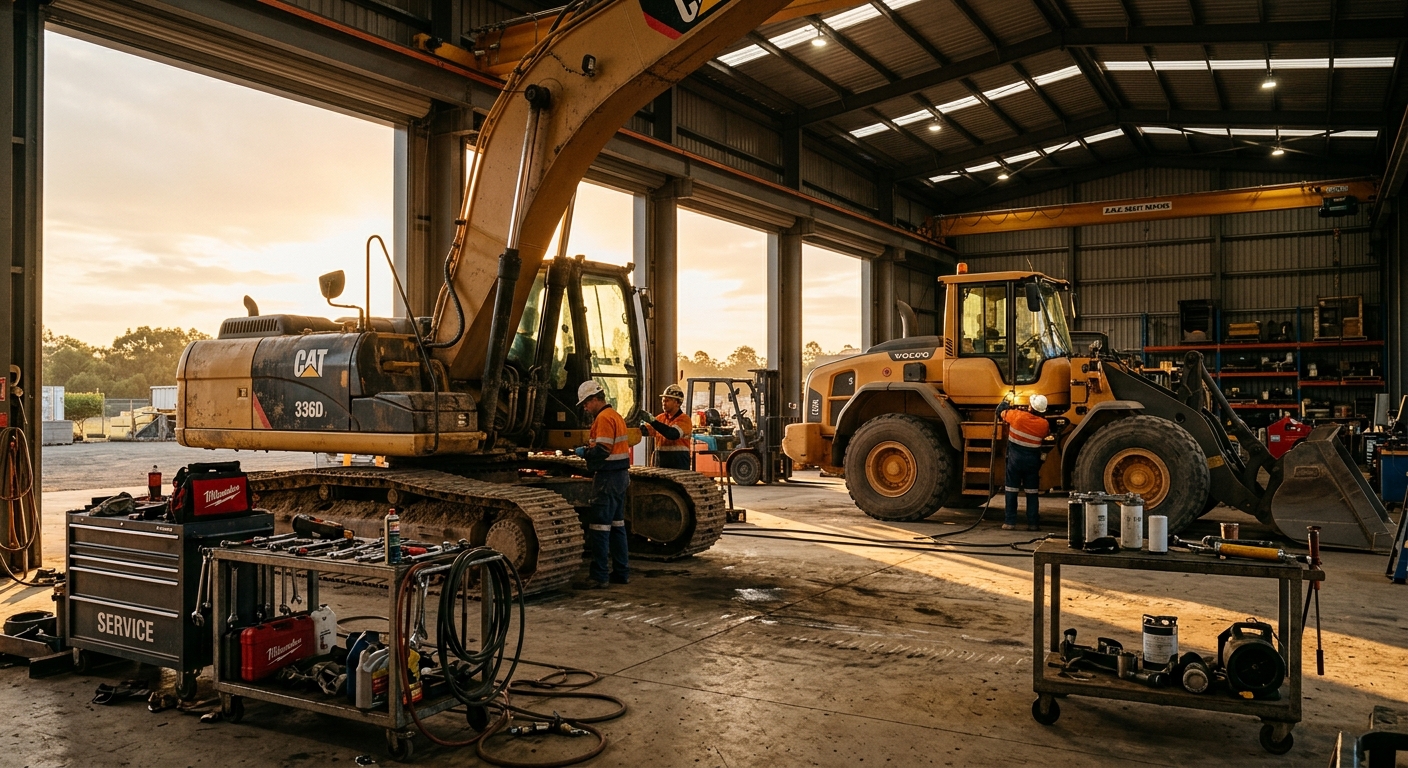
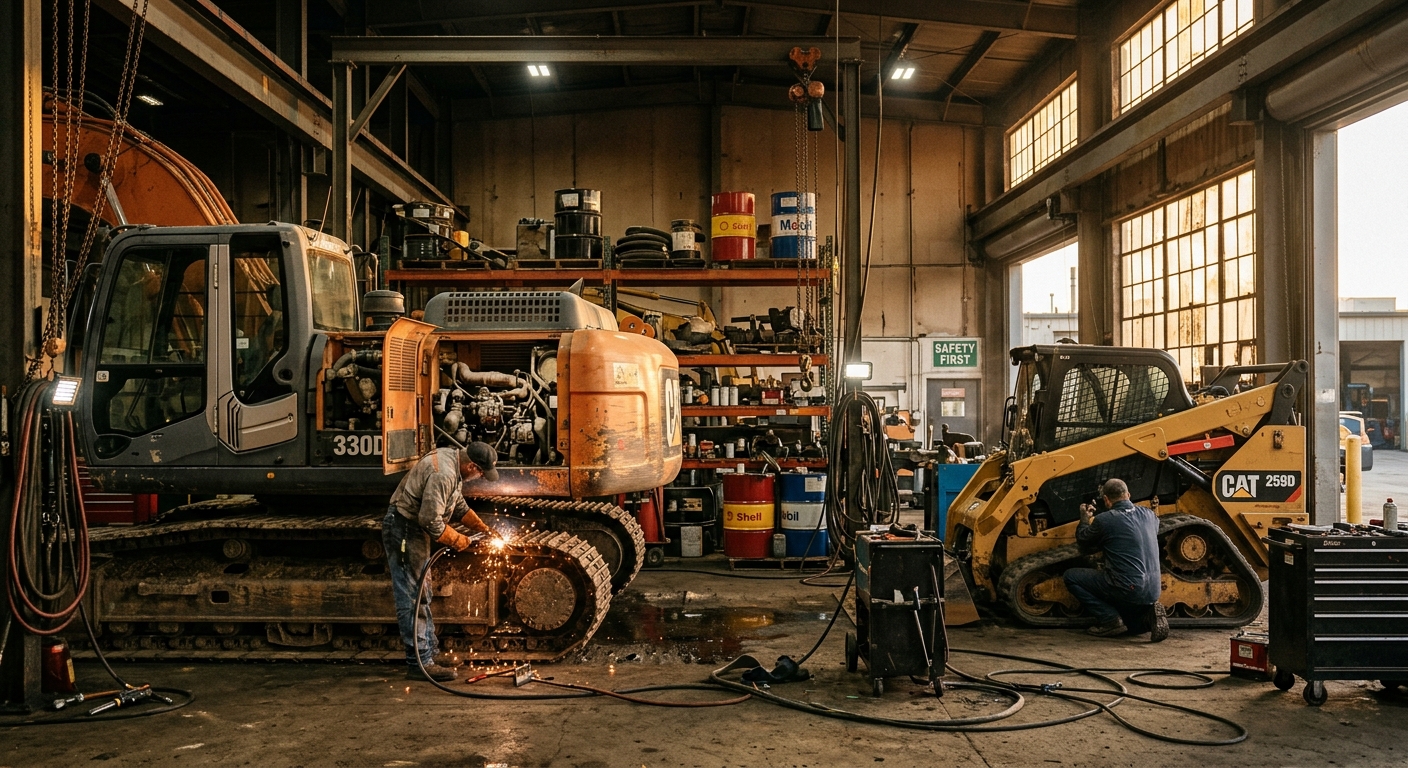
That sounds basic until a job slips because a dozer is waiting on a hydraulic hose, a compact track loader is down with an electrical fault, or an excavator sits behind three other machines in the dealer’s service queue. In that moment, the price paid for the machine matters less than whether somebody can diagnose it, get parts, and put it back to work before the schedule comes apart.
The labor data backs up the pressure. The U.S. Bureau of Labor Statistics says heavy vehicle and mobile equipment service technician employment is projected to grow 6 percent from 2024 to 2034, faster than the average for all occupations. BLS also projects about 21,700 openings per year across the decade, much of it tied to replacement needs as workers retire or leave the field. The same occupation already had 245,600 jobs in 2024, so this is not a tiny niche problem sitting off to the side of the equipment market. It is the repair base under the whole thing. BLS
Dealers feel it even more directly. The AED Foundation has warned that the equipment industry may need to fill up to 73,500 heavy equipment technician positions over five years, with dealer job opening rates running well above the national average. AED Foundation
That is the part contractors need to take seriously. The problem is no longer just “can I afford the machine?” It is “can I keep the machine available?”
FieldFix Editor’s Note: Downtime is a fleet cost, not a repair event in isolation. Track service history, parts spend, labor, fault patterns, inspections, and machine hours in one place before deciding whether to repair, replace, rent, or sell. FieldFix gives contractors a cleaner view of cost per hour when maintenance starts driving the decision.
Downtime is eating the margin people thought they had
A contractor can win a job on paper and still lose money in the field. Maintenance is one of the fastest ways that happens.
When a machine goes down, the repair invoice is only the obvious cost. The real bill can include idle crew time, rescheduling, rental substitution, transport, missed production targets, overtime, customer frustration, and the owner spending half a day chasing a part instead of selling or managing work.
Small contractors feel this harder than large fleets. A national rental company can move machines between branches, spread mechanic capacity across a region, and carry more spare units. A local dirt contractor with one 30,000-pound excavator does not have that luxury.
The old answer was simple: buy another machine when utilization gets high enough. That still works in some cases. A second excavator, loader, skid steer, or mulcher can protect production if the backlog is real and the crew exists to run it.
But buying another machine also adds another maintenance stream. More filters. More fluids. More undercarriage wear. More DEF headaches. More electrical diagnostics. More grease points that somebody has to actually grease. More records that usually live in text messages, glove boxes, invoices, and somebody’s memory.
That is where the fleet math gets ugly. A contractor who adds machines faster than he adds maintenance discipline is not building capacity. He is building future downtime.
The technician shortage changes replacement timing
Replacement timing used to be framed mostly around hours, resale value, financing, and repair cost. Those still matter. The missing variable is repair access.
If a contractor has a strong internal mechanic, good records, and a dealer that answers the phone, an older machine may be worth keeping longer. If service support is thin, the same machine can become a liability even before repair costs look outrageous on paper.
This is why two contractors can make opposite decisions and both be right. One keeps a 6,000-hour wheel loader because the machine is paid for, the operator knows it, parts are easy to get, and the shop can handle most failures. Another sells a similar loader because every breakdown turns into a two-week wait and a chain of rental invoices.
BLS points out that equipment technology is becoming more sophisticated and computerized, with employers often preferring technicians who have formal postsecondary training. Modern machines are engines, pumps, steel, sensors, controllers, emissions systems, telematics, software, and diagnostic procedures in one package. BLS
That does not mean older machines are automatically better. It means every machine has to be judged by supportability. Can the contractor diagnose it? Can the dealer support it? Are parts available? Are the fault codes understandable? Is the service manual accessible? Does the operator catch small problems before they become big ones?
If the answer is no, the purchase price is lying.
Parts spend is moving from nuisance to planning line
The parts side is not quiet either. Market Data Forecast estimates the global aftermarket parts market in construction at $887.17 million in 2025 and expects it to reach $961.69 million in 2026, with growth projected through 2034. Market Data Forecast
Forecasts vary by firm and methodology, but the direction makes sense. Fleets are aging in places, contractors are trying to stretch capital, and repair often looks better than replacement when financing is expensive.
That does not have to be bad. A contractor who knows his fleet can make good money running paid-off iron and replacing components on a plan. The problem is running older equipment with no plan.
There is a big difference between planned parts spend and panic parts spend.
Planned parts spend is boring in the best way. Filters ordered ahead of service intervals. Wear parts inspected before the season. Undercarriage measured before it is cooked. Hydraulic leaks handled before contamination spreads. Batteries, belts, hoses, teeth, cutting edges, pins, bushings, and sensors treated as operating costs, not surprises.
Panic parts spend happens when nobody knows what is coming. The machine fails on a job, the crew waits, the owner calls three dealers, the only available part is overnighted at a stupid price, and the repair gets done in a hurry because the schedule is already bleeding.
The invoice may look like a maintenance cost. It is really a planning cost.
Rental is becoming the backup plan, but backup plans cost money
Rental keeps gaining ground because contractors want flexibility. Grand View Research estimates the global construction equipment rental market at $213.68 billion in 2025 and projects it to reach $339.04 billion by 2033. It also estimates the market will reach $224.27 billion in 2026. Grand View Research
Global Market Insights uses a different base and still sees growth, estimating the rental market at $159.8 billion in 2025 and $168.7 billion in 2026. It also says earthmoving and roadbuilding equipment made up 57 percent of the market in 2025. Global Market Insights
That growth is about uptime as much as ownership avoidance.
When owned equipment breaks, rental is often the pressure valve. It can save a job. It can protect a customer relationship. It can keep a crew moving when a dealer service bay is backed up.
But rental is not magic. If a contractor rents because the owned fleet is poorly maintained, the business is paying twice: once for the owned machine and again for the substitute. If that pattern repeats, the company does not have a rental strategy. It has a maintenance problem with a rental account attached.
The trouble starts when emergency rentals become normal. That is usually a sign that the fleet plan is too optimistic, the maintenance schedule is weak, or the company is running machines too close to failure.
Operators are part of the maintenance system
Maintenance is often talked about like it belongs to the shop. That is only partly true.
Operators create a lot of the maintenance result. Good operators hear changes in engine load, feel slop in pins, notice heat, smell leaks, catch loose hardware, and report issues early. Weak operators run through warning signs until the machine quits.
That gap is expensive.
Daily checks are not glamorous, but they are one of the cheapest forms of fleet insurance a contractor has. Fluid levels, track tension, tire condition, grease points, attachment pins, hydraulic hoses, cutting edges, teeth, leaks, fault codes, and abnormal noises should not wait for the mechanic. The operator is standing next to the machine every day.
The owner has to make that behavior normal. If reporting small issues gets ignored, operators stop reporting them. If every issue becomes blame, operators hide things. If the schedule always wins over maintenance, the fleet learns to fail at the worst possible time.
Good fleet culture is practical. Operators know what to check. Small issues get logged. The shop or owner closes the loop. Repairs are tied to machine hours, not vibes.
Dealers will matter more, not less
There is a tempting anti-dealer take in the market right now: parts are expensive, service is slow, and contractors should do more in-house. There is truth in that. Contractors who can handle basic service, inspections, wear parts, and simple repairs will be better off than those who outsource everything.
Still, dealers are not going away. Modern machines need diagnostic tools, software access, trained technicians, warranty work, product updates, and parts pipelines. For many contractors, dealer support is the difference between a machine that earns and a machine that sits.
That should change how contractors buy.
Brand loyalty is fine, but support loyalty is smarter. A machine with slightly better specs may not be the better purchase if the dealer is weak in your area. A cheaper used machine may not be cheap if parts are hard to source. A low-hour machine from a thin support network may carry more risk than a higher-hour machine from a dealer that can actually keep you running.
Before buying, contractors should ask uncomfortable questions. How fast can the dealer usually get a field tech out? Which parts are stocked locally? What diagnostic access exists after warranty? Who handles emergency service? What is the shop backlog during peak season? Are loaners or rental substitutions available? Does the dealer have technicians trained on that model?
Those answers belong in the buying decision next to price and financing.
The new fleet question: what can you support?
The next few years will reward contractors who think about equipment less like a shopping list and more like a system.
Every machine in the fleet should earn its place. Revenue is only part of that. Supportability, utilization, repair history, parts availability, operator fit, transport requirements, and uptime all belong in the same conversation.
Before adding iron in 2026, contractors should answer a few blunt questions.
Can the current fleet hit scheduled service without chaos? Does each machine have a real cost-per-hour number? Are repairs tracked by machine, date, hour meter, and category? Which machines cause the most downtime? Which failures repeat? Which parts should be stocked before peak season? Which dealer actually performs when something breaks? Which machines would be rented if they disappeared tomorrow?
If those answers are fuzzy, buying another machine may only make the blur bigger.
The best contractors will still buy equipment. They will still finance, rent, rebuild, and trade. The difference is that they will treat maintenance capacity as part of fleet capacity.
That is the shift. The bottleneck is not always the machine you do not own. Sometimes it is the machine you own but cannot keep running.