
The Rental Market Is Growing, but the Easy Money Is Gone
United Rentals, Herc, and the ARA forecast all point to the same rental market: demand is still there, but utilization, fleet mix, rates, and capital discipline matter more than raw fleet growth.
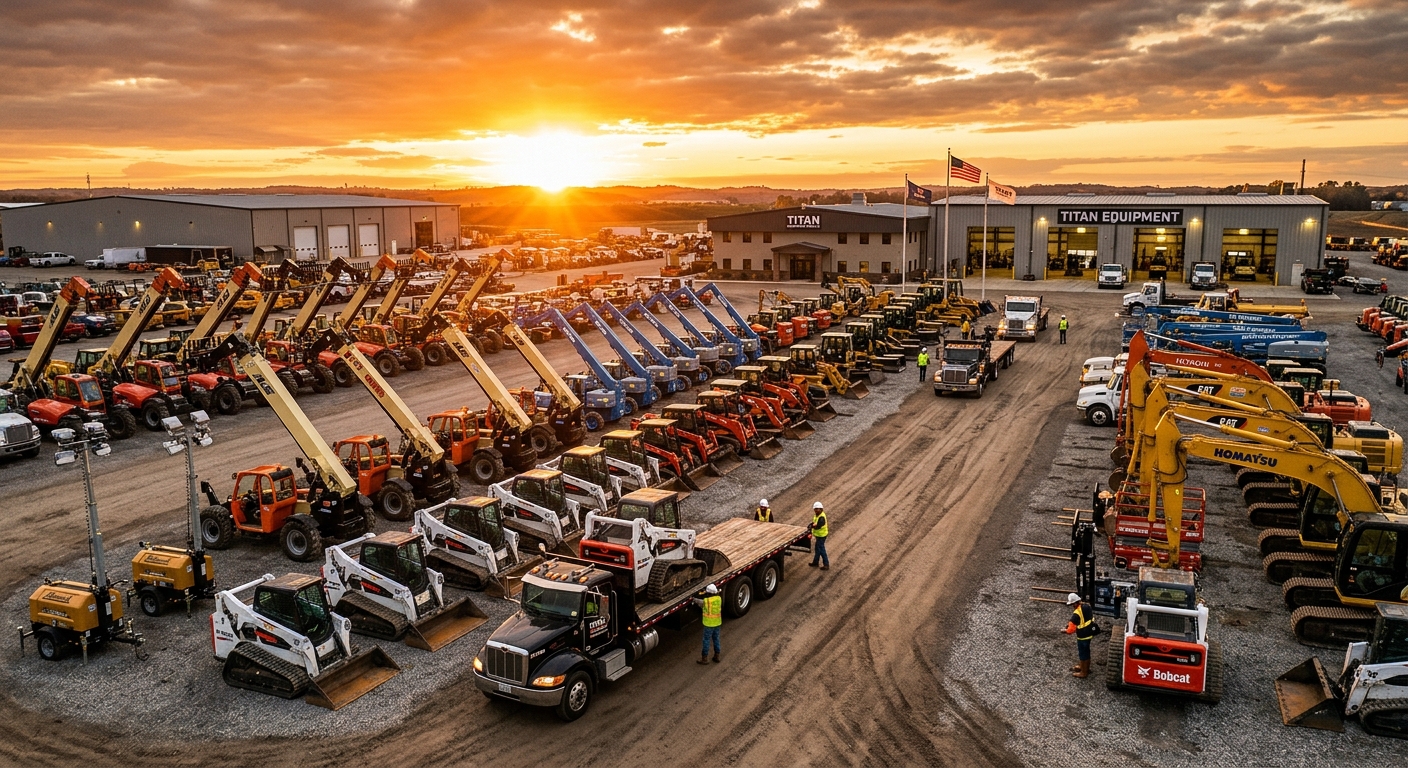
The rental market is still growing. That does not mean it is easy.
The last few years trained contractors to rent because buying got expensive, lead times got strange, interest rates got painful, and nobody wanted to own an extra machine that might sit for six weeks. Rental companies benefited from that shift. They had the fleet, the branch network, the service departments, and enough buying power to absorb a messy equipment cycle better than a small contractor could.
Now the market looks different. Demand is not falling apart, but the free tailwind is weaker. Fleet costs are higher. Utilization has to be watched closer. Specialty work is separating from plain general rental. Big national accounts and mega projects are still pulling equipment, while smaller local jobs can feel choppy depending on region and trade.
That is the part contractors should care about. Rental is not just a backup plan anymore. It is becoming part of fleet strategy. The companies that rent well will protect cash and keep crews moving. The ones that rent lazily will just trade ownership costs for invoices they never really understood.
FieldFix Editor’s Note: Rental only works when owners compare it against real machine cost. FieldFix helps contractors track owned equipment hours, service history, downtime, and cost per hour so rental decisions can be made against numbers instead of hunches.
The ARA forecast is positive, but not wild
The American Rental Association’s 2026 forecast is a good place to start because it removes some of the hype. ARA projects U.S. construction and industrial equipment plus general tool rental revenue will grow 2.8 percent in 2026 to $82.9 billion. The group said the industry ended 2025 at $80.6 billion, up 3.3 percent from 2024. ARA also estimated U.S. construction and industrial equipment rental penetration at 59.5 percent in 2025, its fifth straight annual increase. The forecast summary is on ARA’s site here.
Those numbers are healthy, but nobody should read them as a boom. A 2.8 percent growth forecast is not the kind of market where every branch can buy iron, raise rates, and assume customers will take it. It is a market where rental keeps taking share, but the underlying construction economy is uneven.
ARA’s outlook points to modest nonresidential construction growth and a softer residential market. That fits what a lot of contractors are seeing on the ground. Data centers, infrastructure, utilities, energy work, manufacturing plants, and public projects can still be strong. Housing-adjacent work is more selective. Smaller commercial jobs are not dead, but customers are slower to approve big spends when money is expensive.
Rental tends to do well in that kind of fog. If a contractor is not sure whether the next six months will be busy enough to justify a purchase, renting is the cleaner choice. The contractor keeps borrowing capacity, avoids a large down payment, and can send the machine back when the job ends.
But that same uncertainty makes rental companies cautious. They cannot let yards fill with expensive machines that are only busy during perfect weeks. The rental operator’s job now is less about having more fleet and more about having the right fleet in the right market.
United Rentals still has scale on its side
United Rentals’ first quarter 2026 results show how much strength remains at the top of the market. The company reported total revenue of $3.985 billion, including rental revenue of $3.419 billion. Adjusted EBITDA was $1.759 billion, and the company raised its full-year revenue guidance to a range of $16.9 billion to $17.4 billion. United’s first quarter release is available here.
That mix is one reason the big rental companies have become harder to compare with a local yard. United is not simply a place to call when a contractor needs a lift for three days. It is a logistics and fleet partner for customers with hundreds of jobs, safety requirements, vendor systems, site rules, and purchasing departments.
For small contractors, that cuts both ways. The big rental houses often have better fleet depth, cleaner digital systems, and more locations. They may also price like the service has value because, for many customers, it does. A cheap rental that shows up late or breaks on day one is not cheap. It is a scheduling problem with tires.
The lesson from United’s quarter is not that every rental company is fine. The lesson is that customers are still paying for reliability, reach, and fleet availability when the work is there.
Herc’s growth comes with a utilization reminder
Herc Rentals is telling a slightly different story after its H&E Equipment Services acquisition. In Q1 2026, Herc reported equipment rental revenue up 33 percent year over year to $981 million and total revenue up 32 percent to $1.139 billion. Adjusted EBITDA rose 33 percent to $448 million. The company also reported dollar utilization of 36.4 percent, down from 37.6 percent a year earlier, which it tied largely to the higher mix of general rental fleet after the H&E deal. Herc’s release is here.
That utilization detail matters more than the growth headline.
Acquisitions can make revenue look bigger fast. They can also change fleet mix, branch density, customer overlap, maintenance needs, and pricing behavior. A rental company can buy another platform and instantly own more machines, but it still has to put those machines to work at decent rates. The spreadsheet closes before the real integration work does.
Dollar utilization is one of the cleaner ways to see that tension. If fleet value rises faster than rental revenue, utilization slips. Sometimes that is temporary. Sometimes it means the company owns too much of the wrong fleet or has not priced the work well enough. In Herc’s case, the company is still guiding for growth, so the signal is not panic. It is a reminder that scale does not make utilization automatic.
Contractors should pay attention because branch behavior changes when utilization pressure shows up. If a rental company needs to move general fleet, rates may soften on common machines. If specialty fleet is tight, pricing may stay firm. If a market is overloaded with lifts, skid steers, compact excavators, or telehandlers, the customer has more leverage. If the branch only has one machine left that fits the job, the branch has the leverage.
Rental is local at the point of pain, even when the company is national.
General rental is getting harder to hide in
The equipment rental business has a plain problem: everybody understands the obvious machines.
Skid steers, compact track loaders, mini excavators, telehandlers, light towers, trenchers, lifts, compressors, generators, and rollers are necessary. They are also easy for competitors to stock. When several yards in the same market own similar machines, the difference comes down to availability, price, delivery, service response, and whether the customer trusts the branch.
That is why specialty categories matter. Trench safety, pumps, shoring, power, HVAC, fluid handling, mats, traffic control, and jobsite services can have better pricing power because the customer is buying more than a machine. He is buying application help, setup, compliance support, and fewer ways to get the job wrong.
For contractors, this means rental should be split into two buckets. Commodity rentals are the machines you shop hard because several yards can provide them. Specialty rentals are the ones where the cheapest quote can become the most expensive mistake on the job.
Treating both buckets the same is lazy buying.
Buying versus renting needs better math
The old question was simple: should we buy this machine or rent it?
That is still the question, but the answer needs better inputs now. Purchase price, interest rate, insurance, taxes, storage, hauling, repairs, maintenance, attachments, depreciation, resale, downtime, and operator familiarity all matter. So do rental rate, delivery fees, fuel charges, damage waiver, overtime, minimum rental periods, and whether the branch will swap the machine quickly if it fails.
A contractor who only compares monthly payment to monthly rental rate is missing half the story.
Buying can still be the right answer when a machine stays busy, crews know it, attachments are already matched, and the owner has enough service discipline to keep it earning. Renting can be the right answer when the work is seasonal, the application is narrow, the machine is expensive to maintain, or the contractor needs capacity without balance sheet drag.
The trap is emotional ownership. Contractors like owning iron. There is pride in it, and sometimes that pride is earned. A paid-off machine that works every week can be a license to print money. But a financed machine that sits, breaks, or gets used below its capability is not an asset in any meaningful sense. It is a bill with tracks.
Rental has its own trap. It can feel flexible while quietly getting expensive. A machine rented over and over for the same work is often a signal that the contractor either needs to buy one or raise prices enough to account for the rental habit.
Good fleet decisions are boring. Track the hours. Track the repairs. Track downtime. Track rental spend by job type. Then decide.
Dealers and rental houses are fighting for the same wallet
The line between dealer and rental company keeps getting thinner.
Dealers want rental fleets because rental creates customer relationships, feeds used equipment sales, and keeps machines inside their service orbit. Rental companies want deeper services because plain fleet rental can get crowded. Manufacturers want more predictable channels and better support coverage. Contractors want one less headache.
That overlap is going to make the next few years interesting.
A dealer with a strong rental fleet can let a contractor try before buying, cover seasonal peaks, and keep a customer in the brand. A rental company with enough service strength can become the default equipment partner even when it does not sell the machine. The contractor may not care which model wins as long as the job keeps moving.
What contractors should do now
This is not a market to swear off buying or swear loyalty to rental. Both takes are too simple.
The better move is to sort machines by how they actually behave in the business.
Own the machines that stay busy, make money, and are central to the work. Rent the machines that fill spikes, test new services, cover weird jobs, or carry too much risk to own full time. Be ruthless about the middle group. That is where the money leaks. The machine is not busy enough to own cleanly, but it gets rented often enough to bother you. Those are the decisions that deserve a spreadsheet, not a gut call.
Also, stop treating delivery and downtime as side issues. A rental rate means nothing if the machine arrives late. A cheap rental is not cheap if the operator loses half a day waiting on a swap. A branch that knows your work and answers when things go sideways may be worth more than the lowest number from a yard that treats every call like a transaction.
The rental market is healthy enough to keep growing, but the easy money is gone. That is probably good for disciplined contractors. Sloppy buying, lazy renting, and untracked machine costs get punished when the market stops doing everyone favors.
The next advantage will not come from owning the most iron or renting the cheapest iron. It will come from knowing which iron actually pays you back.