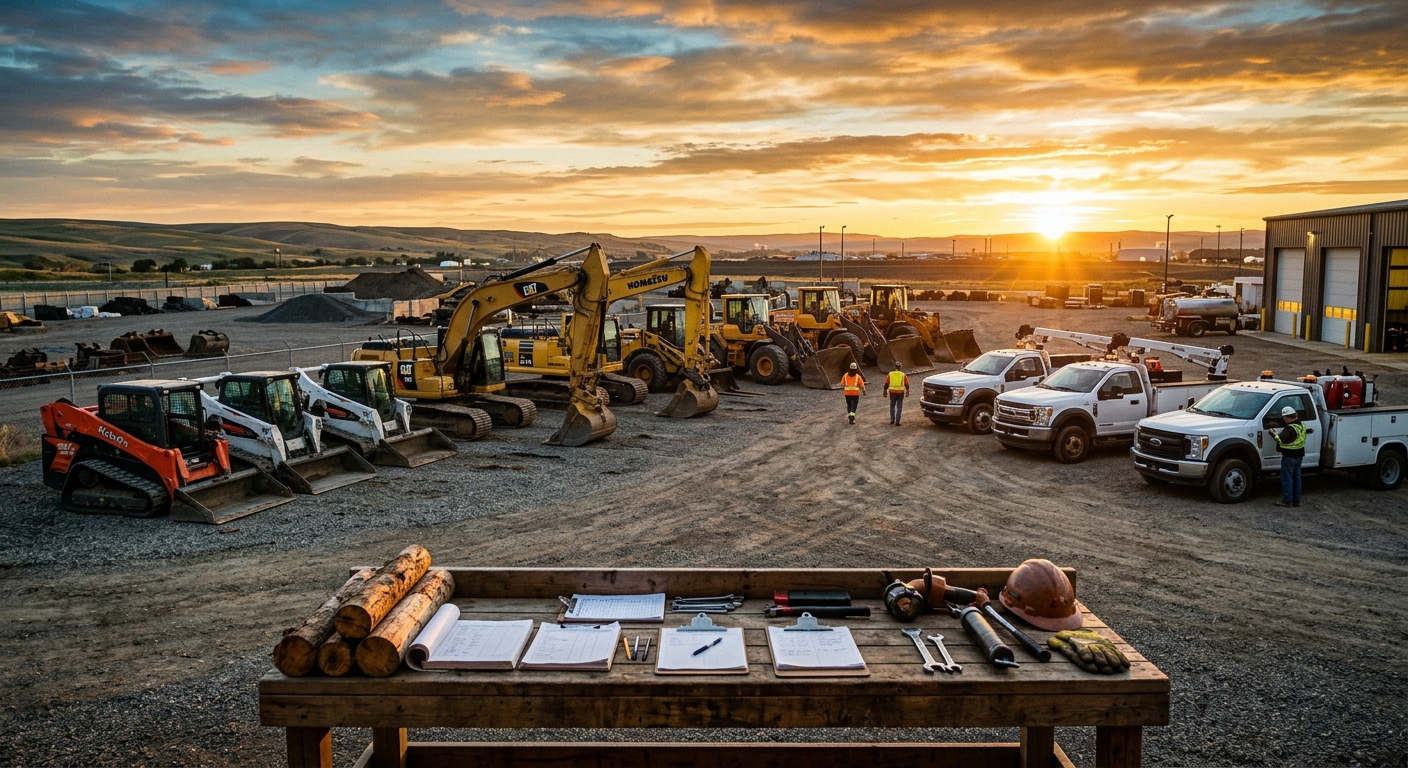

Caterpillar's Record Q1 Is Less About Construction Than It Looks
Caterpillar just printed a $17.4 billion quarter and a $63 billion backlog. Underneath the headline numbers, the mix is shifting. Power generation for data centers is pulling the company's center of gravity in a direction most contractors are not buying for.
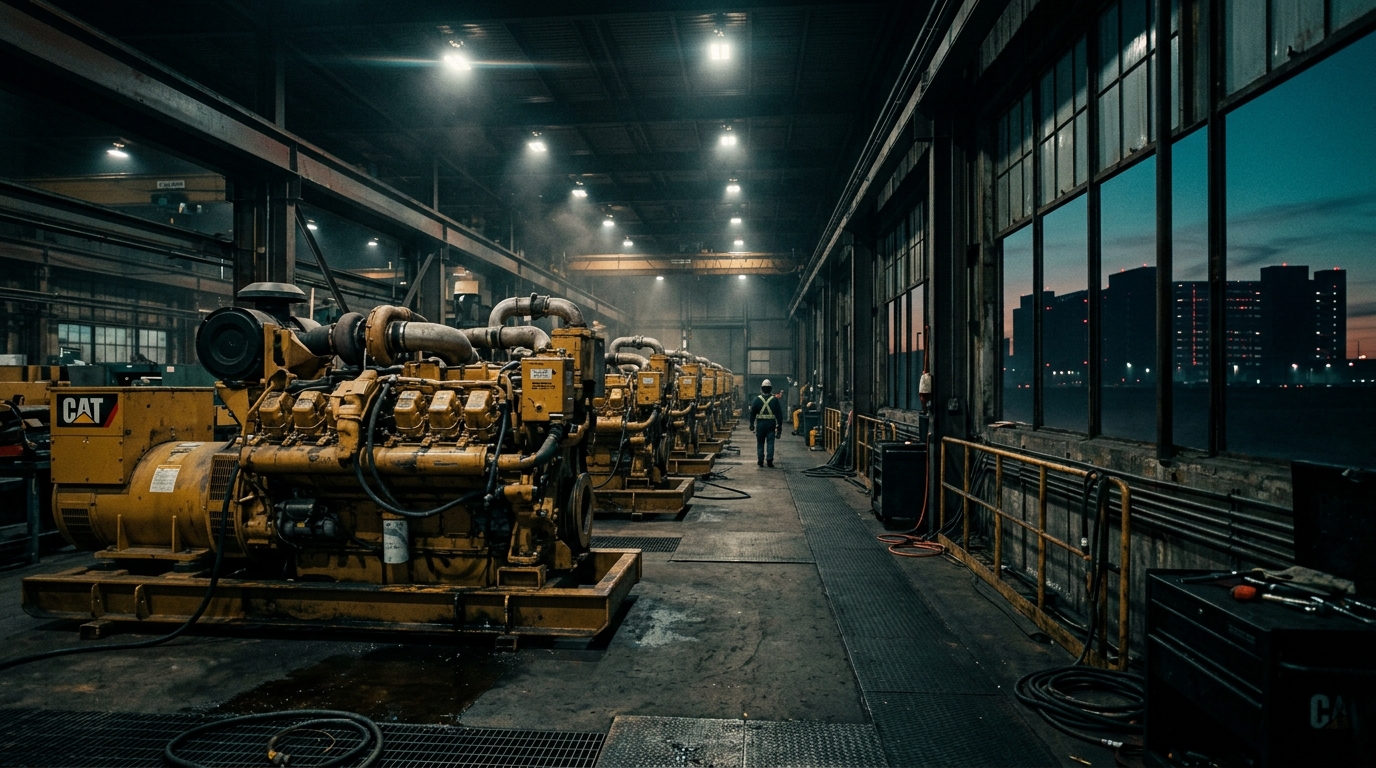
A 22 percent revenue quarter and a record backlog should feel like a clean win for Caterpillar.
It probably is. Q1 2026 sales of $17.4 billion, adjusted profit per share of $5.54, Construction Industries up 38 percent, Power Generation up 41 percent, and a backlog of roughly $63 billion that grew about 79 percent year over year is not a quiet result. Morgan Stanley used the print to double its price target to $915. The headlines wrote themselves.
The problem with headlines is that they flatten the mix.
When you read past the top line, the more interesting story in this quarter is not how strong Caterpillar is. It is how quickly the company’s center of gravity is sliding toward data center power and away from the equipment most contractors actually run on a jobsite. That shift matters whether or not you own a yellow machine, because the supply chain, dealer attention, parts allocation, and capacity decisions Caterpillar makes from here are going to be shaped by where the dollars are growing the fastest.
Right now, that is not site work. That is megawatts.
FieldFix Editor’s Note: When manufacturer priorities shift, the operator feels it in lead times, parts availability, and dealer service capacity. FieldFix helps contractors track the real cost of waiting on parts, missed PMs, and equipment downtime so the impact of a tighter supply chain shows up in the numbers, not just in frustration.
The headline numbers, briefly
Caterpillar reported first quarter 2026 sales and revenues of $17.4 billion, up from $14.2 billion a year earlier. Adjusted profit per share came in at $5.54 against $4.25 in the same quarter of 2025. Reuters and CNBC both flagged the print as a clear earnings beat tied to construction machinery and to engines and turbines used to power AI data centers. The official press release is on the company’s site here.
Three segment moves matter most for understanding the quarter.
Construction Industries revenue jumped about 38 percent to $7.2 billion. That sounds like a pure construction story until you see that the increase included roughly $1.5 billion of dealer inventory build. In other words, a meaningful share of the segment’s growth came from dealers stocking up rather than from end-customer deliveries. That is normal in a healthy cycle and a recovery quarter, but it is also a leading indicator that has to be watched. Inventory builds are easier to celebrate when they are followed by sell-through, and dealers do not sit on iron forever.
Power Generation revenue climbed roughly 41 percent to about $2.82 billion, with most of the growth tied to data center demand. Power & Energy as a broader category showed retail sales growth of 32 percent, with power generation applications up around 48 percent. Manufacturing Dive’s coverage of the call summarized that Caterpillar plans to triple its large reciprocating engine capacity relative to 2024 baseline, and that the order backlog for those large engines has grown more than 3.5 times since January 2024. You can read that piece here.
The total Caterpillar backlog reached approximately $63 billion in Q1, up around 79 percent year over year. Multiple outlets, including Benzinga’s transcript coverage here and BigGo Finance’s earnings recap here, flagged that figure as the cleanest single signal that demand is being booked further into the future than usual.
That is the surface story. The mix story underneath is what should hold a contractor’s attention.
The center of gravity is moving
Caterpillar is still primarily a construction and resource industries company. Construction Industries remains the largest segment by revenue, and Resource Industries continues to feed mining, quarrying, and aggregates customers around the world.
What is changing is direction.
Power generation is now growing faster than construction, and Caterpillar is tripling capacity in the part of the engine business that serves data centers, pipelines, prime power, and large standby applications. That is not a marginal investment. Tripling reciprocating engine capacity is the kind of decision that takes years to fund, build, and staff, and the only thing that justifies it is a very durable view of where the demand is going.
Data center buildout is the cleanest example of that. AI training and inference workloads are pushing electricity demand at a rate that grid construction cannot match in the short term, so hyperscalers and colocation operators are ordering on-site generation for both prime power and backup at unusual scale. Reciprocating engines and turbines are both involved. Caterpillar has both, and management on the call repeatedly framed the ability to offer both as a competitive advantage in the data center segment. The Motley Fool’s transcript here captures that messaging in detail.
For Caterpillar shareholders, that is a clean growth story.
For an excavator buyer in the U.S. Southeast or a forestry contractor in the Pacific Northwest, it is a more complicated message. The portion of the company’s manufacturing, capital, engineering attention, and dealer support that is being pulled toward power generation is real. The contractor’s iron is still important. It is just sharing the table with a customer that orders in megawatts, signs multi-year supply contracts, and pays for pre-emptive capacity expansion.
This is not a new dynamic. Caterpillar has had a Power & Energy business for a long time. What is new is the speed at which it is scaling and the fact that the order backlog growth is concentrated there.
The dealer inventory tell
The other quiet detail in Q1 is that $1.5 billion dealer inventory build inside Construction Industries.
A 38 percent revenue jump looks much different when a chunk of it is dealers replenishing stock rather than end users absorbing units. Caterpillar’s dealers are not stupid. If they are willing to take on inventory at this level, they are seeing real demand, real lead time pressure, or both. That is not a problem on its own.
The problem comes if end-user demand softens before that inventory clears. Then you get cancellations, pricing pressure, and a sales line that suddenly looks much weaker than the comparable a year earlier suggests. Construction Equipment magazine’s earlier 2026 forecast coverage of tariff effects on equipment plans here flagged that some buyers were already delaying acquisition because of tariff and price uncertainty. That kind of sentiment does not show up in this quarter’s revenue line, but it is the type of signal that tells you a dealer build can flip from healthy to overhang faster than it took to grow.
For an operator, the practical takeaway is to watch lead times and incentive behavior across the next two quarters. If lead times shorten quickly and dealers start running aggressive promotions on stock units, that is the inventory cycle catching up. If lead times stay long and dealers remain confident, the build was justified.
Either way, do not read 38 percent segment growth as a clean read on end demand. It is partially a stocking story.
Tariffs are still a real cost, just smaller than feared
Caterpillar disclosed roughly $600 million of tariff cost in Q1 alone. Full-year tariff cost is now estimated in the range of $2.2 billion to $2.4 billion, down from a January estimate around $2.6 billion, after a Supreme Court ruling removed certain IEPA tariffs and Section 122 tariffs were added in. The Investing.com slide summary here and the GuruFocus call highlights here lay out the numbers.
The story to read out of those figures is not that tariffs are crushing Caterpillar. They are not. The company beat estimates and raised guidance. The story is that tariffs at this scale are now baked into pricing assumptions, dealer cost structures, and end-customer quotes. The cost is real, it is being absorbed, and it is being passed along through some combination of price, mix, and productivity.
For contractors, that means the price inflation in new iron over the past year is structural, not temporary. The Construction Owners coverage of 50 percent metal tariffs and their effect on input costs here sits adjacent to this picture: steel up around 13 percent, aluminum up around 23 percent, copper products up close to 5 percent year over year. Even if tariff rates ease somewhere down the road, the cost base on machines and components built today is set against this environment. New equipment list prices are not coming back down materially in the near term.
That changes the math on used iron, on extended ownership cycles, on rebuilds, and on rentals. It does not change the fact that you can still make money. It does change which decisions look smart.
What the bifurcation means at the jobsite
Most contractors do not care which Caterpillar segment is growing fastest. They care about three things: can I get the machine I need, can I get parts and service when it breaks, and is the price defensible.
The honest read on Q1 is that all three of those are getting harder, not easier.
Lead times for popular construction units are still extended in many regions. Dealer service capacity is stretched in growth markets. New equipment prices remain elevated by tariff and material cost. And now Caterpillar is adding capacity in a different part of the business at a much faster rate than it is adding it in compact construction.
That is not a complaint. It is a planning input.
Operators who run full fleets should be thinking about three things this year. First, lock in PM and parts relationships now, not when something breaks. The dealers that get the most factory attention next year are likely the ones with the strongest service throughput today. Second, treat lead time as part of the bid. If the next compact track loader is six to nine months out, that affects what jobs you can chase and how aggressive you can be on schedule. Third, do not assume the used market softens just because new sales are strong. As long as new prices stay tariff-loaded, used iron has a floor that is higher than memory says it should be.
For smaller operators and one-machine owners, the takeaway is simpler. The factory is not building toward you right now. It is building toward gigawatt customers. That is fine, but it means the next five years are going to reward operators who plan their fleet decisions early, maintain hard, and run good machines longer.
The structural read
Caterpillar’s Q1 2026 print is a strong quarter. It is also a quiet announcement that the company is repositioning around durable, multi-decade demand for on-site power generation while still growing its traditional construction business inside a tariff-affected, partially restocking environment.
That mix is unusually favorable for the manufacturer. Power generation is high-margin, contract-heavy, and tied to capital expenditure cycles that do not move with weekly contractor sentiment. Construction equipment is more cyclical and more sensitive to interest rates, dealer inventory, and tariff pass-through. Having both lets Caterpillar keep growing even when one side wobbles.
For the rest of the industry, the takeaway is to plan against the bifurcation rather than fight it. Power generation demand from data centers, prime power, and backup is going to keep pulling capacity and capital toward that part of the business. Traditional construction equipment will keep selling, but it will share the table.
If the next decade of heavy equipment is partly written in megawatts, the operators who think about it now will be the ones still able to get the right machine, on the right lead time, with the right service support, when they need it.
The rest will read the same earnings report next year and wonder what changed.