
The 128-Week Transformer Backlog Is Now a Construction Problem
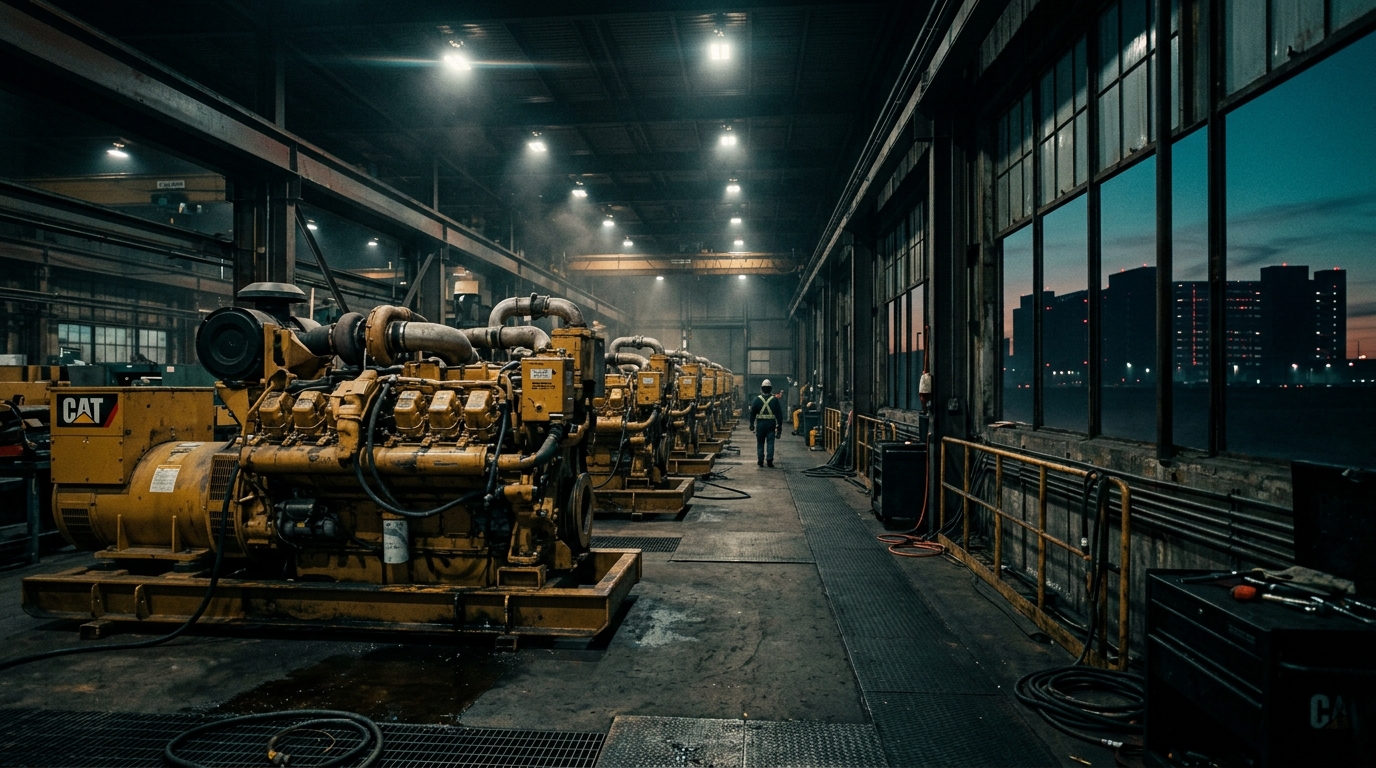
Standard power transformers are running 128 weeks out. Generator step-ups are at 144 weeks. Substation units have crossed 160. The data center boom built the demand, the tariff schedule built the price, and contractors who don't plan around electrical lead times are about to lose schedule on jobs they already won.

The most important number on a 2026 site development schedule is not a machine spec. It is a transformer lead time.
Standard power transformers are now averaging about 128 weeks for delivery, according to Wood Mackenzie’s second-quarter survey. Generator step-up transformers are running closer to 144 weeks. Substation transformers, which were already at roughly 140 weeks in 2023, are tracking above 160 weeks in 2026. Padmount distribution transformers — the small green boxes that step utility power down for an individual building — have come off their worst peaks but still sit far above pre-2020 norms in most markets.
Those are not theoretical numbers. They are now showing up on contractor bid sheets as the gating item that decides when a project can actually energize.
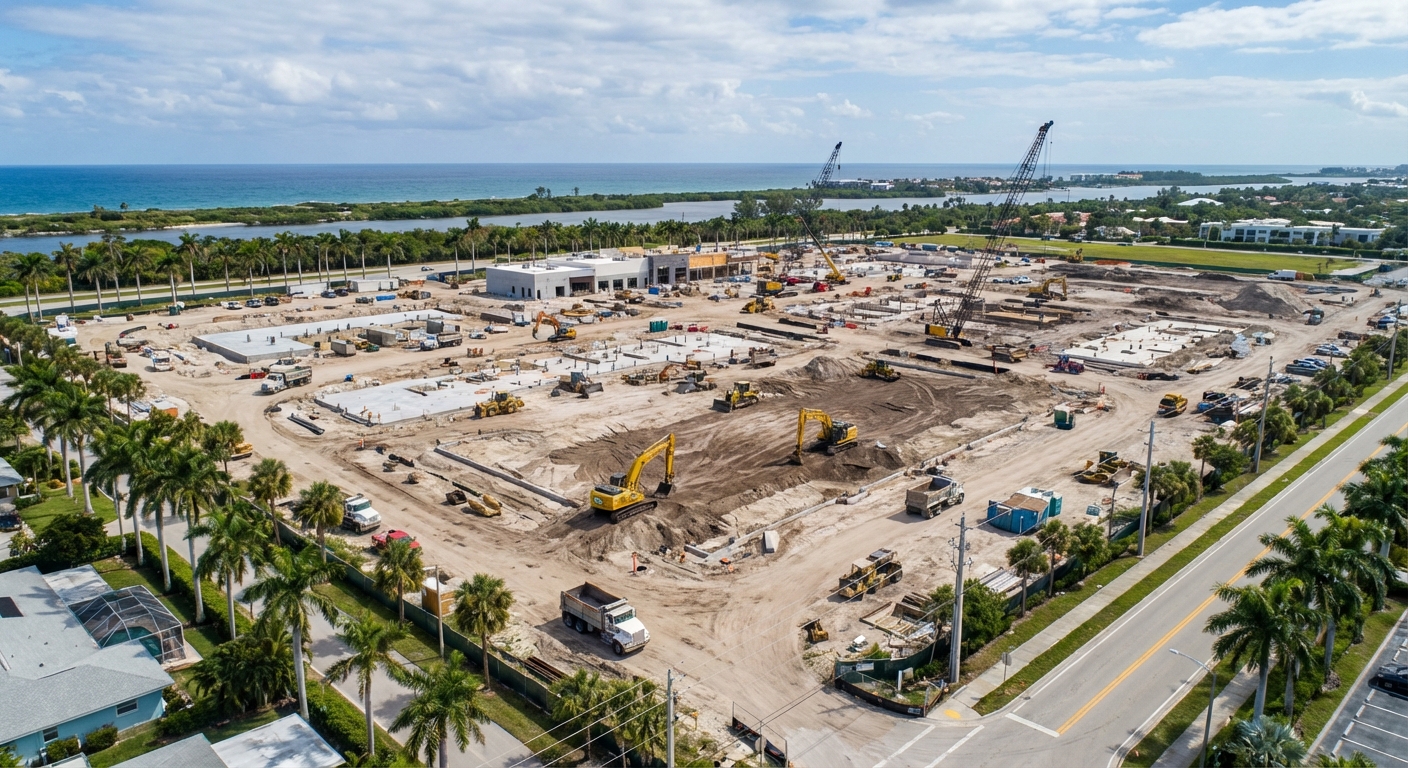
For dirt contractors, demolition crews, utility builders, and site development outfits, this is no longer somebody else’s problem. The transformer queue has quietly become one of the most important variables in fleet planning, project sequencing, and bidding strategy for the second half of 2026.
FieldFix Editor’s Note: Power infrastructure delays do not stay in the electrical scope. They roll downhill into earthwork, paving, utility, and site finish — the work this audience does. FieldFix helps equipment owners track utilization, idle time, and project-level machine hours so the cost of a stalled project is visible before it becomes a quarter-end surprise.
How a power problem became a construction problem
The transformer story started as an electric-utility story. Then it became an AI story when data center hyperscalers began locking up generation and grid capacity faster than utilities could build new substations. By the time it hit the trade press as a “supply chain issue,” it had already mutated into something contractors should pay attention to: a structural bottleneck in the electrical equipment supply that determines whether large projects can come online on the schedule the financing assumes.
The mechanics are not complicated. AI training clusters need hundreds of megawatts of power delivery per site, and each megawatt needs transformers at multiple points in the distribution chain. According to industry trackers, more than 21 gigawatts of large electrical projects were sitting in engineering and procurement as of January 2026, with another 8.2 gigawatts already under construction. That demand has been layered on top of normal utility replacement, electrification, EV charging buildout, and a backlog of grid hardening work that was already running behind schedule before any of this started.
Transformer manufacturing capacity did not scale up at the same rate. Domestic OEM lines have added shifts and a small amount of new capacity, but the bottleneck is not just assembly. It is upstream — in grain-oriented electrical steel, in copper windings, in the specialized labor pools that wind and stack transformer cores. Grain-oriented electrical steel prices have roughly doubled since 2020. Copper has run more than 50 percent above its 2020 base. None of that gets fixed by a press release.
Now the tariff regime has been layered on top of that. As of April 2026, steel, aluminum, and copper items made entirely or mostly from those metals carry a 50 percent tariff. Derivatives of those metals sit at 25 percent. Industrial and electrical equipment that incorporates those materials — transformers, panel boards, conduit systems, breaker gear — faces a 15 percent tariff. Associated Builders and Contractors reports that nonresidential construction input prices surged at a 12.6 percent annualized rate in the first two months of 2026, the fastest pace since the supply chain disruptions of early 2022. Surveys of contractors put the share affected by tariffs at roughly 70 percent.
That is the macro picture. The micro picture is simpler. Owners are showing up to bid letting with projects that cannot energize on time. General contractors are getting pulled into longer schedules. Sitework contractors are watching mobilization dates slip three, six, sometimes twelve months. Equipment that was financed against a specific run of work is sitting on a yard with no jobsite to go to.
Where the schedule actually breaks
Three places — and none of them are the transformer itself.
The first break is the interconnection queue. A project owner secures land, files for interconnection, and gets a slot in a utility queue that is itself moving slowly because the utility cannot install upgrades any faster than its own electrical equipment shows up. When the utility’s substation transformer is 160 weeks out, every project hanging off that substation inherits the delay. Contractors who built their schedule around a verbal interconnection date are routinely discovering that the date moved and nobody told them.
The second break is on-site step-down equipment. A data center, a warehouse with high-density refrigeration, an industrial plant, a large multifamily complex — all of them need their own transformers, switchgear, and distribution. That equipment is also in queue. Even when the utility side comes online on time, the building cannot energize until its own gear arrives. Site development contractors finish their scope, the building shell goes up, and then nothing happens for nine months while the project waits for a transformer that was ordered too late.
The third break is the smaller equipment that nobody thinks about until it is missing. Pad-mount transformers for individual buildings. Breaker panels. Switchgear cabinets. Conduit and wire. Each of those has its own lead-time story, often shorter than power transformers but still far longer than the industry was used to before 2020. Copper wire and cable saw the largest twelve-month price increase in the recent producer price data — about 22 percent — and electrical sub-contractors are routinely quoting customers that they need long-lead items released for purchase at the design phase, not the construction phase.
Put together, the three breaks mean that any large project with significant electrical loads is now a project where the schedule is being driven by equipment most general contractors never used to track.
What this means for the equipment side
The simplest answer is also the most uncomfortable one for equipment owners: a slower project schedule means more days where machines are not earning.
Sitework contractors who finish their grading and utility scope on a project that then sits idle for six months waiting for power do not bill those six months. The crew moves to the next job. The machines either move with them or sit. The financing payment does not move. The insurance payment does not move. The yard cost, the depreciation, and the technician’s salary do not move. The only thing that moves is the bottom line, in the wrong direction.
That is why this is worth treating as a fleet planning issue rather than an electrical contractor issue.
Three specific implications stand out.
First, project mix matters more than it did three years ago. A fleet that is heavily exposed to single large projects with long electrical lead times is taking on different risk than a fleet that runs a steady mix of smaller residential, commercial, and infrastructure work. The big-job premium is real, but so is the big-job tail risk. If 40 percent of your year is anchored on one data center site that just got pushed back a quarter, that is a fleet planning problem disguised as a customer schedule problem.
Second, contract terms are catching up — slowly. The contractors who survive these delays best have moved to contract language that gets paid for mobilization, demobilization, and remobilization when schedules slip for reasons outside their control. The contractors who get hurt are the ones still operating on handshake schedule changes. If you cannot recover a remobilization cost on paper, you are absorbing it.
Third, dealer relationships matter when the schedule is uncertain. Owners who can flex between owned and rented equipment, who have an honest rate sheet with their dealer’s rental department, and who can swap a six-month rental in for a delayed owned purchase are more resilient than owners who can only operate one way. The American Rental Association’s revised forecast, which now puts U.S. equipment rental revenue at $83.5 billion in 2026, is in part a measurement of contractors choosing optionality over commitment in exactly this kind of uncertain environment.
The bidding playbook nobody wrote down
A handful of habits separate the contractors who bid these projects profitably from the ones who get hurt.
Track power infrastructure status on every bid. Not just whether power is “available.” Whether the utility has the equipment in hand, whether the on-site transformer has been ordered and confirmed, and what the realistic energization date is. If the answer involves the word “should,” your schedule is built on hope.
Price mobilization the way the project actually behaves. A real number for the second mobilization, a real number for downtime risk on long-lead jobs, and a real number for the carrying cost of equipment that is committed but cannot work. The cleanest way to do this is to set internal hourly carrying-cost minimums per machine and refuse to take work that can park them below that number.
Build in optionality on the equipment side. That is partly a rental conversation and partly a project sequencing conversation. Owners who can finish their scope, demobilize cleanly, and come back when the building is ready to take a paving and finish scope earn twice on the same project. Owners who get stuck on site eating standby costs earn once and lose money doing it.
Treat the dealer as part of the schedule team. The dealers who are doing well in this market have figured out that supply-chain-aware customers want straight answers about availability — both on new machines and on rental fleet — and want to know what the dealer is hearing from the field. A dealer who can give a contractor a realistic 90-day picture of what is moving and what is not is worth more than a slightly cheaper finance rate.
The bigger picture
There is a comfortable narrative in the construction equipment industry right now that says: data centers are good for the business, infrastructure money is good for the business, and electrification is good for the business. All three are true at the macro level. All three are also, at the project level, creating schedule risk that contractors are not paid to absorb.
The transformer story is going to get worse before it gets better. Wood Mackenzie’s data and recent utility filings point to lead times that may extend further before domestic capacity additions and tariff-driven near-shoring start to bend the curve. The earliest most market watchers expect real relief is late 2027 — and that assumes the demand side does not surprise to the upside, which AI projects have a habit of doing.
For equipment owners, the practical implication is that the next eighteen months will reward operators who do three things consistently. Plan fleet utilization against realistic project energization dates, not nominal ones. Price mobilization and standby risk into bids on long-lead projects. Keep enough optionality between rented and owned equipment to absorb a schedule slip without absorbing the full cost of it.
The contractors who treat the 128-week transformer queue as somebody else’s problem will keep discovering, project by project, that it is not.
Sources and further reading
- Wood Mackenzie Q2 2025 transformer lead-time survey, summarized in industry coverage including Industrial Sage and PV Magazine USA.
- Associated Builders and Contractors construction input price index, Q1 2026 update, summarized in IMA Construction Markets In Focus.
- American Rental Association 2026 forecast, published May 8, 2026.
- Tariff schedule details summarized in Carolinas AGC tariff update and Construction Equipment magazine tariff coverage.
- Interconnection queue and AI data center demand figures summarized in Latitude Media and Data Center Knowledge.