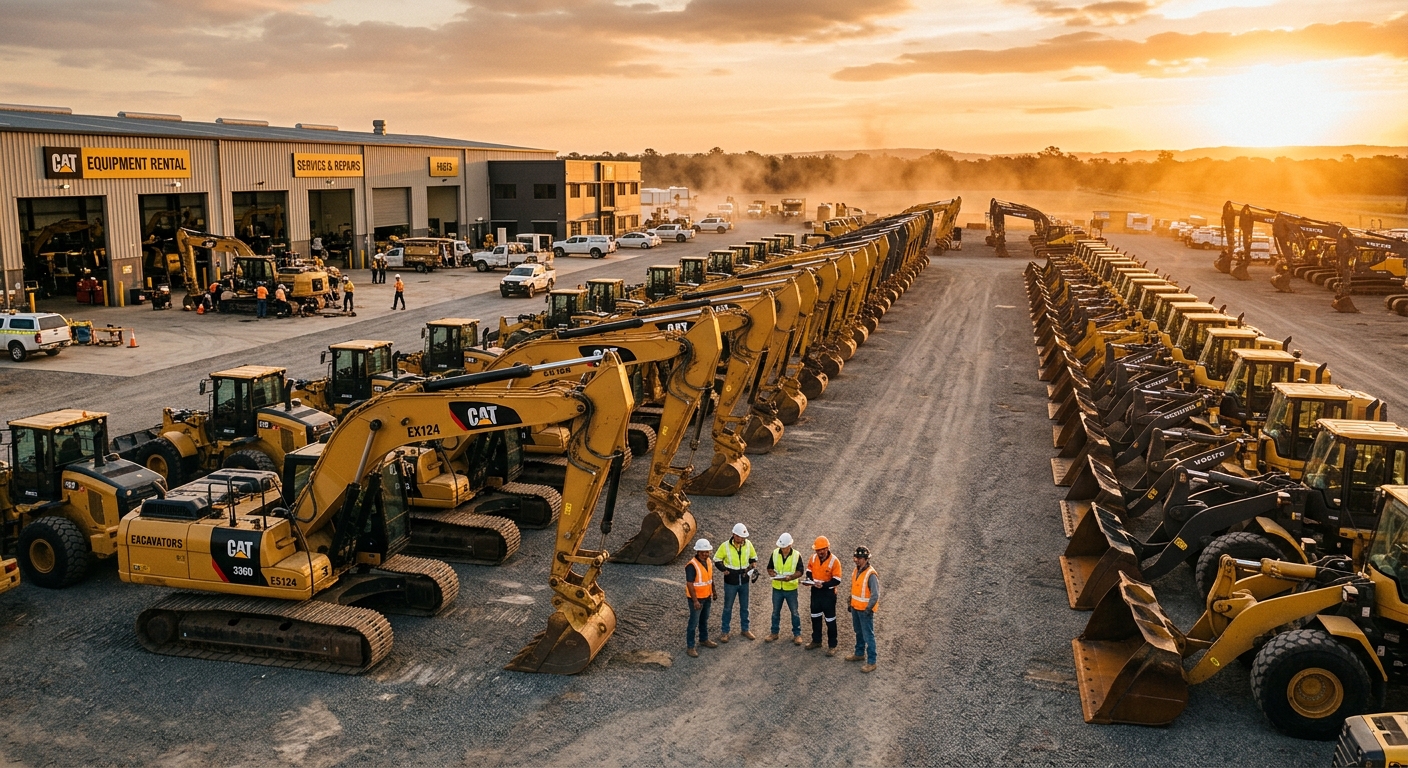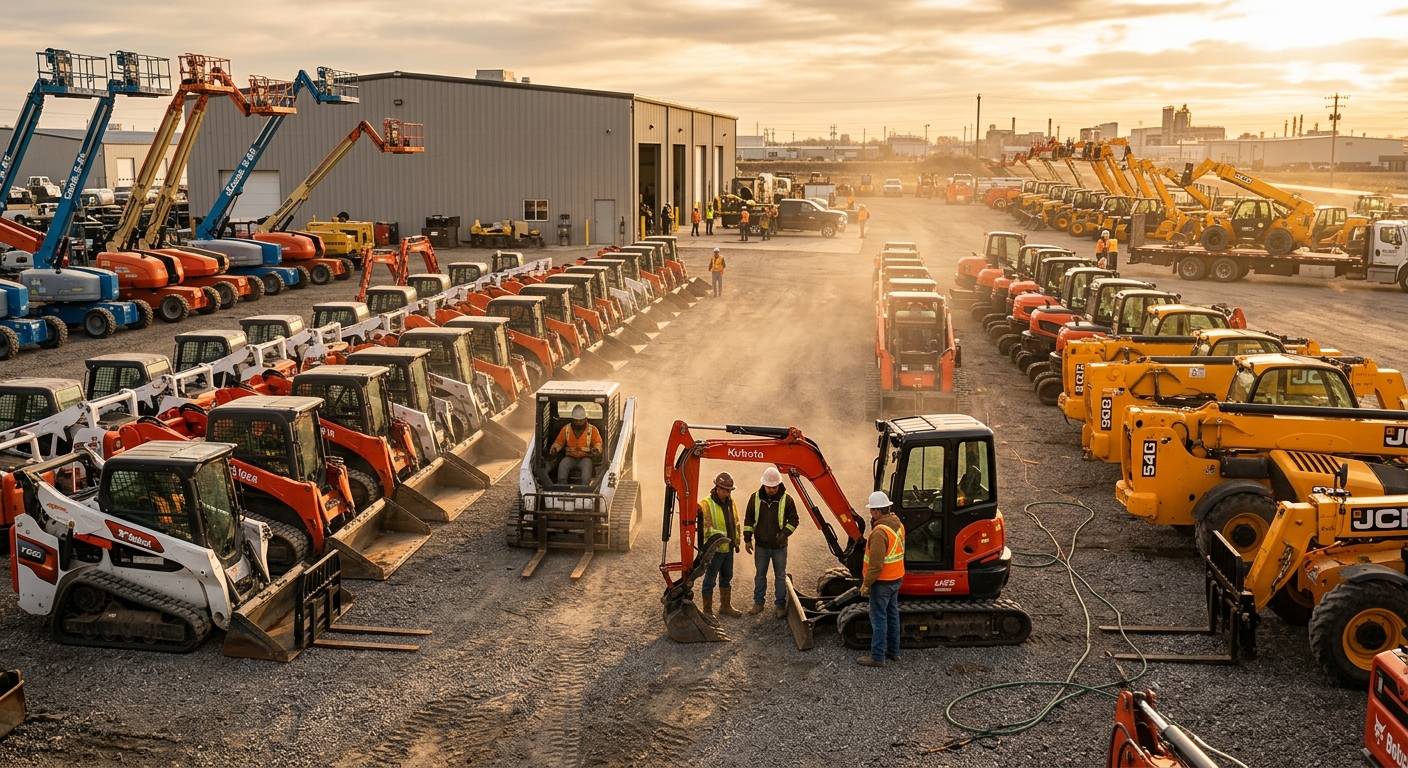

Backlog Is Up. Confidence Is Not.
Contractor backlog rose in May while confidence slipped. That split matters for equipment planning because a full schedule does not automatically justify another machine payment.

Contractors have more work on the books, but they are not acting like the market is easy.
Associated Builders and Contractors reported on June 16 that its Construction Backlog Indicator rose to 9.1 months in May. That is up 0.3 months from April and 0.7 months from May 2025. On paper, that looks like a green light. More backlog usually means more equipment demand, more crews to staff, more work to schedule, and more pressure on machines already in the fleet.
The catch is in the same release. ABC said contractor confidence readings for sales, profit margins, and staffing all fell in May, even though each stayed above the growth threshold. That is the part worth paying attention to. Contractors are busy enough to carry more backlog, but not comfortable enough to treat every opportunity like guaranteed profit.
That is a very different equipment market than a straight boom.
FieldFix Editor’s Note: Backlog only helps if each machine is earning its keep. FieldFix helps equipment owners track service records, downtime, repair spend, hours, fuel, and cost per hour, so fleet decisions are based on machine-level numbers instead of gut feel.
Backlog is real demand, not guaranteed margin
Backlog matters. It is contracted or expected work that has not yet been completed, and it gives contractors a view into future revenue. A company with nine months of backlog can make different choices than a company living two weeks at a time.
But backlog is not cash in the bank. It still has to move through scheduling, permitting, weather, labor availability, material costs, payment terms, customer decisions, and change orders. A project can be profitable on bid day and ugly by the time the crew is halfway through it.
That is why the confidence decline matters. Contractors are saying two things at once: there is work, and the work is not simple.
For equipment owners, that creates a harder decision than “buy because we are busy.” A full calendar can hide weak margins if the wrong machines are tied up, if transport is inefficient, if crews are thin, or if downtime keeps eating production. A contractor can have plenty of backlog and still be one major repair away from a miserable month.
This is where a lot of fleet mistakes start. A contractor sees the schedule filling up, adds a compact track loader, excavator, dozer, telehandler, roller, or truck, then realizes the new unit solved one constraint and created three others. Now the company needs another operator, another trailer, more service capacity, more insurance, more storage, more fuel management, and another payment that does not care whether the weather cooperated.
The machine might still be the right move. It just has to be judged against the real bottleneck, not the headline backlog number.
Planning activity is improving, but the work is changing
Backlog is not the only demand signal pointing up.
Dodge Construction Network said its Dodge Momentum Index rose 5.9 percent in May to 275.7, up from a revised April reading of 260.4. Dodge said commercial planning expanded 6.9 percent while institutional planning rose 3.1 percent. The index tracks nonresidential building projects entering planning, which makes it useful as an early signal for future construction spending.
The important detail is where the activity is coming from. Dodge said data centers continued to drive growth, but healthcare, retail stores, and offices also gained momentum in May. That is better than a market where one overheated segment is doing all the work.
Still, the equipment implications are uneven.
Data centers, healthcare projects, offices, retail, public facilities, and infrastructure work do not use the same mix of machines. Some projects pull hard on excavation, grading, hauling, lifting, paving, trenching, and utility support. Others are more about schedule density, site access, material handling, concrete, cranes, temporary power, and logistics.
That matters for smaller contractors trying to read the market. “Construction planning is up” does not tell you whether to buy another CTL. It does not tell you whether a mini excavator will stay busy through winter. It does not tell you whether that used wheel loader is a bargain or just another machine to maintain.
The question is narrower: what type of work is actually landing in your market, and what equipment does that work need every week?
If the answer is repeatable, ownership starts to make sense. If the answer changes job by job, rental, subcontracting, or delaying the purchase may be the smarter move.
Spending is steady, but not roaring
The broader spending picture is supportive, but not wild.
The U.S. Census Bureau’s April 2026 construction spending report estimated total construction spending at a seasonally adjusted annual rate of $2.172 trillion. That was up 0.4 percent from March and 0.9 percent from April 2025. Private construction rose 0.4 percent from March, while public construction also rose 0.4 percent.
Those are healthy numbers. They are not panic-buying numbers.
Private residential spending improved in April, but private nonresidential construction slipped slightly from March. Public spending remained a steady support, with highway and educational construction both up from the prior month. The result is a market with work in it, but not one where every contractor can assume pricing power.
This is exactly the kind of market where equipment discipline matters. When demand is strong but uneven, the best contractors separate capacity from ownership. They do not buy a machine just because a machine would be useful. Almost every machine is useful. That is how yards fill up with equipment that looks productive but quietly bleeds cash.
The sharper test is whether the machine removes a constraint that is costing money repeatedly.
If a contractor is renting the same excavator every month, turning down work because rental availability is poor, and can keep an operator in the seat, buying deserves a serious look. If the machine is needed for one project, one customer, or one type of job the company is hoping to sell more often, the argument is weaker.
Hope is not utilization.
Confidence slipping should change the math
ABC’s confidence readings are still above 50, so contractors are not forecasting a collapse. But the direction matters because fleet decisions are long-lived. A contractor can add a machine in July based on a strong summer and carry the consequences through February.
That is especially true for financed equipment. The payment is fixed. Utilization is not. Repairs are not. Fuel is not. Insurance is not. Labor is not. The job mix is not.
When confidence slips while backlog rises, it usually means contractors are seeing stress inside the work. Maybe customers are slower to sign. Maybe owners are pushing schedules. Maybe material pricing is still irritating. Maybe qualified labor is harder to find. Maybe subcontractors are stretched. Maybe margins are thinner than the revenue numbers suggest.
Whatever the cause, the fleet response should be more precise.
Do not use backlog as a blanket excuse to buy. Break it down by machine class. How many booked hours does each machine type have? Which jobs require owned equipment versus rentable equipment? Which machines are already maxed out? Which machines look busy but spend too much time moving between low-margin work? Which repairs keep showing up? Which unit would actually increase revenue instead of just making scheduling feel easier?
That exercise is boring. It also saves money.
The temptation is to make the decision around the machine itself. The deal looks good. The dealer has one. The used market has softened in a category. The rental house was short last month. The operator wants it. The crew says it would help.
All of that may be true. None of it is enough.
The operator problem is part of the equipment decision
Equipment planning and labor planning cannot be separated.
A machine without a good operator is a parked asset or a repair bill waiting to happen. A contractor adding equipment in a tight labor market may not be adding productive capacity. The company may simply be spreading the best operators across more iron, training inexperienced people under pressure, or creating another scheduling headache.
That is why the staffing confidence reading in ABC’s report matters. Contractors still expect growth, but confidence fell in May. If hiring is getting harder or more expensive, the real fleet constraint may be people, not iron.
Buying another machine can make sense when the operator plan is clear. It is riskier when the plan is “we will find someone.” Good operators are not spare parts. They shape production, fuel burn, undercarriage life, attachment wear, safety, rework, and customer satisfaction.
This is also where rental can protect a contractor from overcommitting. Renting lets a company test whether the work, operator availability, and margins are strong enough before turning temporary demand into permanent overhead.
Rental is not always cheaper. On long jobs, it can be painfully expensive. But it is often cheaper than owning a machine that only looked necessary during a busy stretch.
What contractors should do this summer
The market is giving contractors a mixed signal, and the right answer is not fear. It is discipline.
Backlog is up. Planning activity is improving. Construction spending is steady. Those are good signs for equipment demand. At the same time, confidence slipped, costs remain annoying, labor is tight, and not every segment is moving at the same pace.
That combination calls for cleaner fleet planning.
Start with the next six months of booked and likely work. Assign machine classes to that work. Separate core machines from occasional machines. Look at rental history by category, not just total rental spend. Pull repair history by unit. Compare owned cost per hour against rental rates for the same work. Be honest about operator availability.
Then decide.
Some contractors should buy this summer. If the machine fills a proven gap, has an operator, supports profitable work, and reduces repeat rental pain, ownership may be the right call. Waiting can cost money when the work is real.
Some contractors should rent longer. If the need is tied to one project, one customer, one service line, or one optimistic sales push, rental keeps the risk contained.
Some contractors should sell before they buy. A fleet with dead iron, duplicate capacity, weak utilization, and unreliable older machines may not need more equipment. It may need a cleaner yard and better numbers.
The backlog headline is encouraging. The confidence slip is the warning label.
Busy contractors can still make bad fleet decisions. In 2026, the winners will be the ones who can tell the difference between real capacity needs and the emotional pull of a full schedule.