Fuel Efficiency Technologies: What's Actually Saving Contractors Money
From engine idle management to hybrid systems, manufacturers are attacking fuel costs from multiple angles. Here's what works and what's hype.
Fuel represents the largest variable operating cost for most construction equipment. With diesel prices elevated compared to historical averages, fuel efficiency technologies that reduce consumption deliver meaningful impact to contractor bottom lines. This analysis examines the fuel efficiency technologies available on current equipment, separating proven performers from marketing promises.
The Fuel Cost Context
Understanding the fuel cost opportunity requires context:
Typical consumption: A 36-ton excavator burns 5-7 gallons per operating hour. A D6-class dozer consumes 4-6 gallons per hour. Wheel loaders in production applications may exceed these rates.
Annual cost: At 1,500 operating hours annually and $4.00/gallon diesel, a mid-size excavator’s fuel cost approaches $35,000. A five-machine fleet represents $150,000+ annual fuel expense.
Efficiency impact: A 15% efficiency improvement on that five-machine fleet saves over $22,000 annually. Technology investment recovering that much operating cost deserves attention.
Engine Technologies
Modern engine designs incorporate multiple efficiency features:
Advanced Fuel Injection
Current common rail fuel injection systems operate at extreme pressures (up to 2,400 bar in some applications), enabling:
Finer atomization: Smaller fuel droplets mix more completely with intake air, improving combustion efficiency.
Multiple injections: Multiple injection events per combustion cycle optimize combustion phasing and reduce emissions while maintaining efficiency.
Precise timing: Injection timing optimized for operating conditions improves efficiency across the operating range.
These systems deliver 3-5% efficiency improvement over previous generation designs.
Variable Geometry Turbocharging
Variable geometry turbochargers adjust airflow across operating conditions:
Low speed: Closed vanes accelerate exhaust flow, spinning the turbocharger faster to maintain boost at low engine speeds.
High speed: Open vanes reduce restriction, preventing over-boost while maintaining efficiency.
The result: better engine response and 2-4% improved efficiency compared to fixed geometry alternatives.
Intelligent Cooling
Traditional cooling systems operate at constant speed, consuming power whether or not cooling is needed. Intelligent systems:
Variable speed fans: Adjust fan speed to actual cooling requirements, reducing parasitic losses during low-load operation.
Demand-controlled circuits: Separate cooling circuits for engine, transmission, and hydraulics optimize cooling for each system.
Cooling system optimization yields 1-3% efficiency improvement, with greater savings in moderate climate conditions.
Idle Management
Equipment spends substantial time idling—30-40% of operating hours in many applications. Idle management addresses this waste:
Auto Idle Down
Systems that reduce engine speed after a period of inactivity:
Operation: If controls remain inactive for a preset period (typically 5-10 seconds), engine speed drops from working RPM to low idle.
Savings: 25-40% fuel reduction during idle periods. On equipment idling 30% of operating time, this translates to 8-12% overall fuel savings.
Tradeoff: Brief delay when resuming operation as engine speed increases.
Most current equipment includes auto idle as standard, though operator configuration may be required.
Auto Shutdown
Automatic engine shutdown after extended idle:
Operation: If the machine idles for a preset period (typically 3-10 minutes configurable), the engine automatically shuts down.
Savings: Complete elimination of extended idle fuel consumption. A machine that would otherwise idle one hour daily saves 1,500+ gallons annually.
Tradeoff: Restart required to resume operation; extended shutdown/restart cycles add minor wear.
Auto shutdown is particularly valuable for equipment prone to extended unattended idling—lunch breaks, waiting periods, end-of-day situations.
Idle Notification
Telematics systems track and report idle time:
Visibility: Fleet managers see idle percentages by machine, operator, and time period.
Behavioral impact: Awareness drives improvement. Operators and supervisors who know idle time is tracked tend to reduce it.
Benchmarking: Compare operators and machines to identify outliers and best practices.
Idle notification alone—without any equipment changes—typically reduces idle 10-15% through behavioral modification.
Power Mode Selection
Modern equipment offers multiple power modes:
Eco/Economy Modes
Reduced power settings for lighter work:
Operation: Electronically limits maximum engine power and/or hydraulic flow, reducing fuel consumption when full power isn’t needed.
Savings: 10-20% fuel reduction in eco mode, varying by equipment and application.
Application fit: Appropriate for truck loading, light grading, material handling—operations not requiring maximum productivity.
Smart Power Management
Automated power management adjusting to workload:
Operation: Systems monitor actual power demand and adjust engine output accordingly, rather than maintaining constant high availability.
Savings: 5-10% through continuous optimization versus operator-selected modes.
Operator acceptance: Transparent to operators when properly calibrated; may frustrate operators if response feels sluggish.
Smart systems require proper calibration for application; poorly configured systems create productivity complaints.
Hydraulic Efficiency
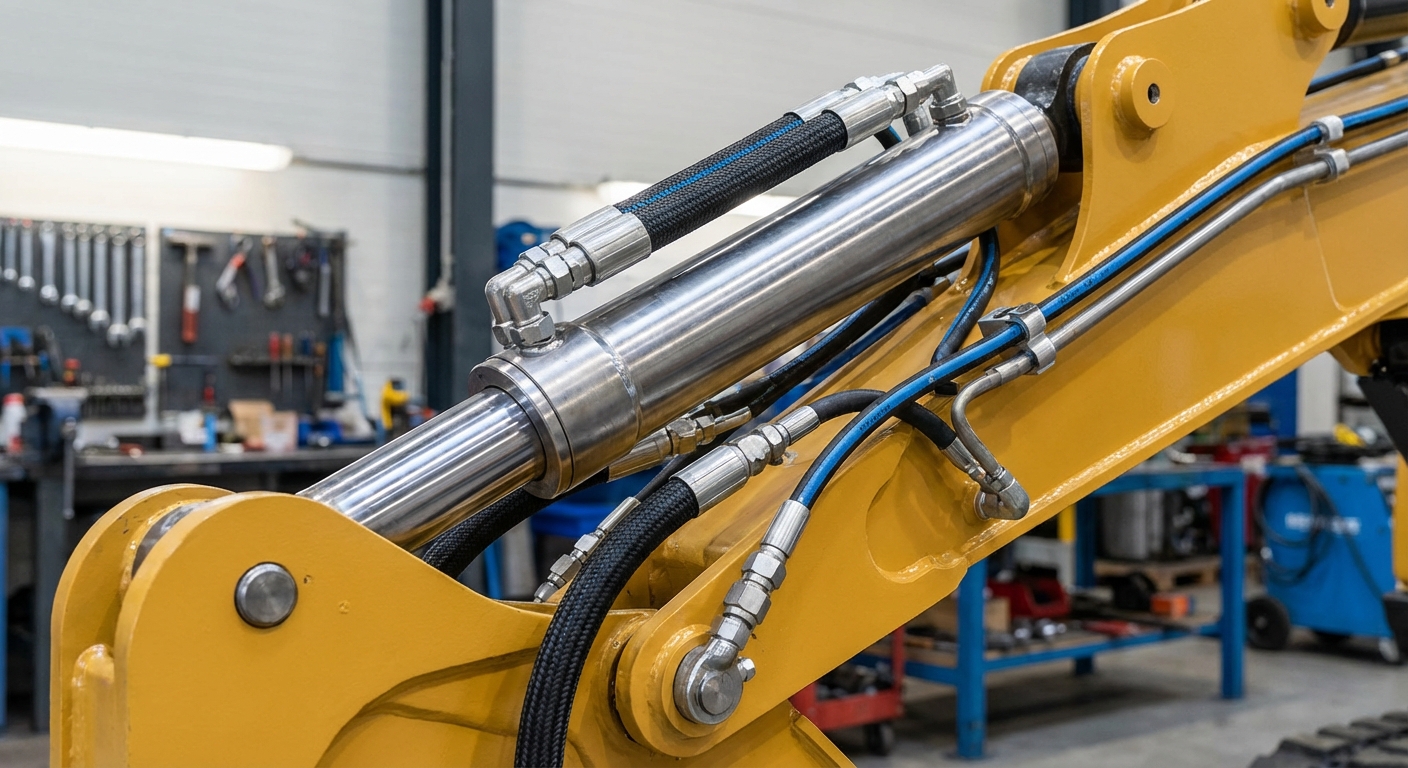
Hydraulic systems consume significant engine power. Efficiency technologies include:
Load-Sensing Hydraulics
Traditional hydraulic systems maintain constant flow and pressure regardless of demand. Load-sensing systems:
Operation: Adjust pump output to actual demand, providing only the flow and pressure required by active functions.
Savings: 15-30% hydraulic power reduction depending on duty cycle. Greater savings in applications with variable demand.
Prevalence: Standard on most current excavators and increasingly common across equipment categories.
Independent Metering
Advanced valve systems control flow into and out of cylinders independently:
Operation: Optimizes cylinder fill and exhaust for each motion, recovering energy where possible.
Savings: Additional 5-10% beyond basic load-sensing in appropriate applications.
Prevalence: Emerging technology available on premium equipment.
Regeneration
Capturing energy from lowering functions:
Operation: Flow from lowering cylinders powers other functions rather than being throttled across valves.
Savings: Significant in applications with frequent boom lowering (truck loading, trenching).
Implementation: Requires hydraulic circuit design supporting regeneration; not all equipment is configured for this.
Hybrid Technologies
Hybrid systems combine multiple power sources:
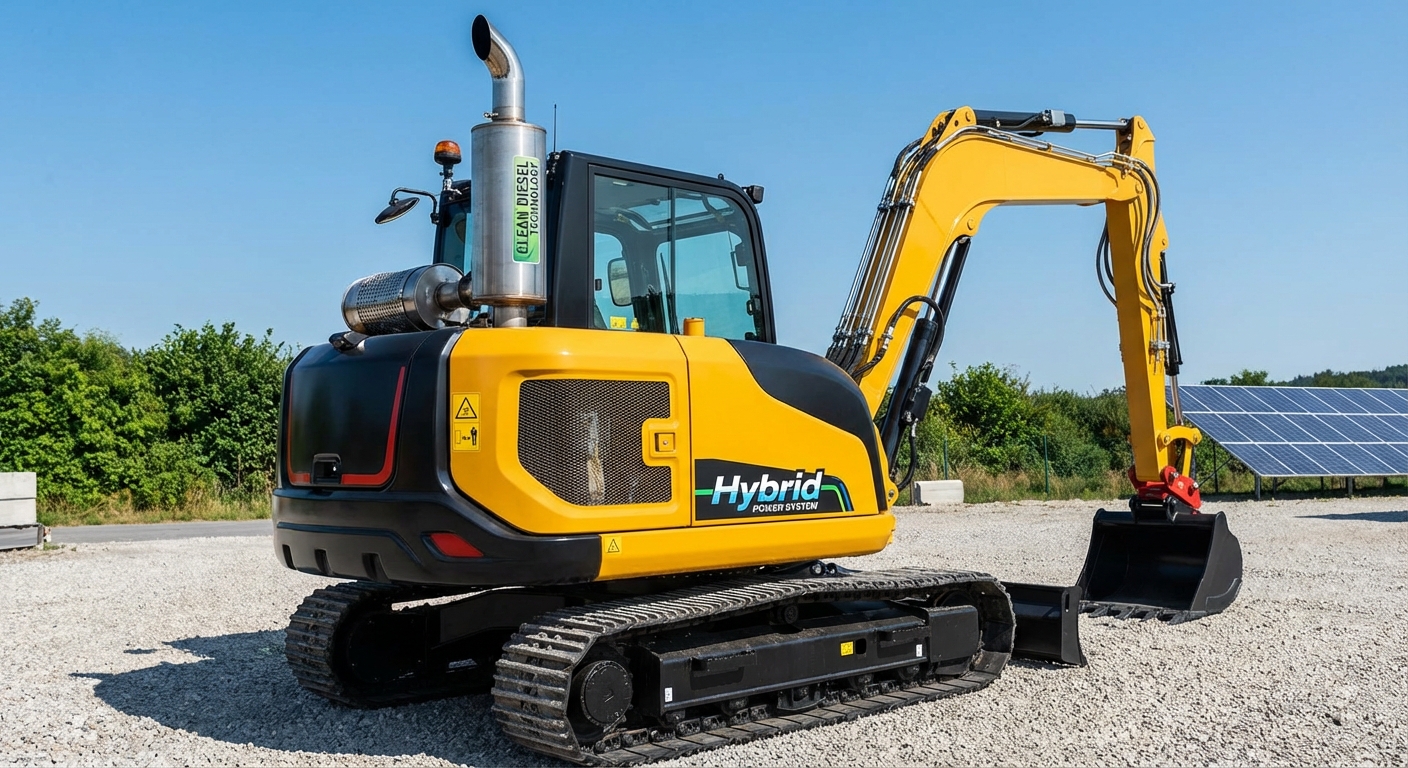
Electric Hybrid
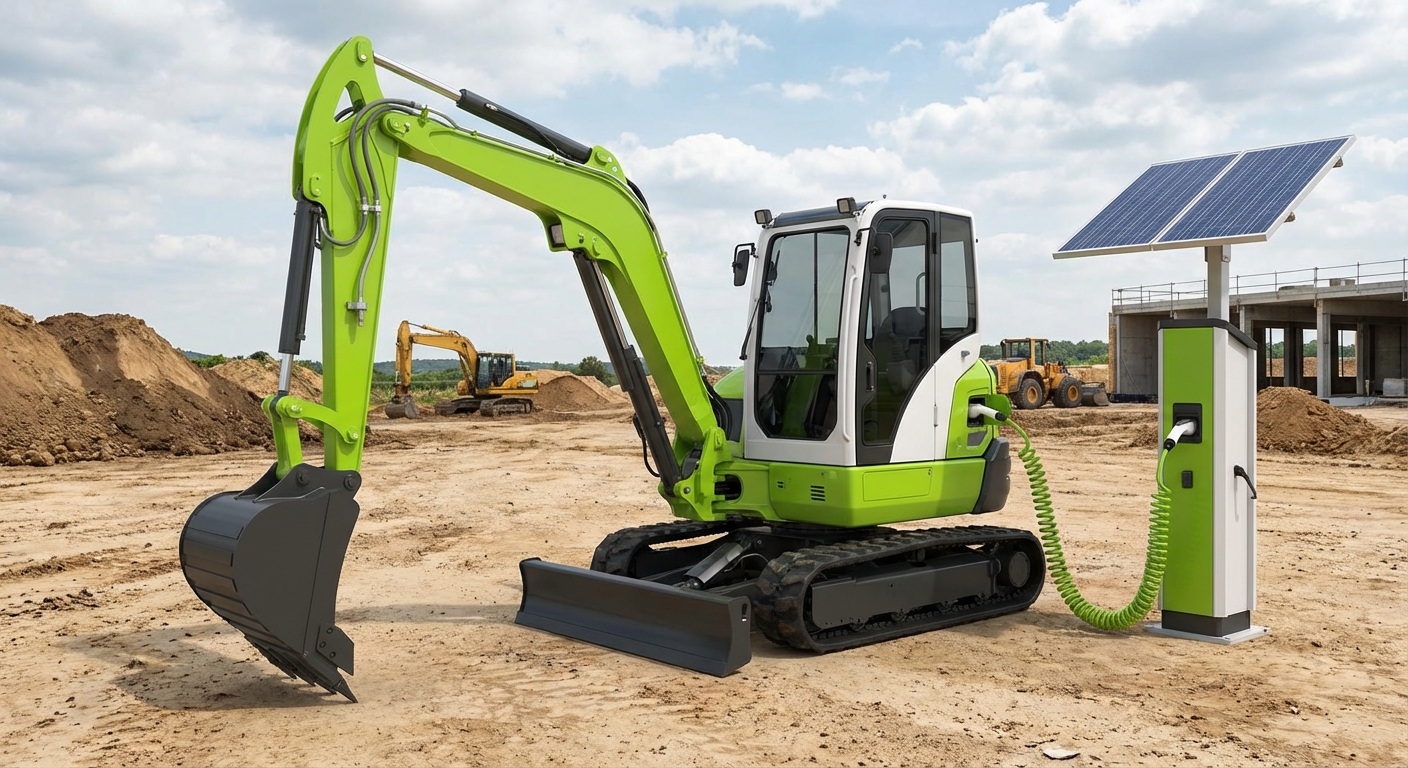
Systems combining diesel engines with electric motors and energy storage:
Caterpillar D7E (discontinued): Diesel-electric drive eliminated mechanical drivetrain losses. Achieved 10-15% efficiency improvement.
Komatsu HB series: Excavators with electric swing motor regeneration. Recover swing deceleration energy for reuse.
Other applications: Various manufacturers have introduced or previewed hybrid systems.
Hybrid economics depend on duty cycle. Applications with frequent acceleration/deceleration benefit most from regeneration capabilities.
Hydraulic Hybrid
Systems using hydraulic accumulators for energy storage:
Operation: Pressure stored in accumulators during deceleration or lowering, released to assist subsequent power demands.
Savings: 15-25% in appropriate applications.
Prevalence: Limited commercial availability; technology continues developing.
Real-World Results
Manufacturers claim various efficiency improvements; real-world results depend on:
Application match: Technology benefits vary dramatically by application. Features optimized for excavator production may provide less benefit in dozer finish grading.
Operator behavior: Operator practices affect technology benefit realization. Auto idle saves nothing if operators disable it.
Maintenance condition: Poorly maintained equipment underperforms regardless of efficiency technology.
Measurement accuracy: Fuel consumption measurement in field conditions involves uncertainty. Claimed improvements may be difficult to verify.
Contractors evaluating fuel efficiency claims should:
- Request data specific to their applications and operating conditions
- Talk to references using equipment in similar applications
- Consider total cost of ownership including maintenance and productivity
- Test equipment in actual working conditions when possible
Making Decisions
For contractors evaluating fuel efficiency options:
Standard Features
Most current equipment includes baseline efficiency features (auto idle, load-sensing hydraulics, efficient engines). These features are effectively “free” compared to older equipment.
When replacing aging equipment, expect 15-25% efficiency improvement from cumulative technology advances.
Optional Technologies
Additional efficiency options require cost-benefit analysis:
Eco modes: Free to use; question is whether productivity impact is acceptable for specific applications.
Hybrid systems: Premium pricing requires volume to achieve payback. Calculate breakeven hours and compare to expected utilization.
Power mode optimization: Requires operator buy-in and proper configuration. Training investment matters.
Operational Practices
Some of the largest efficiency opportunities require no capital investment:
Idle reduction: Management attention to idle time delivers immediate savings.
Operator training: Efficient operating practices reduce fuel consumption 10-15% without equipment changes.
Right-sizing: Matching equipment to application—avoiding oversized machines doing light work—improves fleet efficiency.
Fuel efficiency technologies offer real opportunities to reduce operating costs. Contractors who understand available technologies, evaluate claims critically, and implement thoughtfully can achieve meaningful savings.
For broader technology coverage, see our telematics adoption analysis and fleet management software comparison.