Hydraulic System Innovations: The Technology Quietly Revolutionizing Equipment Performance
While electric and autonomous tech grab headlines, hydraulic innovations are delivering major efficiency and capability gains. Here's what's changed.
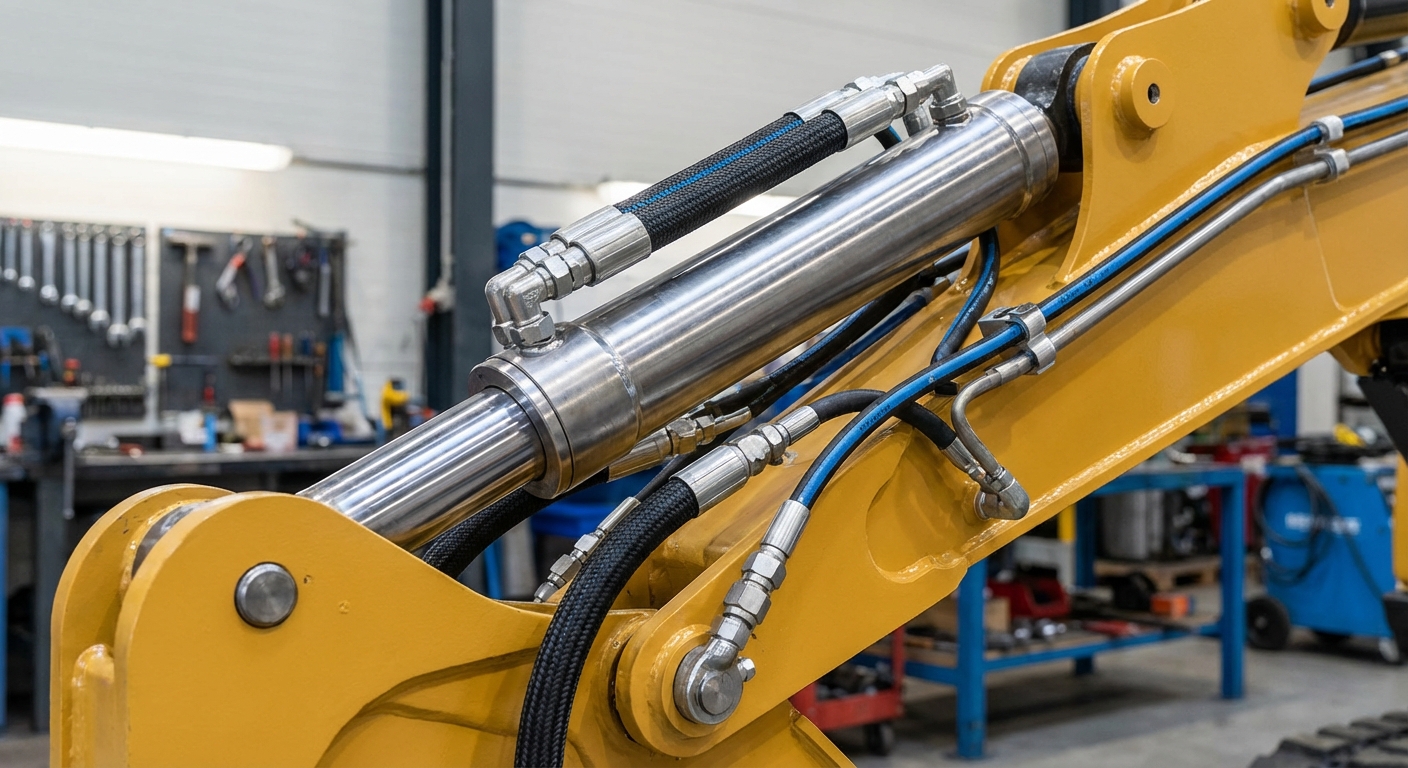
Headlines focus on electric excavators and autonomous dozers, but some of the most significant equipment technology advances are happening in hydraulic systems—the muscle that makes construction equipment work. Modern hydraulic innovations are delivering substantial improvements in efficiency, capability, and operator experience while extending the relevance of conventional diesel-powered equipment.
This analysis examines the hydraulic technologies transforming current equipment and what they mean for contractors.
The Hydraulic Revolution You Might Have Missed
Hydraulic systems have evolved dramatically over the past decade. Equipment from 2015 and equipment from 2025 may look similar externally, but their hydraulic systems operate fundamentally differently.
From Constant Flow to Intelligent Response
Traditional hydraulic systems operated on simple principles: pumps delivered constant flow, and valves restricted that flow to control functions. The approach worked but wasted energy—pumps produced full flow even when functions needed only a fraction.
Modern systems reverse this approach:
Load-sensing: Systems monitor actual load requirements and adjust pump output accordingly. No flow is produced until needed, and only the required pressure and flow are delivered.
Electronic control: Computer-controlled pumps and valves replace mechanical linkages, enabling precise response to operator inputs and changing conditions.
Closed-loop feedback: Sensors throughout the hydraulic system provide real-time feedback, enabling continuous optimization.
The result: equipment that responds better, works more efficiently, and enables capabilities impossible with older technology.
Key Hydraulic Technologies
Several specific technologies drive hydraulic advancement:
Variable Displacement Pumps
Modern piston pumps adjust displacement continuously:
How it works: Internal mechanisms change the pump’s effective volume per revolution. Maximum displacement provides full flow when needed; minimum displacement reduces flow (and power consumption) when loads are light.
Impact: 20-40% reduction in hydraulic power consumption compared to fixed displacement systems in typical applications.
Prevalence: Standard on excavators; increasingly common across equipment categories.
Electro-Hydraulic Valves
Electronic controls replacing mechanical linkages:
Proportional valves: Electronic signals control valve position proportionally, enabling precise flow control without mechanical complexity.
Independent metering: Separate valves control flow into and out of cylinders, enabling optimization impossible with traditional spool valves.
Digital valves: Emerging technology using fast-switching on/off valves to achieve proportional-like control with improved efficiency.
Intelligent Pump Control
Beyond basic load-sensing, advanced pump control optimizes system performance:
Positive flow control: Operator inputs directly command pump output rather than simply opening valves. Improves response and reduces overshoot.
Torque limiting: Automatic pump de-stroking prevents engine overload, enabling smaller engines to power larger hydraulic systems.
Power prioritization: Algorithms allocate available power across multiple functions based on operator intent and priority.
Regeneration Systems
Capturing and reusing energy from negative loads:
Boom-down regeneration: Flow from lowering boom cylinders powers bucket or arm motion rather than being throttled across valves.
Swing regeneration: Electric or hydraulic accumulators capture swing deceleration energy for reuse during acceleration.
Lowering brake recovery: Converting potential energy from lowering loads into useful work rather than heat.
Application Improvements
Hydraulic innovations enable specific capability improvements:
Excavator Fine Control
Modern excavators offer unprecedented control precision:
Smooth operation: Electronic controls eliminate the notchiness of mechanical linkages. Operators can make minute adjustments impossible with older systems.
Grade capability: Precise control supports machine control systems for fine grading applications.
Material handling: Smooth, proportional response makes excavators more capable for lifting and placing applications.
“The control on new excavators is completely different than what I trained on,” reports one operator with 20 years’ experience. “Things I couldn’t do before are now routine.”
Dozer Blade Control
Dozer hydraulics have evolved similarly:
Automatic blade control: Electronic hydraulics respond to GPS grade control inputs faster and more precisely than mechanical systems could.
Load-adaptive response: Systems adjust blade response based on material resistance, preventing stalling while maximizing productivity.
Pitch and tilt precision: Multi-function blade control enables slopes and transitions that required motor graders previously.
Loader Productivity
Wheel loader hydraulics optimize material handling:
Return-to-dig: Programmable detent positions enable consistent bucket positioning without operator attention.
Parallel lift: Automatic control maintains level bucket throughout lift cycle.
Power management: Intelligent allocation between steering, bucket, and auxiliary functions optimizes available power.
Efficiency Impacts
Hydraulic efficiency directly affects fuel consumption and operating costs:
Reduced Power Consumption
Efficient hydraulics require less engine power:
Load-sensing savings: Producing only required flow reduces power consumption 20-40% compared to constant-flow systems.
Regeneration recovery: Capturing energy from lowering functions reduces net power consumption by 5-15% in appropriate applications.
System efficiency: Modern pumps, valves, and circuits minimize pressure drops and leakage, improving overall efficiency.
Downsized Components
Efficient hydraulics enable smaller components:
Engine sizing: More efficient hydraulics do the same work with smaller engines, reducing initial cost and fuel consumption.
Oil volume: Efficient systems run cooler, requiring smaller reservoirs and coolers.
Cylinder sizing: Higher efficiency enables smaller cylinders for equivalent performance.
Extended Component Life
Modern hydraulics are gentler on themselves:
Reduced heat generation: Efficient systems generate less heat, reducing oil degradation and extending component life.
Controlled pressures: Intelligent systems avoid pressure spikes that damage components.
Cleanliness: Better filtration and system design maintain fluid cleanliness.
Maintenance Implications
Hydraulic technology evolution affects maintenance practices:
Fluid Requirements
Modern systems often require higher-quality fluids:
Cleanliness standards: Tighter tolerances require cleaner oil. ISO cleanliness codes have tightened; filtration requirements have increased.
Fluid specifications: Some systems require specific fluid formulations. Using incorrect fluids can damage sensitive components.
Analysis value: Regular fluid analysis provides critical insight into system condition. Predictive maintenance increasingly relies on fluid analysis data.
Diagnostic Requirements
Complex systems require sophisticated diagnostics:
Electronic diagnosis: Service requires manufacturer-specific diagnostic tools and training.
System complexity: Understanding modern hydraulics requires more technical knowledge than older systems.
Data interpretation: Sensor-rich systems generate diagnostic data requiring interpretation skills.
Component Service
Some maintenance becomes more complex; some becomes simpler:
Precision requirements: Component rebuilds require tighter tolerances and cleaner conditions.
System integration: Component replacement may require electronic calibration and programming.
Reliability improvement: Better-designed systems and components reduce overall maintenance frequency.
Selecting Equipment
Understanding hydraulic technology helps equipment selection:
Evaluating Systems
Questions when evaluating equipment hydraulics:
System type: Load-sensing? Positive flow control? What level of electronic integration?
Efficiency features: What regeneration capabilities? Power management approach?
Control quality: How does operation feel? Can operators achieve required precision?
Service support: Is dealer service capable with this hydraulic technology? Diagnostic tool availability?
Total Cost Consideration
Advanced hydraulics affect total cost of ownership:
Purchase price: Advanced hydraulics typically cost more initially.
Fuel savings: Efficiency improvements reduce operating costs over equipment life.
Maintenance costs: May be higher or lower depending on reliability improvements versus complexity.
Productivity: Better control and capability affect work accomplished per hour.
Consider total cost across ownership, not just purchase price.
Application Matching
Hydraulic features matter differently across applications:
Production applications: Efficiency and power management optimize fuel consumption in high-utilization operations.
Precision applications: Control quality and grade control compatibility matter for finish work.
Mixed applications: Versatile systems supporting multiple work types provide flexibility.
Looking Forward
Hydraulic technology continues evolving:
Electrification Integration
Hydraulics and electrification are converging:
Electro-hydraulic actuators: Electric motors driving hydraulic pumps dedicated to individual functions, combining electric efficiency with hydraulic power density.
Hybrid architectures: Electric energy storage supporting hydraulic functions during peak demands.
Digital hydraulics: Electronically-controlled components enabling new optimization possibilities.
Automation Support
Hydraulics enabling autonomous operation:
Response precision: Automatic operation requires highly precise, repeatable hydraulic response.
Sensor integration: Hydraulic systems incorporating sensors for position, pressure, and force feedback.
Safety systems: Hydraulic circuits supporting automated safety functions.
Sustainability Focus
Hydraulics contributing to equipment sustainability:
Efficiency improvements: Continued efficiency gains reducing fuel consumption and emissions.
Fluid developments: Bio-based and extended-life hydraulic fluids reducing environmental impact.
Leakage reduction: Improved sealing and system design minimizing fluid loss.
Hydraulic innovations may not generate headlines, but they’re delivering real improvements to equipment that contractors operate every day. Understanding these technologies helps contractors select equipment, optimize operation, and plan for the future.
For related technology coverage, see our analysis of GPS grade control systems and fuel efficiency technologies.