Heavy Equipment Operator Workforce Study: Training, Retention, and Industry Outlook
A comprehensive study of the heavy equipment operator workforce reveals significant shortages, evolving training requirements, and strategies emerging among contractors successfully recruiting and retaining qualified operators.

The equipment operator workforce remains one of the construction industry’s most critical constraints. A comprehensive new study examining the operator labor market reveals significant shortages, evolving skill requirements, and strategies emerging among contractors successfully navigating workforce challenges.
This analysis examines key findings from the 2025 Operator Workforce Study, providing insight for contractors addressing their own workforce requirements.
Study Methodology
The 2025 Operator Workforce Study gathered data across multiple research methods:
Contractor survey: 847 construction contractors providing workforce data and perspectives.
Operator survey: 1,423 current equipment operators responding on demographics, career paths, and preferences.
Training provider interviews: 34 training programs including union, contractor, and educational institution programs.
Geographic coverage: National study with regional analysis capability.
Workforce Shortage Assessment
The study confirmed significant operator shortages:
Shortage Magnitude
Current shortage metrics:
Vacancy rate: Average operator position vacancy rate of 12.4% among responding contractors.
Time to fill: Average of 47 days to fill open operator positions, up from 31 days five years prior.
Project impact: 67% of contractors report having declined or delayed projects due to operator availability.
Quality concerns: 54% report hiring operators below preferred qualification levels due to availability.
Regional Variation
Shortages vary geographically:
Most severe: Texas, Florida, Arizona, and Colorado report highest vacancy rates.
Moderate shortage: Midwest and Mid-Atlantic states report below-average but still significant shortages.
Least severe: Northeast and parts of the West Coast report relatively lower shortages.
Regional variation correlates with construction activity levels and population growth patterns.
Equipment Type Variation
Shortage severity varies by specialty:
Most critical: Crane operators, particularly for larger mobile and tower cranes.
Highly constrained: Dozer and motor grader operators for precise grading work.
Moderate shortage: Excavator and loader operators.
Least constrained: General compact equipment operators.
Specialty skills and certification requirements correlate with shortage severity.
Workforce Demographics
The study examined operator workforce composition:
Age Distribution
Current age profile:
Under 30: 18% of current operators.
30-44: 31% of operators.
45-54: 28% of operators.
55 and older: 23% of operators.
The workforce is aging, with nearly a quarter of operators within 10-15 years of typical retirement.
Experience Levels
Years of equipment operation experience:
Under 2 years: 12% of current operators.
2-5 years: 19% of operators.
6-15 years: 34% of operators.
Over 15 years: 35% of operators.
The concentration of experience among more senior operators creates succession risk.
Demographic Diversity
Workforce diversity metrics:
Gender: Women represent approximately 3.2% of equipment operators, up modestly from prior years.
Ethnic diversity: Varies significantly by region, with higher diversity in some markets.
Opportunity: Expanding recruiting beyond traditional demographics could help address shortages.
Training Pathways and Requirements
The study examined how operators develop skills:
Training Origins
How current operators learned their skills:
On-the-job training: 58% report primary training through on-the-job experience.
Union apprenticeship: 18% trained through union apprenticeship programs.
Vocational/technical schools: 11% completed formal technical school training.
Military: 7% developed skills through military experience.
Contractor programs: 6% participated in structured contractor training programs.
Certification Status
Operator certifications held:
OSHA 10/30: 78% have completed OSHA safety training.
NCCCO crane certification: 89% of crane operators hold NCCCO credentials.
Other certifications: Varying levels of equipment-specific and specialty certifications.
Evolving Requirements
Training requirements are changing:
Technology skills: Modern equipment requires comfort with technology, telematics, and grade control systems.
Multiple equipment types: Contractors increasingly value operators capable on multiple machine types.
Safety emphasis: Safety training requirements continue increasing.
GPS/machine control: Grade control and GPS systems require additional training investment.
Recruitment Strategies
The study identified successful recruitment approaches:
Effective Channels
Recruitment sources by effectiveness:
Employee referrals: Rated most effective by 67% of contractors; referral bonuses averaging $1,500.
Union hall/apprenticeship: Highly effective for contractors working with unions.
Social media: Growing effectiveness, particularly Facebook and Instagram.
High school partnerships: Building pipeline through career exposure programs.
Veteran recruitment: Military transition programs producing qualified candidates.
Less Effective Channels
Channels with lower effectiveness:
Traditional job boards: Decreasing effectiveness for skilled positions.
Newspaper advertising: Limited reach for target demographics.
Walk-in applications: Rarely producing qualified operators.
Pipeline Development
Long-term pipeline strategies:
High school programs: Career exposure, equipment operation experiences, and scholarship programs.
Community college partnerships: Curriculum input and internship programs.
Pre-apprenticeship programs: Structured pathways into full apprenticeships.
Second-career programs: Targeting career changers from related industries.
Retention Factors
The study examined what keeps operators with employers:
Retention Drivers
Factors operators cite as most important:
Compensation: Competitive pay remains fundamental; 89% cite as highly important.
Equipment quality: Modern, well-maintained equipment matters; 76% cite as highly important.
Consistent work: Steady employment with minimal layoffs; 71% cite as highly important.
Respect and treatment: Professional treatment and recognition; 68% cite as highly important.
Work-life balance: Reasonable hours and schedule predictability; 64% cite as highly important.
Turnover Causes
Why operators leave employers:
Better compensation: Leading cause at 47% of departures.
Equipment and conditions: Poor equipment or working conditions drive 23%.
Disrespect or conflict: Relationship issues cause 15%.
Work availability: Inconsistent work or layoffs cause 12%.
Other factors: Career advancement, relocation, personal reasons.
Best Practices
High-retention contractors share characteristics:
Competitive pay: Pay rates at or above market for the region and specialty.
Quality equipment: Investment in modern, well-maintained equipment.
Respectful culture: Treatment of operators as valued professionals.
Career development: Paths for advancement and skill development.
Benefits package: Health insurance, retirement, and other benefits.
Compensation Trends
The study examined operator compensation dynamics:
Wage Levels
Current compensation ranges:
Entry-level operators: $18-24/hour for operators with limited experience.
Experienced operators: $26-38/hour for operators with 5+ years and multiple equipment types.
Specialty operators: $35-55/hour for crane and specialty equipment operators.
Regional variation: Significant variation with 15-25% differences between regions.
Wage Growth
Recent compensation trends:
Annual increases: Average wage increases of 4.5-6% annually over recent years.
Compression concerns: Experienced operator wages rising faster than entry-level, creating compression.
Competitive pressure: Inter-company recruiting driving wage inflation.
Benefits and Total Compensation
Beyond wages:
Health insurance: 82% of respondents receive employer health benefits.
Retirement benefits: 67% have access to 401(k) or pension programs.
Paid time off: Averaging 10-15 days annually for experienced operators.
Overtime opportunity: Significant overtime availability in most markets.
Technology Impact
Technology is reshaping operator requirements:
Skills Evolution
Changing skill requirements:
Digital comfort: Operators must be comfortable with electronic controls, displays, and interfaces.
Grade control systems: GPS and laser grade control operation increasingly expected.
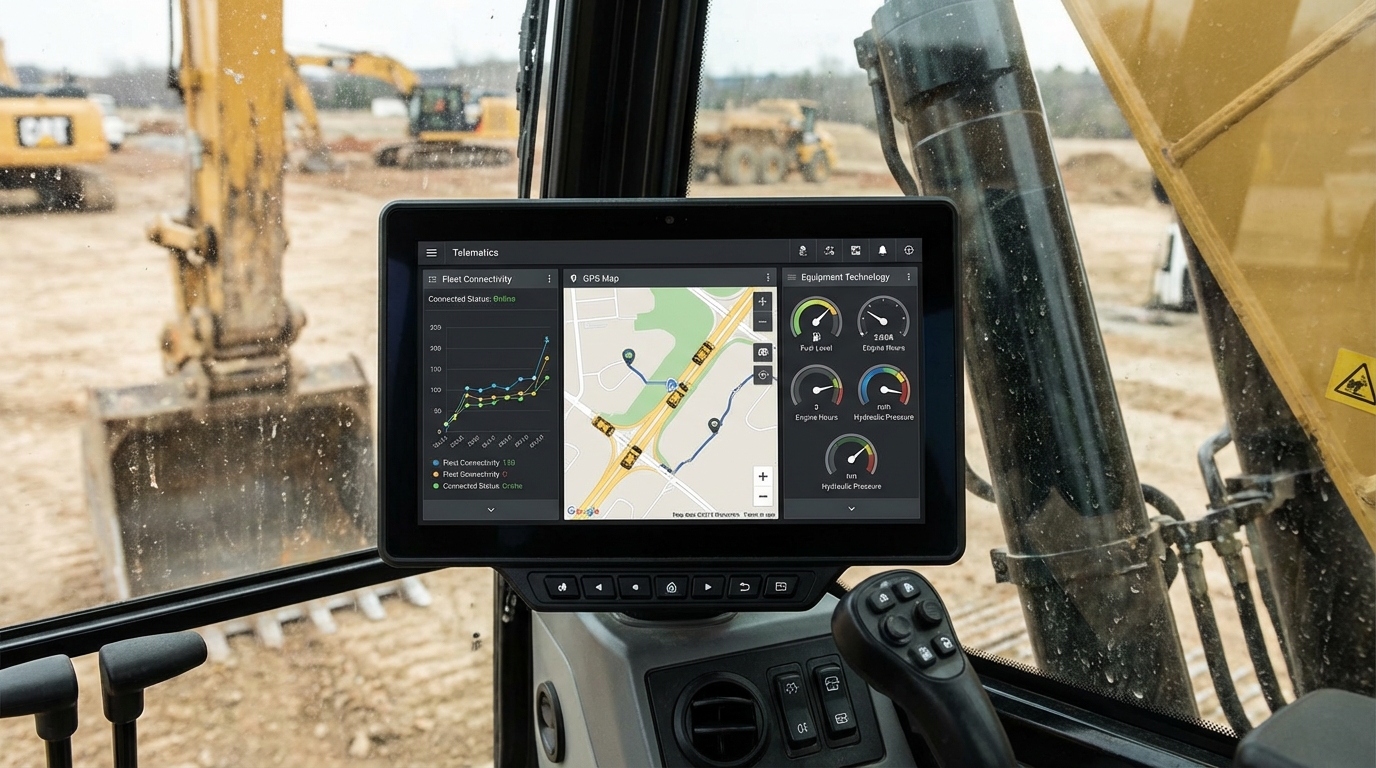
Telematics interaction: Understanding of telematics systems and data.
Troubleshooting: Diagnostic capability for technology-equipped machines.
Training Implications
Training programs must evolve:
Technology integration: Training programs incorporating technology operation alongside fundamental skills.
Continuous learning: Ongoing training as technology evolves.
Simulator use: Increased use of simulators for training and assessment.
Automation Outlook
Future automation impact:
Assisted operation: Semi-autonomous features changing operator roles.
Productivity enhancement: Technology enabling higher productivity per operator.
Role evolution: Operator roles potentially evolving toward machine supervision.
Recommendations
The study suggests strategies for addressing workforce challenges:
For Contractors
Contractor recommendations:
Invest in training: Develop internal training capability rather than relying solely on external sources.
Compete on culture: Differentiate on treatment, equipment, and work environment—not just wages.
Build pipelines: Invest in long-term workforce development partnerships.
Embrace technology: Leverage technology to enhance productivity and attract technology-comfortable workers.
Track metrics: Monitor workforce metrics to identify issues early.
For the Industry
Industry-level recommendations:
Career awareness: Collective investment in career awareness and image improvement.
Training coordination: Industry-level coordination on training standards and resources.
Data development: Better industry-wide workforce data to inform planning.
Looking Ahead
The equipment operator workforce will remain constrained for the foreseeable future. Demographic trends—an aging existing workforce and limited pipeline—suggest shortages will persist even if construction activity moderates.
Contractors who invest in workforce development, retention, and technology will be best positioned to maintain the operator capacity needed for their projects. Those relying on spot-market hiring will face increasing difficulty and cost.
For related coverage, see our analysis of operator certification programs and workforce crisis strategies.