Telematics Adoption Survey: Fleet Connectivity Trends and Challenges in 2025
While telematics hardware is now present on the majority of construction equipment fleets, a comprehensive survey reveals that most organizations struggle to extract actionable value from the data—representing both a challenge and opportunity.
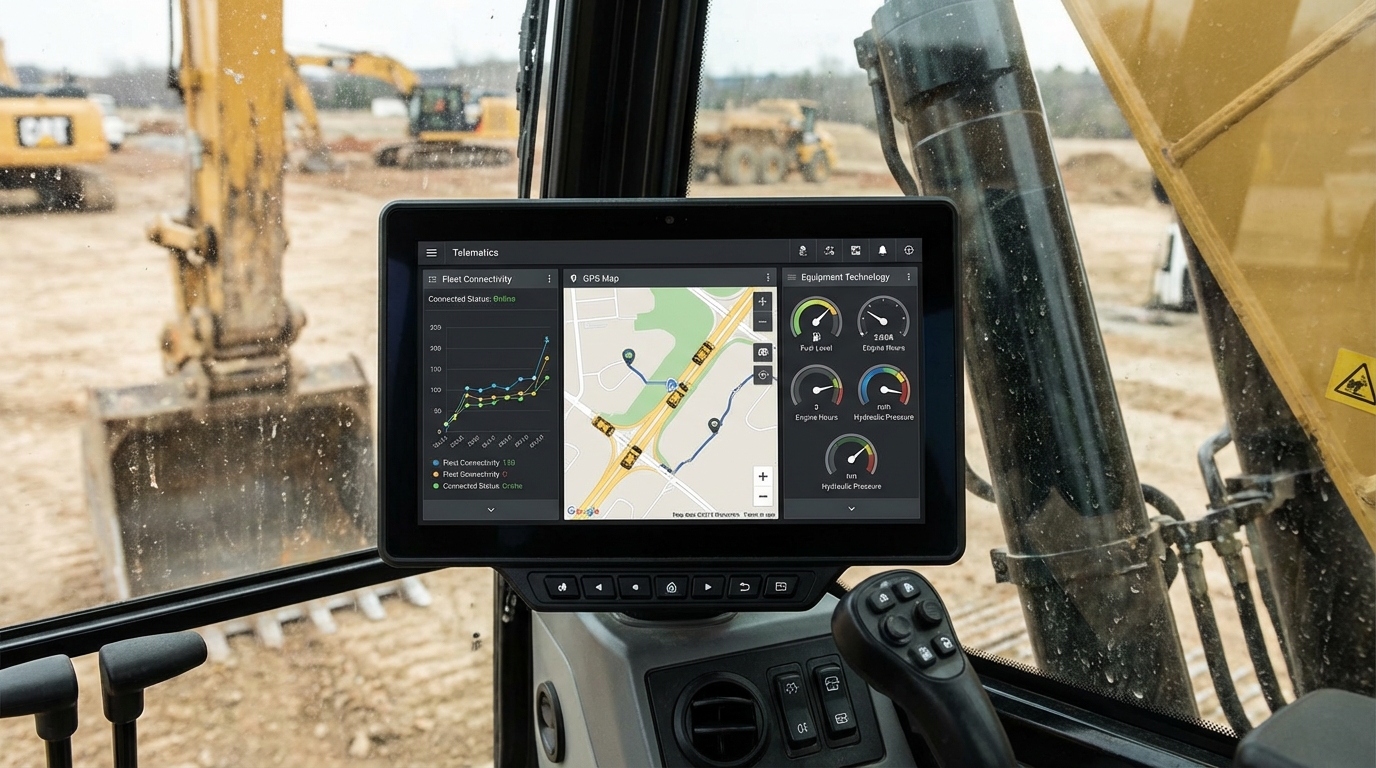
Telematics technology—the combination of GPS, sensors, and communications enabling equipment connectivity—has transitioned from emerging technology to mainstream adoption. A new comprehensive survey of construction equipment fleet operators reveals that two-thirds of fleets now have telematics deployed, but significant gaps remain in how effectively organizations use the resulting data.
This report examines current adoption rates, usage patterns, challenges, and best practices emerging among leading fleet operators.
Survey Methodology
The 2025 Telematics Adoption Survey gathered data from equipment fleet operators across construction, infrastructure, and related industries:
Sample size: 1,247 respondents from organizations operating equipment fleets.
Fleet size distribution: 32% large fleets (100+ units), 41% medium fleets (25-99 units), 27% small fleets (under 25 units).
Geographic coverage: North American operations with some multinational organization inclusion.
Respondent roles: Fleet managers, operations directors, technology staff, and executive leadership.
Adoption Status
Telematics adoption has reached majority levels:
Deployment Rates
Current deployment status:
Full deployment: 43% of respondents report telematics deployed on substantially all equipment.
Partial deployment: 24% have telematics on some but not all equipment.
No deployment: 33% report no telematics currently deployed.
Combined adoption: 67% have at least some telematics deployment.
Adoption by Fleet Size
Fleet size correlates strongly with adoption:
Large fleets (100+ units): 89% have some telematics deployment, with 62% at full deployment.
Medium fleets (25-99 units): 71% have some deployment, with 41% at full deployment.
Small fleets (under 25 units): 44% have some deployment, with 28% at full deployment.
Economies of scale in both implementation and ongoing management contribute to higher adoption among larger fleets.
Equipment Type Coverage
Telematics deployment varies by equipment type:
New equipment: 78% of respondents report telematics included on most or all new equipment purchases.
Existing fleet retrofit: Only 34% have retrofitted existing equipment with aftermarket telematics.
Selective coverage: Many fleets deploy telematics on higher-value equipment while leaving compact and older equipment unconnected.
Telematics Capabilities and Usage
Survey explored which capabilities are deployed and used:
Deployed Capabilities
Capabilities present on telematics-equipped fleets:
Location tracking: 98% of telematics deployments include GPS location.
Engine hours: 96% track engine operating hours.
Fuel consumption: 71% monitor fuel consumption.
Idle time: 68% track idle time separately from operating hours.
Fault codes: 64% receive equipment fault codes through telematics.
Productivity data: 37% access production metrics (cycles, loads, volumes).
Actual Usage Patterns
Capabilities used regularly differ from what’s deployed:
Location tracking: 89% regularly use location data—closest alignment between availability and usage.
Engine hours: 82% regularly use hours data, primarily for maintenance scheduling.
Fuel consumption: 47% regularly analyze fuel data—significant gap from deployment rate.
Idle time: 41% actively manage idle time—substantial underutilization.
Fault codes: 38% act on fault code data—many receive but don’t process alerts.
Productivity data: 22% use productivity data regularly—significant gap for fleets with capability.
Data Integration Challenges
Integration emerged as a significant barrier:
Platform Fragmentation
Multi-platform complexity:
Average platform count: Fleets with telematics average 2.8 different telematics platforms (primarily due to different equipment manufacturers).
Integration status: Only 23% have achieved meaningful integration across platforms.
Unified view challenge: 64% cite lack of unified fleet visibility as a significant limitation.
Enterprise System Integration
Integration with other business systems:
Maintenance systems: 41% have integrated telematics with maintenance management systems.
Accounting systems: 28% have integration enabling automated cost allocation.
Project management: 19% connect equipment data with project management platforms.
No integration: 38% have no integration between telematics and other enterprise systems.
Data Management
Data handling challenges:
Data volume: 52% report challenges managing the volume of data generated.
Data quality: 44% cite data quality issues affecting reliability of insights.
Analysis capability: 58% lack internal capability to effectively analyze telematics data.
Barriers to Adoption and Value
Survey identified key barriers:
For Non-Adopters
Organizations without telematics cite:
Cost concerns: 67% cite implementation cost as a barrier.
ROI uncertainty: 58% are uncertain about return on investment.
Complexity: 45% view telematics as too complex for their organization.
Lack of resources: 41% lack personnel to manage telematics effectively.
For Partial Adopters
Organizations with partial deployment cite:
Retrofit costs: 72% find aftermarket retrofits for existing equipment cost-prohibitive.
Inconsistent data: 61% struggle with different data formats across platforms.
Organizational readiness: 54% cite organizational capability gaps limiting expansion.
For Full Adopters
Even fully deployed organizations face challenges:
Data utilization: 68% acknowledge not fully utilizing available data.
Integration: 59% cite integration challenges limiting value.
Change management: 47% struggle with organizational adoption of data-driven practices.
Value Realization
Survey examined actual value realized:
Reported Benefits
Organizations reporting specific benefits:
Maintenance improvement: 61% report improved maintenance through telematics.
Theft recovery/prevention: 47% cite theft-related benefits.
Utilization visibility: 45% report improved utilization visibility.
Fuel savings: 38% report measurable fuel savings.
Productivity improvement: 29% report productivity gains.
Quantified Returns
Organizations able to quantify ROI:
Positive ROI confirmed: 52% of telematics users have confirmed positive ROI.
Unable to quantify: 41% believe benefits exist but haven’t quantified them.
Uncertain or negative: 7% question whether investment has paid off.
ROI Drivers
Factors correlating with higher ROI:
Active management: Organizations actively managing to telematics data report 3x higher ROI.
Integration level: Integration with enterprise systems correlates with higher perceived value.
Organizational commitment: Executive sponsorship and clear ownership improve outcomes.
Best Practices from High Performers
Top performers share common characteristics:
Organizational Practices
Organizational factors:
Clear ownership: Designated personnel responsible for telematics value realization.
Cross-functional engagement: Operations, maintenance, and finance all engaged with telematics data.
Training investment: Structured training on telematics systems and data interpretation.
Process integration: Telematics data embedded in standard operating procedures.
Technical Practices
Technical approaches:
Platform strategy: Deliberate approach to platform selection and integration.
Data governance: Defined standards for data quality and management.
Automation: Automated alerts and workflows triggered by telematics events.
Analytics capability: Internal or outsourced analytics capability for deeper insights.
Cultural Factors
Organizational culture:
Data-driven culture: Expectation that decisions incorporate available data.
Continuous improvement: Ongoing effort to expand telematics value, not one-time implementation.
Accountability: Performance metrics incorporating telematics-derived insights.
Future Adoption Intentions
Survey explored future plans:
Expansion Plans
Organizations plan to expand:
Expand deployment: 58% of current users plan to expand telematics deployment.
Deepen usage: 64% plan to improve utilization of existing telematics data.
New adopters: 47% of non-adopters plan to implement telematics within 2 years.
Capability Priorities
Priorities for new or expanded capabilities:
Predictive maintenance: 52% cite predictive maintenance as priority capability.
Unified platform: 48% prioritize platform consolidation or integration.
Productivity analytics: 41% want better productivity insights.
Electric equipment support: 38% cite need for electric equipment monitoring.
Looking Ahead
The telematics adoption curve has reached an inflection point. The technology is proven, adoption is mainstream among larger fleets, and the question has shifted from “whether to adopt” to “how to extract full value.”
For organizations early in their telematics journey, the experiences of leading adopters provide roadmaps for successful implementation. For those already deployed, the priority shifts to deeper integration, better analytics, and organizational practices that translate data into operational improvement.
For related coverage, see our analysis of fleet utilization and fleet management software.