Ascension Tree Care: Three Partners Rising Above the Canopy in Oakland County
Profile of Ascension Tree Care - How an engineer, a concrete worker, and an environmental scientist built Michigan's most trusted tree service
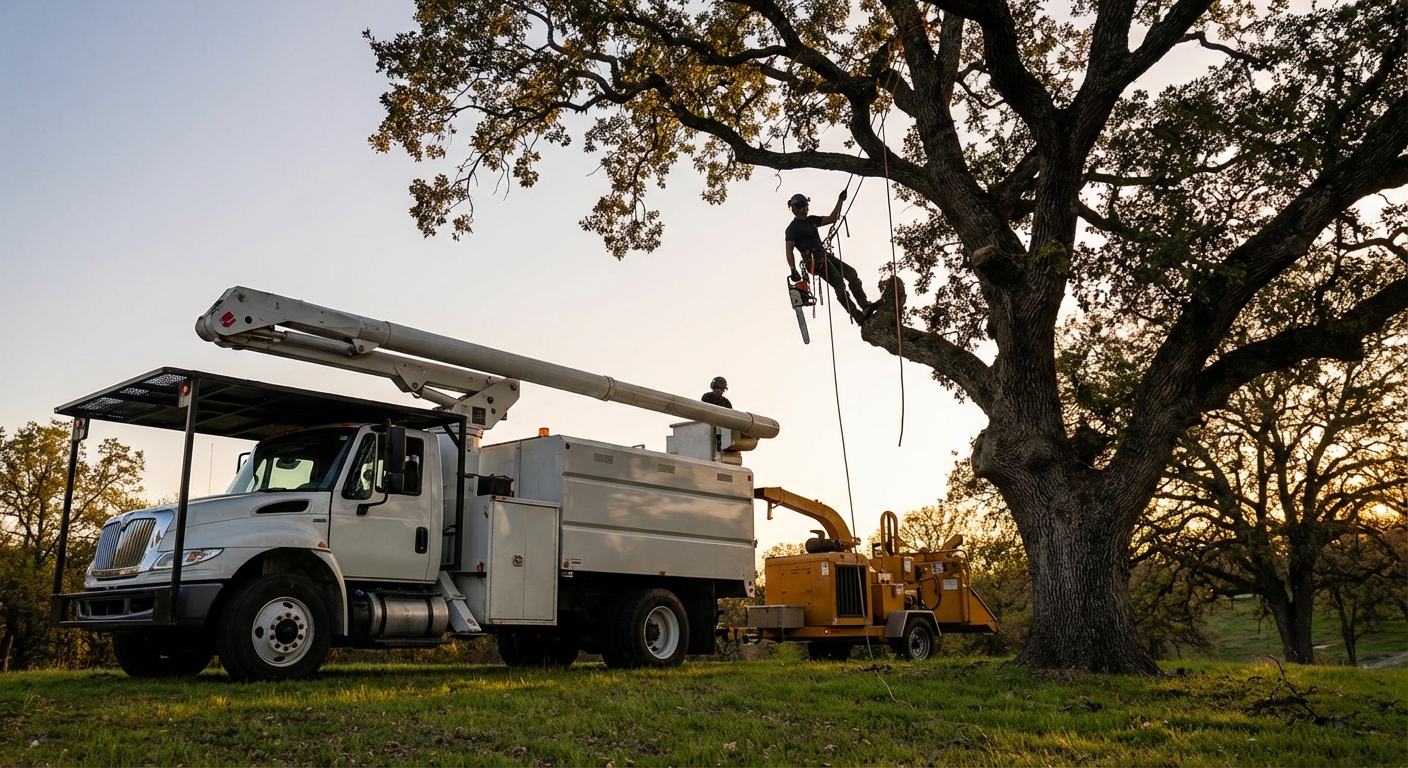
In the tree care industry, you’ll find no shortage of companies willing to show up with a chainsaw and a truck. But in Oakland County, Michigan, one company has built a reputation that rises above the rest—quite literally. Ascension Tree Care, based in Milford, has become the go-to choice for homeowners and businesses across the region, earning an “Excellent” rating across 162 Google reviews and a loyal customer base that keeps coming back season after season.
What sets Ascension apart isn’t just their ISA certifications or their state-of-the-art equipment. It’s the unlikely partnership of three men from vastly different backgrounds who came together with a shared vision: to elevate tree care from a commodity service to a craft. Their story is one of career pivots, calculated risks, and a relentless commitment to doing things the right way.
FieldFix Editor’s Note: Ascension Tree Care represents a growing trend in the tree care industry—operators who combine formal credentials with diverse professional backgrounds. Their approach to equipment investment and continuous training offers a blueprint for other regional tree services looking to differentiate themselves in a competitive market.
The Three Pillars of Ascension
Walk onto any Ascension Tree Care jobsite and you’ll likely encounter all three owners working alongside their crew. It’s a hands-on approach that reflects the company’s culture and the complementary skill sets that make the partnership work.
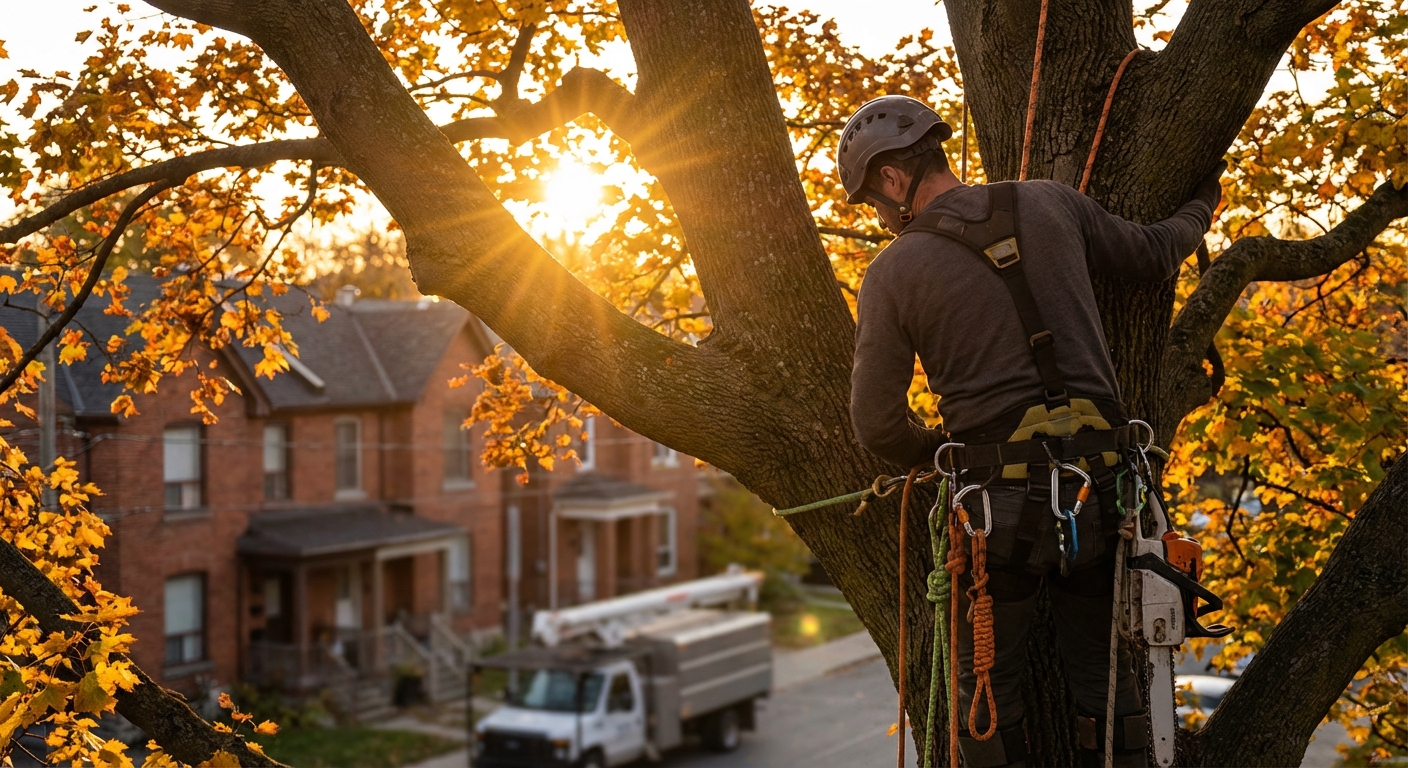
Dan Sheridan brings the scientific foundation. A graduate of Oakland University with a degree in Environmental Sciences, Dan cut his teeth working for Oakland County on invasive species mitigation before serving as the lead arborist for the City of Auburn Hills. He holds ISA certification (MI-4628A) and is TRAQ certified—credentials that represent hundreds of hours of specialized training. “At home in the canopy” is how the company describes him, and colleagues say there isn’t a tree species in Michigan he can’t identify on sight.
Scott Simpson came to tree work through an unexpected route: concrete. Years spent in that demanding trade forged a work ethic that translated perfectly to arboriculture. But Scott didn’t just bring muscle to the partnership—he brought ambition. A regular competitor at tree climbing competitions, he embodies the company’s commitment to continuous improvement. His hunger to master new techniques and push his skills keeps the entire team sharp.
Dave Sheridan, Dan’s brother, rounds out the trio with something equally essential: operational excellence. A graduate of Central Michigan University, Dave spent a decade building a career in engineering and manufacturing before leaving it all behind to co-found Ascension. He’s self-deprecating about his tree work credentials—“definitely the rookie of the crew,” he admits—but his expertise in systems, logistics, and business operations keeps the company running smoothly. “Someone’s gotta keep these arborists organized,” he says with a grin.
From Different Worlds to Shared Purpose
The origin story of Ascension Tree Care reads like a case study in second-act careers. Here were three professionals, each established in their respective fields, who chose to walk away from security and start something new.
For Dave, the decision to leave engineering wasn’t easy. A decade of building a career represents significant investment—both financial and emotional. But the opportunity to build something with his brother and a trusted partner proved too compelling to pass up. His manufacturing background has proven invaluable in optimizing operations, from route planning to equipment maintenance schedules.
Scott’s transition from concrete to canopy might seem like a lateral move—both are physically demanding trades that require precision and an understanding of structural forces. But the similarities run deeper. In concrete, timing is everything. Pour too early, too late, or in the wrong conditions, and the work fails. Tree care demands the same awareness of variables: weather, temperature, tree health, and site conditions all factor into every decision.
Dan’s path was perhaps the most linear, but no less significant. Moving from municipal arboriculture to entrepreneurship meant trading stability for uncertainty. But it also meant the freedom to practice tree care according to his own standards—standards shaped by years of formal education and hands-on experience with some of Oakland County’s most challenging trees.
The Oakland County Territory
Ascension Tree Care has staked its claim across some of Michigan’s most densely wooded suburbs. From their Milford headquarters, they serve Commerce, West Bloomfield, White Lake, Clarkston, Novi, Lake Orion, Highland, and surrounding communities throughout Oakland County.
This territory presents unique challenges. Michigan weather is notoriously unpredictable—the company’s website puts it bluntly: “Michigan storms are no joke.” Ice storms, wind events, and the occasional tornado create constant demand for emergency services. The region’s mature tree stock, including significant oak populations, requires specialized knowledge to maintain and protect.
The oak wilt threat looms particularly large in this area. This exotic fungal disease can devastate entire stands of oak trees if not properly managed. Ascension has developed expertise in oak wilt management, offering preventive treatments and rapid response when infections are detected. It’s specialized work that requires understanding of the disease’s transmission pathways and careful attention to pruning timing—red oaks, for instance, should never be pruned during the growing season when the fungal spores are active.
Services Built on Science
Ascension’s service menu reflects their credentials-first approach. While they handle the full spectrum of tree care needs, each service is grounded in arboricultural best practices rather than just showing up and cutting.
Tree Pruning and Trimming goes beyond aesthetics. The team focuses on structural pruning to improve tree health and reduce failure risk. They’re particularly attentive to limbs that overhang roofs, power lines, and high-traffic areas—the branches that cause the most damage when Michigan’s inevitable storms arrive.
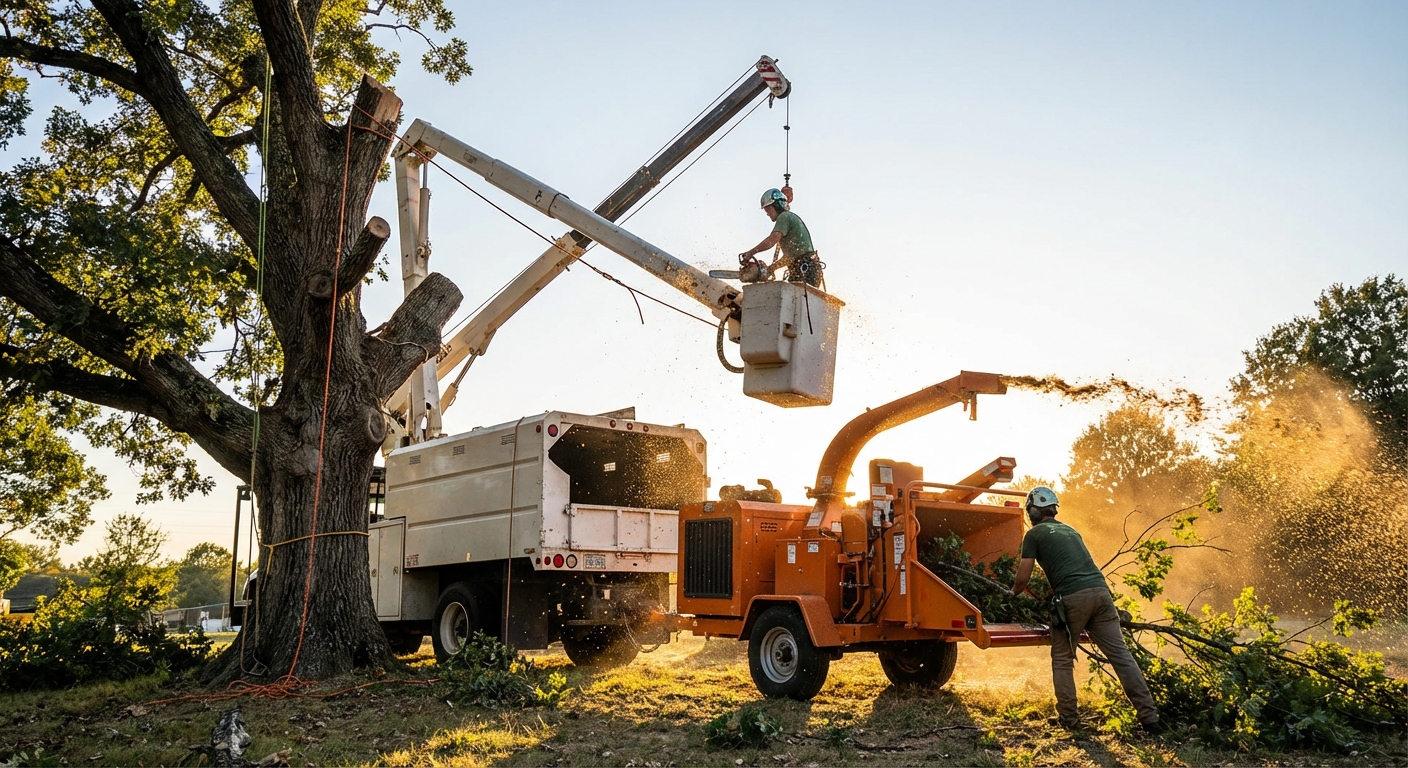
Tree Removal is handled with what the company calls “detailed risk assessment and planning.” Before the first cut, they evaluate the site, identify potential hazards, and develop a customized removal strategy. This approach minimizes damage to surrounding landscapes and structures while ensuring crew safety.
Tree Risk Assessment leverages Dan’s TRAQ certification to provide formal evaluations of hazard trees. For property owners unsure whether a leaning tree or one with visible decay poses a genuine threat, these assessments provide clarity and documentation—useful for insurance purposes and peace of mind alike.
Emergency Services operate 24/7, reflecting the reality of Michigan’s weather patterns. When a storm drops a tree on a roof at 2 AM, Ascension’s rapid response unit mobilizes to mitigate immediate hazards and prevent secondary damage.
Plant Health Care rounds out the service offerings, addressing the root causes—literally—of tree decline. From invasive borers to fungal infections, the team provides diagnosis and treatment to restore tree vigor before problems become fatal.
Equipment Philosophy
The company emphasizes their investment in “state-of-the-art equipment,” and customer reviews consistently note the professional appearance of their fleet. Clean, well-maintained trucks and equipment signal something important about an operation: attention to detail extends from the gear to the work itself.
For tree care companies, equipment decisions directly impact both safety and efficiency. Modern chippers process debris faster, reducing time on site. Properly maintained climbing gear and rigging equipment protects workers’ lives. Well-engineered bucket trucks extend reach while providing stable work platforms.
Customer testimonials specifically mention the quality of Ascension’s equipment. One reviewer noted “even the trucks and equipment were clean and professional looking”—a detail that might seem minor but reflects the broader operational discipline the company maintains.
The Customer Experience
Reading through Ascension’s 162 reviews reveals consistent themes that speak to their operational approach. Communication stands out repeatedly—customers praise the estimate process, scheduling coordination, and job-day walk-throughs. One customer described “outstanding communication throughout the entire process, from estimate to invoicing to completing the work.”
The walk-through process appears to be a company standard. Before starting work, the crew reviews the scope with the property owner to ensure alignment. After completion, another walk-through confirms satisfaction before the team leaves. It’s a simple practice that eliminates misunderstandings and demonstrates respect for the customer’s investment.
Cleanup consistently earns praise as well. Multiple reviews mention the thoroughness of debris removal—“cleaned up every last twig,” one customer noted. For tree work, where a single job can generate tons of material, this attention to site restoration matters enormously to homeowners.
Pricing feedback clusters around “fair” and “reasonable,” with several customers specifically noting that complex jobs came in at better-than-expected rates. In an industry where price gouging on emergency calls isn’t uncommon, this reputation for fair dealing builds the trust that generates repeat business and referrals.
Training as Competitive Advantage
The company’s investment in continuous education sets them apart from operators who learn once and stop growing. Both ISA certification and TRAQ certification require ongoing education to maintain—a built-in incentive for staying current with industry developments.
But Ascension goes beyond the minimum requirements. Scott’s competition climbing keeps him engaged with techniques and equipment at the cutting edge of the profession. Dan’s environmental science background means he approaches tree health from a systems perspective, considering soil conditions, water availability, and ecosystem interactions that less-trained operators might overlook.
This commitment to training manifests in subtle but important ways on the job. One customer review noted that during a treatment application, the team “made sure the ground and air temperature were just right for maximum benefit.” That level of attention to application conditions reflects genuine expertise—many less conscientious operators would simply spray and go, regardless of whether conditions supported effective treatment.
Navigating Michigan’s Challenges
Operating in Michigan demands adaptability. The state’s continental climate produces hot, humid summers and brutal winters, with spring and fall shoulder seasons that can swing wildly between extremes. Each season brings distinct challenges.
Winter brings dormancy, which is actually optimal for many pruning operations—trees are less stressed by cuts when they’re not actively growing. But snow and ice create access challenges and can obscure hazards on the ground. Ascension’s crews work through winter conditions when necessary, as evidenced by customer reviews mentioning work completed with snow on the ground.
Spring awakens insect pests and fungal pathogens, making it a critical time for plant health care interventions. It’s also when oak wilt restrictions begin—responsible arborists avoid pruning oaks from April through July to prevent disease transmission.
Summer brings peak growth and peak storm season. Emergency call volume spikes as severe weather moves through the region, and routine maintenance competes with urgent storm response for crew time.
Fall offers another window for major tree work as activity slows before winter dormancy sets in. It’s also the time to prepare vulnerable trees for the stresses of the coming cold season.
The Business of Trust
Tree care is fundamentally a trust business. Property owners invite strangers onto their land with chainsaws and climbing equipment, authorizing them to cut into valuable trees or remove them entirely. The potential for things to go wrong—damage to structures, injury to people, destruction of irreplaceable landscape features—is significant.
Ascension builds trust through credentials, communication, and consistency. Their ISA certifications provide third-party validation of competence. Their communication practices keep customers informed and involved. Their consistent execution, documented across hundreds of reviews, demonstrates that they deliver on their promises.
The company’s tagline, “Let’s Ascend,” captures both their name and their philosophy. In an industry where barriers to entry are low and quality varies wildly, they’ve chosen to rise above—through training, through equipment investment, through operational discipline, and through genuine care for the trees they’re hired to manage.
Looking Forward
For property owners throughout Oakland County, Ascension Tree Care has become a reliable partner for maintaining one of their most valuable and vulnerable assets. Trees that have grown for decades, providing shade, beauty, and ecosystem services, deserve care from people who understand their biology and respect their value.
The three partners who founded Ascension brought different skills but shared values: do the work right, treat customers fairly, and never stop learning. As Michigan’s trees face mounting pressures from invasive pests, changing climate patterns, and expanding development, that combination of expertise and integrity matters more than ever.
Whether you’re dealing with storm damage at 3 AM, worried about a tree that’s starting to lean, or simply want to maintain the health and beauty of your landscape, Ascension Tree Care has built their reputation one job at a time. And based on what their customers say, that reputation is well-earned.
Ascension Tree Care is based in Milford, Michigan, serving Oakland County. They can be reached at (248) 238-8781 or quotes@ascensiontreecare.com. Find them online at ascensiontreecare.com or on X @LetsAscend_248.