Volvo CE Is Killing Rokbak. Here's What That Means for Articulated Haulers.
After 40+ years of building articulated haulers in Scotland, Volvo CE is shuttering the Rokbak brand by Q3 2026. Tariffs and rising costs made the math impossible.
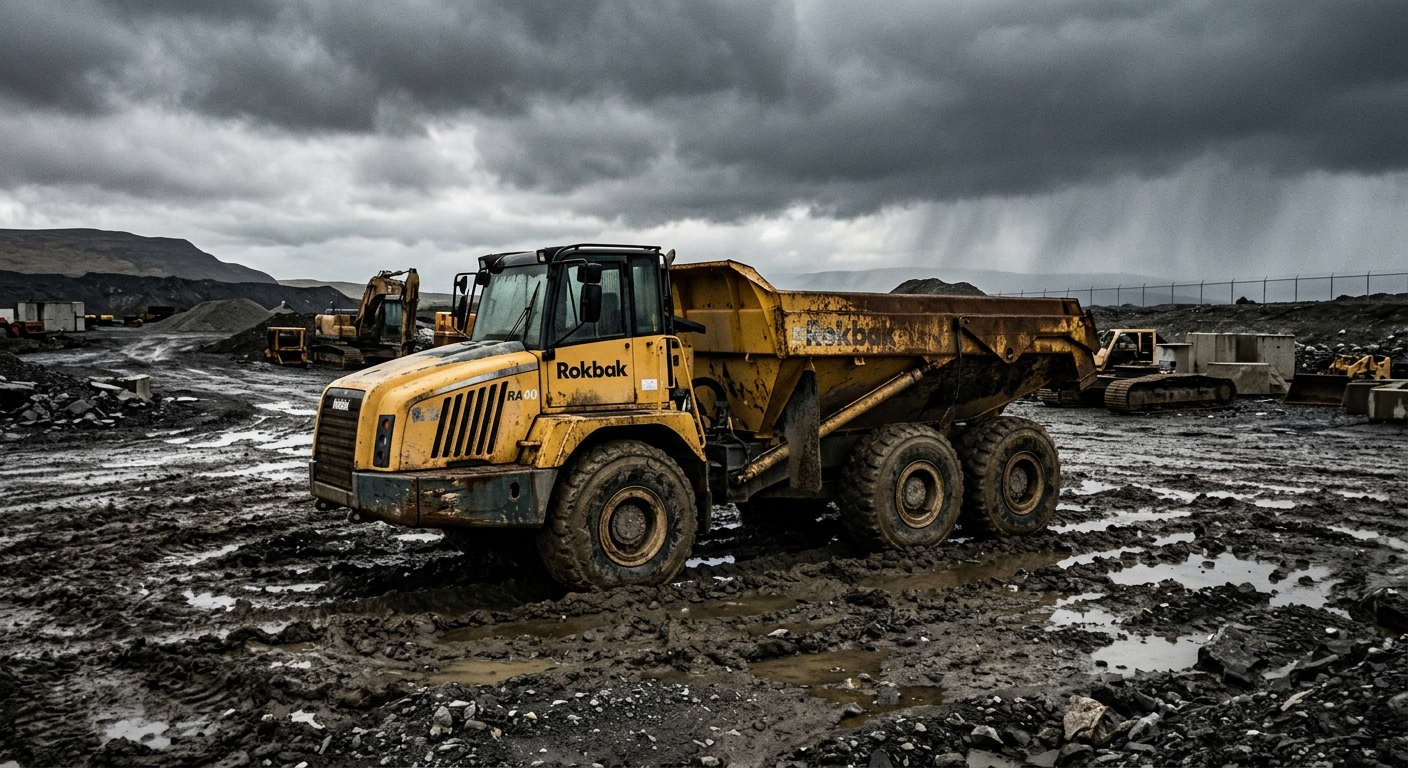
Volvo Construction Equipment announced this week that it’s closing its Rokbak articulated hauler business. The brand — formerly Terex Trucks — has been building off-highway articulated haulers at its Motherwell, Scotland facility for more than four decades. That’s done by Q3 2026.
The reason is money. Rising supply chain costs and international trade pressures, including U.S. tariffs, made the business unsustainable. Volvo CE didn’t sugarcoat it: profitability was gone and wasn’t coming back under current conditions.
FieldFix Editor’s Note
Tracking machine costs is hard enough when your equipment brand still exists. FieldFix helps owner-operators and fleet managers log maintenance, calculate true cost-per-hour, and make smarter decisions about the iron they run — whether the manufacturer is thriving or shutting down.
What Actually Happened
Rokbak has had a rough few years. The brand was born in 2021 when Volvo CE renamed the Terex Trucks line it acquired back in 2014. The rebrand was supposed to signal a fresh start. Instead, it turned into an expensive identity crisis during a period of escalating global trade friction.
According to For Construction Pros, Volvo CE president Melker Jernberg acknowledged the impact on employees and partners but stressed the company’s commitment to honoring existing customer support obligations.
The closure follows a broader pattern of OEMs reevaluating product lines that don’t generate enough margin to justify the operational overhead. When tariffs push up input costs on everything from steel to components, and the finished product has to compete against locally manufactured alternatives in key markets, the economics fall apart fast.
The Tariff Problem Is Real
This isn’t an isolated case. U.S. tariffs have been squeezing equipment manufacturers who rely on international supply chains. For a Scottish-built hauler sold into North American markets, every tariff increase eats directly into already-thin margins.
The construction equipment industry ran on relatively predictable global trade for decades. That era is over. Companies that manufacture in one country and sell heavily in another are facing a fundamentally different cost structure than they planned for.
Rokbak’s haulers — the RA30 and RA40 — were solid machines. The problem wasn’t product quality. The problem was that building a 30-ton articulated hauler in Scotland and shipping it to a job site in Texas became more expensive than the market would bear.
Motherwell Isn’t Closing (Yet)
Here’s the nuance that matters: Volvo CE isn’t abandoning the Motherwell facility. The plant will continue operating as a hub for Volvo rigid hauler design and manufacturing. Resources that were going to Rokbak will shift toward rigid hauler development.
That’s a calculated bet. Rigid haulers serve the mining and quarry segments where Volvo already has strong positioning. Rather than spreading resources across two hauler product lines with overlapping market space, Volvo is consolidating around the one that makes money.
For Motherwell employees, the transition is still painful. Volvo CE said it’s working through a collective consultation process with unions and government representatives. The timeline for that process runs through Q3 2026.
What This Means If You Own a Rokbak
If you’re running RA30s or RA40s, take a breath. Volvo CE committed to ongoing aftermarket support and service through the phase-out and beyond. Parts availability shouldn’t disappear overnight — that’s the kind of move that tanks resale values and destroys dealer relationships, and Volvo knows it.
But let’s be honest about what happens over time. When a brand goes away, parts get harder to source. Lead times stretch. Dealer technicians who knew the machines move on. The support commitment is genuine today, but five years from now? That’s less certain.
Here’s what Rokbak owners should be thinking about right now:
Parts inventory. If there are wear items or components with long lead times, start stocking now while supply chains are still active. Filters, hydraulic components, undercarriage wear items — the stuff you’d normally order as-needed becomes worth having on hand.
Resale timing. Rokbak values are going to take a hit. That’s already baked in. If you were planning to trade up in the next 12-18 months anyway, moving sooner rather than later makes sense. Every month after the official closure date, the “orphan brand” discount gets steeper.
Service relationships. Find out which Volvo dealers in your area were also Rokbak dealers. Those relationships matter more now. A dealer who’s committed to supporting the transition is worth their weight in gold.
The Bigger Picture
Rokbak’s closure is a data point in a larger trend. The global equipment market is consolidating around manufacturers with the scale and geographic footprint to absorb trade friction.
Companies building in the markets where they sell have an advantage right now. Caterpillar’s North American manufacturing base looks smarter every time a new tariff hits. Same for Deere. Komatsu’s U.S. plants give it insulation that pure importers don’t have.
For mid-size OEMs and specialty brands, the math is getting harder. You need enough volume to justify manufacturing in multiple regions, or you need margins fat enough to absorb the tariff penalties. Rokbak had neither.
The articulated hauler market itself isn’t shrinking. Construction activity, mining demand, and infrastructure spending all support continued need for these machines. But the list of companies that can profitably build and sell them globally just got shorter.
Who Benefits?
Bell Equipment is the obvious winner. The South African manufacturer has been Rokbak’s primary competitor in the articulated hauler space, and every unit Rokbak would have sold is now up for grabs. Bell already manufactures in the U.S. through its facility in Richards Bay and has been expanding its North American dealer network.
Caterpillar and Deere also pick up share by default. Their articulated haulers aren’t identical products to what Rokbak offered, but fleet managers who need to replace aging RA30s and RA40s will look at the Cat 730 and Deere 370P as natural alternatives.
Komatsu’s HM series rounds out the main beneficiaries. With Rokbak gone, there’s one fewer option at the dealer level, which simplifies purchasing decisions for contractors who just want a reliable hauler from a brand that’s going to be around in 10 years.
The Bottom Line
Rokbak was a good brand with good machines that got caught on the wrong side of global trade economics. The closure isn’t a reflection of product quality — it’s what happens when the cost to manufacture and deliver a product exceeds what the market will pay.
For the broader industry, this is a warning sign. Tariffs and supply chain disruption aren’t temporary inconveniences. They’re reshaping which companies can compete and which can’t. The equipment brands that survive the next decade will be the ones with manufacturing flexibility, geographic diversification, and enough scale to eat the costs that smaller players can’t absorb.
If you own Rokbak iron, you’re not in crisis — but you should be planning. And if you’re shopping for an articulated hauler right now, well, you just lost an option. The remaining choices are still strong, but the market just got a little less competitive.
Sources: For Construction Pros, Equipment World