
Half Your Fleet Is Sitting Idle Right Now. Here's What the Data Says.
New research from Teletrac Navman surveyed 600 fleet operators and found that 40-50% of equipment is underutilized. The problem isn't a lack of data — it's that nobody can use it.
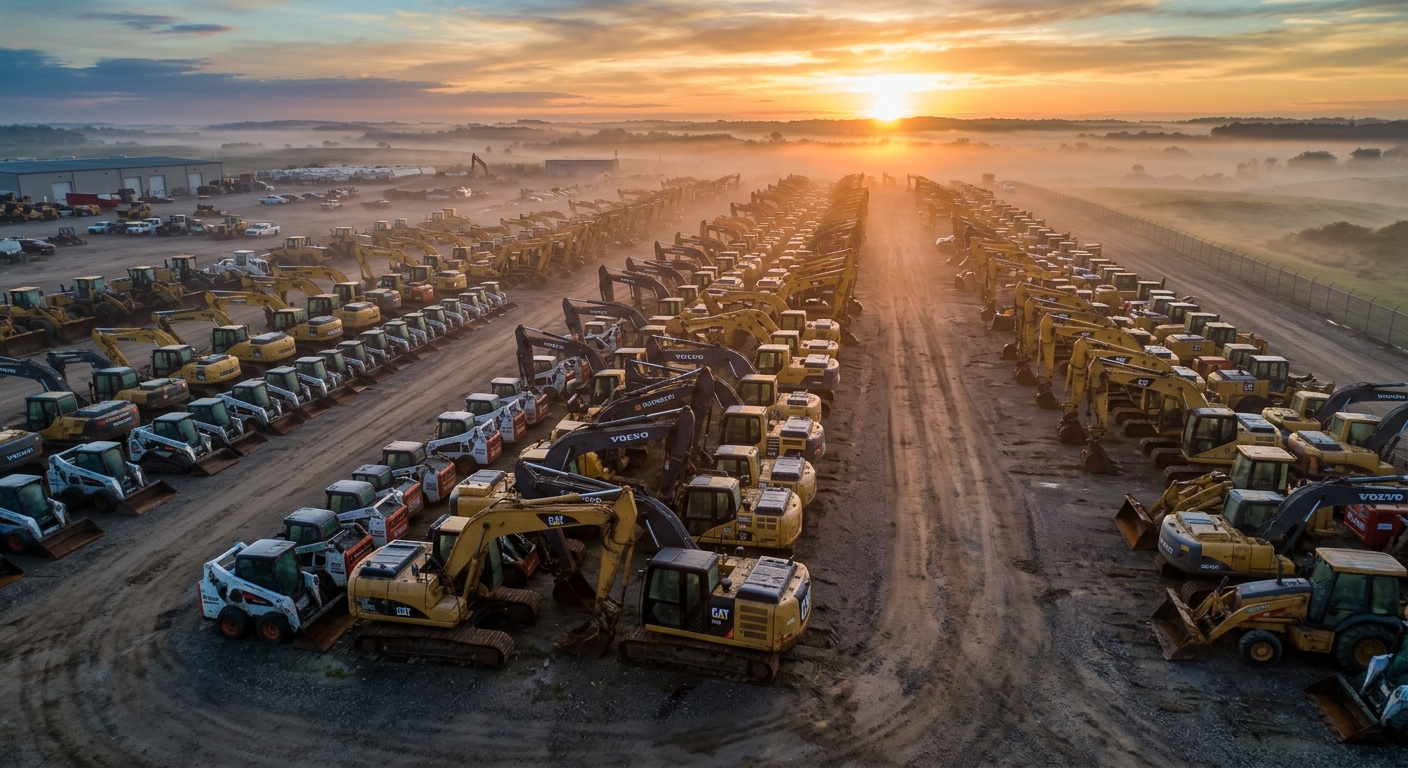
There’s a stat floating around the construction industry right now that should make every fleet manager uncomfortable: somewhere between 40 and 50 percent of your equipment is either underutilized or sitting completely unused at any given time.
That’s not a guess. That’s from a new report by Teletrac Navman, a telematics platform that manages over 700,000 vehicles and assets worldwide. The company surveyed 600 fleet operators across the United States, United Kingdom, Australia, and New Zealand through Arlington Research, collecting responses in October 2025. The margin of error is ±4.0 percentage points at a 95% confidence level.
The findings paint a picture of an industry drowning in data it can’t actually use.
FieldFix Editor’s Note: Fleet utilization is exactly the kind of problem that starts with better data. If you’re tracking machine hours on spreadsheets or sticky notes, you’re flying blind. FieldFix gives you cost-per-hour breakdowns, digital service logs, and real-time fleet visibility — free for up to three machines. It’s a good first step toward fixing the problems this report outlines.
The Idle Equipment Problem
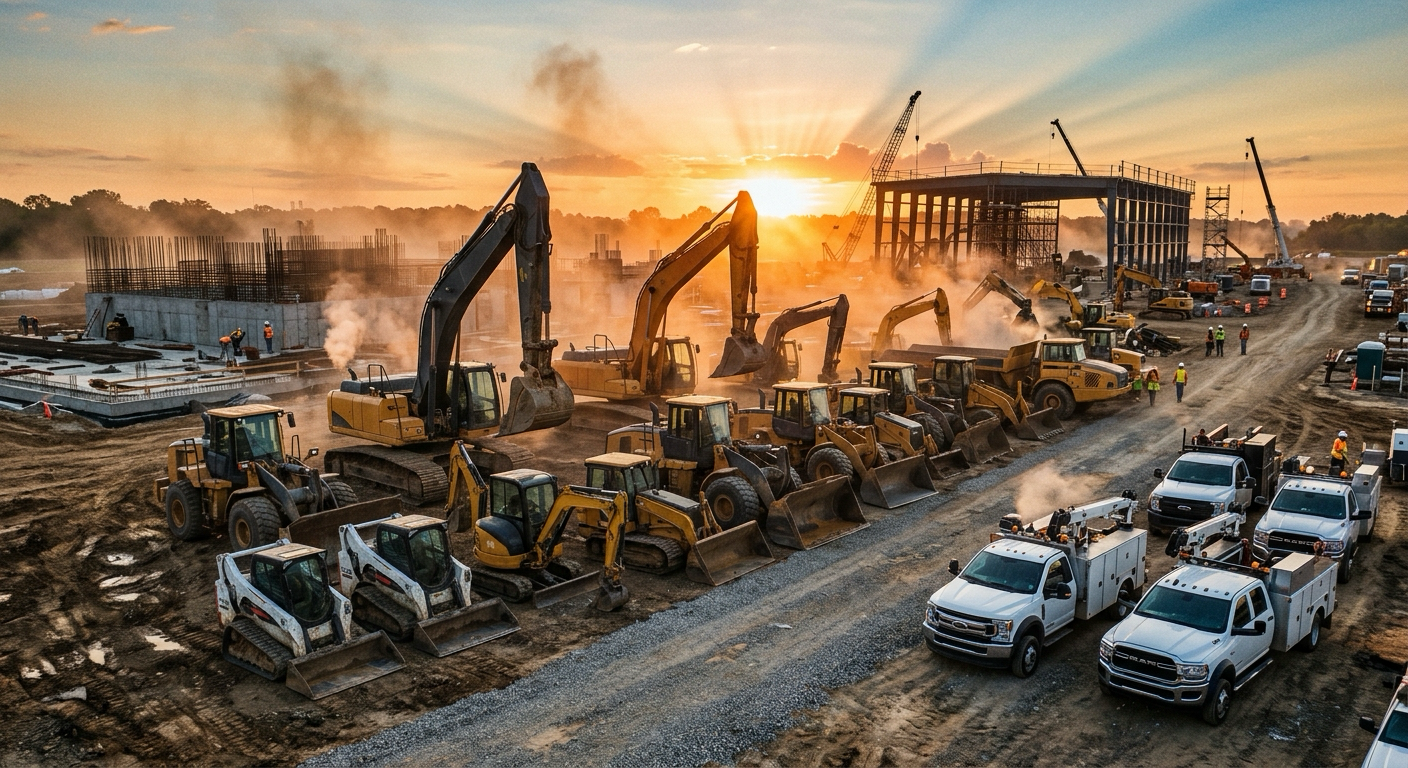
The headline number from the report is brutal. Across the fleets surveyed, heavy equipment sat idle — engine running, no productive work happening — for more than 25% of total engine time on roughly half the machines in any given fleet. Mid-range and compact equipment fared even worse.
Think about what that means in real dollars. A compact track loader burning diesel at idle for a quarter of its engine hours isn’t just wasting fuel. It’s eating through maintenance intervals, piling up hours that reduce resale value, and taking up space on a jobsite where it could be swapped for something actually working.
For a fleet of 20 machines, if half are significantly underutilized, you’re carrying the insurance, payments, and maintenance on 10 machines that aren’t earning their keep. At even a conservative $3,000/month per machine in total carrying costs, that’s $30,000 per month walking out the door.
The Data Accessibility Gap
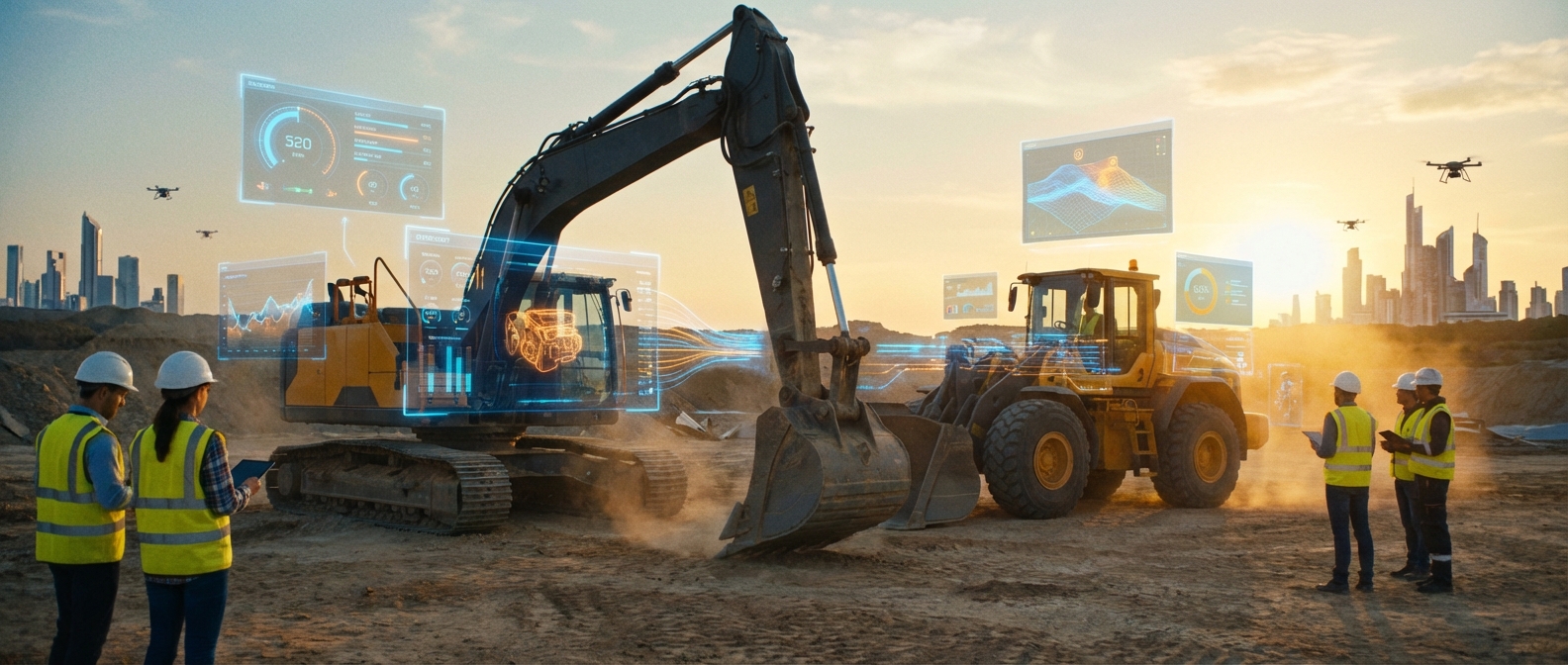
Here’s where it gets frustrating. The industry has adopted telematics at a solid clip. GPS trackers, engine diagnostics, geofencing — most fleets have some version of this technology bolted onto their iron. The problem isn’t collecting data anymore. The problem is getting it into a format that someone can actually use to make a decision.
According to the Teletrac Navman report, 74 percent of operators say data accessibility is their biggest barrier to improving utilization. Not a lack of data. Accessibility.
This makes sense if you’ve ever tried to pull a report from most telematics platforms. The data lives in one system. The accounting lives in another. The dispatch schedule is on a whiteboard or in somebody’s head. And the maintenance log might be a stack of paper invoices in a filing cabinet.
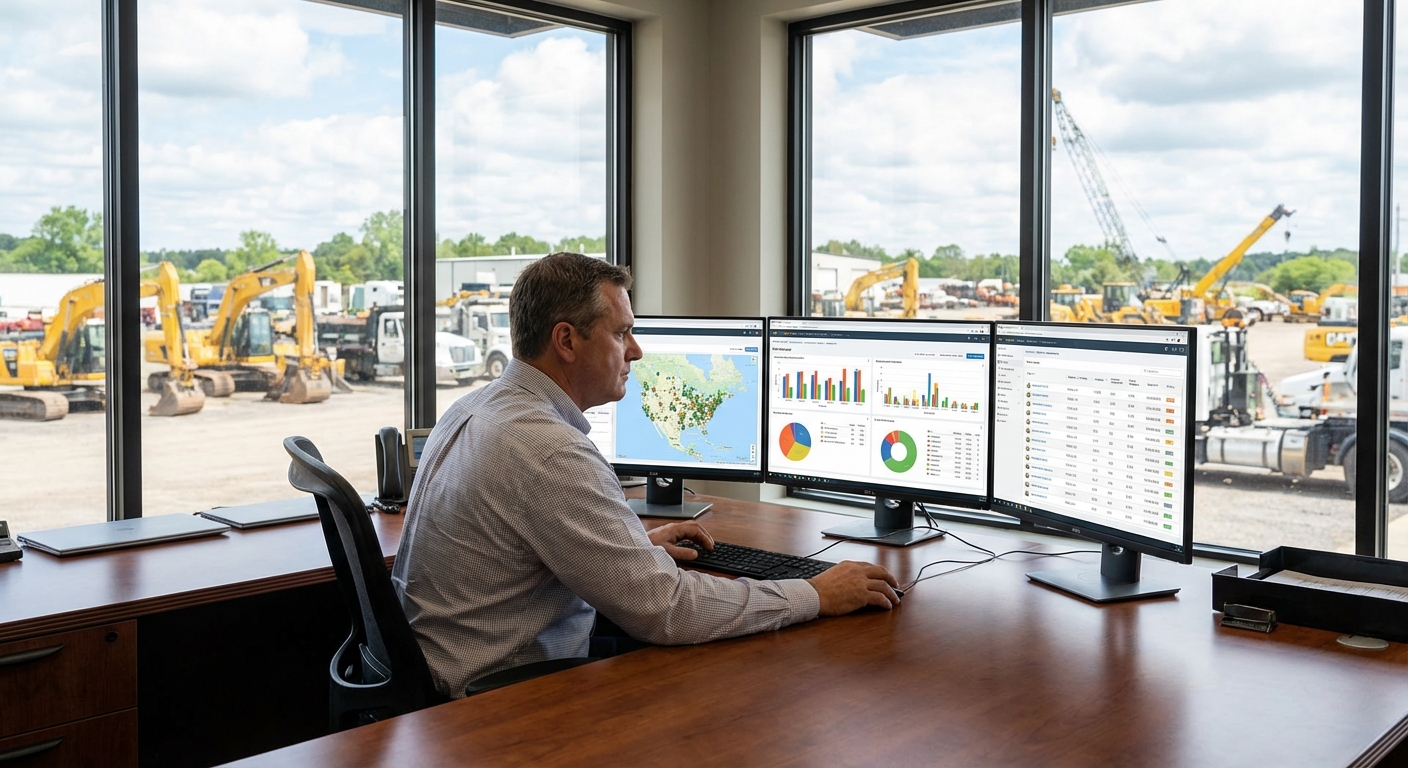
The fleet manager who could theoretically optimize everything is instead spending their morning bouncing between four different dashboards, a spreadsheet, and a text thread with their mechanic. By the time they’ve assembled a picture of what’s actually happening, the day is half over and the decisions have already been made on gut instinct.
Manual Tracking Is Still the Norm
This might be the most surprising finding in the report: 75 percent of heavy equipment fleets and 77 percent of mid-range and compact equipment fleets still rely on manual processes to track utilization.
In 2026. Manual processes.
That means someone is writing down hours by hand, estimating utilization based on job tickets, or just… not tracking it at all. Meanwhile, 87 percent of those same fleets agree that improved location intelligence would help their utilization numbers.
There’s a disconnect between what fleet operators know they need and what they’ve actually implemented. The technology exists. It’s not prohibitively expensive anymore. A basic telematics unit runs a few hundred dollars per machine plus a monthly subscription. Fleet management software like FieldFix starts at free for small operators.
The barrier isn’t cost. It’s inertia. The crew has always done it this way. The current system “works” (meaning: nobody has quantified how much it doesn’t). And the person who would champion the change is already buried in work.
Maintenance as a Silent Productivity Killer
About 32 percent of fleets in the survey said maintenance disrupts project timelines. That number feels low, honestly — anyone who’s had an excavator throw a code on a Monday morning knows the cascading effect it has on a week’s schedule.
But the real cost shows up in the workaround: 27 percent of fleets rent or buy extra equipment specifically to cover downtime. That’s not a maintenance strategy. That’s a tax on poor planning.
Reactive maintenance — fixing things when they break — costs two to five times more than preventive maintenance, depending on whose numbers you trust. The Equipment Maintenance Council has been preaching this for decades. But the report suggests most fleets still operate reactively because they don’t have the visibility to do anything else.
If you don’t know a machine’s exact hour count, you’re guessing on filter changes. If you don’t have a service history in one place, you’re repeating diagnostics. If your mechanic’s knowledge walks out the door when they quit, you’re starting from scratch.
The Equipment Hoarding Problem
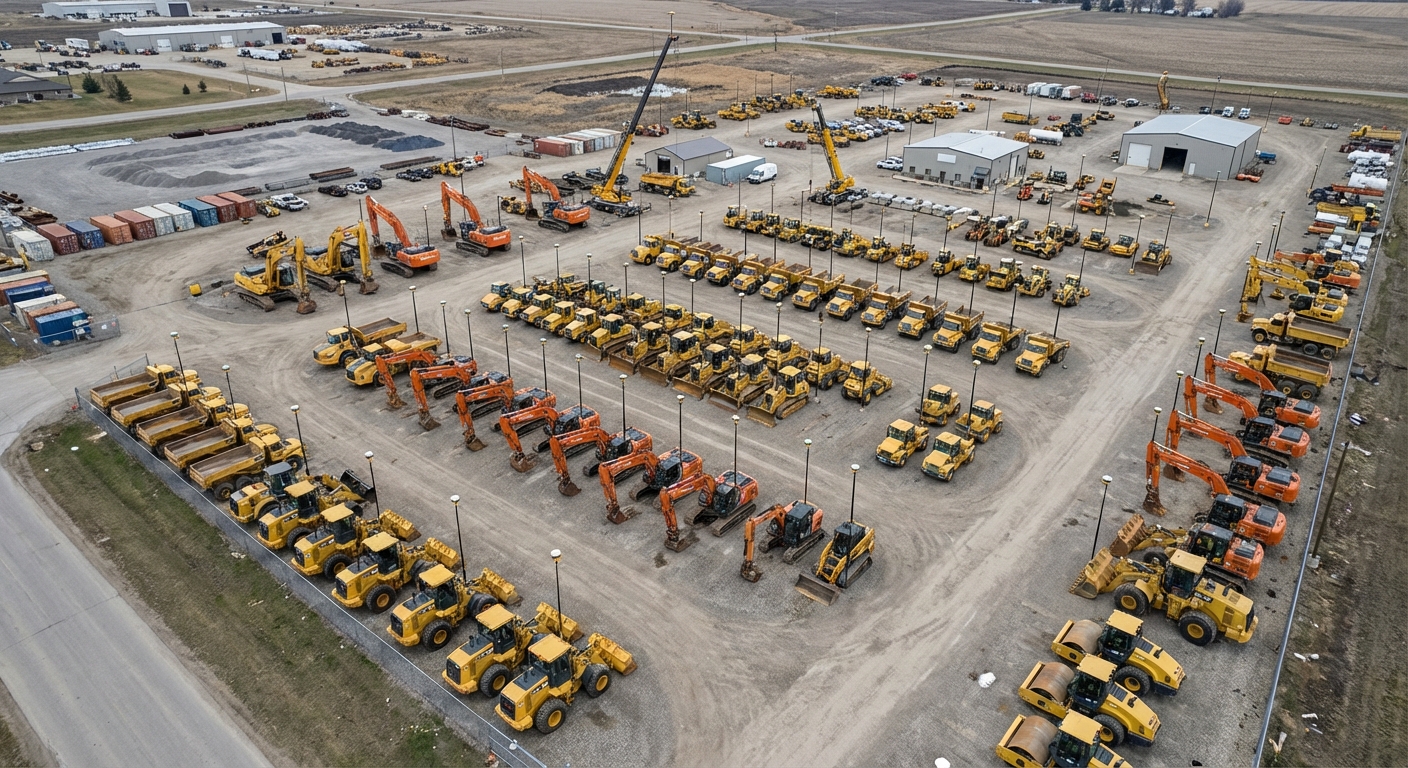
This one is almost funny if it weren’t so expensive. According to the report, 67 percent of fleets keep machines on site that aren’t being used — not because they need them, but “just in case.”
The report attributes this to “operational uncertainty and maintenance-related delays, rather than deliberate over-allocation.” In other words, operators don’t trust that the machines they need will be available when they need them, so they hoard.
It’s a rational response to an irrational system. If you’ve been burned by a machine going down mid-project with no backup, you learn to keep a spare nearby. The problem is that “spare” is a $200,000 piece of equipment depreciating in the sun.
Better utilization data breaks this cycle. If you can see in real time what’s available, what’s down for service, and what’s about to come off another job, you don’t need to keep a security blanket parked in the mud.
What Actually Fixes This
The report is clearly a marketing vehicle for Teletrac Navman’s platform — let’s not pretend otherwise. But the underlying data is solid, and the problems it identifies are real. So what does a practical fix look like for the average contractor who isn’t running a 500-machine fleet?
Start with hours. If you’re not tracking engine hours digitally on every machine, that’s step one. Not weekly check-ins. Real-time or daily digital readings. This alone will show you which machines are overworked and which are collecting dust.
Centralize maintenance records. Stop keeping service history in three different places. One digital system, accessible to the mechanic, the fleet manager, and the operator. It doesn’t have to be fancy. It has to be consistent.
Track cost per hour. This is the number that changes behavior. When an operator or project manager can see that a specific machine costs $47/hour to run and another costs $31/hour, they start making different allocation decisions. When ownership can see that one machine’s cost-per-hour has doubled over the last quarter, they know it’s time to trade or overhaul.
Set utilization targets. You can’t improve what you don’t measure. If your fleet averages 60% utilization, set a target for 70%. Track it monthly. Make it visible. The number itself will start driving better decisions because people pay attention to numbers that get reviewed.
Kill the hoarding instinct with visibility. The antidote to “just in case” is “I can see exactly where every machine is and what it’s doing.” Real-time fleet visibility replaces guesswork with confidence. When the dispatcher knows a dozer is finishing up on Tuesday and can be on the next site Wednesday morning, nobody needs to pre-stage a backup.
The Bigger Picture
The equipment industry spent the last decade selling connectivity. Telematics modules are standard on most new machines. Mixed-fleet platforms can pull data from a dozen different OEM brands. The hardware problem is mostly solved.
The utilization problem is a people-and-process problem dressed up in technology’s clothing. You can bolt a GPS tracker to every machine in your yard and still run a disorganized fleet. The data has to flow somewhere useful. Someone has to look at it. And the organization has to be willing to change how it operates based on what the numbers say.
Teletrac Navman’s report puts a number on what a lot of fleet managers already feel in their gut: too many machines, not enough productive hours, too much money walking out the door. The gap between “we have telematics” and “we actually use our data to make better decisions” is where the money is hiding.
Closing that gap doesn’t require a six-figure software investment. It requires discipline, a willingness to track the basics consistently, and the honesty to admit that the current system isn’t working as well as everyone pretends it is.
The data is there. The question is whether anyone’s going to use it.
Sources: Teletrac Navman 2026 Equipment Utilization Report, BusinessWire press release, Construction Equipment coverage