Telematics Adoption Hits Tipping Point: Why 2026 Is the Year Small Contractors Can't Ignore Fleet Data
The construction equipment telematics market is projected to hit $1.22 billion in 2026. Here's what the data revolution means for contractors of every size—and why the operators who resist will get left behind.
For decades, construction fleet management operated on a simple premise: if the machine starts, it works. Service intervals were tracked on paper (or not at all). Equipment utilization was a gut feeling. Fuel theft was an accepted cost of doing business. Downtime happened when it happened.
That era is ending—faster than most contractors realize.
The construction and heavy equipment telematics market is projected to grow from $1.05 billion in 2025 to $1.22 billion in 2026, a 16% compound annual growth rate that signals something more significant than gradual adoption. We’re watching a fundamental shift in how equipment operations function, and 2026 appears to be the year when telematics moves from competitive advantage to baseline expectation.
Editor’s Note: Tracking equipment data—service history, operating hours, fuel consumption, and true cost-per-hour—is exactly what FieldFix was built to handle. Whether you’re running two machines or twenty, understanding your real numbers is the difference between profitable operations and expensive guesswork. Free to start for fleets under three machines.
The Numbers Behind the Shift
The growth isn’t happening in a vacuum. Several converging factors are pushing telematics from “nice to have” to “non-negotiable”:
GPS-Enabled Tracking Has Become Standard
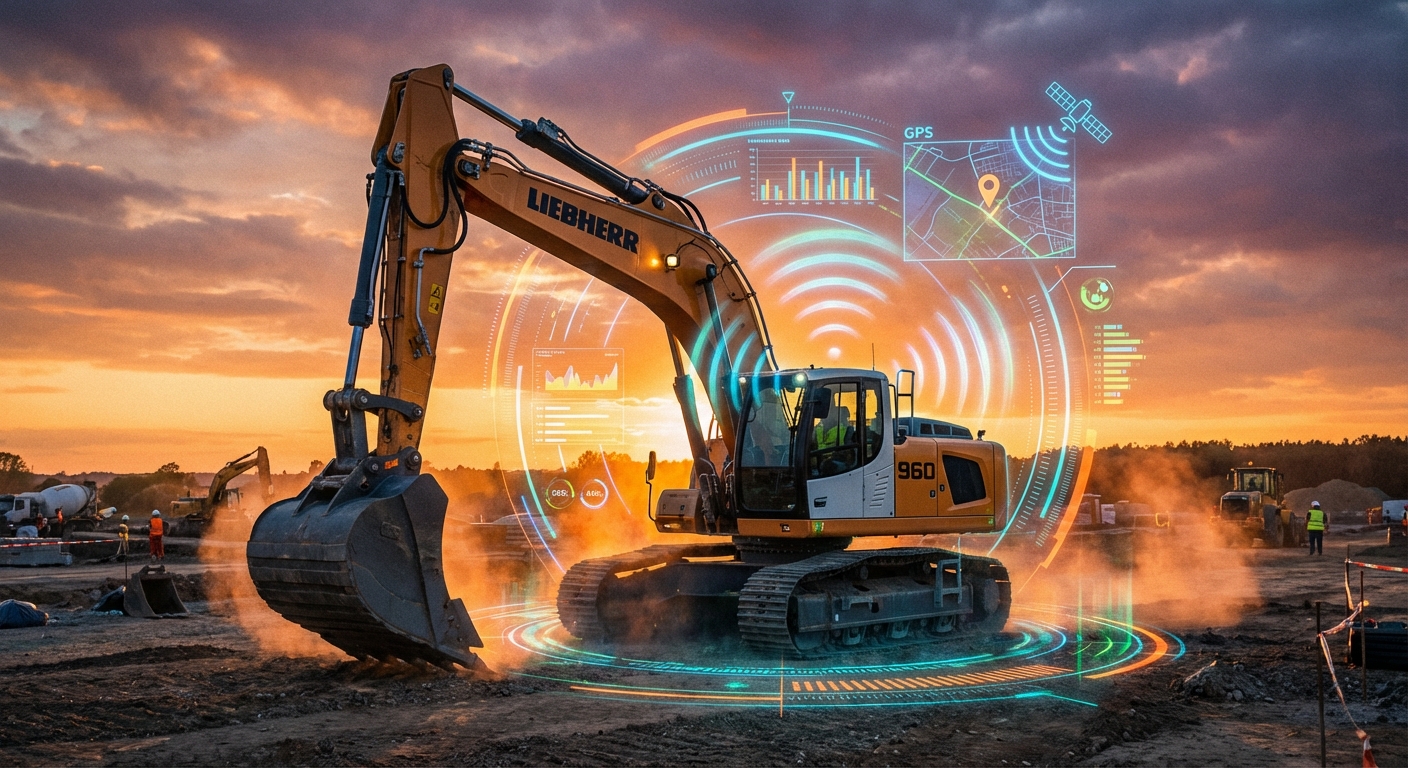
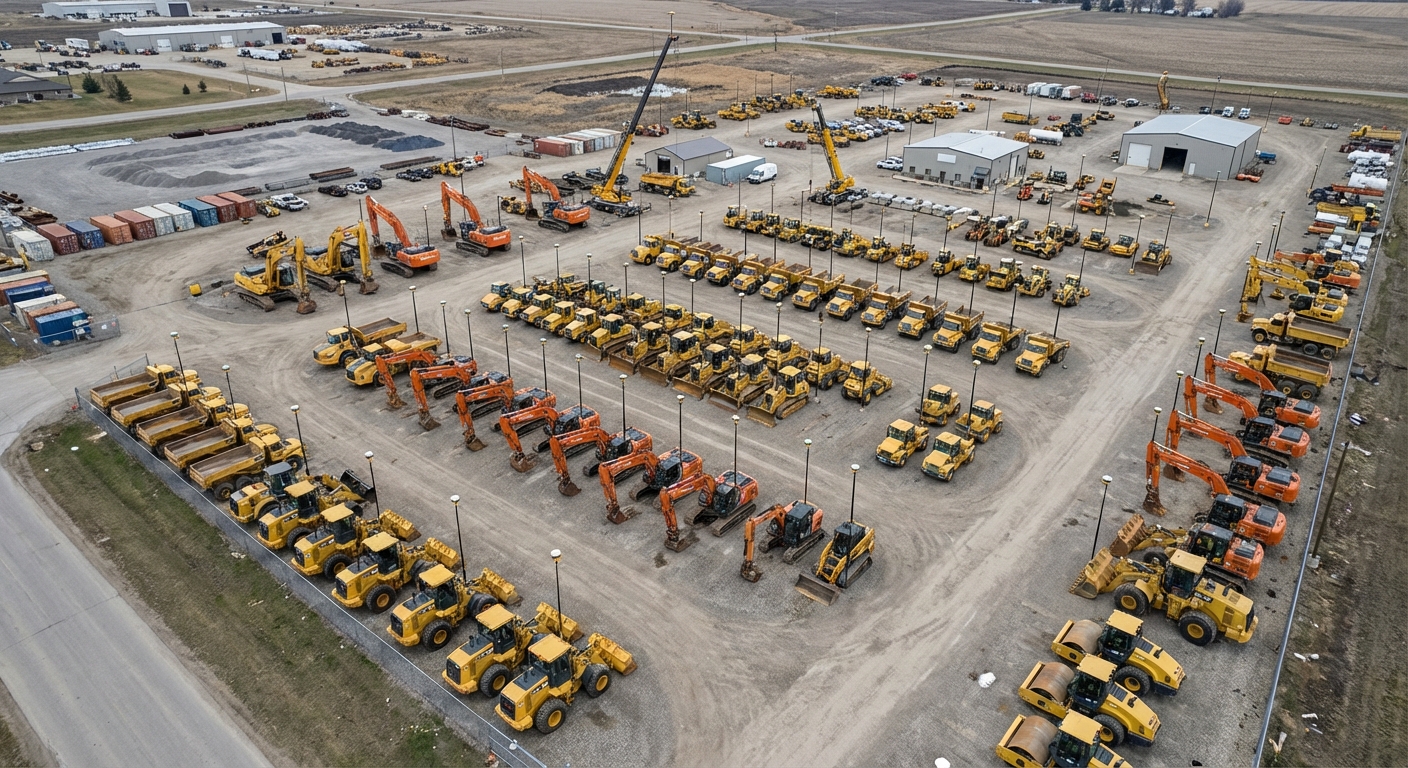
What started as theft recovery has evolved into comprehensive asset visibility. Modern telematics systems provide real-time location, geofencing alerts, unauthorized movement detection, and historical route mapping. For contractors running jobs across multiple sites, knowing exactly where every machine is located—and where it’s been—eliminates the daily phone calls and site visits that eat management time.
Large Fleets Set the Expectation
Major contractors and rental companies have been running telematics for years. Their operational efficiency creates competitive pressure that trickles down to smaller operators. When a general contractor’s large equipment rental partner can provide real-time utilization reports, fuel consumption data, and predictive maintenance alerts, they start expecting similar visibility from all their equipment sources.
Connectivity Infrastructure Finally Caught Up
Rural and remote jobsites—where heavy equipment often operates—traditionally struggled with cellular coverage. The expansion of LTE and satellite-based connectivity means telematics data can now flow reliably from locations that were communication dead zones five years ago. No coverage, no excuse.
Safety Compliance Is Getting Teeth
Regulatory requirements around equipment operation, operator certification, and jobsite safety are becoming more stringent. Telematics systems provide the documentation trail that manual record-keeping can’t match. When OSHA or a project owner wants proof that equipment inspections happened, that operators were certified, and that safety protocols were followed, digital records speak louder than clipboards.
What Telematics Actually Delivers
The sales pitch for telematics has always been compelling. The reality in the field is starting to match the promise.
Asset Tracking and Utilization
The baseline function—knowing where machines are and how much they’re running—sounds simple but transforms fleet decisions. Contractors regularly discover they have equipment sitting idle on one site while renting identical machines for another. Utilization data reveals which machines are earning their keep and which are expensive paperweights.
Real utilization numbers also inform bidding. Estimating equipment costs based on guesses leads to either underpriced jobs that lose money or overpriced bids that lose work. Actual run-time data provides defensible numbers.
Fuel Management
Diesel is still one of the largest operating expenses for heavy equipment fleets. Telematics systems track consumption per machine and can identify anomalies—whether that’s a fuel leak, an operator leaving equipment idling for hours, or theft.
Some systems integrate with fuel card data to reconcile what was purchased against what was burned. The discrepancies often reveal problems that would otherwise go unnoticed until they showed up as unexplained costs at the end of the month.
Predictive Maintenance
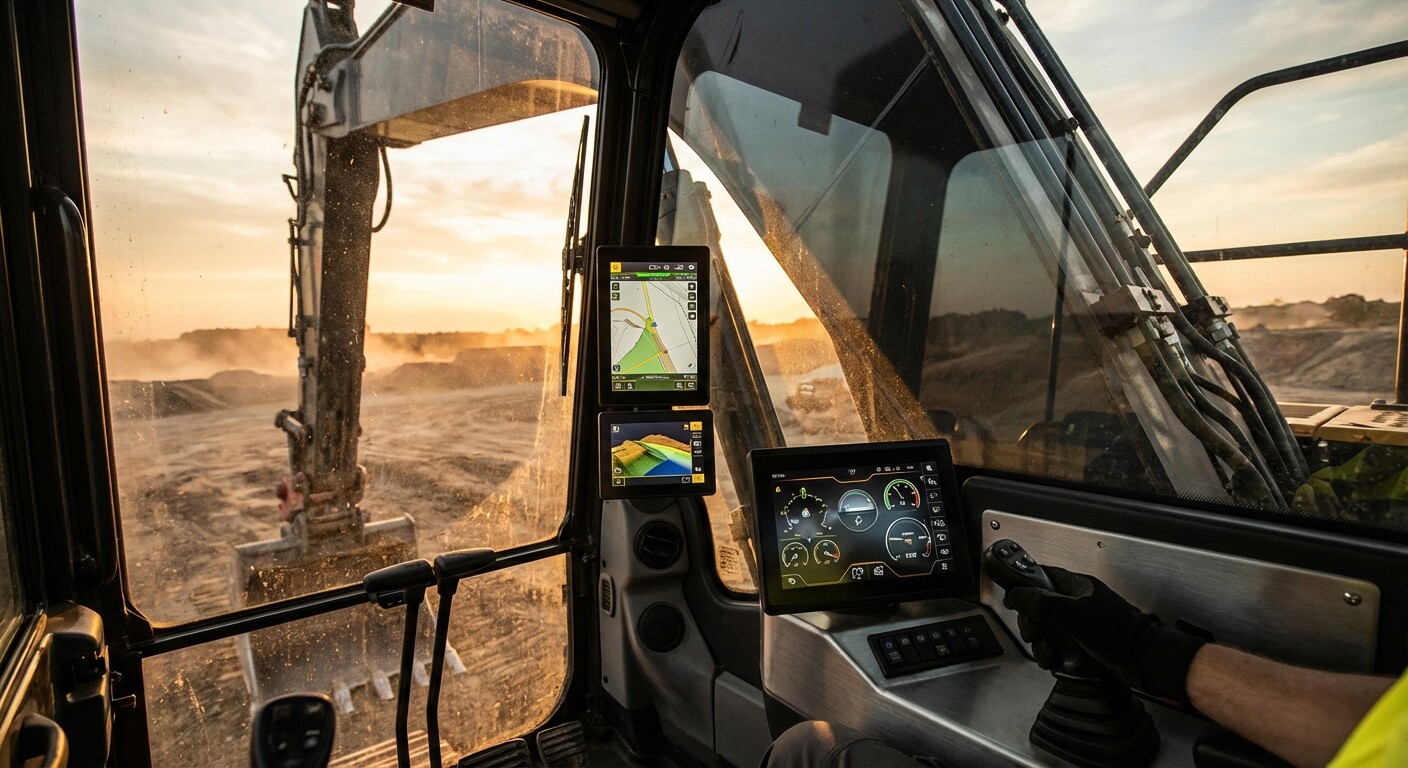
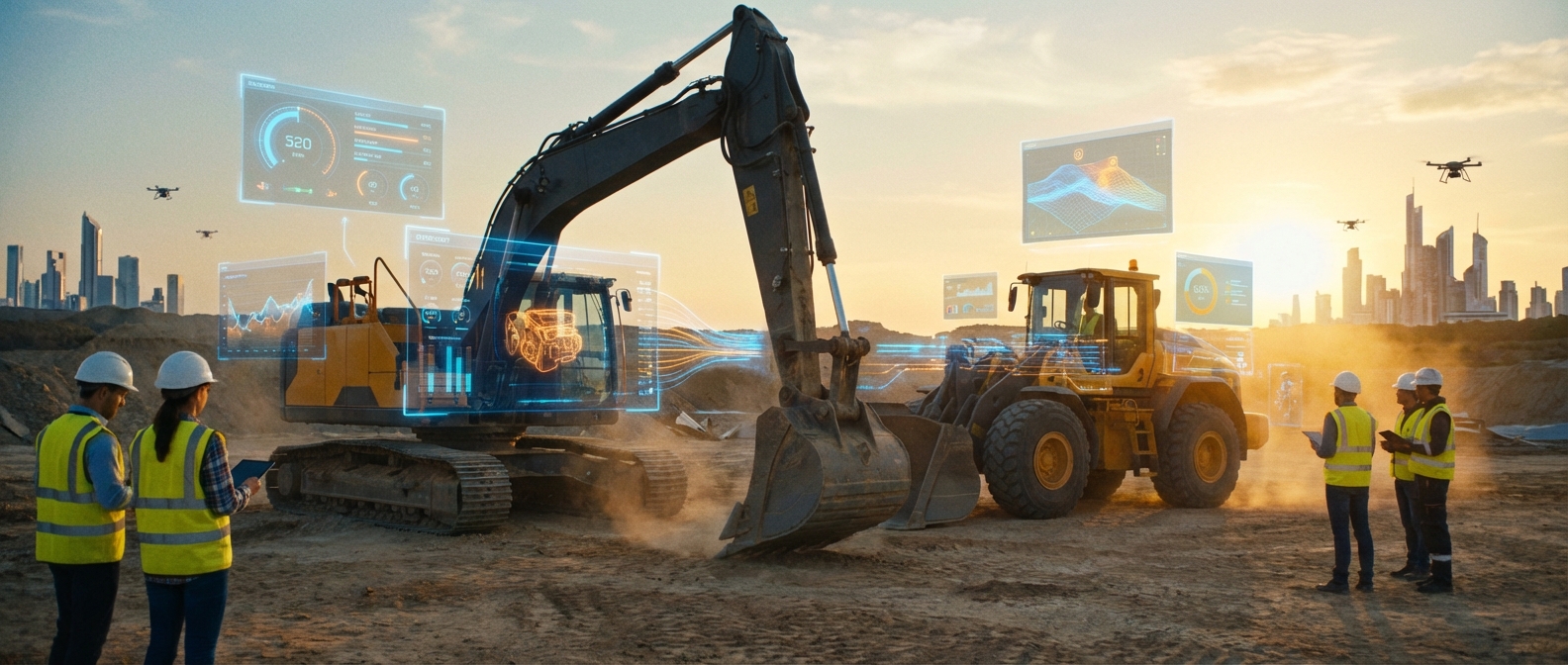
This is where the technology shifts from monitoring to management. Modern telematics systems track not just hours and location, but engine parameters, hydraulic pressure, fluid temperatures, and error codes. Patterns in this data can predict failures before they happen.
A hydraulic pump that’s running hotter than normal might have weeks of life left—or days. Predictive analytics can flag the trend and recommend inspection before a $300 filter becomes a $15,000 pump rebuild plus a week of downtime.
According to industry research, predictive maintenance approaches are becoming standard practice, with fleets using diagnostic data to identify issues before they cause failures. The contractors who’ve embraced this report reduced unplanned downtime and more efficient parts ordering.
Fleet Performance Reporting
Raw data is worthless without analysis. Modern telematics platforms process operational data into actionable reports: fuel efficiency comparisons across operators, utilization trends by machine type, maintenance cost tracking, and total cost-of-ownership calculations.
These reports inform decisions about equipment replacement timing, operator training needs, and fleet composition. A machine that looks productive based on hours might reveal itself as a maintenance sink when the full picture comes together.
The AI Layer Changes Everything
The most significant development in construction telematics isn’t the sensors—it’s what happens to the data after collection.
AI adoption in fleet management systems is reaching up to 75% in 2026, according to industry analysis. The technology has moved beyond generating alerts and reports to automating processes and improving decision-making in safety, uptime, and cost optimization.
Automated Compliance
AI-powered systems can automatically verify that pre-operation inspections were completed, that operators have current certifications for the equipment they’re running, and that maintenance schedules are being followed. The administrative burden of compliance—historically a paperwork nightmare—becomes largely automated.
Dynamic Resource Allocation
When a project runs ahead of schedule or behind, when weather delays work, or when priorities shift, AI systems can recommend equipment reallocation across sites. The recommendations factor in transportation costs, utilization predictions, and project timelines in ways that would take a fleet manager hours to calculate manually.
Integrated Safety Systems
Safety is becoming embedded in telematics ecosystems rather than existing as a separate initiative. Modern systems integrate prevention and coaching directly—monitoring operator behavior, detecting fatigue indicators, alerting to proximity hazards, and generating safety scores that inform training priorities.
Risk is being redefined to include factors like pedestrian proximity, roadwork zones, and driver distraction, making safety more measurable and manageable than ever before.
The Small Contractor Dilemma
Here’s where the market dynamics get uncomfortable for smaller operators.
The telematics solutions that work beautifully for fleets of fifty or five hundred machines often don’t make economic sense for contractors running five machines or fewer. Subscription costs, hardware installation, and the learning curve all scale poorly for small operations.
But the competitive pressure doesn’t care about scale. When project owners and general contractors experience the visibility that telematics-equipped fleets provide, they start expecting it from everyone. The small contractor who can’t provide utilization reports, fuel consumption data, or maintenance documentation looks unprofessional at best and risky at worst.
This creates a gap in the market that’s starting to close. Fleet management solutions designed for smaller operations—with lower costs, simpler interfaces, and mobile-first approaches—are emerging to serve the contractors who’ve been left out of the telematics revolution.
The key for small operators isn’t matching the capabilities of enterprise systems. It’s establishing baseline visibility: knowing true operating costs, tracking maintenance history, and having data that supports business decisions.
The Labor Shortage Multiplier
Construction’s skilled labor shortage isn’t new, but it’s increasingly shaping technology adoption. The industry simply cannot find enough qualified operators, mechanics, and supervisors to run growing project pipelines with traditional methods.
Telematics and AI-powered fleet management partially address this by:
-
Extending mechanic capacity: Predictive maintenance and remote diagnostics let fewer technicians manage more machines by prioritizing their attention on actual problems rather than routine checks.
-
Improving operator efficiency: Real-time feedback on operating practices helps less experienced operators perform closer to veteran levels faster.
-
Reducing administrative overhead: Automated tracking, reporting, and compliance documentation free up supervisory time for higher-value activities.
-
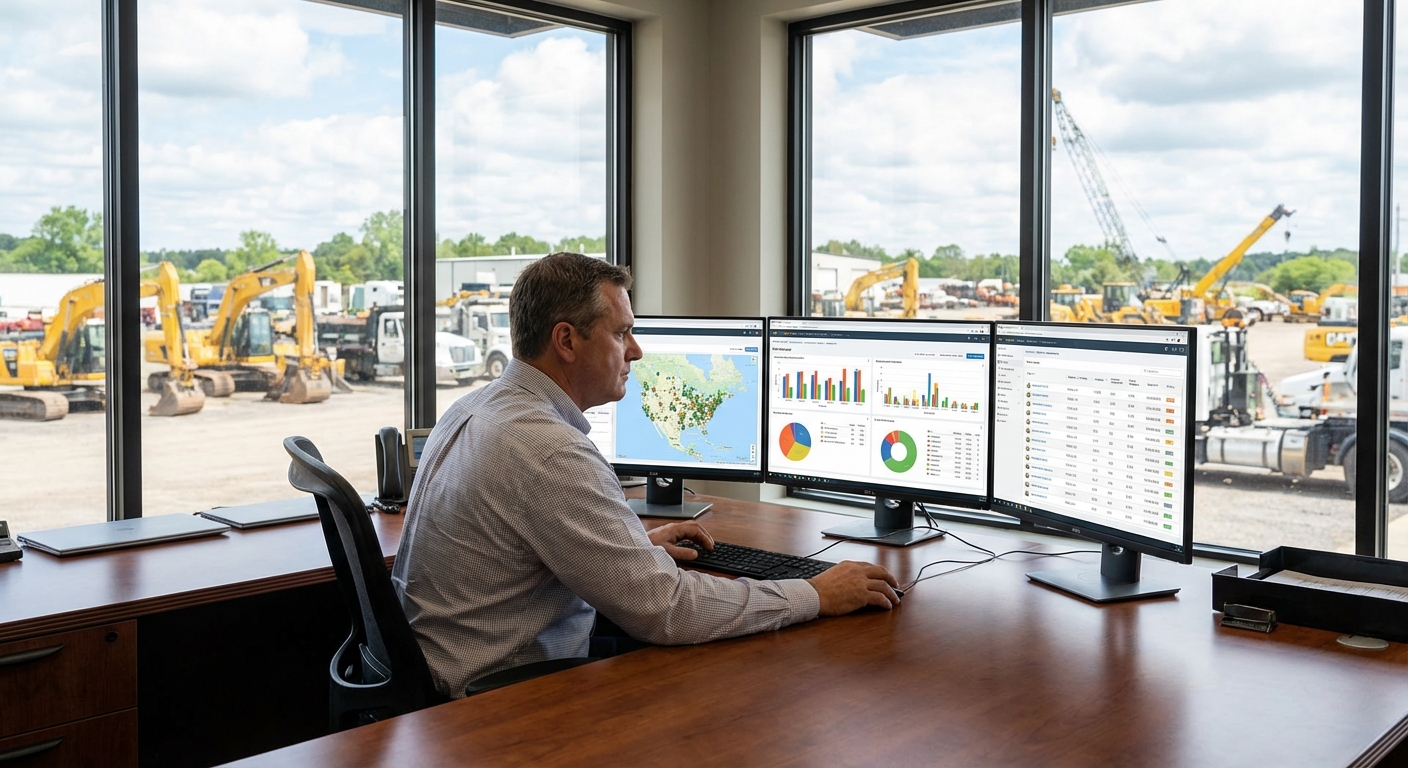
Enabling remote oversight: A fleet manager can monitor operations across multiple sites from a single dashboard, reducing travel time and increasing effective supervision capacity.
According to research presented ahead of CONEXPO-CON/AGG 2026, technologies that help contractors achieve more with fewer people—including telematics and data-driven jobsite tools—will be a dominant theme at this year’s show.
The Cost Reality
Equipment telematics isn’t free, and the ROI isn’t guaranteed. But the math is getting more favorable.
Industry analysis suggests that advanced telematics can lead to a 10-15% cost reduction within 90 days through optimized operations, reduced idle time, and improved operator efficiency. For a contractor burning $50,000 monthly in equipment operating costs, that’s $5,000-7,500 in potential savings—more than enough to cover telematics subscription costs with margin to spare.
The harder-to-quantify benefits often matter more:
- Avoided downtime: One prevented equipment failure that would have idled a crew and delayed a project can pay for years of telematics costs.
- Better bidding: Accurate cost data leads to more competitive and profitable bids.
- Reduced theft and unauthorized use: Knowing when equipment moves unexpectedly pays for itself in avoided losses.
- Documentation for disputes: When a client claims equipment wasn’t on site or wasn’t running, telematics data provides objective evidence.
What Adoption Looks Like in Practice
For contractors considering telematics adoption in 2026, the path forward has several levels:
Level 1: Basic Visibility
Start with GPS tracking and hour monitoring on key assets. Know where machines are and how much they’re running. This baseline eliminates the most common fleet management blind spots and provides utilization data for better decision-making.
Many contractors discover immediate value simply by understanding actual utilization rates versus assumptions.
Level 2: Maintenance Integration
Connect telematics data to maintenance scheduling. Use actual hours—not calendar time—to trigger service intervals. Track repair history and costs by machine. Calculate true cost-per-hour including maintenance and consumables.
This level requires more data discipline but delivers significant value in maintenance cost control and resale value preservation.
Level 3: Operational Optimization
Add fuel monitoring, operator behavior analysis, and performance benchmarking. Use data to identify efficiency improvements, training needs, and equipment replacement timing.
This is where telematics moves from record-keeping to competitive advantage.
Level 4: Predictive and AI-Powered
Implement predictive maintenance, automated compliance, and AI-driven optimization. This requires robust data infrastructure and typically makes sense for larger fleets, but the capabilities are increasingly accessible to mid-size operations.
The Market Trajectory
Where does this go from here?
The $1.22 billion construction equipment telematics market in 2026 is part of a broader commercial vehicle telematics market projected to reach over $130 billion by 2030. The underlying technology continues improving while costs decline.
Electrification adds another layer. As electric construction equipment adoption grows, telematics platforms need to support both electric and traditional power plants—tracking battery state of charge, charging infrastructure requirements, and energy consumption alongside traditional metrics.
The integration between telematics, project management software, and enterprise systems continues deepening. Equipment data that used to live in isolation is becoming part of connected workflows that span entire construction operations.
The Bottom Line
2026 isn’t the year that telematics became valuable—that happened years ago for early adopters. It’s the year that resistance to telematics becomes increasingly costly.
The contractors who’ve embraced fleet data aren’t just running more efficient operations. They’re making better decisions about equipment purchases, more accurate bids on projects, and building the documentation that clients and regulators increasingly require.
The technology exists at every price point and complexity level. The question isn’t whether telematics makes sense for construction equipment operations—the market has answered that decisively. The question is whether individual contractors will adopt in time to remain competitive or wait until the gap becomes insurmountable.
For small and mid-size operators, the path forward doesn’t require enterprise-grade systems or five-figure annual commitments. It requires starting: tracking what machines do, what they cost, and what they need. That baseline visibility is the foundation everything else builds on.
The data revolution in construction equipment isn’t coming. It’s here. The operators who recognize that—and act on it—will be the ones still thriving when the dust settles.
Equipment Insider covers the heavy equipment industry from independent owner-operators to major manufacturers. Have a story? Reach us at editor@equipmentinsiderhq.com.