
Blue Diamond Attachments Built a Big Business by Selling the Tools Around the Machine
Blue Diamond Attachments is not an OEM giant, and that is exactly what makes it worth watching. The Knoxville-based company built its business around the reality that margins, uptime, and dealer relationships often hinge on the attachment, not just the carrier.
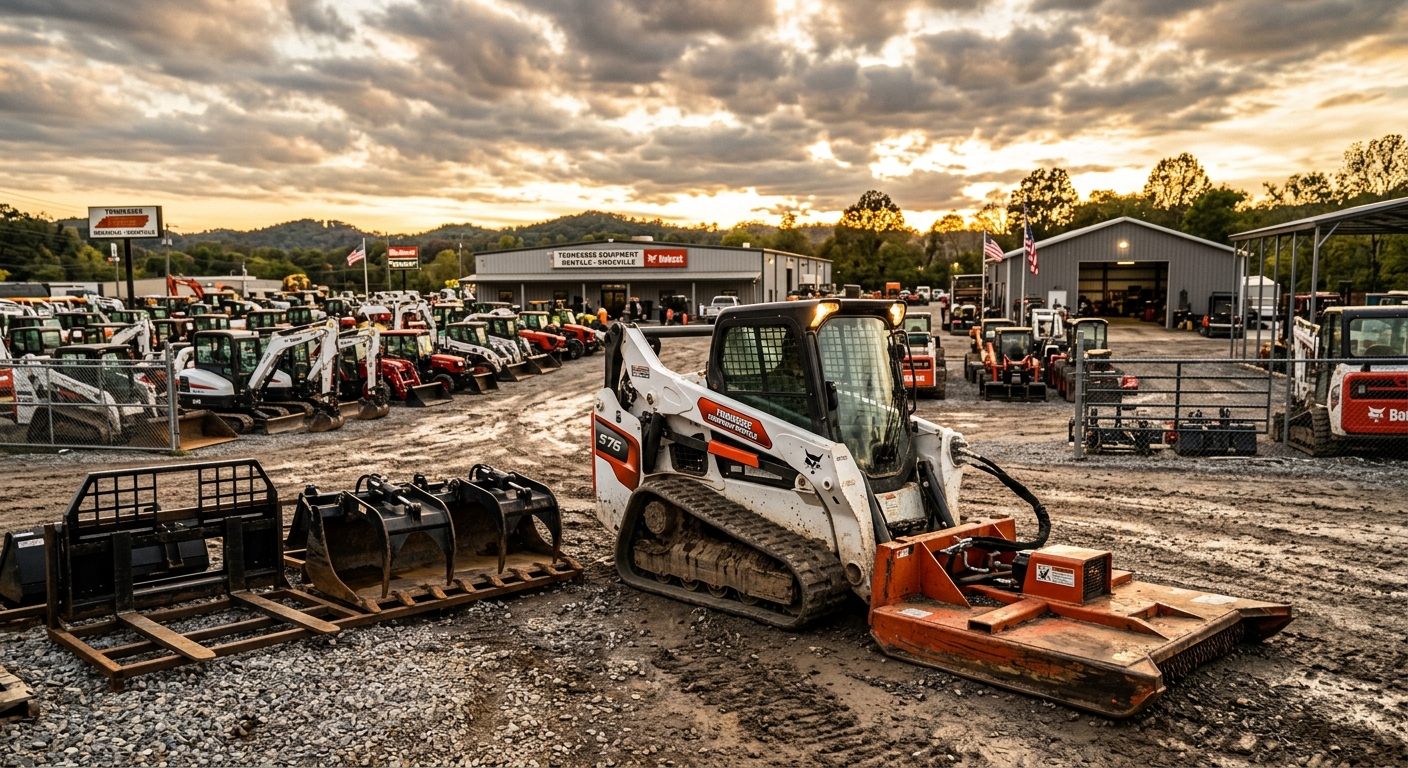
Most contractors spend a lot of time thinking about the machine and not nearly enough time thinking about the thing bolted to the front of it.
That sounds obvious, but it matters. A skid steer is useful. A skid steer with the right cutter, grapple, fork, broom, breaker, or auger is what actually makes money. In a lot of fleets, the attachment is the piece that decides whether a machine can take on a higher-margin job or ends up doing generic work against generic competition.
That is the lane Blue Diamond Attachments has spent three decades owning.
The Knoxville, Tennessee company is not a household name in the way Deere, Cat, or Bobcat are. It is not trying to be. Blue Diamond built its position by focusing on what sits between the carrier and the work itself: the attachment catalog, the dealer network, the replacement-parts pipeline, and the speed to get product out the door when a contractor or rental yard needs something now.
FieldFix Editor’s Note: Attachments change the economics of a fleet faster than most owners realize. If you are rotating cutters, forks, grapples, breakers, and buckets across machines, you need clean records on service, wear items, and cost-per-hour. FieldFix helps fleets track that without the usual spreadsheet mess.
Why attachment companies matter more than people think
Equipment media naturally gravitates toward new carriers. New excavator. New dozer. New compact track loader. That is where the big OEM marketing budgets live.
But the attachment business is where a lot of the practical leverage sits.
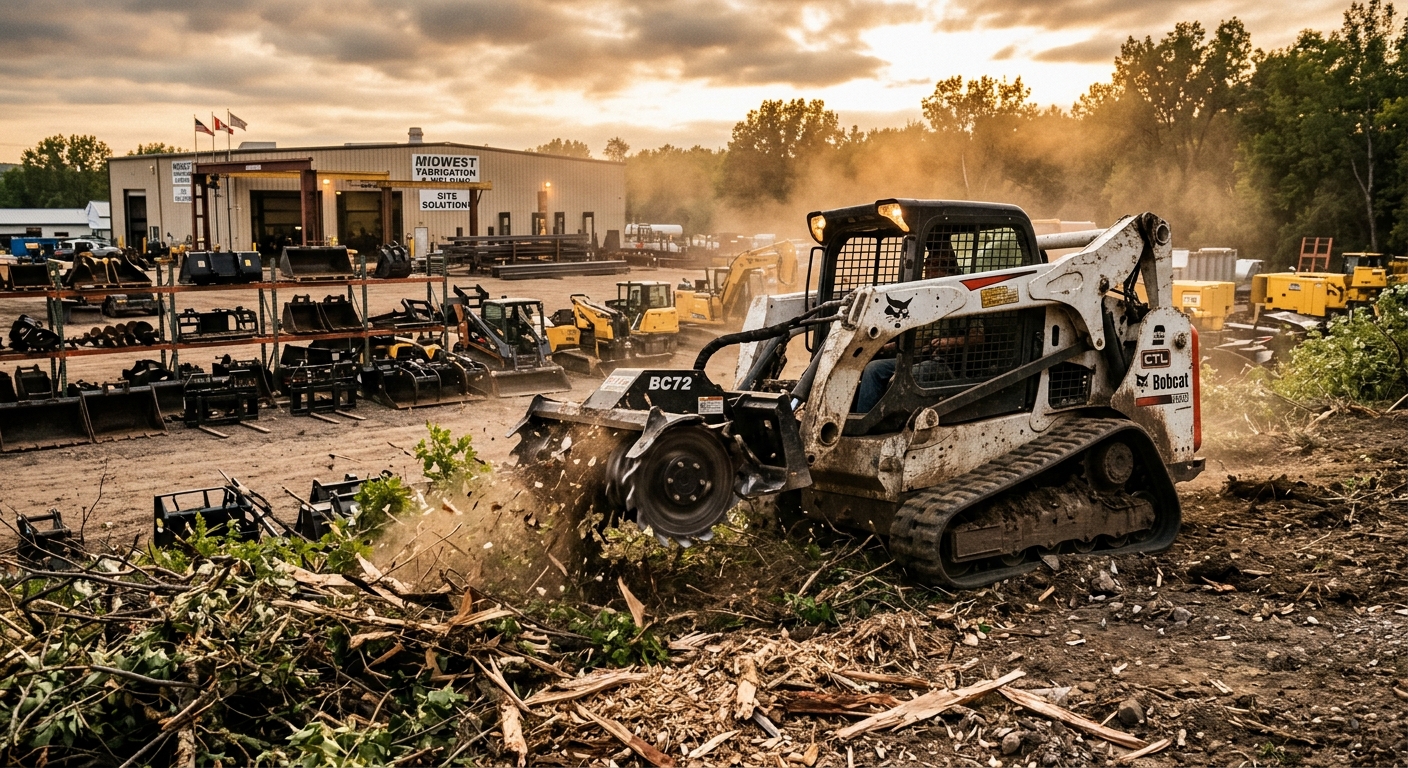
Contractors do not just buy horsepower. They buy capability. A landscaper can turn a skid steer into a soil-prep machine, a brush-clearing rig, a material-handling tool, or a snow unit depending on what is mounted that morning. A rental house can get far more value out of the same carrier when it has the right attachment mix sitting on the yard. A dealer can sell a machine once, but can keep winning business for years through parts, wear items, replacement tools, and add-on capability.
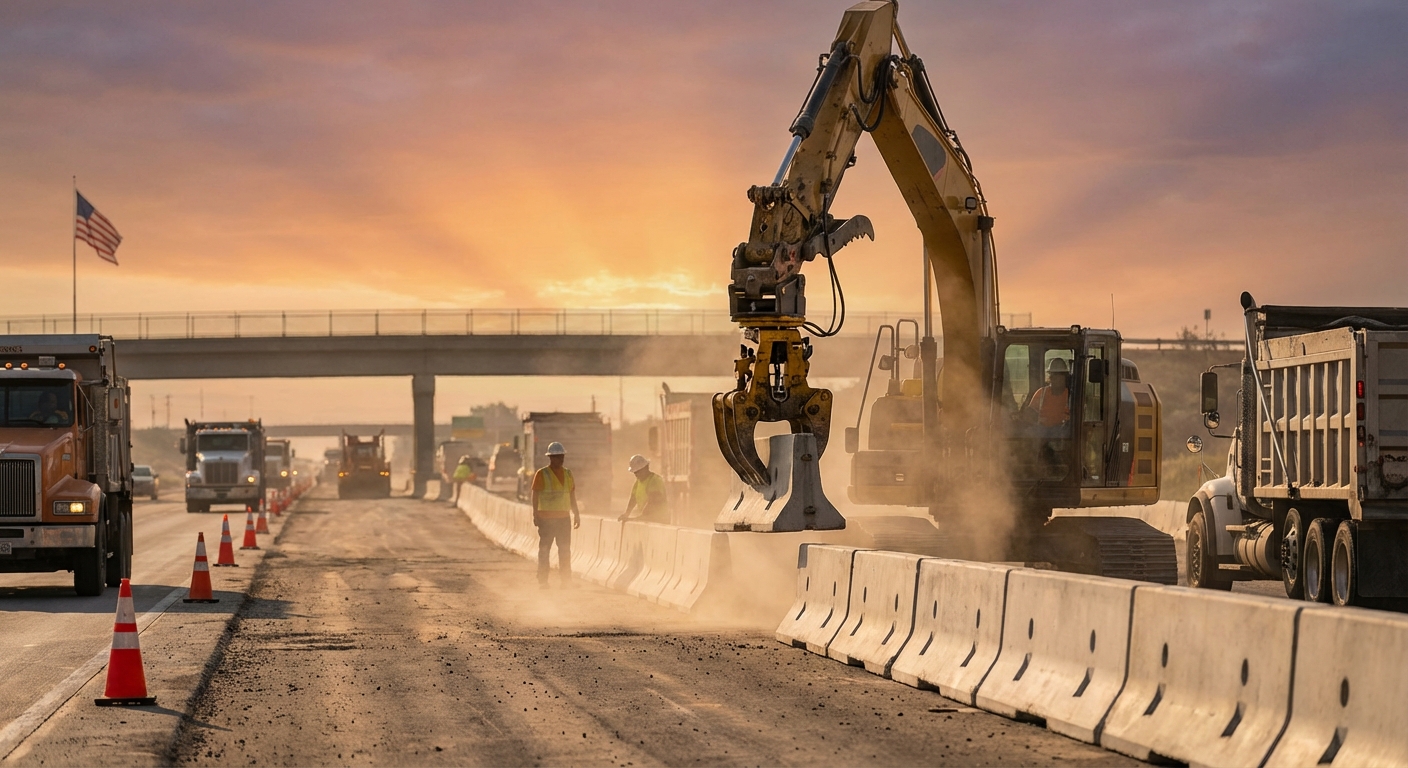
That is why attachment manufacturers punch above their weight in the real market. They live closer to the daily work. They also tend to feel demand shifts earlier. When land clearing heats up, brush cutters move. When cleanup and demolition pick up, grapples and breaker-related products start to matter more. When contractors get cautious on machine purchases, some of them still spend on attachments because the cheaper way to expand capability is often improving the machine they already own.
Blue Diamond sits right in the middle of that logic.
The basic company profile
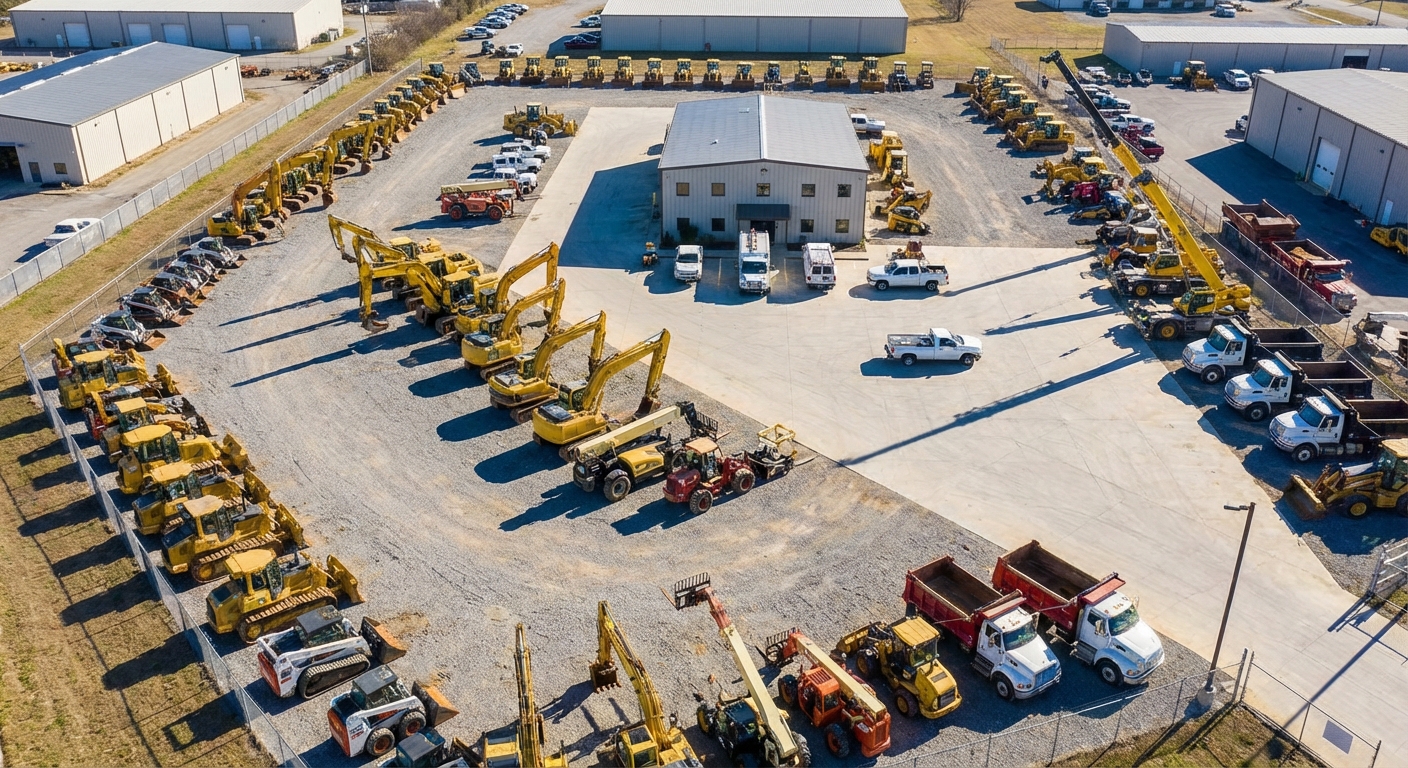
Blue Diamond Attachments was founded in 1995 and is headquartered in Knoxville, Tennessee. On LinkedIn, the company lists itself as privately held, with 51 to 200 employees, around 76 visible employees on the platform, and more than 5,000 followers. It says its Tennessee facilities now total more than 250,000 square feet on 32 acres.
That footprint is a useful clue. This is not a tiny fabrication shop building a few niche products. It is a real mid-sized manufacturer that has had to solve warehousing, shipping, dealer support, and stocking strategy at scale.
The company also says it keeps thousands of finished products in inventory and aims to ship many orders in two to three days, with most orders leaving its facility within 10 days. For parts orders placed before noon Eastern, Blue Diamond says those ship the same day by 4 p.m. Eastern. That may sound like boring operational detail, but in the attachment business it is a serious selling point.
A lot of attachment purchases are not leisurely. They happen because a contractor landed a job, a rental customer asked for a setup the yard does not have, or an existing tool got bent, burned up, or worn down. In those moments, lead time is not a side issue. Lead time is the product.
The model: broad catalog, dealer-first distribution, fast turnaround
Blue Diamond’s public messaging is simple: build durable attachments, support dealers, keep parts moving, and be easy to do business with. Strip away the slogans and that still looks like the core model.
From its site and company profiles, Blue Diamond is active across skid steer attachments, tractor implements, excavator attachments, mini skid steer attachments, and forklift attachments. That range matters because it gives dealers multiple ways to work with one supplier instead of piecing together five or six smaller lines.
For a dealer, that creates a cleaner shelf story. The salesperson can cover brush cutters, buckets, forks, grapples, brooms, augers, trenchers, snow tools, and more without hopping brands every time a customer wants a new category. For a rental yard, it means there is a plausible one-vendor path to broadening the attachment lineup around compact equipment.
The dealer-first piece is just as important. Blue Diamond leans hard on its dealer network in its site copy. That usually tells you two things. First, it does not want to fight a direct-to-customer war on price. Second, it understands that local support still decides a lot of buying decisions in this category.
That is smart. Attachments are simpler than carriers, but they still generate support questions around coupler fitment, hydraulic requirements, wear parts, compatibility, and application use. If a contractor cannot get a straight answer locally, the sale gets shaky fast.
What Blue Diamond seems to understand about contractors
The interesting thing about Blue Diamond is not just that it sells a lot of categories. It is that the company appears to understand the contractor psychology behind attachment buying.
Most buyers in this space are not chasing novelty. They want a tool that works, ships fast, fits the machine, and does not create headaches. That sounds almost too plain to mention, but a lot of manufacturers drift into shiny-product language while contractors are asking a much blunter question: will this thing hold up and can I get parts if I tear it up?
Blue Diamond’s messaging, even when it gets a little polished, keeps coming back to durability, delivery speed, stocked inventory, and replacement parts. That is not accidental. It is the right pitch for a buyer who lives with jobsite abuse and downtime.
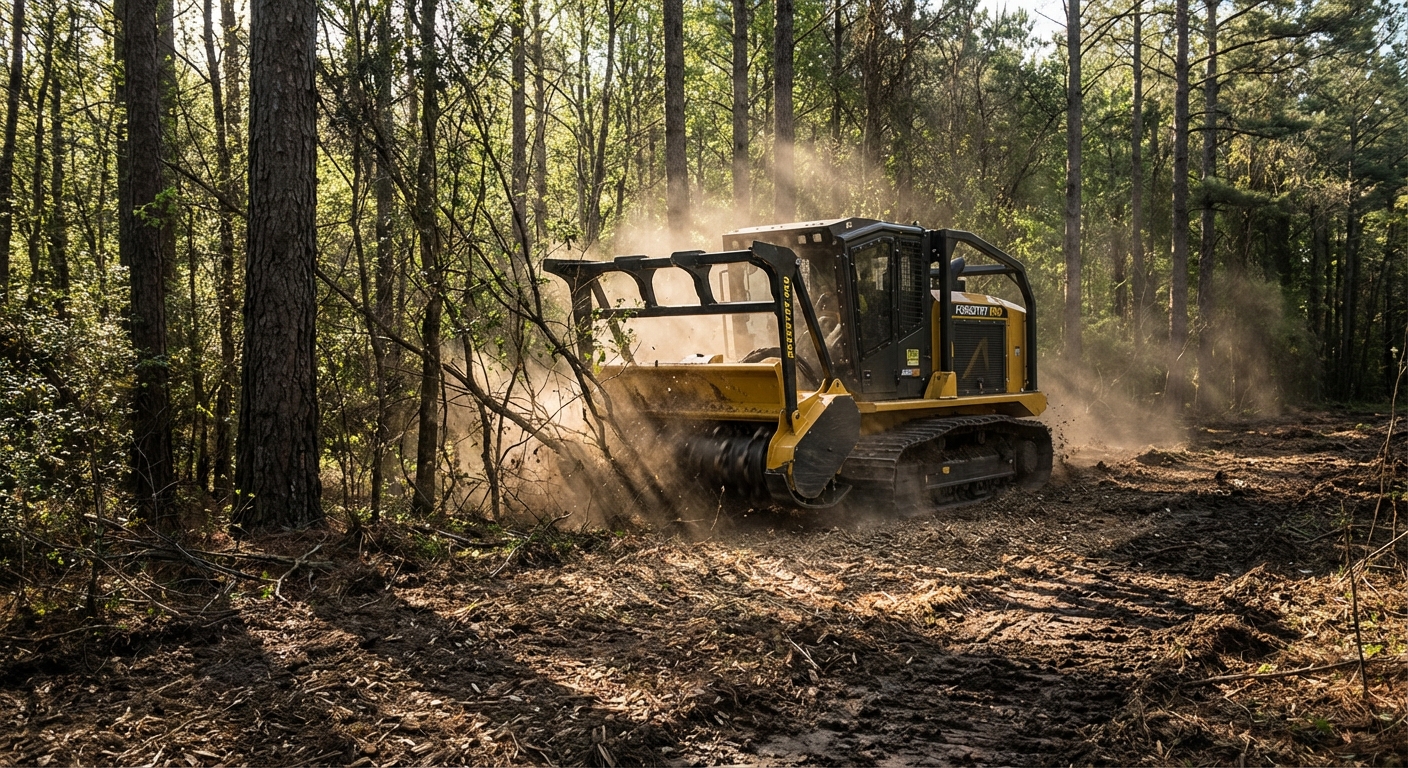
Its recent product marketing follows the same pattern. In LinkedIn updates promoting its Heavy Duty Open Front Brush Cutter, Blue Diamond emphasized motor spec, heat management, debris protection, and value. That is exactly how working buyers tend to talk. Not in vague lifestyle language, but in terms of how the tool survives and whether it earns back its cost.
The rental angle is probably bigger than it looks
One reason companies like Blue Diamond matter is that rental yards need attachment suppliers that can cover a lot of ground without turning procurement into a circus.
Rental fleets live in an awkward middle zone. They need attachments durable enough for hard use and operator abuse, but still affordable enough to maintain decent returns. They also need stocking depth and parts availability, because a rental attachment that sits broken in the yard is dead capital.
Blue Diamond’s promise of stocked finished inventory and same-day parts shipping speaks directly to that pain point. The company also talks openly about fast delivery because it knows a lot of customers are making time-sensitive purchasing decisions.
There is a second layer here too. Rental has become one of the easiest paths for attachment adoption. Contractors often try a specialty tool through rental before buying one. If a Blue Diamond attachment is sitting in rental fleets across dealer territories, the brand gets trial exposure without needing Super Bowl-level brand awareness. That matters more than a lot of marketers admit.
The aftermarket may be the real moat
In heavy equipment, the glamorous part of the business is usually the iron on the lot. The durable part of the business is often everything that comes after the initial sale.
Blue Diamond appears to know that.
The company puts real emphasis on replacement parts and on keeping those parts in stock. That is not filler. It is the kind of operational discipline that can lock in dealer loyalty over time. If a dealer can trust that parts orders will move quickly and customers will not be left hanging, that dealer has a strong reason to keep pushing the line.
The same goes for customers. An attachment manufacturer does not build trust only when the unit is new. It builds trust when the owner needs teeth, hoses, wafers, blades, motors, seals, or some weird hardware three seasons later and can still get it without begging through three different channels.
That kind of support does not get headlines, but it is how mid-sized manufacturers build staying power.
Why this is a good example of the middle market
The heavy-equipment world pays a lot of attention to huge OEMs and tiny specialty shops. The middle market gets less oxygen, even though it often produces the most interesting companies.
Blue Diamond is a clean example of that middle layer. It is big enough to run meaningful facilities, broad enough to support a serious catalog, and focused enough to avoid the sprawl that can make larger companies feel slow.
This part of the market tends to reward execution more than image. Nobody cares how clever the tagline is if attachments are backordered, parts are impossible to find, and dealers cannot get answers. On the other hand, a company that consistently ships, supports, and solves fitment headaches can build a very loyal following without dominating mainstream headlines.
That is probably the best way to read Blue Diamond. Not as a hype story, but as an execution story.
Risks and pressure points
That does not mean the business is easy.
Attachment manufacturers sit in a brutally practical market. Steel costs move. Freight costs move. Dealer expectations keep rising. Customers compare on price, delivery, and durability at the same time. If a product line gets a reputation for bent decks, weak welds, poor finish, or hard-to-find parts, that reputation spreads quickly.
There is also constant pressure from both ends of the market. At the low end, cheap imports and budget lines compete hard on price. At the high end, premium brands and OEM-adjacent attachment lines can lean on dealer relationships and brand halo. The middle only works if the product is good enough to avoid the cheap-junk bucket and priced well enough to avoid looking like an indulgence.
Blue Diamond’s own public claims suggest it knows this. Stocking depth, quick shipping, and broad category coverage are all ways to stay sticky when pure product comparison gets crowded.
What to watch next
If I were watching Blue Diamond over the next 12 to 18 months, I would focus on four things.
First, product expansion around high-usage contractor categories. Brush cutters, grapples, forks, brooms, and demolition-oriented tools are the kinds of products that can quietly grow with the right dealer base.
Second, how hard the company leans into mini skid steer and compact excavator attachments. That part of the compact equipment market keeps getting more attention because small crews want specialized capability without stepping up to bigger machines.
Third, dealer network quality. A wide map is nice. A responsive network is better. The winners in this business are usually the companies whose dealers actually answer the phone, understand fitment, and can solve parts issues quickly.
Fourth, how Blue Diamond handles the line between stocked breadth and operational complexity. Carrying thousands of finished products is powerful, but it also creates a real inventory-management challenge. If they keep that balance right, it is a competitive advantage. If they do not, it turns into cost.
The bigger takeaway
Blue Diamond Attachments is worth paying attention to because it represents a part of the equipment business that tends to get overlooked until a buyer needs it badly.
The machine gets the photo. The attachment gets the work done.
That is why companies like this matter. They sit in the less glamorous but often more practical layer of the industry, where uptime, stocked inventory, dealer competence, and replacement parts decide whether a contractor can finish the job this week instead of next week.
Blue Diamond did not build its position by trying to outshine the big iron brands. It built it by making itself useful to the people who already own the machine and need more from it.
That is a solid business. In this market, it is also a smart one.
Sources
- Blue Diamond Attachments website: bluediamondattachments.com
- Blue Diamond Attachments About page: About Us
- Blue Diamond Attachments LinkedIn profile: LinkedIn company page
Blue Diamond Attachments is headquartered in Knoxville, Tennessee. Learn more at bluediamondattachments.com.