
Loftness Built a Real Business by Refusing to Stay Seasonal
Loftness started with a farm-built snow blower in rural Minnesota and turned that idea into a long-running equipment business by diversifying hard, staying close to ugly work, and eventually becoming employee-owned.
A lot of equipment companies claim they understand the field. Loftness has a more convincing story than most because the company started in the field, literally, with a Minnesota farmer building a snow blower he wanted for himself.
That origin matters, but it is not the only reason the company is worth paying attention to. The more interesting part is what happened next. Loftness did not stay a one-product seasonal manufacturer. It pushed into vegetation management, grain bagging, crop residue equipment, fertilizer and lime spreaders, and a handful of specialized attachments. It changed ownership more than once, became 100 percent employee-owned in 2020, and named Josh South as CEO in early 2025 after he had joined the business as CFO in late 2023.
That is a lot of change for a company based in Hector, Minnesota. It is also a pretty good lesson in how smaller equipment businesses survive for decades. They do not survive by sounding important. They survive by giving dealers and customers a reason to keep coming back.
FieldFix Editor’s Note: Mulchers, disc heads, spreaders, and specialty attachments usually become maintenance orphans once they hit the yard. Everyone tracks the carrier. Nobody tracks the attachment until a hose blows or a bearing cooks itself. FieldFix gives fleets a cleaner way to track service, cost, and downtime across the whole setup.
It started with weather, which is a brutal way to build a business
According to Loftness’ company history, Dick Loftness started the business in 1956 after building a V-type snow blower for use on his own farm. Neighbors wanted one too, which is how a lot of decent equipment companies begin, with somebody solving a practical local problem before anyone starts talking about vision statements.
The early business was tied almost entirely to snow blowers. That worked, up to a point. Dick moved production from the farm into a small building in Hector as demand grew, and in 1970 local farmer Marv Nelson began distributing the blowers across the upper Midwest. By 1975 the business had moved again into a building Dick had constructed in Hector.
Then the weakness in the model became obvious. Snow equipment is useful, but a company built around weather is always one weird season away from a bad year. Loftness says sales fluctuated widely because the snow blower line depended on weather, which pushed the business to add other product lines that could smooth out those peaks and valleys.
That may be the most important decision the company ever made.
A lot of manufacturers get trapped by the thing that made them successful. Loftness seems to have understood pretty early that surviving as a regional manufacturer meant diversifying into work that customers needed regardless of snowfall totals.
Marv Nelson did more than buy the company
Dick Loftness sold the business in 1979 to Marv Nelson. On paper that looks like a simple ownership transition. In practice, it looks more like the point where the company started becoming a broader equipment manufacturer.
Loftness says Nelson took control of production and distribution, added direct truck delivery to dealers, and helped guide the company into new categories over time. Those categories eventually included vegetation management equipment, crop shredders, grain bagging equipment, and later fertilizer and lime spreaders.
That shift is worth sitting with for a minute.
It is one thing to add adjacent products. It is another thing to turn a seasonal snow blower company into a manufacturer with multiple business lines serving both agriculture and vegetation management. That takes more than product development. It takes dealer relationships, manufacturing discipline, service support, and enough patience to build markets that do not happen overnight.
My read is that Loftness made a very smart bet on recurring, unglamorous work. Clearing vegetation, handling grain storage problems, shredding crop residue, and spreading fertilizer are not flashy categories. They are useful categories. Useful tends to age well.
The vegetation-management side is probably the clearest signal of what Loftness is good at
If you want to understand the company’s personality, look at the vegetation-management business.
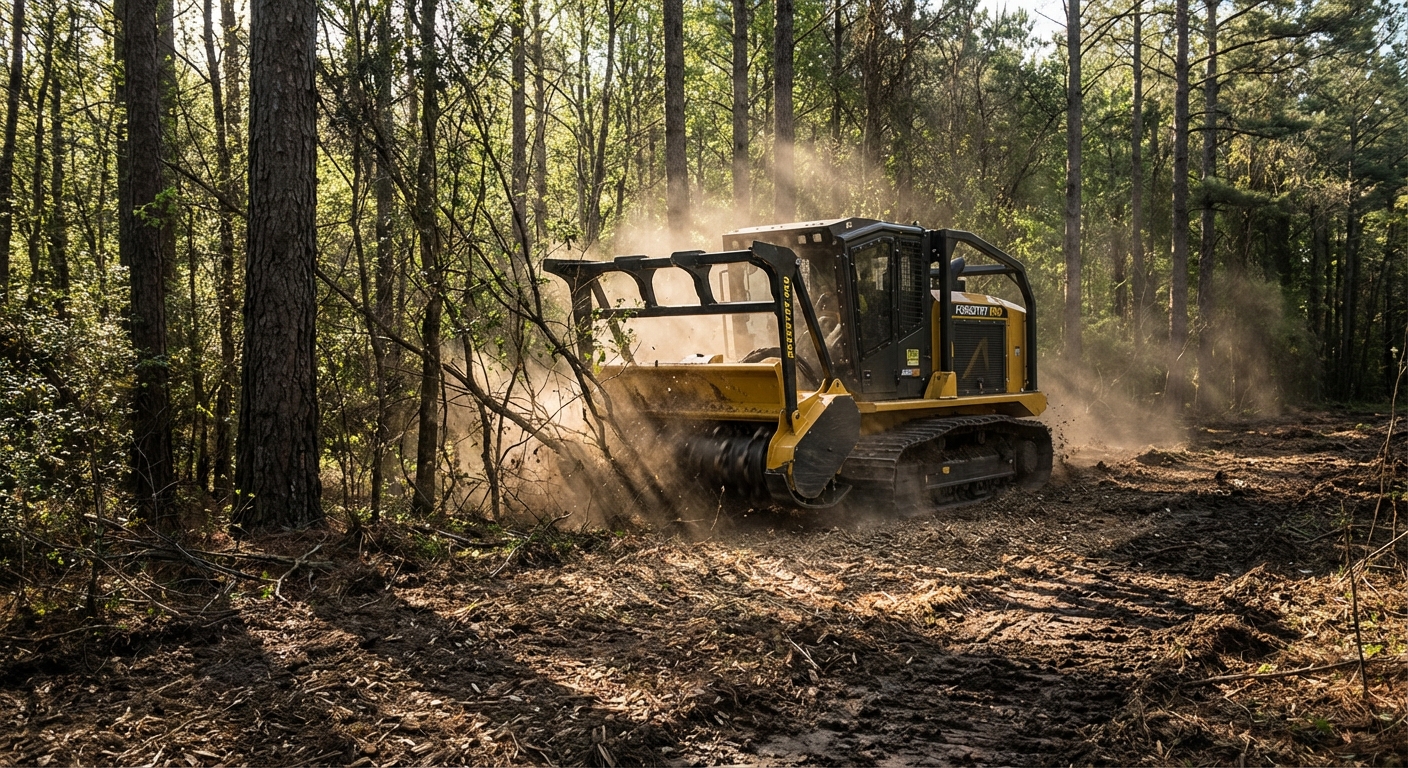
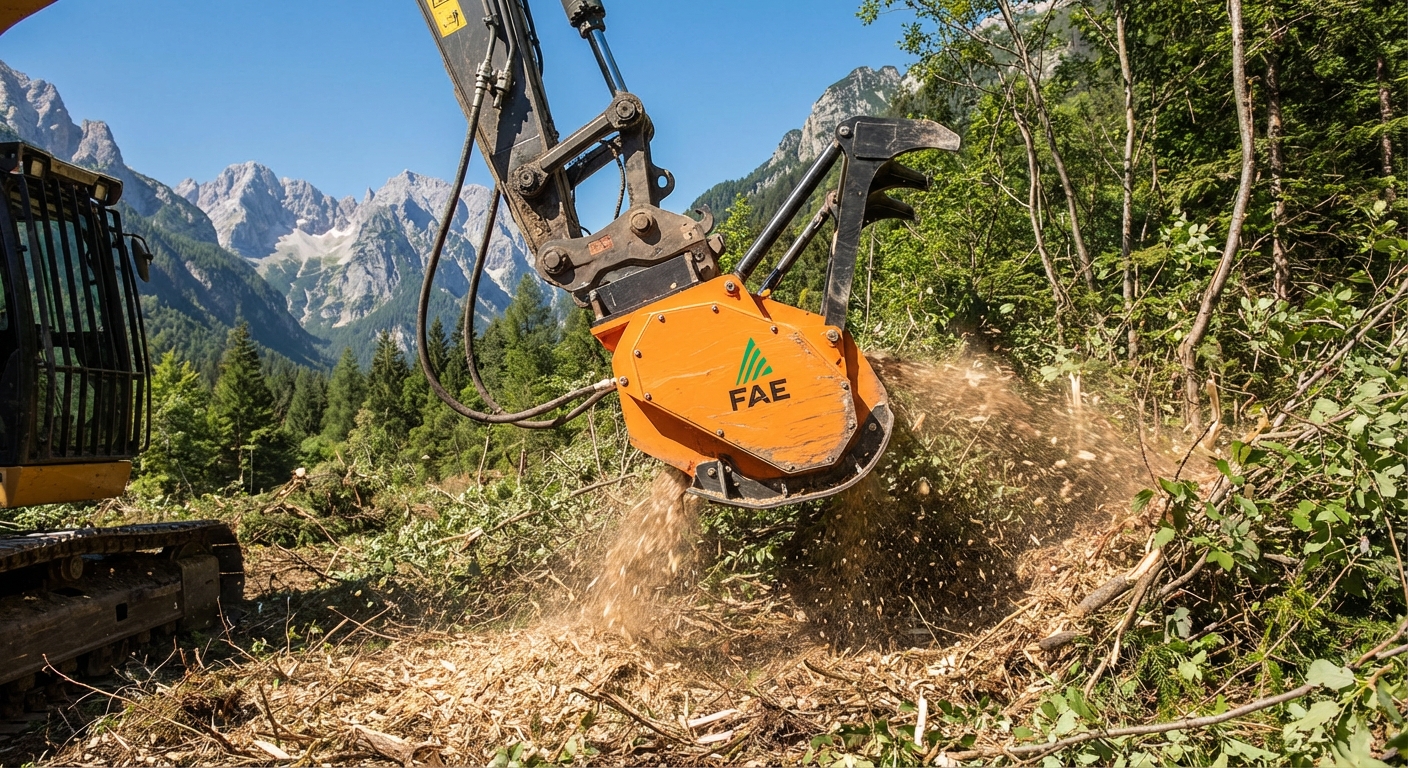
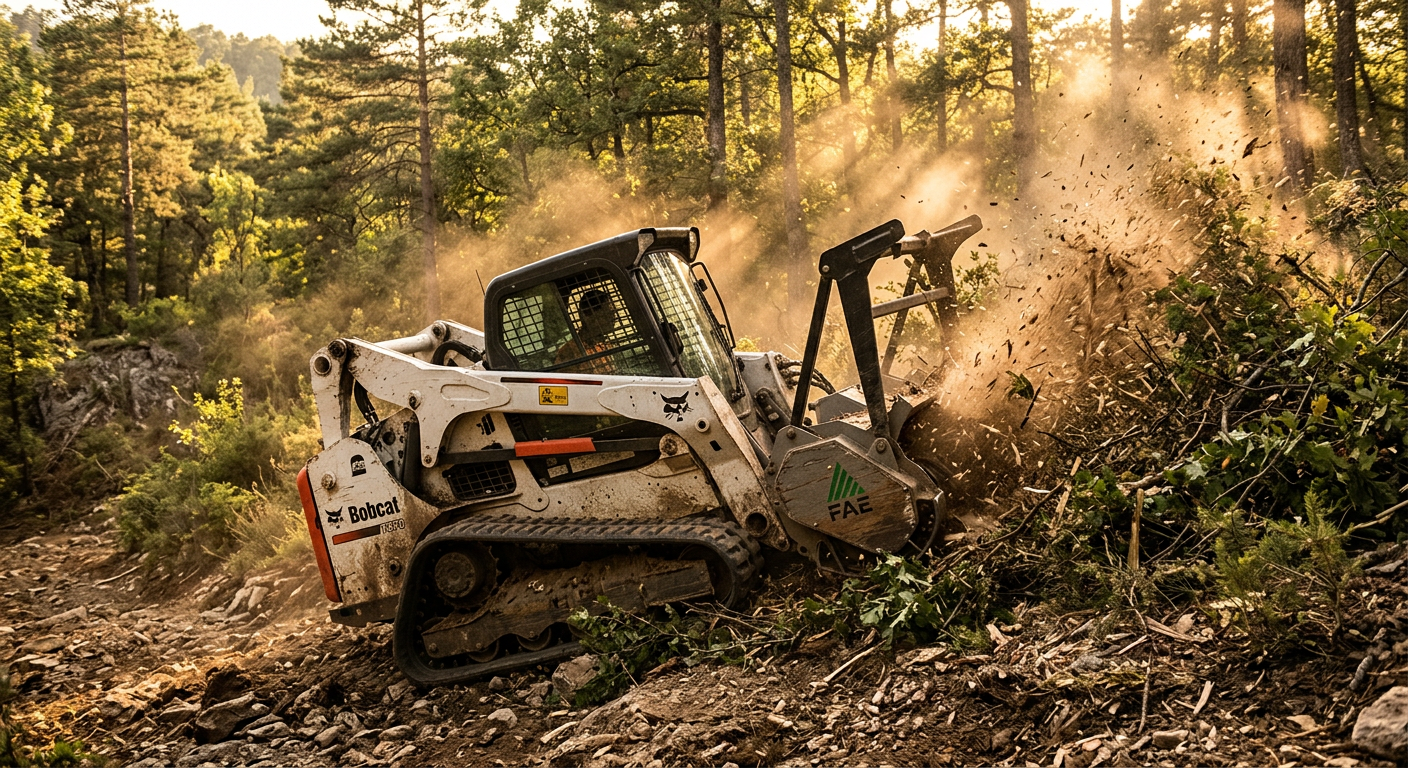
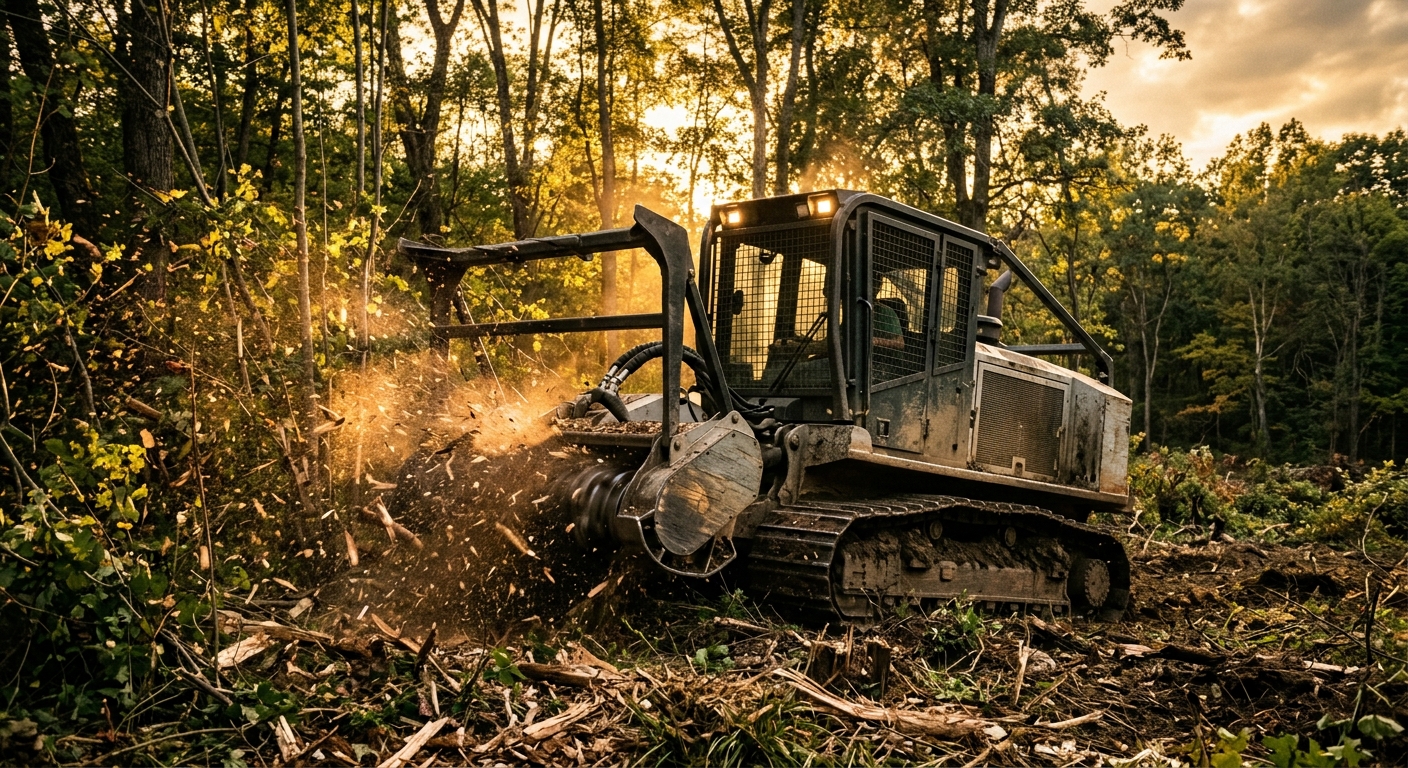
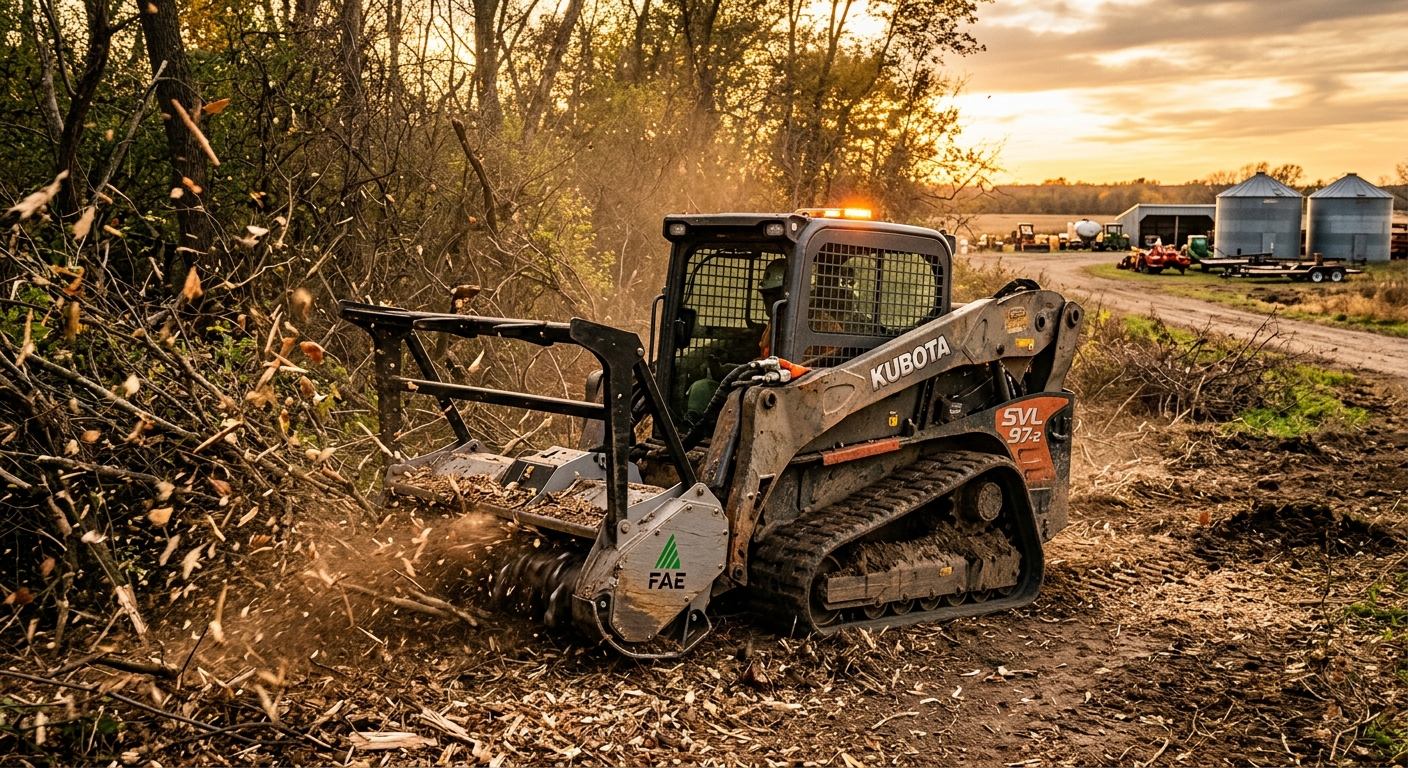
This is not a category built on showroom polish. It is a category built on abuse. Mulching heads, disc mulchers, trimmers, and related attachments go into rough ground, hot conditions, and jobs where the operator is usually trying to get a lot done in a hurry. Weak equipment gets exposed fast.
Loftness has leaned into that part of the market for years. Its own materials point to the VMLogix line, including mulching heads and other vegetation-management tools, as a major part of the business. The company’s trade show calendar also tells the same story. Loftness is not only showing up at farm events. It is showing up at vegetation, utility, and heavy-equipment events across the U.S. and Canada, including the National Heavy Equipment Show, Paul Bunyan Expo, TCI Expo, and Utility Expo.
That matters because trade-show choices tell you where a company thinks real demand lives.
Loftness does not look like a manufacturer trying to be everything to everyone. It looks like one trying to stay relevant in a handful of practical markets where specialized tools still matter.
Customer stories tell you where the product lands
Company marketing is usually noisy, but it can still reveal useful patterns if you read it carefully.
One of Loftness’ customer stories, published in 2022, follows Kenny Wright of Triple B Excavation in Tennessee. Wright said he started his land-clearing business with a Kubota excavator and a Loftness mulching head, later adding a larger excavator, a Battle Ax mulching head, and a Bad Ax disc mulcher. The interesting part is not the praise. It is the business logic underneath it.
Wright used different attachments for different job requirements. The drum mulcher handled finer particle sizing and harder-to-reach areas. The disc mulcher moved faster when a rough cut was enough. That is the kind of detail that actually matters in the field. It points to a manufacturer working in categories where attachment choice changes job economics, not just machine appearance.
The same story also points to something else smaller manufacturers live and die by: support. Wright specifically mentioned being able to call Loftness territory managers and talk through product needs. That is not glamorous. It is also the whole game once equipment leaves the dealer lot.
The company kept expanding without pretending to be a giant OEM
One thing I like about Loftness is that the company profile makes sense without needing giant-company theater.
Its 2016 material marking 60 years in business described a lineup that had already broadened well past the original snow blower roots: VMLogix vegetation-management equipment, SnowLogix snow blower attachments, GrainLogix grain-bagging equipment, CropLogix crop-residue equipment, FertiLogix fertilizer application and handling equipment, plus specialized products like the EZ Pick rock picker, Cool Flow auxiliary hydraulic cooler, and Power Pak hydraulic power unit.
That is a useful portfolio for a mid-sized manufacturer because it creates several ways to win.
A company tied only to one category gets cornered when that category softens. A company that serves agriculture, vegetation management, utility-related work, and specialized attachment needs has more room to adjust. It can follow dealer strength, regional demand, and end-user pain points instead of praying that one hot product line carries the whole year.
There is also a practical brand advantage in that structure. Once a dealer already trusts a manufacturer on one product, it becomes easier to add another line. That does not guarantee success, but it gives the company a better shot at repeat business.
The ESOP move probably says more than the press release did
Loftness became 100 percent employee-owned through an ESOP on January 1, 2020.
Plenty of companies announce employee ownership. Not all of them make it mean anything. Still, in this case, the move lines up with the kind of company Loftness appears to be: regional, manufacturing-heavy, long-tenured, and dependent on execution more than marketing spin.
That kind of business benefits when the workforce has a direct stake in quality and continuity. At least in theory, it should help with retention, internal buy-in, and the sense that the company is being built for durability rather than for a quick financial event.
I would not romanticize it too much. Employee ownership does not magically fix bad decisions or weak products. But for a company in a town like Hector, with a long family-to-employee transition story behind it, the ESOP does feel like a logical next step instead of a slogan.
It also gives Loftness a sharper identity in a market full of manufacturers that either roll up into larger groups or drift toward generic corporate language.
The 2025 CEO change is worth watching
In February 2025, Loftness announced Josh South as its new CEO. He had joined the company as CFO in November 2023, and the company said he brought experience in financial leadership, cost accounting, strategic pricing, and business expansion from previous industrial roles.
That appointment catches my attention for two reasons.
First, it suggests Loftness is thinking seriously about the next operating chapter, not just preserving the old one. A new CEO with a finance and operations background usually means the company is paying attention to margins, footprint, pricing discipline, and where growth can happen without getting sloppy.
Second, it fits the reality of the equipment business right now. Mid-sized manufacturers do not have much room for lazy execution. Steel, freight, labor, dealer expectations, and service pressure all hit at once. A company like Loftness does not need a celebrity leader. It needs somebody who can keep product quality up while making the numbers work.
That is boring, and I mean that as a compliment.
Why Loftness still matters
Loftness matters because it is a good example of the kind of manufacturer the equipment business often underrates.
It is not one of the giant OEMs. It does not dominate every conversation. But it has been around since 1956, survived an ownership handoff, diversified beyond a weather-driven origin, built a real position in vegetation management and agricultural equipment, and kept enough market relevance to show up across a broad calendar of trade shows and dealer-facing product categories.
That is not an accident.
It usually means the company has done a lot of ordinary things well for a long time. Product development. Distribution. Support. Manufacturing consistency. Category selection. Those are the habits that keep a mid-sized equipment company alive.
I also think Loftness sits in a smart part of the market. Vegetation management and practical agricultural support equipment are not going away. They are tied to recurring needs, ugly work, and operators who care more about output than brand mythology. That is fertile ground for a focused manufacturer.
The bigger takeaway
Loftness is a reminder that some of the healthiest equipment businesses are built by getting out of the seasonal trap and staying close to hard work.
The company began with a snow blower. It became something more durable by refusing to stop there.
That is the part worth noticing.
Sources
- Loftness, “History”: https://www.loftness.com/history/
- Loftness, “Loftness Becomes 100-Percent Employee Owned” (January 2020): https://www.loftness.com/loftness-becomes-100-percent-employee-owned/
- Loftness, “Farm Equipment: Loftness Marks 60 Years of Manufacturing Innovation” (May 2016): https://www.loftness.com/farm-equipment-loftness-marks-60-years-of-manufacturing-innovation/
- Loftness, “Lots to Like About Loftness” (February 2022): https://www.loftness.com/lots-to-like-about-loftness/
- Loftness, “Loftness Announces New CEO” (February 2025): https://www.loftness.com/loftness-announces-new-ceo/
- Loftness, “Trade Shows”: https://www.loftness.com/trade-shows/
- Loftness homepage: https://www.loftness.com/