
Alamo's Petersen Deal Puts Grapple Loaders in the Roll-Up Lane
Alamo Group's acquisition of Petersen Industries is more than another tuck-in deal. It shows how public works, storm debris, and bulky waste equipment are becoming more attractive as buyers look for steady demand outside the normal construction cycle.
Alamo Group’s move on Petersen Industries looks small if you only judge it by the size of the machines. Grapple loaders do not get the attention that excavators, dozers, compact track loaders, or battery-electric prototypes get at trade shows.
That is exactly why the deal is worth a closer look.
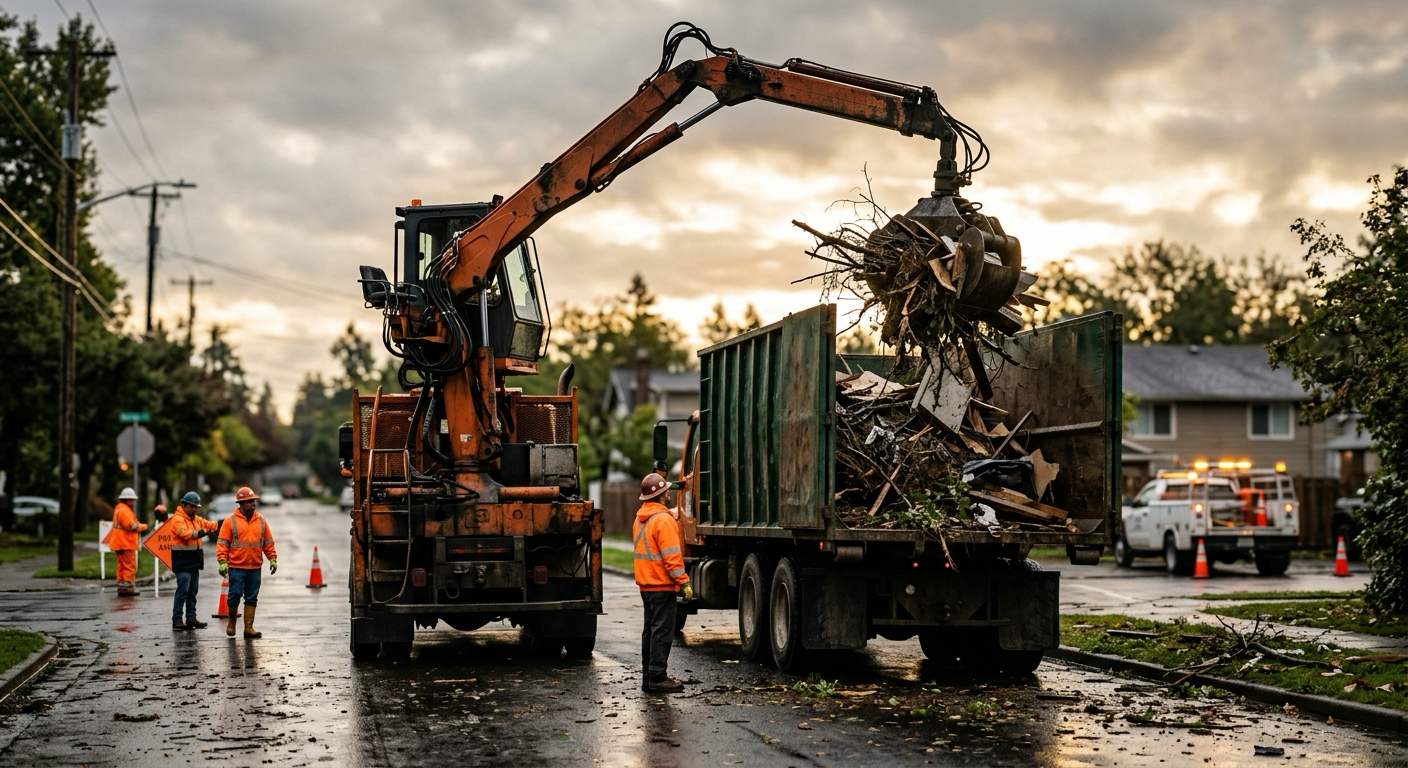
On January 26, Alamo Group said it had completed the acquisition of Petersen Industries, a Lake Wales, Florida manufacturer of truck-mounted grapple loaders used by municipalities, public works departments, contractors, and private haulers. The company framed Petersen as a solid fit for its Industrial Equipment portfolio and said the acquisition strengthens its position in solid waste and debris collection. Petersen’s machines are used for bulky waste, furniture, appliances, storm debris, and other material that does not fit cleanly into normal waste routes, according to Alamo’s announcement.
The read for equipment owners is simple: essential-service equipment is getting worth more. Not louder. Not flashier. Harder to ignore.
FieldFix Editor’s Note: Grapple loaders live in rough duty cycles: curbside debris, storm cleanup, overloaded routes, hydraulic grabs, PTO hours, and operators who may not be thinking about long-term repair cost. FieldFix helps fleets track hours, service history, repair spend, and downtime so owners can see what these machines really cost to keep working.
Why this deal matters
Alamo is not new to buying specialized equipment brands. Its portfolio already includes names across industrial equipment, vegetation management, snow removal, vacuum excavation, sweepers, and roadside maintenance. That matters because Petersen is not being bolted onto a generic holding company. It is being added to a buyer that already understands public works budgets, dealer coverage, parts support, municipal buying cycles, and the long tail of fleet maintenance.
That is the point.
Grapple loaders sit in an overlooked corner of the equipment market, but their demand is tied to problems that do not go away when housing slows down. Cities still collect bulky waste. Counties still clear storm debris. Contractors still handle right-of-way cleanup. Private haulers still need to move awkward loads that a standard rear-loader or roll-off setup does not handle well. When severe weather hits, the first question is not whether the market is hot. It is whether the fleet starts.
That makes the category attractive to strategic buyers. The machines are specialized enough to protect margins, but common enough that a larger platform can help with sourcing, sales coverage, parts, warranty, and dealer reach.
Alamo’s own release says Petersen equipment is trusted by more than 1,000 cities and counties nationwide. That kind of installed base matters because these are not one-time machine sales. Every loader creates future demand for cylinders, pins, hoses, bodies, controls, service, and replacement units. In a market where new equipment orders can swing hard with interest rates, aftermarket gravity is a real asset.
The unglamorous equipment is often the stickiest
Construction equipment coverage usually rewards novelty. Electric excavators. Autonomous dozers. AI dashboards. Hydrogen engines. Hybrid systems. All of that matters, but it can make the industry forget where a lot of durable money is made.
A grapple truck is not a concept machine. It is a working municipal tool. It sits in a fleet yard, runs a route, gets called after storms, gets beat up by tree limbs and wet debris, and then goes out again the next morning. That is not glamorous work, but it is sticky work.
The buyer is often a city, county, contractor, landfill operator, public works department, or waste-services fleet. Those buyers care about uptime, service access, and whether the machine can survive operators, weather, and material it was never supposed to pick up. They are usually less interested in being first and more interested in being right.
That changes the sales cycle. It also changes the support burden. A dealer or manufacturer that can keep a grapple loader running has more than a sales relationship. It has a fleet relationship.
That is where Alamo’s channel network could matter. Petersen has a long history in the niche. Alamo has broader reach, more procurement muscle, and a portfolio that already sells into many of the same public-sector and infrastructure-maintenance buyers. If the integration works, Petersen gets more distribution without losing the narrow product focus that made the brand useful in the first place.
Public works is becoming a consolidation lane
The Petersen deal fits a broader pattern. Buyers are looking for equipment categories with steady replacement demand, mandated work, and public-sector exposure. Street sweepers, sewer cleaners, vacuum trucks, snow equipment, roadside mowing equipment, vegetation management tools, and debris loaders all have that profile.
These machines are not immune to budget pressure, but they are less discretionary than many construction purchases. A contractor can delay buying a second excavator if backlog softens. A municipality cannot ignore storm debris sitting in the right of way. A city cannot stop bulky waste pickup for a year because rates moved. A county cannot let drainage channels or roadside brush go forever without creating bigger problems.
That does not make these markets recession-proof. It does make them different.
For manufacturers, the appeal is clear. Public works equipment often has a large installed base, regular service demand, and fragmented competitors. For private equity and strategic buyers, that is the setup they like: a niche with recurring need, product knowledge that keeps weak entrants out, and enough operational friction that scale can improve the business.
The best version of this kind of roll-up is boring in a good way. Keep the brand close to the customer. Improve sourcing where it helps. Add sales coverage without flattening the product into a spreadsheet. Protect parts availability. Speed up service response. Let the acquired company stay good at the thing customers bought it for.
The worst version is just as easy to spot. Cut too hard. Centralize too much. Raise prices before the support improves. Treat municipal buyers like generic accounts. Lose the people who know why a hydraulic line fails on a loader arm after 1,200 hours of curbside abuse.
Petersen’s next few years will show which path Alamo takes.
Why grapple loaders are having a moment
Bulky waste is not shrinking. Furniture, mattresses, appliances, storm limbs, construction debris from small jobs, and illegal dumping all keep pressure on cities and haulers. At the same time, labor is tight. Manual collection is risky. Workers’ compensation costs are real. Residents expect faster cleanup after storms and large pickup days.
A truck-mounted grapple loader attacks that problem with one operator and a hydraulic claw. It reduces hand work, lowers exposure to sharp debris and awkward lifting, and lets a crew handle large, irregular material without bringing a wheel loader or excavator into residential streets.
That is why the machine type has staying power. It is not trying to make waste collection look advanced. It is trying to make a messy job manageable.
The storm angle matters too. Weather events have turned debris collection into a capacity problem for many public agencies. Crews need machines that can move fast, load odd material, and return to service quickly. A city may not care about the newest machine-control interface when the problem is a street full of branches and soaked furniture. It cares about reach, lift, body capacity, hydraulic reliability, and whether parts are available when the loader is down.
Those are the kinds of product details that decide whether a niche brand survives after acquisition.
What contractors should take from it
For contractors, the lesson is not “buy a grapple truck because Alamo bought Petersen.” That would be lazy.
The better lesson is that cleanup, debris, and public-works-adjacent services are becoming a more serious equipment category. A contractor who already owns trucks, loaders, skid steers, dump trailers, or land-clearing equipment should be paying attention to the work around the main job: debris removal, storm cleanup, right-of-way clearing, bulky material handling, and municipal overflow work.
Those jobs are rarely as exciting as new construction. They can also be steadier, especially when tied to local contracts or recurring cleanup needs.
The equipment math has to be tight. Grapple trucks are not cheap, and they can bleed money if the owner does not understand use, hydraulic maintenance, body wear, tire cost, driver availability, and insurance. But the service itself solves a real problem. That is why strategic buyers care about the segment. It is not a fad. It is a painkiller.
For dealers, the deal should push specialized public works accounts higher on the call list. These customers may not buy the most units in one shot, but they tend to return for parts, service, training, and replacement cycles. They also talk to each other. A machine that performs well for one county can influence the next one over.
The real test is support
Alamo can give Petersen more reach. That part is obvious. The harder work is keeping the product close to the field.
Grapple loader customers will not grade the acquisition on press-release language. They will grade it on lead times, parts availability, warranty handling, dealer knowledge, hydraulic reliability, and whether the machines still feel built for the crews using them.
That is the part of equipment consolidation that gets underreported. The deal closes in one day. The trust takes years.
Petersen gives Alamo a stronger position in bulky waste and debris collection. Alamo gives Petersen a bigger platform. If both sides keep the field reality at the center, this is exactly the kind of unglamorous equipment deal that can age well.
And that is the broader signal: the market is not consolidating only around the biggest machines. It is consolidating around the jobs that have to get done no matter what the cycle is doing.