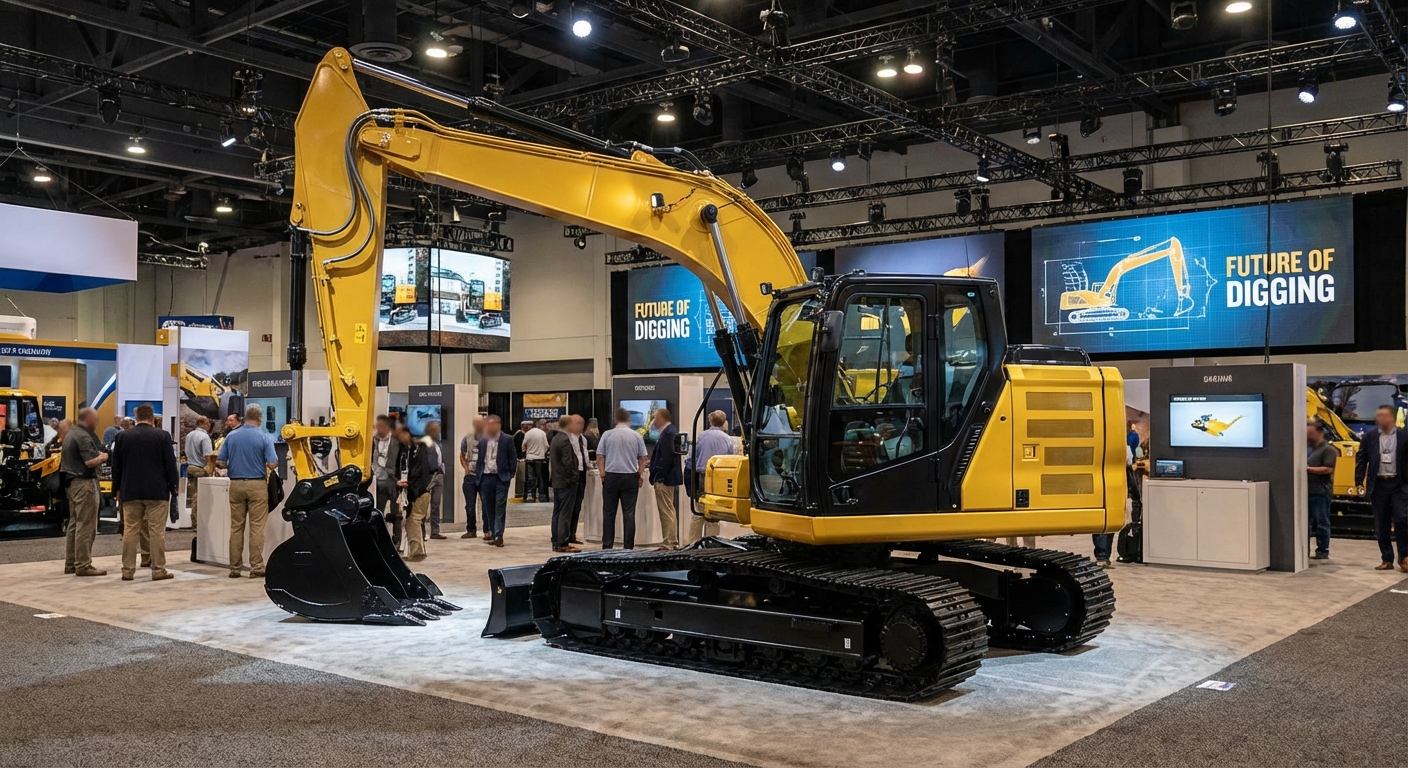

Komatsu's PC9000 Is a 900-Ton Answer to One Mining Problem: Fewer Passes
Komatsu has opened global availability for the PC9000-12, its largest hydraulic mining excavator. The real story is not just size. It is pass matching, electric-drive optionality, and the economics of moving more tons with fewer loading cycles.

Komatsu has moved the PC9000-12 from Canadian launch project to global product. That matters because this is not a routine model refresh. It is Komatsu’s largest hydraulic mining excavator, built for high-volume surface mines where the loader, the truck fleet, and the haul cycle all have to work as one system.
According to Komatsu Germany Mining Division’s April 2 release, the PC9000-12 is now available worldwide through Komatsu’s dealer network after its introduction in Canada with SMS Equipment. Komatsu lists the machine with front shovel and backhoe configurations, 46 cubic meter and 49 cubic meter bucket options, diesel and electric-drive choices, and a loading match for Komatsu’s largest 240- to 400-short-ton mining trucks. The company says the machine can load a Komatsu 980E truck in five passes in under 150 seconds under stated conditions. The dedicated PC9000 site also says the machine is compatible with Komatsu’s FrontRunner autonomous haulage system.
FieldFix Editor’s Note: Giant machines still live or die by ordinary numbers: hours, fuel, downtime, payload, and maintenance cost per ton. FieldFix helps equipment owners track those costs at the machine level, whether the fleet is one skid steer or a pit full of iron.
The pass count is the story
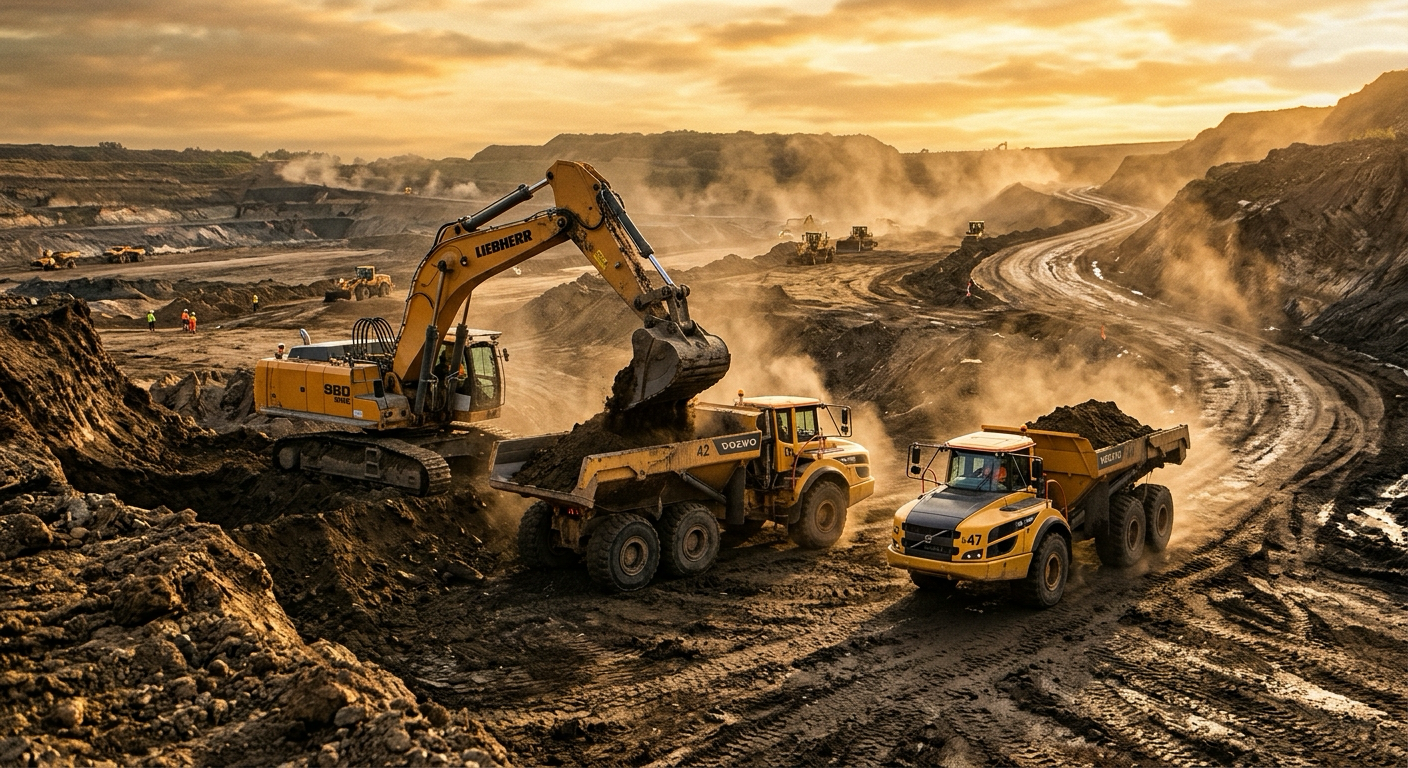
Mining equipment announcements often get trapped in size talk. Bigger bucket. Bigger machine. Bigger headline. That is understandable with the PC9000 because the numbers are hard to ignore. Komatsu’s own material points to an operating class around 900 tonnes, bucket capacities up to 49 cubic meters, and more than 80 tons of payload per pass.
But the useful story is pass count.
A shovel does not make money because it looks impressive in a brochure. It makes money when it keeps haul trucks loaded, keeps the crusher fed, and avoids creating a bottleneck that ripples through the whole mine plan. If a loading tool can take a large truck from six or seven passes down to five, and do it consistently, the math changes fast.
Five passes is not just fewer bucket swings. It means fewer truck spotting cycles, fewer chances for spillage, less time sitting under the shovel, and a cleaner rhythm between loader and hauler. Multiply that by a mine that runs around the clock and the operating difference is not cosmetic. It is fleet planning.
Komatsu says the PC9000-12 is a three-, four-, and five-pass match for the 830E, 930E, and 980E haul truck classes. That is the product positioning in plain English: this machine is meant for mines that are already running big trucks and want the loading tool to stop being the constraint.
Why Komatsu needed a machine above the PC8000
Komatsu has not retired the PC7000 or PC8000. Its own FAQ says those models remain available. That is important because it shows the PC9000 is not just a replacement model with a larger number on the side.
It is a separate class for a separate problem.
The largest open-pit mines are pushing production targets, emissions targets, automation goals, and maintenance planning all at once. The shovel has to fit that environment. If it is too small, the mine burns time loading trucks. If it is too large for the truck class, the machine becomes expensive overkill. If it cannot plug into the site’s power, autonomy, or support strategy, it becomes a one-off asset that maintenance teams have to work around.
The PC9000 is Komatsu’s answer for mines that have already outgrown the old loading assumptions. It is designed around very large haul trucks, double-side loading, diesel or electric power, and FrontRunner integration. Those details matter more than the raw size.
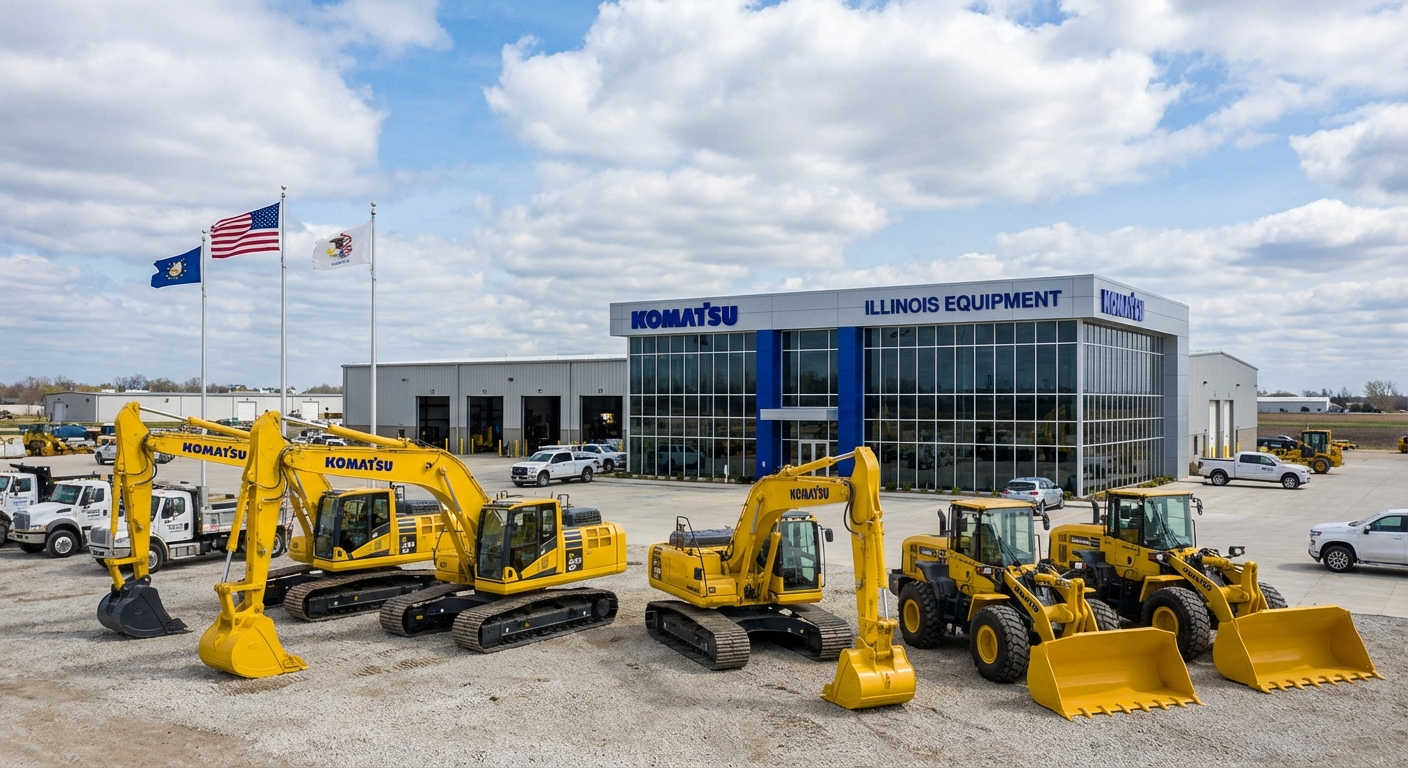
There is also a dealer and support angle here. Ultra-class mining excavators are not sold like compact loaders. The machine is only one piece of the deal. Parts planning, field support, operator training, component rebuild strategy, power availability, and truck matching are part of the buying decision. By moving from a Canadian launch to global availability, Komatsu is saying the support system is ready for broader deployment, not just that the machine exists.
Electric drive is not a side note
The PC9000-12 can be configured with diesel Tier 4, diesel unregulated, or electric drive, according to Komatsu’s release and FAQ. The electric version uses two motors, each listed at 1,700 kW. The diesel version uses two Komatsu SSDA16V160E engines, each listed at 1,678 kW.
That flexibility is not a spec-sheet flourish. It is how mining equipment has to be sold right now.
Some regions need emissions compliance. Some mines have access to grid power and want to cut diesel burn in the pit. Some sites are remote enough that diesel remains the practical answer. Some operators want to decarbonize but cannot rebuild their entire mine infrastructure at once. A shovel platform that can be ordered across those realities gives Komatsu more room to sell into mixed global demand.
The electric-drive option also changes the long-term cost discussion. Mine operators already think in cost per ton, but electric shovels put a sharper edge on that analysis. Power cost, cable management, uptime, maintenance intervals, motor performance, and diesel logistics all move into the same spreadsheet. For the right mine, removing diesel engines from the loading tool can be a serious operating advantage. For the wrong mine, it can add complexity without enough payoff.
That is the point. Komatsu is not forcing one answer. It is giving mine planners a platform that can be matched to site conditions.
Autonomy only works if the shovel plays along
The PC9000’s FrontRunner compatibility may end up being one of the most important parts of the launch. Autonomous haulage gets plenty of attention, but autonomous trucks still need a loading tool that can keep a predictable cycle. The cleaner the shovel-truck interaction, the better the whole autonomous system can perform.
A human truck driver can adjust to messy site behavior in ways software tries to avoid. Autonomous systems prefer repeatability: clear spotting, reliable loading positions, consistent pass count, and predictable cycle timing. If the shovel is built with that environment in mind, the mine has a better shot at turning autonomy from a technology project into normal production.
Komatsu’s release says the PC9000 is designed for efficient double-side loading and integrated with FrontRunner. That combination tells you where the company thinks large mines are going. The shovel is not just a bucket on tracks. It is part of a production cell.
This is also where equipment buyers should be careful. Autonomy does not forgive sloppy maintenance. Sensors, communications, bucket control, travel systems, hydraulics, power supply, and site procedures all have to be reliable. A larger machine raises the stakes because every hour of unplanned downtime takes a bigger bite out of production.
Canada was the proving ground
The first PC9000-12 was delivered in May 2025 to an oilsands operation in Canada, according to the PC9000 release. SMS Equipment was the launch partner for that market.
That detail is worth more than a line in the announcement. The oilsands are a harsh proving ground for big loading tools. Cold weather, abrasive material, long shifts, production pressure, and maintenance intensity do not leave much room for fragile machines. If an ultra-class excavator can earn its way into that environment, global mining customers will pay attention.
It also explains why SMS Equipment is visible throughout the PC9000 rollout. The dealer’s role in a machine this size is not just delivery. It is commissioning, parts support, field service, training, and feedback to the manufacturer. For a product launch at this scale, the dealer relationship is part of the product.
What contractors can learn from a mining shovel
Most Equipment Insider readers are not buying a 900-ton mining excavator. That is fine. The lesson still applies.
The smartest equipment decisions start with the work cycle, not the machine category. Komatsu did not build the PC9000 because the industry needed a bigger toy. It built it around a loading problem: match the shovel to the truck, cut pass count, support the site’s power strategy, and keep production moving.
The same thinking scales down.
A land-clearing contractor deciding between a compact track loader and a dedicated mulcher is really asking a pass-count question of a different kind. How many acres per day? How many maintenance hours? How much transport time? How often does the machine sit because the wrong attachment is on it? A site contractor choosing between a skid steer, wheel loader, and excavator is asking the same question. What work cycle are we actually trying to improve?
That is where spec-sheet shopping gets people in trouble. Horsepower, operating weight, bucket size, and lift capacity matter, but they do not answer the business question by themselves. The business question is whether the machine improves the cycle that makes money.
Komatsu’s PC9000 announcement is a mining story, but it is also a reminder that equipment economics are brutally practical. The machine that wins is the one that moves the most billable work through the least wasted time.
The bottom line
The PC9000-12 gives Komatsu a bigger answer for the largest surface mines, but the launch is really about system fit. Bigger bucket, yes. Longer reach, yes. Diesel or electric drive, yes. But the heart of the machine is the relationship between shovel, truck, autonomy, and cost per ton.
If the PC9000 performs the way Komatsu’s launch material says it can, the machine gives high-volume mines another lever to pull: fewer passes, tighter loading cycles, and a loading platform that can be configured around the site’s power and automation plan.
That is not flashy in the social-media sense. It is better than flashy. It is the kind of equipment decision that can change the math of a mine one truckload at a time.
Sources: Komatsu PC9000 global launch release, PC9000 product page, and PC9000 FAQ.