Bobcat and Caterpillar Are Fighting Over the Brains Inside Compact Machines
The patent fight between Doosan Bobcat and Caterpillar is not only legal noise. It shows how much value now lives in controls, hydraulics, software, and machine behavior, not just steel and horsepower.
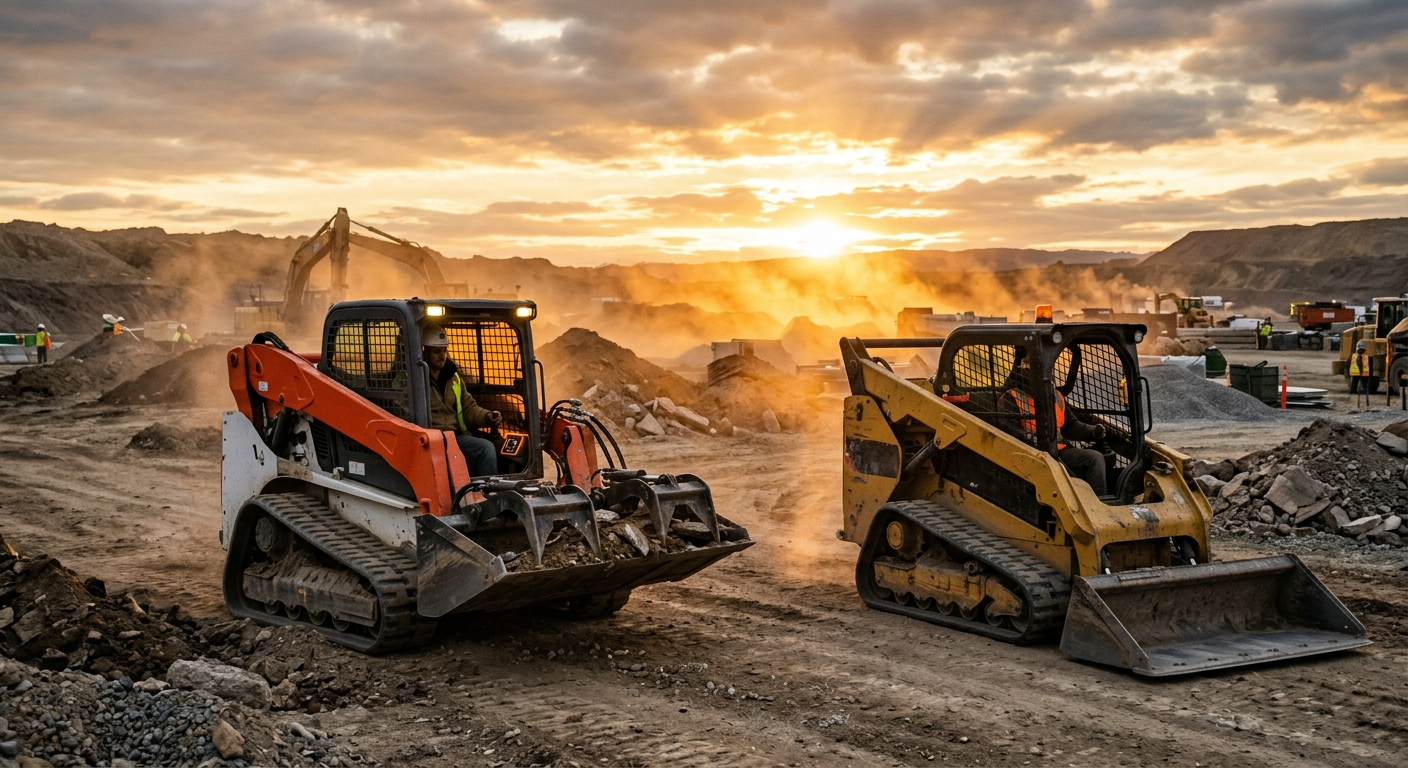
The fight between Doosan Bobcat and Caterpillar is easy to file away as lawyer work. Two huge equipment names, a stack of patents, dueling claims, and enough court language to make a fleet manager close the tab.
That would miss the point. The most interesting part of this dispute is what the companies are fighting over: machine control systems, hydraulic behavior, power management, operating zones, attachment control, and other features that shape how compact equipment actually works in the dirt.
FieldFix Editor’s Note: When machine value shifts from steel alone to controls, sensors, and operating history, records matter more. FieldFix helps equipment owners track hours, service, repairs, and machine costs so fleet decisions are based on real operating data, not guesses.
What is happening
Doosan Bobcat North America filed patent lawsuits against Caterpillar in December 2025 in the U.S. District Court for the Eastern District of Texas. Public docket summaries list related cases including Doosan Bobcat North America, Inc. v. Caterpillar Inc., case 2:25-cv-01184 and case 2:25-cv-01185.
The claims center on patents tied to compact and construction equipment technologies. The disputed areas include hydraulic drive behavior, machine power management, lift-arm operating zones, engine speed control, tracked vehicle systems, and attachment-related functions. Bobcat also pursued related actions outside the district court system, including an International Trade Commission complaint and European proceedings, according to public reporting and docket summaries.
Caterpillar has denied Bobcat’s allegations and pushed back with its own claims. Public summaries of Caterpillar’s response describe counterclaims tied to machine control, hydraulic performance, power management, and attachment-leveling technology. Caterpillar also asked for a jury trial in the U.S. case.
None of that means either side has proved its case. Patent complaints are allegations. Counterclaims are allegations. The courts and agencies will decide what is valid, what was infringed, and what remedies, if any, make sense.
But the existence of the fight tells us something useful. Compact equipment is no longer a simple contest over who can build the toughest loader frame or sell the most horsepower per dollar. The battle has moved deeper into the machine.
Compact machines are becoming software-defined iron
A skid steer or compact track loader still looks like steel, hydraulics, tires or tracks, a cab, and an attachment plate. That is the part owners can see. The higher-value fight now sits behind the operator’s hands.
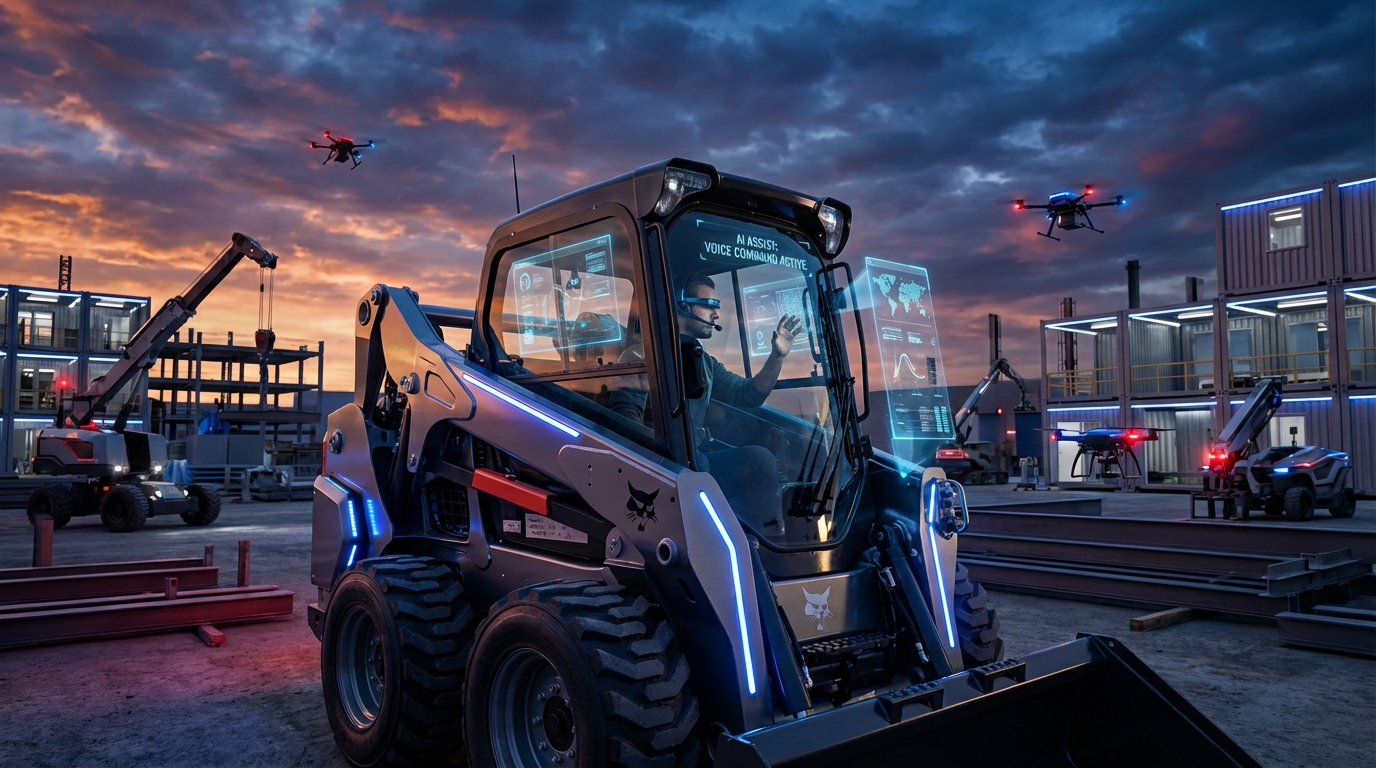
Modern compact machines are full of systems that decide how power is delivered and how the machine responds. Engine speed can be managed to match load. Hydraulic flow can be prioritized. Joystick inputs can be translated through control logic before the machine moves. Attachments can be leveled, limited, protected, or optimized by software. Operating zones can keep a boom or bucket from moving into places the owner or manufacturer wants to avoid.
That sounds dry until you put it on a job. A loader that keeps an attachment flatter, a mulcher that gets steadier hydraulic power, a lift arm that behaves predictably near a truck, or a machine that manages power without lugging can make a real difference. It affects productivity, operator confidence, fuel burn, damage risk, training time, and resale value.
The operator may not know which patent covers which behavior. He just knows one machine feels smarter than another.
That is why these disputes matter. The controls are part of the product now. Not a bonus. Not a brochure feature. The controls are one reason a contractor prefers one compact track loader over another even when the spec sheets look close.
The fight is bigger than Bobcat versus Caterpillar
Bobcat and Caterpillar are the names on the docket, but the same pressure is hitting every OEM in compact equipment.
The machine categories involved are crowded and valuable. Compact track loaders, skid steers, mini excavators, small wheel loaders, backhoes, and related machines sit at the center of rental fleets and small-contractor fleets. They are versatile enough to work every day and expensive enough that small performance differences can move buying decisions.
That puts manufacturers in a hard spot. They need machines that are familiar enough for operators to trust and different enough for buyers to justify brand loyalty. A loader still needs to do loader things. A mini excavator still needs to dig, swing, lift, and fit through tight spaces. Yet the OEM has to make the machine feel better, safer, easier, stronger, or more efficient than the next one.
A lot of that differentiation now lives in control behavior. The metal matters, but the machine’s personality comes from the way the systems talk to each other.
This is where patent risk gets uncomfortable. If every manufacturer is trying to solve similar problems, the inventions can land close to one another. Better power delivery. Better hydraulic response. Better attachment control. Better safety envelopes. Better operator-assist features. Those are the same problems everyone wants solved because customers ask for them every day.
So the industry gets a legal version of a familiar jobsite argument: who got there first, who copied what, and what is just normal competition?
Why dealers should care
Dealers may not follow every filing, but they will feel the effects if the dispute changes product availability, pricing, messaging, or customer questions.
The short-term effect is probably confusion more than disruption. Contractors see headlines about patent lawsuits and wonder whether machines they own, rent, or have on order could be affected. Most owners should not overreact. Patent cases can run for a long time, and a lawsuit does not automatically mean machines vanish from dealer lots.
Still, dealers should be ready with plain answers. Customers will ask whether a model is affected, whether parts and support are safe, and whether a machine could lose software features later. The worst answer is vague reassurance from a salesperson who has not read the issue.
A better answer is simple: the case is active, allegations are unproven, existing warranty and support terms remain the real buying documents, and the dealer will update customers if the manufacturer issues guidance. That may sound boring. Boring is good when customers are deciding whether to spend six figures.
Dealers also need to understand that buyers are getting more sensitive to software and control systems. Ten years ago, a used compact loader conversation might start with hours, undercarriage, hydraulics, engine, and tires. Those still matter. Now buyers also care about displays, control modes, software updates, cameras, telematics subscriptions, and whether certain automated functions work correctly.
The lawsuit is another reminder that the brains inside the machine are now part of the asset.
Why rental companies should care
Rental fleets are built on uptime, standardization, and predictable support. If a patent fight creates even a small risk around certain models or features, rental managers will want clarity fast.
That does not mean rental companies should dump machines because of a lawsuit. That would be silly. But they should document software versions, option packages, service history, and customer complaints more carefully. If a feature becomes part of a legal or manufacturer-update issue later, the rental company with clean records will have a much easier time sorting affected units from unaffected units.
The bigger lesson is that rental customers increasingly rent behavior, not just horsepower. A contractor renting a compact track loader for grading, land clearing, demolition prep, or utility work expects the controls and hydraulic response to feel right on day one. If the machine is awkward, jumpy, underpowered, locked out, or missing the function the customer expected, the rental counter gets the complaint.
That puts rental houses in the same position as dealers. They have to know the machine beyond the spec sheet.
Why contractors should care
For contractors, the practical question is not who wins the case. It is what the dispute says about buying equipment in 2026.
The first lesson is to test machine behavior, not just specs. A compact track loader with similar horsepower, operating capacity, and hydraulic flow may feel very different under a mulcher, grapple, grader, broom, cold planer, or trencher. The control logic matters. If a machine is being bought for attachment-heavy work, demo it with the attachment type that will make the money.
The second lesson is to ask what is software-controlled and what is serviceable. Can the dealer update the machine locally? Are control issues diagnosed through standard tools? Are optional features tied to subscriptions, codes, or manufacturer authorization? What happens if a display fails? What happens if a sensor disables a function during a job?
The third lesson is to keep records. When a machine has control complaints, intermittent hydraulic behavior, unexplained derates, or attachment issues, write it down with hours, conditions, operator notes, fault codes, and repair outcomes. A vague memory that the machine “acts weird sometimes” is useless. A clean history helps the dealer solve the problem and helps the owner defend the machine’s value later.
This is not paranoia. It is just the reality of owning equipment that has become more complex.
The attachment angle
The patent fight also matters because compact machines are really attachment platforms.
A skid steer or CTL earns its keep by switching roles: bucket, forks, grapple, mulcher, auger, trencher, breaker, broom, planer, snow pusher, soil conditioner, mower. The machine’s base value depends on how well it runs that menu.
That makes control systems and hydraulic management more important. A machine that handles one attachment beautifully and another poorly can create real fleet headaches. Owners may blame the attachment, the couplers, the operator, the hydraulic oil, or the dealer. Sometimes the issue is the machine’s control setup.
OEMs know this. Dealers know it. Attachment makers know it too. The companies that make compact machines more predictable across attachments have an edge, especially with rental fleets and contractors who need one machine to do five jobs.
So when patents cover attachment leveling, power distribution, operating zones, or hydraulic behavior, the issue is not academic. Those systems are tied to the economic reason compact machines exist.
The likely industry response
No one outside the legal teams knows where this case lands. It could settle. It could narrow. It could drag through court, agency review, reexamination, appeals, and international proceedings. Patent fights are rarely clean.
The industry response is easier to predict. OEMs will keep building smarter machines, and they will keep protecting the systems that make those machines feel different. More engineering energy will go into controls, software, sensor logic, automation, and machine-to-attachment communication. More legal energy will follow it.
Contractors should expect more of this, not less.
That does not mean the equipment business turns into the smartphone business overnight. Construction buyers still punish fragile machines. A clever control system does not save a loader with weak cooling, poor dealer support, expensive parts, or a lousy undercarriage. Dirt work has a way of humbling fancy ideas.
But the direction is clear. The next wave of compact equipment competition will be fought in the operator station, in the hydraulics, in the software, and in the data trail each machine leaves behind.
Bottom line
The Bobcat-Caterpillar patent fight is not just a courtroom story. It is a signal that the most valuable parts of compact equipment are changing.
Frames, engines, pumps, tracks, buckets, and dealer support still decide whether a machine survives real work. But the systems that manage power, control attachments, protect movement, and shape operator feel are now central to the machine’s value.
For buyers, the takeaway is simple: do not buy compact equipment from a spec sheet alone. Run the machine. Test the attachments. Ask how the controls work. Understand updates and diagnostics. Keep better records than you think you need.
The machines are getting smarter. Owning them badly is getting more expensive.
Sources: Justia docket 2:25-cv-01184, Justia docket 2:25-cv-01185, PacerMonitor case listing, International Trade Commission investigation search.