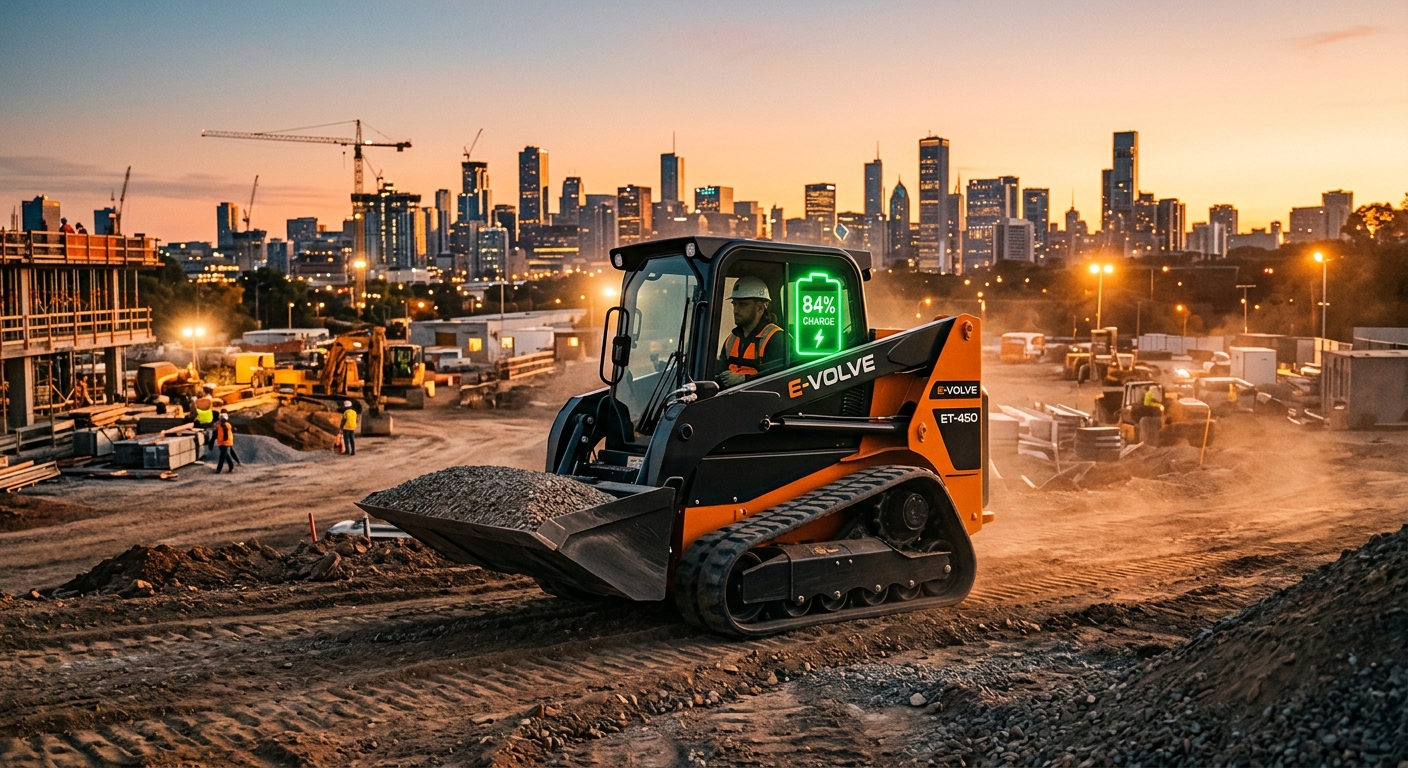

The Compact Track Loader Undercarriage Bill Is Coming Due
Compact track loaders carried the last cycle of small-contractor work and outsold skid steers for the fifth year running. The machines that kept that boom moving are now arriving at the hour count where undercarriage cost stops being theoretical and starts hitting P&Ls.
Compact track loaders were the small-contractor success story of the last cycle. They outsold skid steer loaders in North America for the fifth straight year in 2025, according to AEM’s compact equipment data, and the gap kept widening. The CTL became the default machine for site prep, landscape, hardscape, utilities, residential, agricultural, and almost any job where a wheeled skid steer used to be the obvious choice.
The math that powered that boom is now coming back around. A meaningful share of the machines bought between 2021 and 2024 are crossing the hour count where undercarriage cost stops being a line in a spec sheet and starts being a real bill. For contractors who didn’t budget for it, that bill is uncomfortable. For the ones who did, it is the moment that separates real cost-per-hour discipline from optimism.
FieldFix Editor’s Note: A CTL undercarriage bill is brutal when it surprises you. FieldFix tracks machine hours, service history, and component-level cost on every unit in a fleet, so undercarriage replacement gets forecast across the year instead of dropped on a Tuesday.
Why this is a 2026 problem specifically
Track wear is hours and abuse, not calendar age. A CTL run on rough asphalt and concrete pads at high counter-rotation hours can chew up an undercarriage in 800 to 1,200 hours. A unit kept on softer dirt, cleaned regularly, and operated by someone who doesn’t pivot in place can stretch to 2,000 to 2,500 hours on the original tracks and rollers, sometimes more. Wider weight classes, steel-embed tracks, and certain undercarriage designs push that further.
The selling boom happened concentrated. AEM, EDA, and Construction Equipment Guide data show U.S. CTL sales running near record levels from 2021 through 2024, with strong absorption by small contractors who financed at the time’s available rates. Many of those machines were bought new with one operator running heavy daily hours. The ones still in the original owner’s hands are now somewhere between 1,500 and 3,500 hours, which is exactly where the next wave of undercarriage spend lives.
Rental fleets, which absorbed a different chunk of that production, follow their own replacement schedules, but those schedules end the same way: tracks, idlers, rollers, sprockets, and bogies wear out together. The retail and used market sees those decisions ripple through pricing and trade-in values.
For owners, the dynamic that matters is simple. The peak-of-cycle CTL buy is now far enough into its life that the original components are wearing through the back half of their service window. The bill does not arrive evenly. It arrives in bunches.
What an undercarriage event actually costs
There is no single number, and that is part of the problem. A full undercarriage on a compact track loader can run from roughly $4,500 on a smaller, low-end machine with bare rubber tracks and minimal roller wear to over $15,000 on a heavier weight class with steel-embed tracks, full roller and idler replacement, sprocket replacement, and dealer labor. Real-world quotes contractors share publicly tend to cluster between $8,000 and $12,000 for a mid-class machine, parts and labor combined.
A few drivers stretch or shrink that number:
Tracks alone can run from about $1,200 a pair for budget rubber on a smaller unit to $4,000 or more per pair for OEM steel-embed tracks on a larger CTL. Some owners run mid-grade aftermarket tracks at a noticeable discount, with tradeoffs around lug life and warranty.
Rollers, idlers, and sprockets are the quieter cost. Manufacturers like Bobcat, Caterpillar, Kubota, Takeuchi, John Deere, ASV, and others use different roller counts and designs, and replacement intervals vary. A machine that has run heavy hours without consistent washouts and inspections can need a full set of rollers, idlers, and one or both sprockets at the same time the tracks go.
Labor matters more than the parts conversation suggests. Dealer shop rates have continued to climb, with $145 to $185 per hour now common in many U.S. regions for compact equipment work. A full undercarriage rebuild is typically a multi-shift job. Owners who do their own work save the labor line, but only if they have the lift capacity, the tools, and the time to pull a machine off the schedule for two or three days.
Downtime is the part that rarely shows up on the parts invoice. If a CTL is generating $700 to $1,200 per day of crew-billable revenue, three days down to swap an undercarriage costs the owner thousands of dollars before the parts bill is paid.
Put all of it together and the realistic 2026 number to budget for a mid-class CTL crossing the 2,000-hour mark is in the range of $10,000 to $14,000 all-in for a serious undercarriage event. Some operators will land below that with light wear and aftermarket parts. Others will land well above it, especially on heavier units.
How operators get surprised
The pattern is consistent. The owner runs the machine hard, makes good money, and pays attention to obvious failures. Hydraulic lines, engine codes, cooling system, fuel system, attachment couplers, and electrical issues all get fixed when they break.
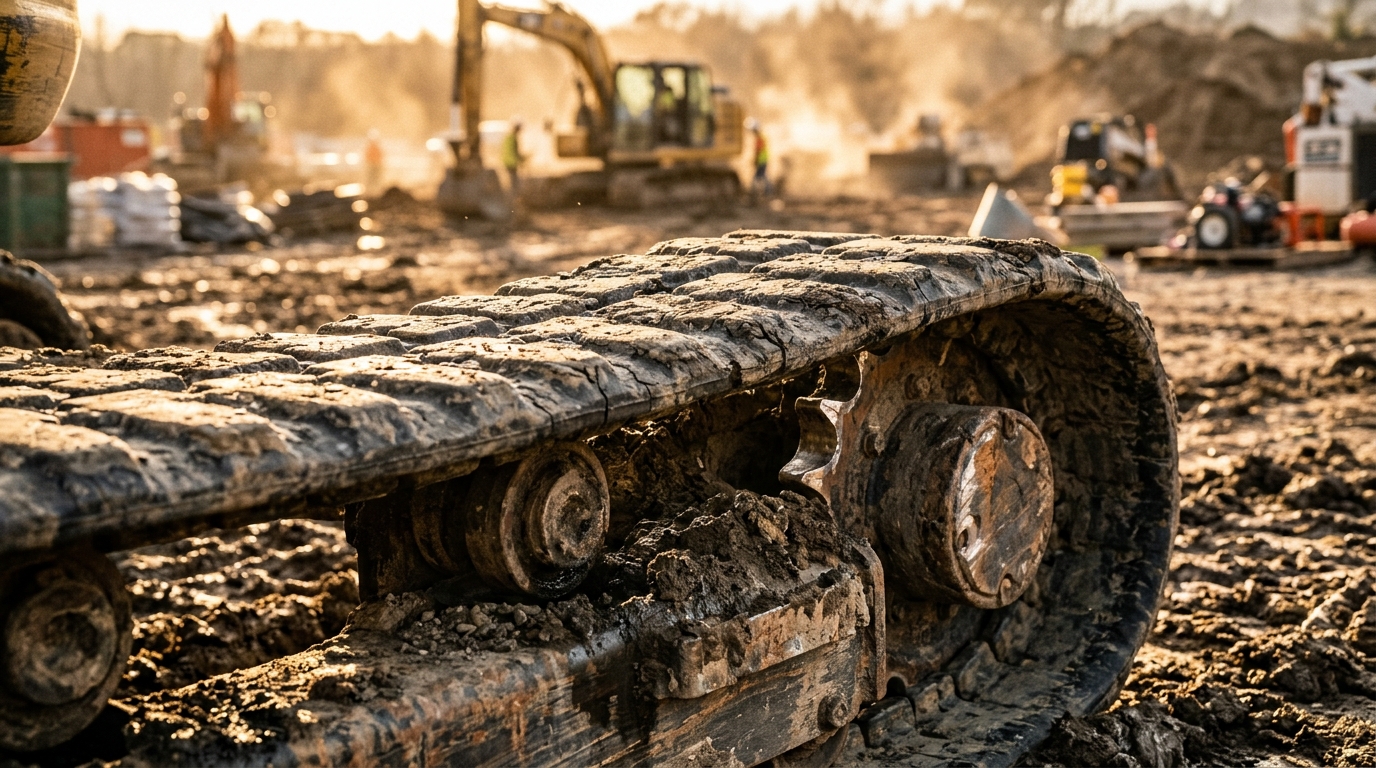
The undercarriage gets less attention because it usually does not fail catastrophically. It degrades. Tracks lose lug height, rubber gets nicked and torn, rollers develop play, idlers shift, sprockets sharpen. The machine still works. The operator notices that turns feel tighter or that the ride is rougher, but the work keeps moving.
Then a real failure happens. A track comes off on a slope. A roller seizes and chews up an idler. A sprocket tooth shears. A track tears down the middle on a rebar or rock. The machine is on the ground, and the inspection that follows reveals that several components were already at the end of their life and need to be replaced together.
That is when the owner who never set aside cost-per-hour reserve for the undercarriage starts looking for a bridge: a credit line, a trade-in deal, a longer rental contract, or a cash flow squeeze. The bill is not the problem in isolation. The bill is the problem because it lands at the same time as fuel, payroll, insurance, finance payments, and other expenses that already used the month’s cushion.
What contractors who plan well are doing
The shops that survive this part of the cycle without drama tend to share a few habits.
They track hours per machine with discipline. Not a vague “we run this thing every day.” A real hour count, updated weekly, tied to a maintenance plan that lists when undercarriage inspections happen. Some are still using spreadsheets and clipboards. Others have moved to telematics dashboards or fleet management software that does the same thing with less manual entry. The point is that the data exists and somebody looks at it.
They inspect undercarriages on a fixed schedule. A practical version: a 15-minute walkaround every 50 hours with a tape and a flashlight, plus a deeper inspection every 250 hours that includes track tension, lug height measurement, roller play check, idler alignment, and sprocket wear. Catching a worn roller before it takes out an idler is a $400 part instead of a $1,800 cascade.
They put cost per hour for undercarriage into their pricing. Treating undercarriage as a real wear cost, similar to fuel or operator labor, changes the bid. Many fleet-savvy operators reserve $2 to $4 per machine hour for undercarriage on a mid-class CTL, accumulated against the eventual rebuild. Over 2,000 hours, that is $4,000 to $8,000 in reserve, which covers most of a serious event before the bill lands.
They manage operator behavior. Counter-rotation on hard surfaces is the fastest known way to destroy rubber tracks. Pivot turns on concrete, asphalt, and gravel chew lugs and stress sprocket teeth. Three-point turns are slower and uglier, and they save thousands of dollars over a machine’s life. Some owners enforce that explicitly through operator training and check-in conversations. Others let their crews learn the expensive way.
They keep machines clean. Mud caked on rollers, idlers, and undercarriages accelerates wear and traps debris. A weekly washout is not optional on a CTL doing serious work. The owners who skip it pay for it later.
They know when to walk away. There is a point where the math on rebuilding an older CTL stops making sense. A machine with 4,000 to 5,000 hours that needs a $12,000 undercarriage, $4,000 in hydraulic work, and a soft engine is often worth more as a trade-in than as a rebuilt unit. The owners who can do that math without emotion replace before the breakdown, not after.
The dealer and rental angle
Dealer service departments are seeing the undercarriage wave clearly. CTL undercarriage work is now a meaningful share of compact shop revenue at many dealers, especially in regions with high CTL density like the Southeast, Texas, the Midwest, and the Pacific Northwest. Service bays that used to focus on excavators, skid steers, and mini track loaders are now committing weekly capacity to CTL undercarriage rebuilds.
That has secondary effects. Wait times for routine work creep up. Loaner programs strain because more machines are in the shop at any given time. Parts allocations on common tracks, rollers, and idlers tighten, especially on popular models from Bobcat, Caterpillar, Kubota, and John Deere. The dealers who anticipated this and stocked components ahead are running smoother service operations than the ones who didn’t.
Rental fleets are sitting in a different seat. A rental house can plan undercarriage cycles around fleet utilization, replace components in winter slowdowns, and rotate older units out before the bill stacks up. That predictability is one of the reasons rental remains a serious option for contractors who do not want to manage their own CTL undercarriage exposure. The ARA’s 2026 forecast continues to highlight rental’s growth, and the wear-cost transfer baked into rental rates is part of why.
Used buyers should also pay attention. A CTL with low cosmetic wear, clean paint, and a sub-2,000-hour reading is not automatically a good buy. The undercarriage condition matters more than the hour meter on a machine like this. Worn rollers and a tired sprocket on an otherwise clean machine can hide a $10,000 surprise. A good pre-purchase inspection on a CTL includes lug height measurement, roller play check by hand, sprocket profile inspection, and a careful look at the idlers and track tension system.
Where the segment is going
Manufacturers know exactly what is happening. The recent CTL refresh cycle from Bobcat, Caterpillar, Kubota, John Deere, ASV, Takeuchi, and Yanmar has emphasized undercarriage durability, ease of inspection, and serviceability. Bobcat’s 5-link undercarriage, Caterpillar’s D3 series rubber tracks, and Kubota’s recent undercarriage updates all target the same problem from different angles: stretch the service interval, make replacement easier, reduce the cost per hour the owner is exposed to.
That is a clear competitive battleground for the next several years. The CTL has won the compact machine argument at the sales counter. The next argument is fought on cost per hour over a real ownership cycle, and the undercarriage is the single biggest variable in that math.
For contractors, the practical takeaway is simple. The CTL boom is not over, but the part of the cycle that rewarded buyers for not thinking about cost per hour is ending. Owners who built the discipline to track wear, reserve for replacement, manage operator habits, and time their trades are going to keep printing money on their CTLs. Owners who didn’t are going to spend the back half of 2026 writing checks they didn’t budget for.
The machines are not the problem. The math always was.
Sources: Association of Equipment Manufacturers (AEM) compact equipment sales data; American Rental Association 2026 forecast; Sandhills Global used equipment inventory reports; manufacturer published specifications and undercarriage guidance from Bobcat, Caterpillar, Kubota, John Deere, ASV, Takeuchi, Yanmar. Cost ranges reflect publicly available dealer parts pricing and labor rate surveys across U.S. regions in 2025-2026.