
JCB's 520X Pushes the X-Series Into 50-Tonne Dirt Work
JCB has added the 520X to the top of its X-Series crawler excavator lineup. The move puts the brand into a heavier class for mass excavation, quarry work, demolition, and crusher loading.
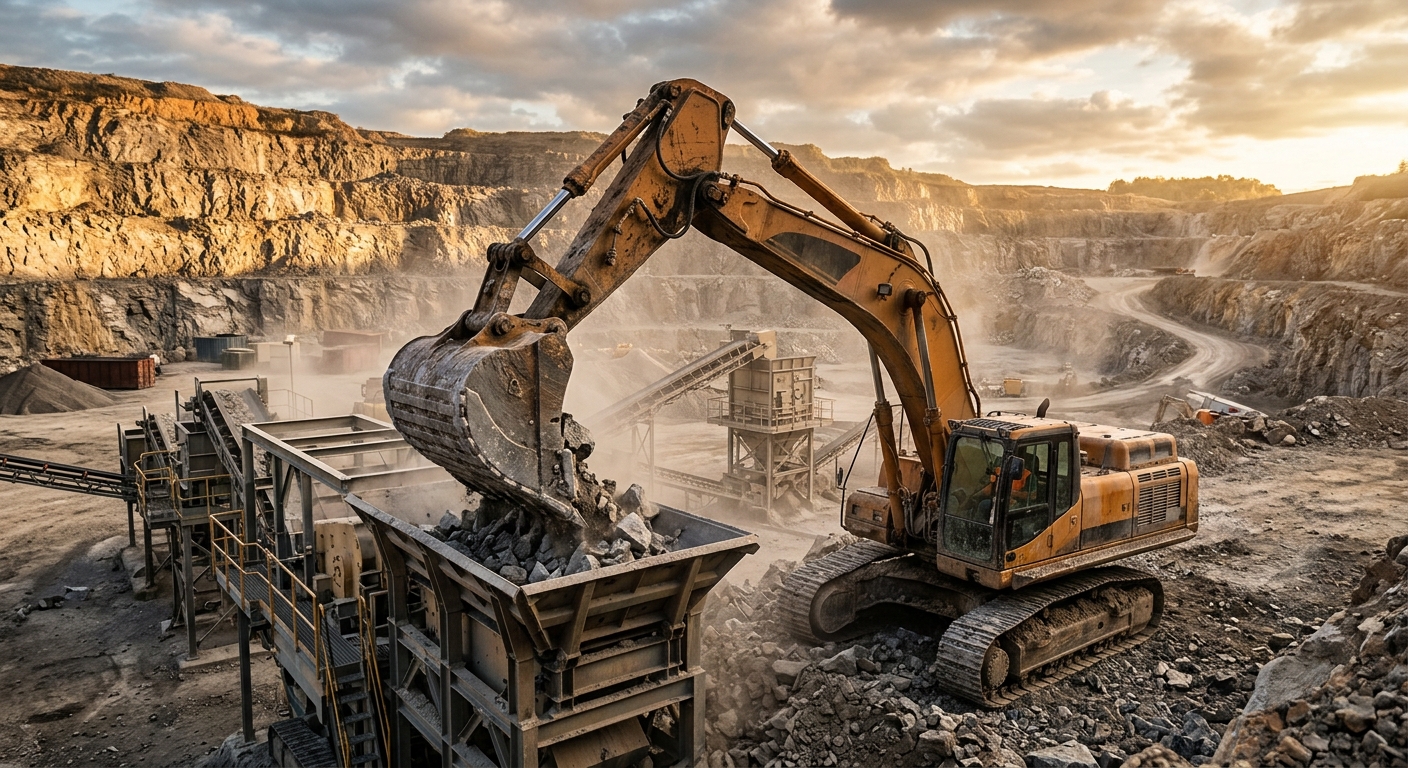
JCB has moved its X-Series crawler excavator line into heavier work with the new 520X, a 50-tonne-class machine aimed at mass excavation, quarrying, demolition, and crusher loading.
The company announced the machine in May and is putting it at the center of its Hillhead 2026 stand. JCB describes the 520X as the largest and most powerful X-Series excavator it has built, sitting above the 370X and 420X in the Heavyline range. According to JCB’s launch release, the machine runs a Cummins X12 engine rated at 298 kW, or about 400 hp, and has an operating weight range of 52 to 57 tonnes depending on build.
That is the basic news. The more useful question is why JCB wants this class badly enough to build a new flagship around it.
FieldFix Editor’s Note: Big excavators are where maintenance records stop being paperwork and start being margin protection. FieldFix helps equipment owners track service, downtime, fault history, and cost per hour across mixed fleets, so a high-hour production machine is managed by numbers instead of memory.
What JCB Is Actually Adding
The 520X is not a small stretch of an existing machine. It takes JCB’s X-Series into a heavier production class where bucket fill, cycle time, hydraulic response, fuel burn, and undercarriage life matter more than brochure comfort.
JCB says the machine can be specified with a 6.9-meter reach boom for general use or a 6.5-meter mass excavation boom for higher-production digging. Buyers can pair those boom choices with several arm lengths. A 2.55-meter or 3.0-meter heavy-duty arm is available with the mass excavation boom, while the 6.9-meter reach boom can be fitted with a 3.0-meter or 3.3-meter arm.
That menu matters. A contractor loading trucks in a quarry does not need the same front end as a demolition contractor reaching into a structure or a civil crew digging deeper utility cuts. The 50-tonne class is large enough that the wrong boom and arm choice can follow the owner for years. The machine may be capable, but it will never quite sit in the right work if the geometry is wrong.
JCB also offers a variable-gauge undercarriage, which gives the machine a wider stance at work and a narrower profile for transport. On a machine that can weigh up to 57 tonnes, that is less of a convenience feature and more of a practical ownership issue. Big excavators need to move between sites, but they still have to feel planted when the bucket is full and the operator is swinging over the side.
The cab is JCB’s CommandPlus setup with the company’s JCB UX operator interface and a 10-inch touchscreen. JCB’s 520X product page also points to reinforced structures, twin-supported top rollers, reinforced idler boxes, keyless start, and updated controls across the X-Series range.
None of that makes the machine a winner by itself. It does show where JCB thinks the buyer is. This is not a rental-yard mini excavator with a simple sell sheet. This is a production tool for owners who will ask about gallons per hour, service access, parts stocking, bucket match, transport permits, and what happens when the machine is down during a crusher feed shift.
Why the 50-Tonne Class Matters
The 50-tonne excavator sits in an awkward but valuable place. It is too big for general small-site work and too small to be a mining shovel. In the right fleet, that is exactly the point.
For quarry and aggregate producers, a machine in this range can load crushers, strip overburden, dig blasted rock, maintain haul roads, and handle heavier site prep work without stepping all the way into the cost and transport burden of a much larger excavator. For demolition contractors, it is a base size that can carry serious tools while still being more flexible than the biggest high-reach and specialty machines. For heavy civil crews, it gives the fleet a bigger digging and loading option without turning every move into a major logistics project.
That middle ground is getting more important. Material producers are trying to squeeze more output from existing pits. Contractors are dealing with tighter schedules and fewer experienced operators. Rental fleets are being asked for heavier iron that can cover more applications. A 50-tonne excavator with the right setup can become the machine that keeps a site moving when smaller excavators spend too much time repositioning and larger machines are too expensive to mobilize.
The downside is simple: this class punishes casual ownership.
A compact excavator can hide sloppy maintenance for a while. A 50-tonne production excavator cannot. Every hour of idling, every track adjustment skipped, every cheap bucket decision, every overdue fluid service, every operator who beats on the undercarriage shows up in the cost per hour. The machine might be productive enough to pay for itself quickly, but only if the owner treats it like a production asset instead of a bigger version of the excavator already in the yard.
That is the real test for the 520X. JCB has built a machine for heavier work. Buyers will judge it on whether it makes money in heavier work.
Hillhead Is the Right Stage
JCB is using Hillhead 2026 as the public stage for the 520X. That makes sense. Hillhead is built around quarrying, construction, and recycling, and JCB’s own event preview says the 520X will sit alongside the 420X, compaction equipment, and the new 9T Dual Drive site dumper.
That pairing says a lot about JCB’s current push. The company is showing a bigger excavator and trying to present a site package for aggregates and heavy construction: larger crawler excavators for digging and loading, compactors for ground work, and dumpers focused on visibility and operator safety.
The 9T Dual Drive dumper is a useful example. JCB says its new dual-drive setup lets the operator rotate the seat and controls to face the direction of travel. The company is pitching that machine around visibility, cab safety, and reduced fatigue, according to JCB’s dumper release. That is a different problem than a 520X solves, but it lands in the same buyer conversation: how do you move more material with fewer incidents and less operator wear?
For contractors, the interesting part is not the trade show display. It is the product logic. JCB is trying to cover the heavier end of the jobsite with machines that talk to the same safety, productivity, and operator-comfort arguments. That matters because fleets rarely buy one category in isolation. A quarry manager looking at a 50-tonne excavator is probably also thinking about compaction, hauling, support machines, and how easy it will be to keep operators in the seats.
The Dealer Question
The 520X gives JCB dealers a heavier machine to sell, but it also raises the support bar.
Selling a backhoe, compact loader, or mid-size excavator is one thing. Supporting a 50-tonne crawler in production work is another. Owners in this class expect field service that understands heavy hydraulics, undercarriage wear, oil sampling, telematics, and attachment matching. They also expect parts availability that matches the cost of downtime.
That is where JCB’s opportunity and risk sit together. The company has name recognition and a broad product line, but in some markets the heavier crawler excavator buyer is used to calling Caterpillar, Komatsu, Volvo, Hitachi, John Deere, Liebherr, or Hyundai before JCB. The 520X has to pull JCB into that conversation and then survive the second round, where the buyer asks what the local dealer can actually support.
Machine specs get the first meeting. Dealer depth wins the second one.
For a contractor considering the 520X, the buying process should be blunt. Ask where major components will come from. Ask how many X-Series machines the dealer has in the field. Ask whether technicians have been trained on the 420X and 520X. Ask which buckets and couplers the dealer recommends for the intended work, not just what happens to be sitting in inventory. Ask how fast they can get undercarriage parts when the machine is earning money every day.
None of those questions are anti-JCB. They are the right questions for any excavator in this class.
What Contractors Should Watch
The 520X is worth watching for three reasons.
First, it tells us JCB is serious about heavier crawler excavators. The company could have stayed in the safer part of the excavator market, where brand loyalty is softer and buyers are less punishing. Instead, it is walking into a class where machines are judged by production numbers, uptime, and support.
Second, it adds pressure in a segment where buyers already have plenty of choices. Another credible 50-tonne option gives contractors and quarry operators more leverage on pricing, warranty terms, support commitments, and attachment packages. Even owners who never buy a 520X may benefit if the machine forces harder competition.
Third, it fits a wider shift toward bigger site packages. Contractors are not just buying iron. They are buying workflows: digging, loading, hauling, compacting, tracking, documenting, and keeping the site safe enough to stay insurable. A flagship excavator now has to live inside that wider system.
The 520X will not be proven by the launch photos. It will be proven after a few thousand hours in rock, mud, demolition debris, and long loading shifts. The machine has the size and spec to earn attention. Now JCB and its dealers have to prove they can keep it earning.
That is the part that matters.