GPS Grade Control Revolution: How Precision Technology is Reshaping Earthmoving
From survey stakes to satellite precision—GPS grade control has transformed earthmoving operations. We examine the technology's impact on productivity.

The transformation of earthmoving operations over the past two decades represents one of the most significant technological shifts in construction history. GPS grade control systems have evolved from experimental curiosities to essential productivity tools, fundamentally changing how contractors approach excavation, grading, and site development work.
Today’s precision technology delivers accuracy measured in millimeters, enabling operations that would have been impossible—or prohibitively expensive—using traditional methods. For fleet operators and contractors, understanding this technology isn’t optional anymore; it’s essential to remaining competitive.
The Evolution of Machine Guidance
To appreciate where we are today, it helps to understand where we’ve come from.
The Traditional Approach
For most of the 20th century, grading operations relied on survey stakes and the skilled eye of experienced operators. A survey crew would establish grade markers across a job site, and operators would cut or fill material to match those references. This approach had obvious limitations:
- Survey crews needed to stay ahead of equipment, creating scheduling dependencies
- Stakes were frequently destroyed during operations, requiring re-surveys
- Accuracy depended heavily on operator skill and experience
- Complex designs required extensive staking and constant checking
- Night operations were extremely difficult
First Generation GPS Systems
The introduction of GPS-based machine guidance in the 1990s began addressing these limitations. Early systems used GPS receivers to display the equipment’s position relative to design surfaces, giving operators visual guidance without eliminating traditional survey methods entirely.
These systems were expensive, somewhat unreliable, and required significant operator training. But early adopters who persevered began seeing productivity gains of 25-40% on suitable projects.
Modern Integrated Systems
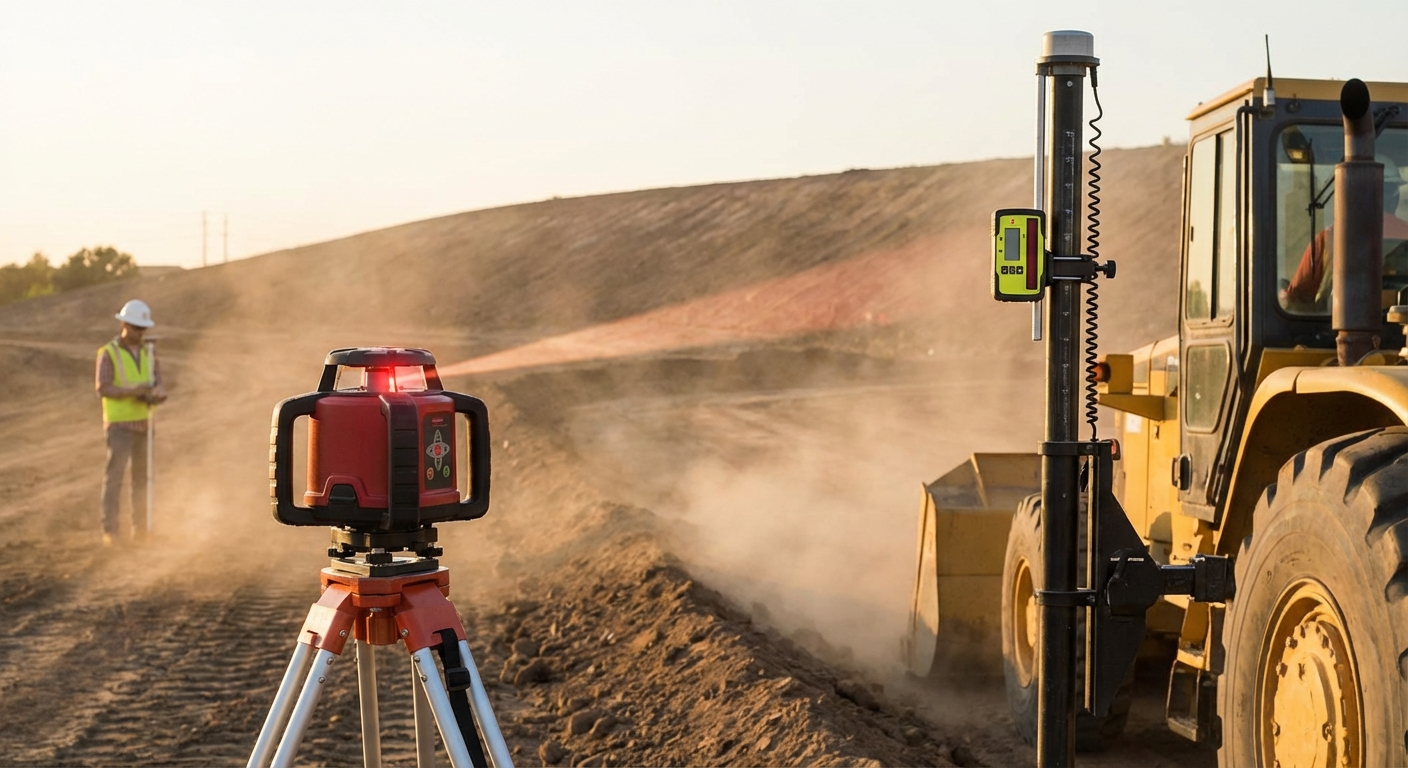
Today’s grade control systems bear little resemblance to those early offerings. Modern platforms integrate multiple positioning technologies:
GNSS (Global Navigation Satellite Systems) now include not just US GPS but also Russian GLONASS, European Galileo, and Chinese BeiDou constellations. Access to multiple satellite networks dramatically improves position accuracy and availability.
RTK (Real-Time Kinematic) correction enables centimeter-level accuracy by using local base stations or correction services to eliminate atmospheric and orbital errors.
IMU (Inertial Measurement Unit) sensors track machine orientation and movement, maintaining guidance during brief satellite signal interruptions and enabling accurate boom and bucket positioning.
3D design integration allows complex surfaces, alignments, and specifications to be loaded directly into the machine control system.
The Business Case for Grade Control
Investment in grade control technology requires significant capital—a fully equipped excavator or dozer can carry $30,000-$80,000 in guidance systems. But for the right applications, the returns justify the investment handily.
Productivity Improvements
Contractors consistently report productivity gains of 30-50% on earthmoving operations using grade control. These gains come from several sources:
Elimination of staking delays. Equipment can work continuously without waiting for survey crews to establish new grade references.
Reduced over-excavation. Operators working to visual displays cut much closer to design grades, reducing excess material movement.
Faster operator ramp-up. Less experienced operators can achieve acceptable productivity levels more quickly when guided by grade control displays.
Extended productive hours. Night operations become feasible, effectively extending the available work day during critical project phases.
Material Savings
Precision grading reduces material waste significantly. On projects involving imported fill or exported spoils, tighter grade tolerances translate directly to reduced trucking costs.
Consider a commercial site development project with 100,000 cubic yards of cut/fill. Traditional grading methods might result in 5-10% over-excavation; grade control can reduce this to 1-2%. At $8-12 per cubic yard for material movement, the savings are substantial.
Quality Improvements
Grade control produces more consistent results than manual methods. Final surfaces are smoother, tolerances are tighter, and rework is reduced. For projects with stringent specifications—airport runways, industrial floor slabs, sports facilities—grade control may be the only practical way to achieve required quality levels.
Current Technology Leaders
The grade control market has consolidated around several major players, each offering comprehensive solutions:
Trimble
Trimble’s Earthworks platform has become something of an industry standard, with broad equipment compatibility and deep integration with their construction management software ecosystem. Their acquisition of various component suppliers has allowed tight hardware-software integration.
Topcon
Topcon’s 3D-MC² system competes directly with Trimble, offering similar capabilities with particular strength in road construction applications. Their machine control solutions integrate well with their surveying equipment.
Leica Geosystems
Leica’s iCON grade systems leverage the company’s expertise in precision measurement. Their solutions are particularly strong in applications requiring the highest accuracy levels.
OEM Integrated Systems
Major equipment manufacturers including Caterpillar, John Deere, and Komatsu now offer factory-integrated grade control options. These systems typically partner with one of the technology providers while offering advantages in integration, support, and warranty coverage.
Implementation Considerations
For contractors considering grade control investment, several factors should guide the decision:
Project Portfolio Analysis
Grade control delivers the best returns on projects with complex grading requirements, tight tolerances, or large earthwork volumes. Simple residential pad grading may not justify the investment, while mass excavation or road building projects almost certainly will.
Equipment Fleet Assessment
Retrofit systems can be installed on virtually any equipment, but factory integration offers advantages in reliability and support. Contractors planning new equipment purchases should carefully evaluate integrated grade control options.
Training Requirements
Successful grade control implementation requires operator training—typically 2-4 days for basic proficiency, with ongoing skill development afterward. Underinvesting in training is the most common cause of disappointing grade control results.
Support Infrastructure
Grade control systems require ongoing support including software updates, calibration, and troubleshooting. Contractors should evaluate the availability of qualified technical support in their operating area before committing to a particular technology platform.
Integration with Fleet Operations
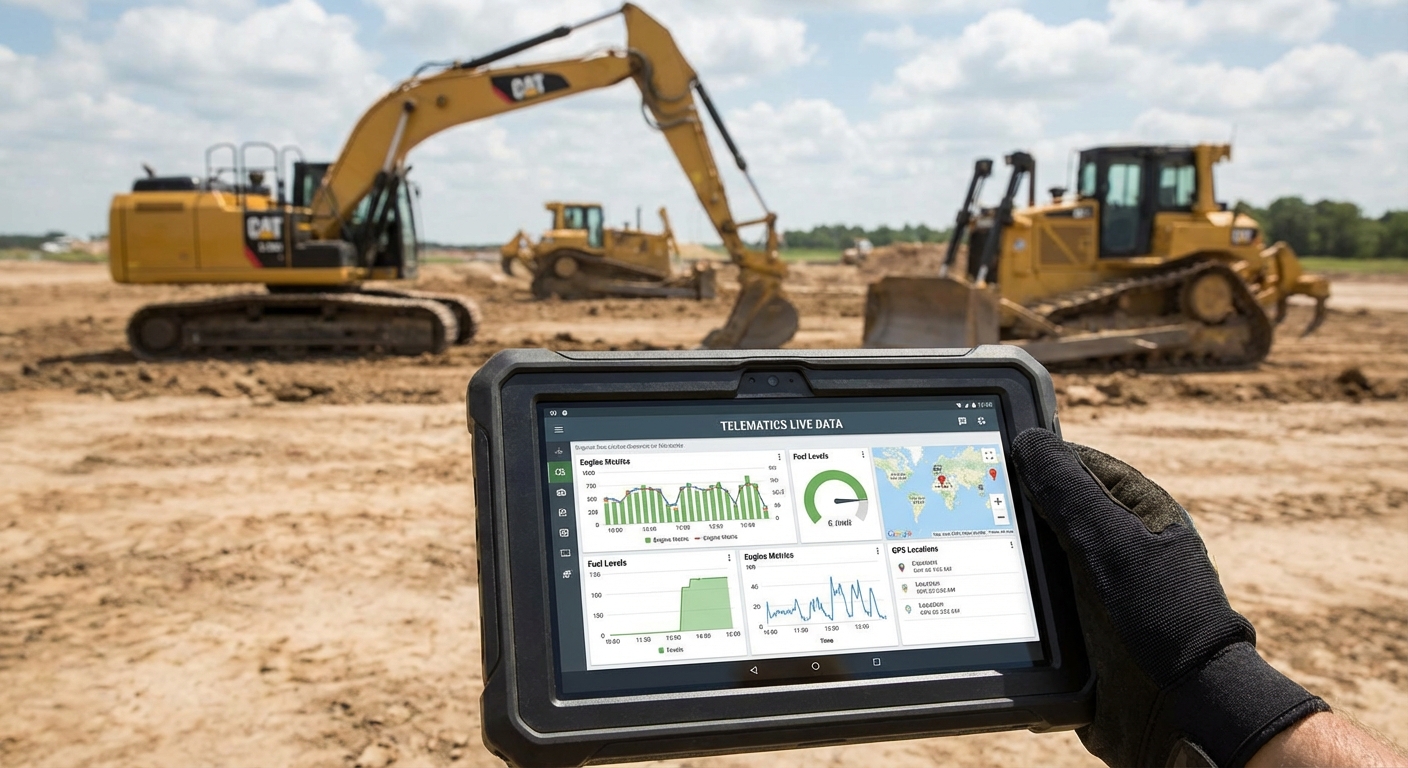
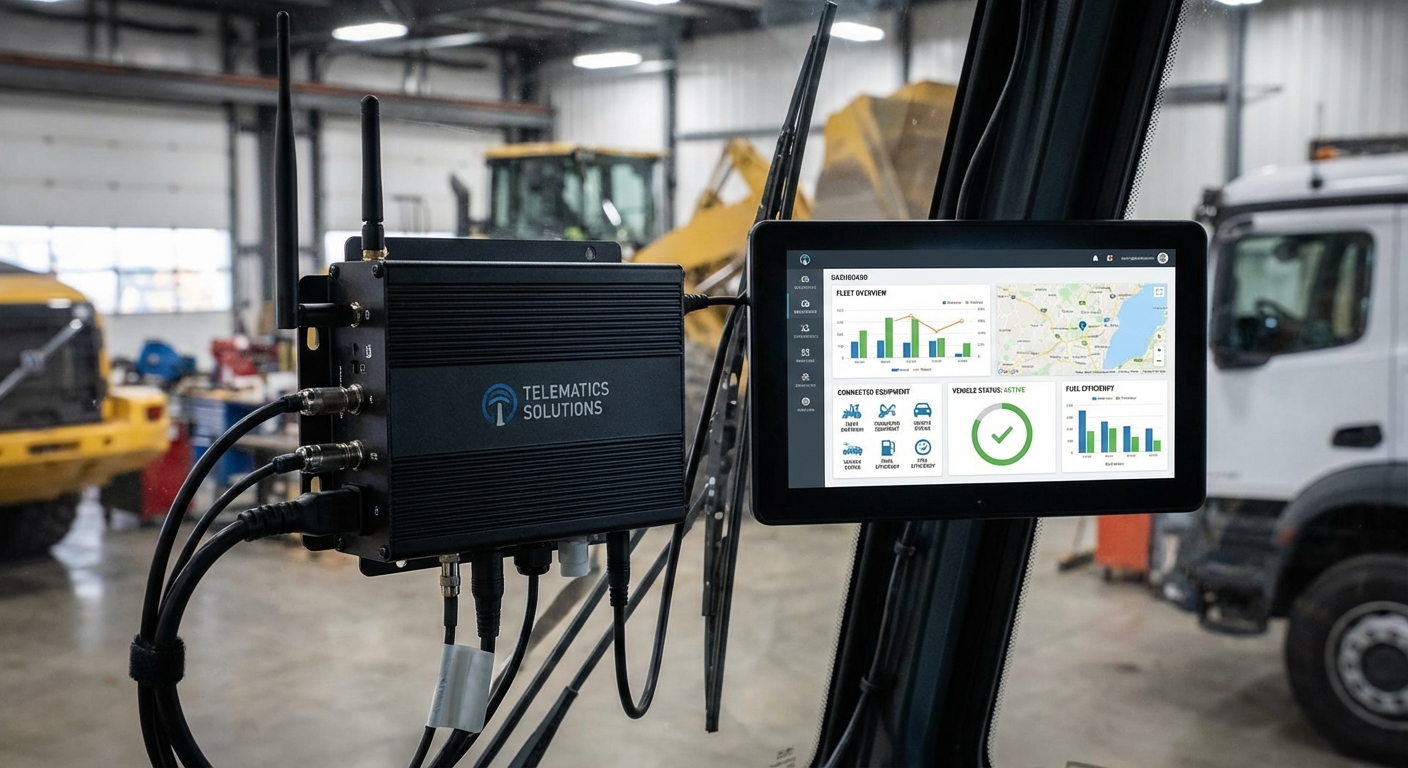
Grade control technology doesn’t exist in isolation. Modern implementations integrate with broader fleet management and telematics systems, enabling centralized monitoring of equipment position, productivity, and system health.
This integration allows office-based personnel to monitor grading progress in real time, compare actual production against targets, and identify issues before they become problems. Some contractors have implemented “digital construction” workflows where design changes flow directly from engineering to machine control systems, eliminating paper-based communication entirely.
Looking Forward
Grade control technology continues to evolve. Several trends will shape the coming years:
Fully Automatic Grading
While current systems provide guidance to human operators, fully automatic grading systems that control equipment without operator input are now in advanced development. Initial applications will likely focus on specific tasks like finish grading, with broader autonomy following as technology matures.
Improved Accessibility
Technology costs continue to decline while capability improves. Systems that once required five-figure investments are becoming available at price points accessible to smaller contractors.
Enhanced Integration
Expect tighter integration between grade control, fleet management, and project management systems. The trend toward unified construction technology platforms will continue.
AI-Enhanced Operation
Machine learning algorithms are beginning to optimize grading operations in real time, adjusting cut depths and pass patterns based on material conditions and equipment capabilities.
Conclusion
GPS grade control has moved from competitive advantage to competitive necessity for earthmoving contractors. The technology delivers clear, measurable returns through improved productivity, reduced material waste, and enhanced quality.
Contractors who haven’t yet adopted grade control should carefully evaluate their operations for suitable applications. Those already using the technology should ensure they’re maximizing its potential through proper training, maintenance, and integration with broader fleet operations.
The precision revolution in earthmoving isn’t coming—it’s here. The question for contractors is whether they’ll lead or follow.
For more on construction technology trends, see our coverage of autonomous equipment developments and fleet management software.