Turner Construction Launches First Equipment Company: America's Largest Contractor Enters the Equipment Rental Market
The nation's top contractor by revenue is rolling out an equipment rental and site services company to support 40,000 trade partners—and any other contractor who wants to rent from them.
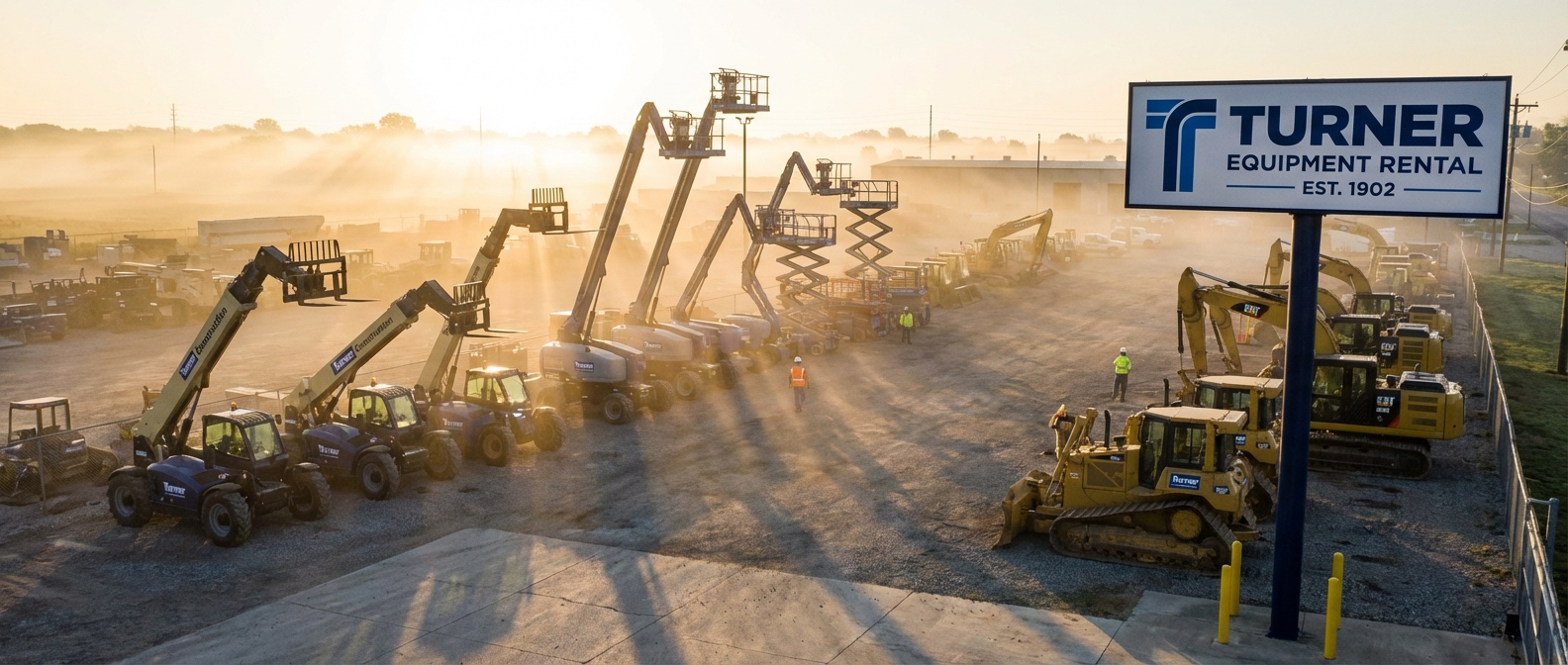
Turner Construction, the largest contractor in the United States by revenue, has launched First Equipment Company (FEC), an equipment rental and site services firm that will serve not just Turner’s own projects but any contractor in the country looking to rent equipment.
The January 2026 announcement marks a significant escalation in Turner’s vertical integration strategy and signals a potential shakeup in the equipment rental market. For years, First Equipment operated quietly as an internal equipment supplier for Turner projects. Now, the New York City-based construction giant is opening those services to its network of over 40,000 trade contractor partners—and to competitors.
“By supporting the contractors working on our projects with a consistent, streamlined equipment experience, we help improve productivity in the field—benefiting our project teams and, ultimately, our clients,” said Shannon Hines, senior vice president for Turner.
Editor’s Note: Mixed Fleet Visibility Matters
As rental fleets grow and equipment sources multiply, contractors need unified visibility across owned and rented machines. FieldFix provides GPS tracking and maintenance management for mixed fleets—track where that rented telehandler actually is, monitor utilization to avoid overpaying for equipment that sits idle, and keep maintenance records that protect you when returning rentals. Works across all brands and rental sources.
What First Equipment Company Offers
FEC isn’t just a rental house. The company positions itself as a centralized equipment and site services provider designed to simplify the logistics nightmare that large construction projects inevitably become. Their offerings span:
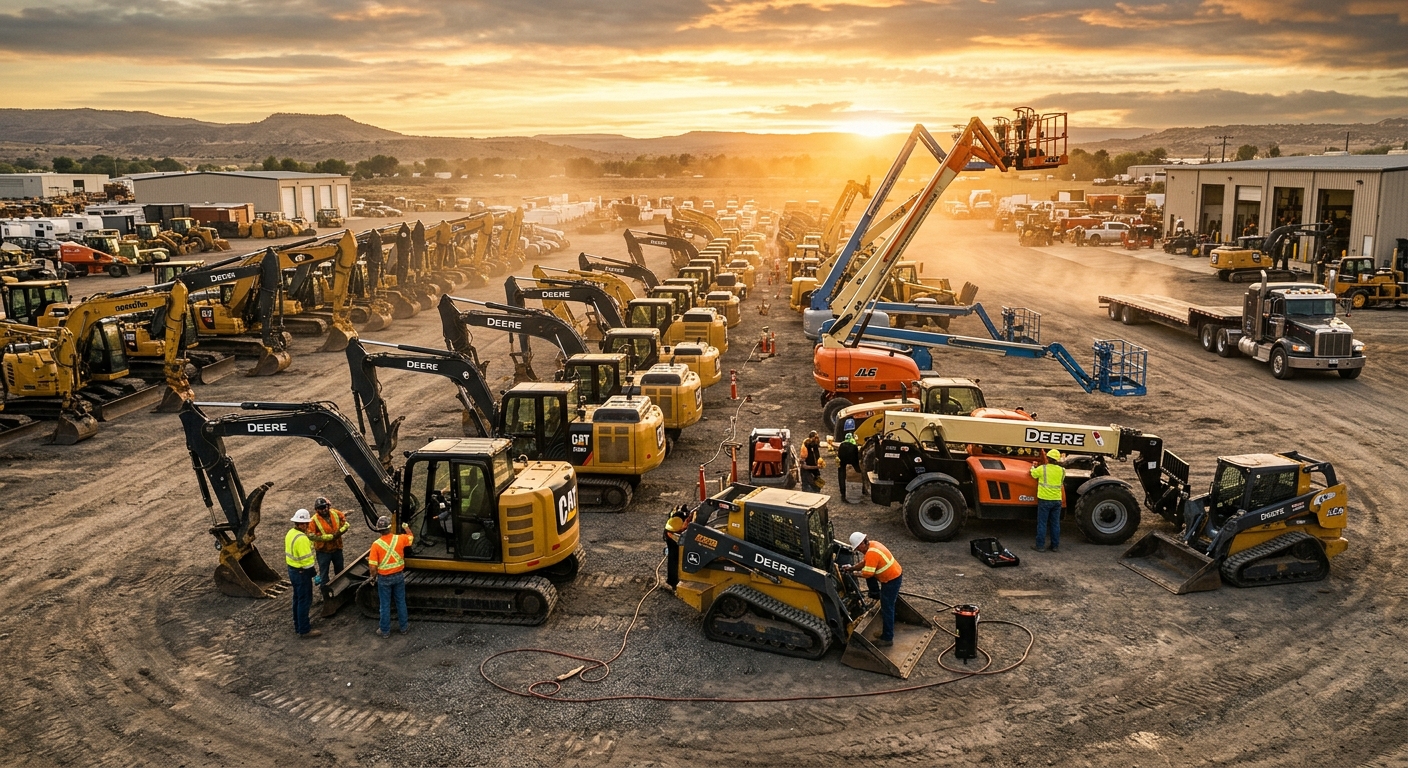
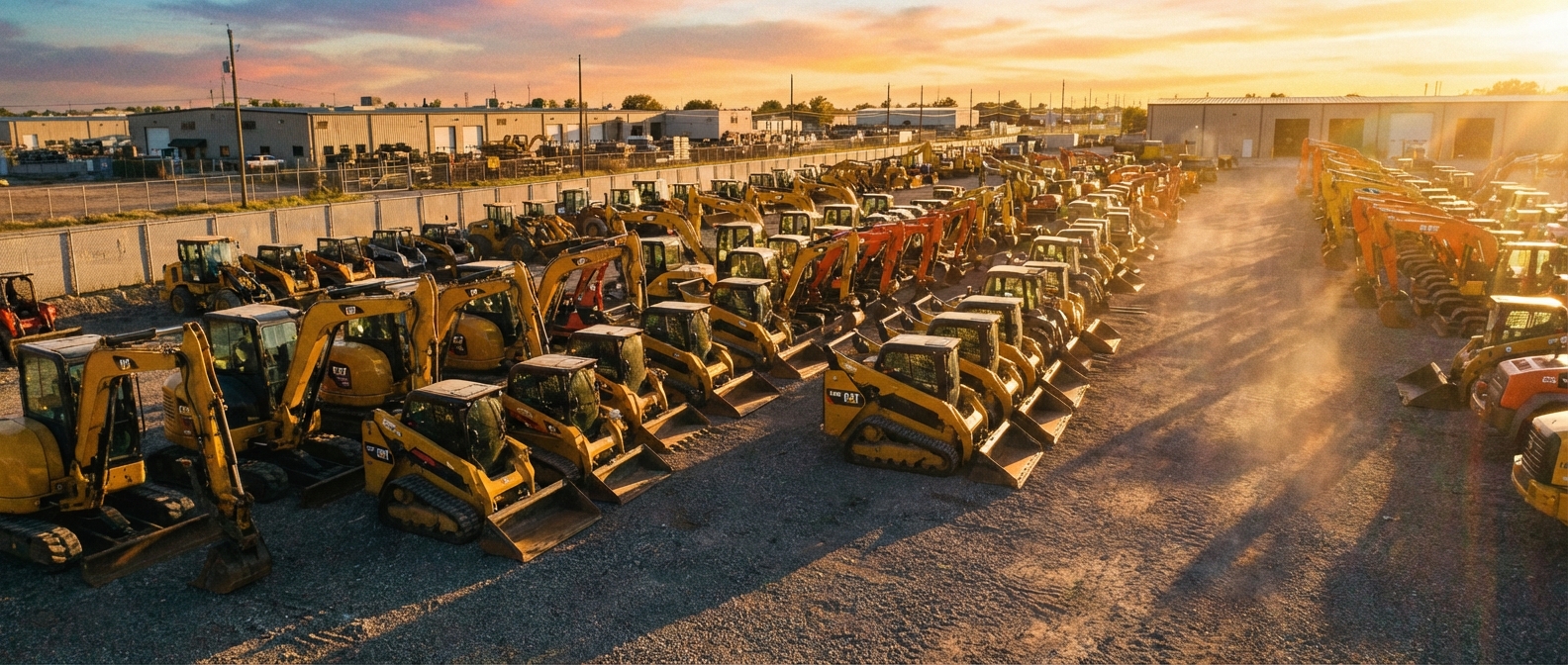
Heavy Machinery and Operating Equipment — The core rental fleet including telehandlers, aerial lifts, material handlers, and the heavy iron that drives major construction projects.
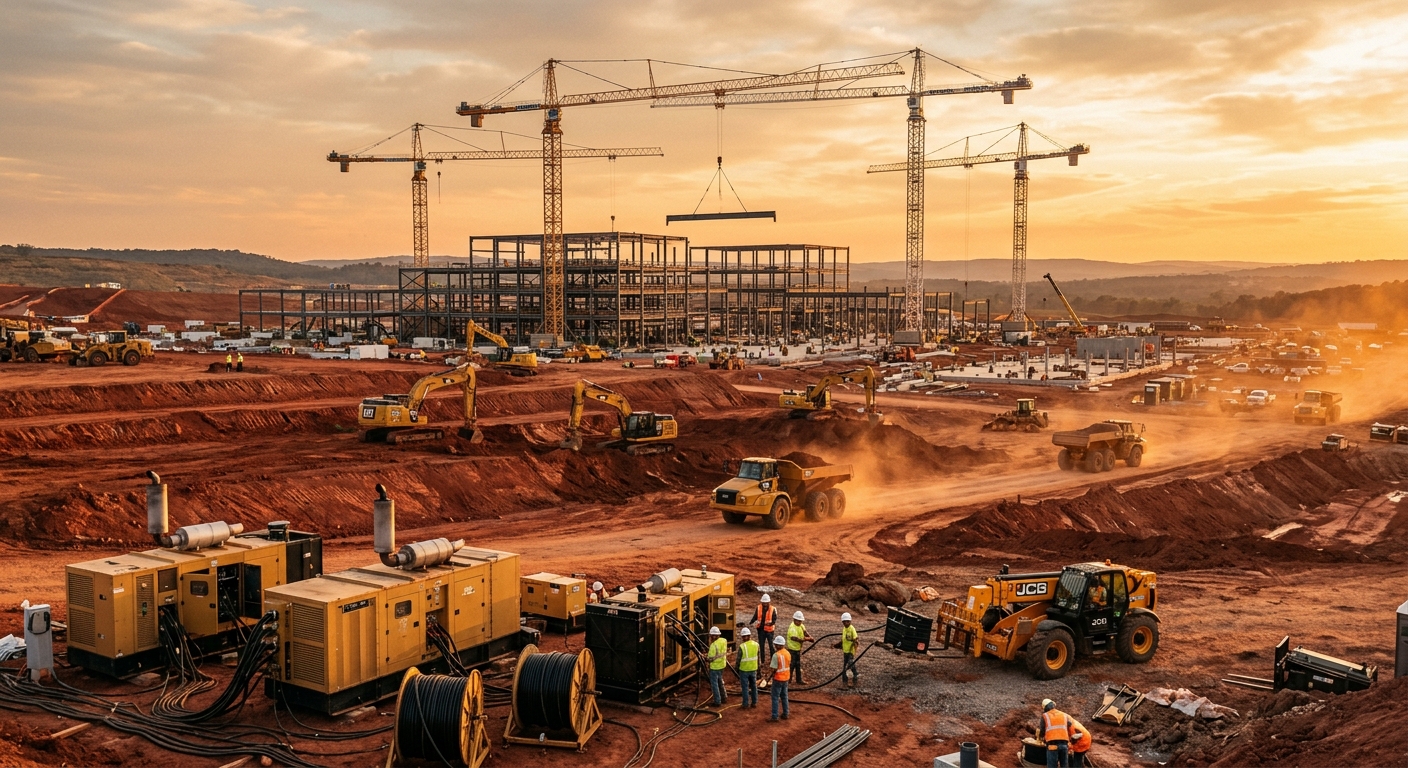
Temporary Power — Generators, distribution panels, and electrical infrastructure for sites that need power before permanent systems come online.
Lighting — Temporary work lighting for extended shifts and interior spaces under construction.
Office and Restroom Trailers — Job site facilities including mobile offices, break rooms, and sanitation facilities.
Fencing and Site Controls — Security fencing, access control, and site protection equipment.
The integrated model is the real differentiator. Rather than coordinating multiple vendors for equipment, power, lighting, and facilities, contractors working with FEC can source everything from a single provider with a unified service team.
Tested on Data Centers
First Equipment Company didn’t launch untested. Turner has been using FEC internally for years, refining the model on some of the company’s most demanding projects—particularly the large-scale data center work that has become a significant portion of Turner’s portfolio.
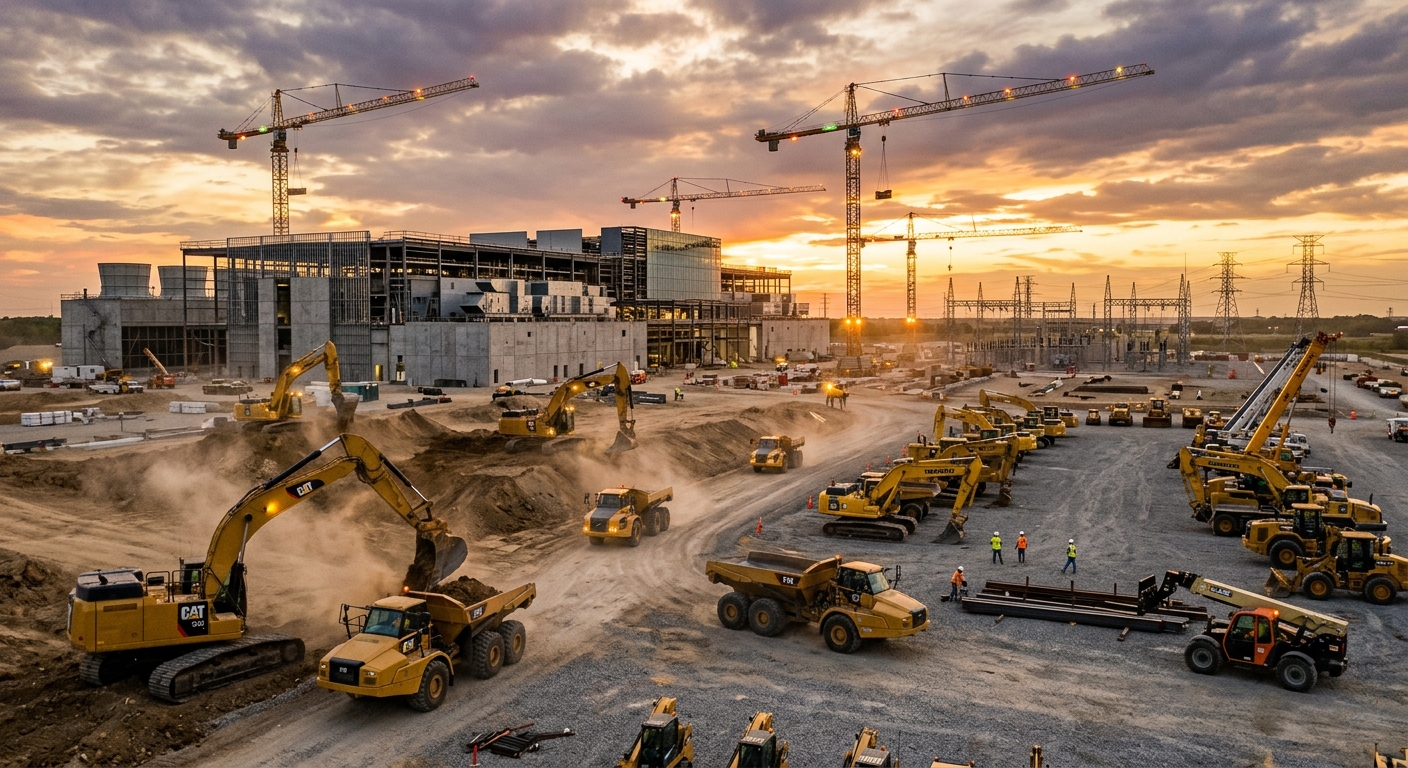
Data center construction presents unique equipment challenges. These projects require massive amounts of temporary power to test electrical systems, specialized material handling equipment for the heavy servers and cooling infrastructure, and around-the-clock operations that demand reliable site services. The controlled chaos of a data center build became the proving ground for FEC’s integrated approach.
The results, according to Turner, demonstrated clear productivity benefits from having equipment and site services coordinated under a single provider. Equipment showed up when needed, power was available when required, and the logistics headaches that plague projects with multiple vendors were significantly reduced.
Turner’s Vertical Integration Play
The launch of First Equipment Company fits into a broader pattern of Turner bringing more project delivery functions in-house. Over the past several years, Turner has:
Launched xPL Offsite — An offsite manufacturing firm that produces building components in controlled factory settings for installation on Turner projects. Offsite construction reduces waste, improves quality control, and can significantly compress project timelines.
Created SourceBlue — A supply chain management brand that handles procurement, logistics, and material management for Turner projects. SourceBlue leverages Turner’s massive buying power and project volume to secure better pricing and more reliable delivery.
Established Turner Engineering Group — An internal architecture and engineering arm that allows Turner to handle design-build projects without external A&E partnerships.
Partnered with OpenAI — In late 2025, Turner entered a partnership with OpenAI to deploy ChatGPT Enterprise across its workforce, betting heavily on AI to improve productivity and decision-making.
Each of these moves represents Turner capturing value that would otherwise flow to external vendors and consultants. First Equipment Company is the latest—and perhaps most significant—piece of that strategy.
What This Means for the Rental Market
Turner’s entry into equipment rental as a service provider to external contractors raises important questions for the established rental houses.
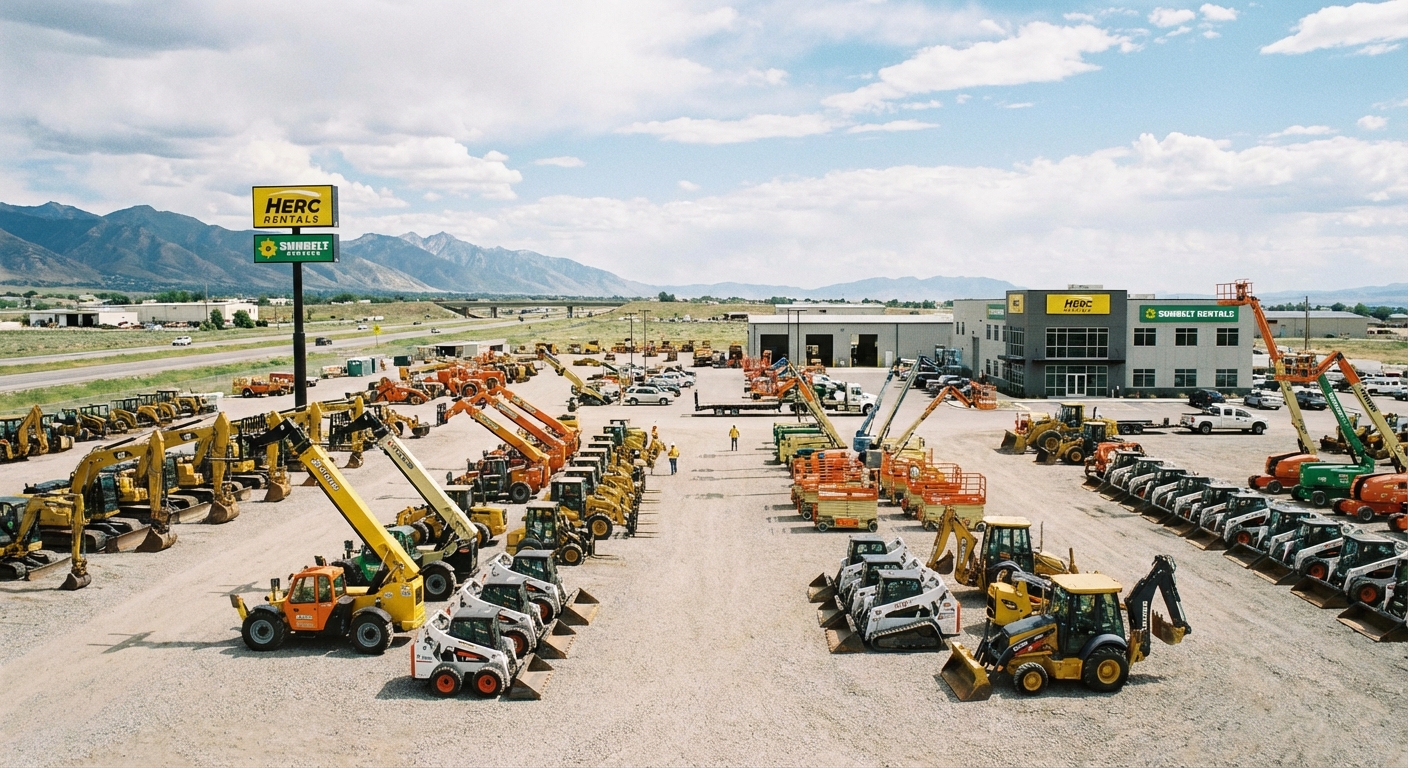
The major national rental companies—United Rentals, Sunbelt Rentals, Herc Holdings, and others—have built massive fleets and logistics networks to serve the construction industry. They’ve invested billions in equipment, technology, and service infrastructure. Turner is entering their market with a different playbook.
FEC’s advantage isn’t necessarily scale or fleet diversity. It’s integration with the contractor workflow. When a subcontractor is already working on a Turner project, getting equipment from FEC creates a seamless experience. The equipment shows up coordinated with the project schedule, maintenance is handled, and billing flows through established relationships.
For Turner’s 40,000+ trade partners, FEC becomes a natural choice. They’re already working with Turner, they trust Turner, and FEC eliminates the friction of managing another vendor relationship.
The question is how far beyond Turner’s orbit FEC can extend. Will contractors who don’t work on Turner projects rent from FEC? Will the integrated services model translate to smaller projects and independent contractors?
The Subcontractor Perspective
For subcontractors and trade contractors, Turner’s move is potentially good news regardless of whether they rent from FEC.
More competition in the rental market generally means better pricing and service. If FEC succeeds in offering a more integrated experience, established rental companies will be forced to respond. That could mean better technology platforms, improved service, or more flexible pricing.
Additionally, the validation of rental as a strategic function—not just a cost center—could benefit subcontractors who’ve long argued for better equipment support on major projects. Turner is essentially saying that getting the right equipment in the right place at the right time is important enough to bring in-house rather than outsource.
The Bigger Picture
Turner Construction generating over $18 billion in annual revenue and consistently ranking as America’s largest contractor by that metric. When a company of that scale makes a strategic move into equipment rental, the industry pays attention.
The launch of First Equipment Company suggests that Turner sees equipment and site services as a meaningful margin opportunity—not just a cost to be minimized. It suggests that the company believes integration and coordination deliver value that separate vendors cannot match. And it suggests that vertical integration in construction may be accelerating.
For equipment operators, rental companies, and contractors of all sizes, Turner’s move is worth watching. The construction industry’s biggest player is betting that controlling more of the project delivery stack creates competitive advantage.
If they’re right, others will follow.
Key Takeaways
- First Equipment Company is now open to contractors nationwide, not just Turner projects
- Services include equipment rental, temporary power, lighting, trailers, fencing, and site services
- Tested on data centers where integrated services proved valuable
- Part of Turner’s vertical integration alongside offsite manufacturing, supply chain management, and engineering
- 40,000+ trade partners now have access to FEC as a rental option
- Competition in rental market could benefit contractors through better pricing and service