The Real Cost of 50% Steel Tariffs: What Equipment Buyers Are Paying in 2026
Section 232 tariffs doubled to 50% last summer. Six months later, the damage is showing up on every dealer invoice in the country.
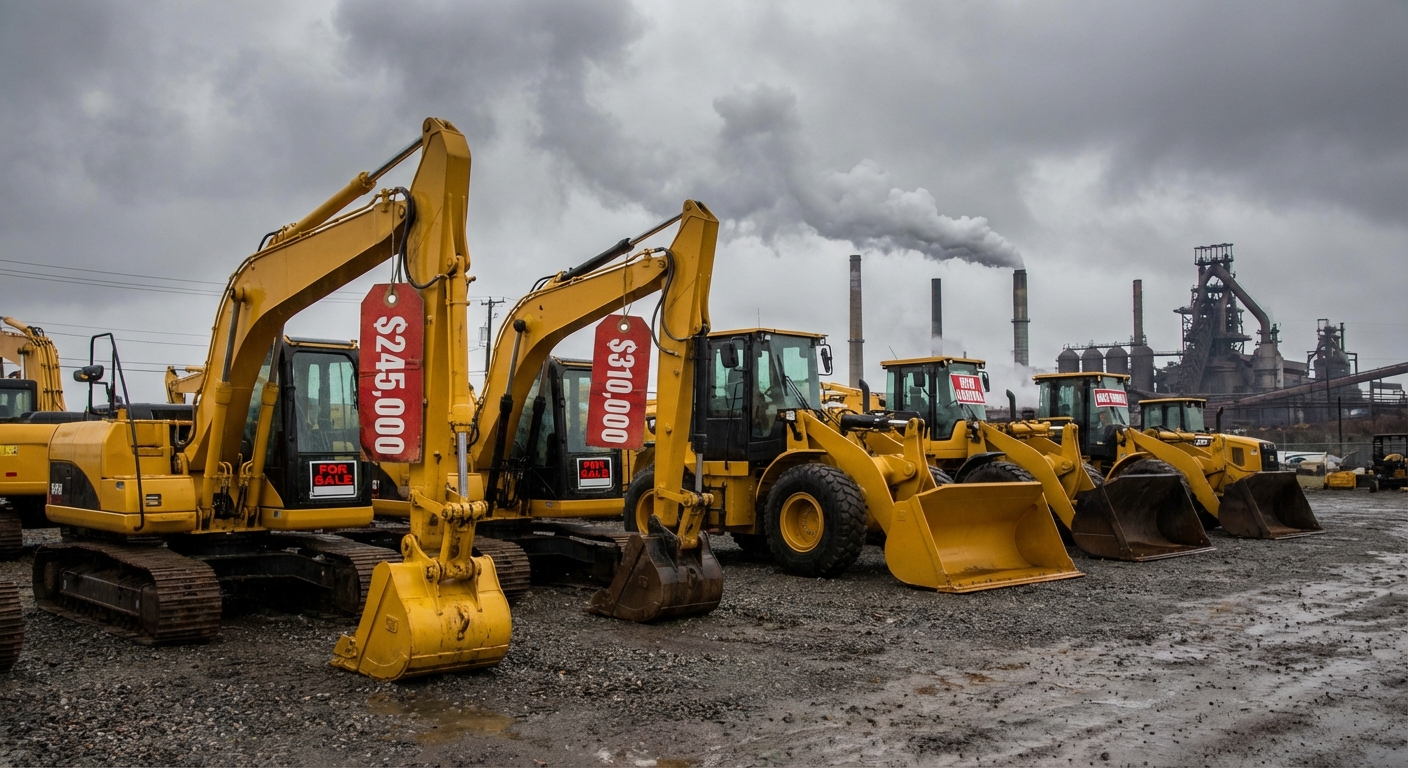
If you’ve priced a new machine in the last six months, you already know something is wrong. That Deere 350 P-Tier you spec’d out in January 2025? It costs more now. A lot more. And you can’t blame supply chain disruptions this time. This one’s pure policy.
In the summer of 2025, the U.S. expanded Section 232 tariffs on steel and aluminum imports to 50% — double what they were before. The rationale was protecting domestic production. The result, for anyone buying heavy equipment, is a price environment that’s getting harder to navigate by the quarter.
FieldFix Editor’s Note: When iron costs more, tracking every dollar you spend on it matters even more. FieldFix helps contractors and fleet managers log maintenance, fuel, and repair costs across their entire fleet — so you know exactly what each machine is costing you.
What Section 232 Actually Did
Let’s back up. Section 232 tariffs aren’t new. They’ve been around since 2018, originally set at 25% on steel and 10% on aluminum. The idea was to boost domestic steel production by making imports more expensive.
In summer 2025, those rates jumped to 50% across the board. The tariffs apply not just to raw steel and aluminum, but to the metal content in derivative products — meaning components, assemblies, and in many cases, finished machines that contain imported steel.
For construction equipment, this is a big deal. An excavator is mostly steel. A wheel loader is mostly steel. Attachments, buckets, booms, frames — steel, steel, steel. Even machines assembled in the U.S. use imported steel and imported components, which means the tariff reaches into domestic manufacturing too.
The Supreme Court Ruling Changed Less Than You Think
In February 2026, the Supreme Court struck down tariffs that had been imposed under the International Emergency Economic Powers Act (IEEPA). If you saw the headlines and thought the tariff problem was over, you weren’t alone. A lot of people did.
But here’s the thing: Section 232 tariffs and IEEPA tariffs are different legal instruments. The court ruled that the president overstepped authority under IEEPA. It said nothing about Section 232, which operates under the Trade Expansion Act of 1962. Those 50% steel and aluminum duties? Still in effect. Still hitting every piece of iron that crosses a border or contains imported metal.
After the ruling, the administration pivoted to a new 15% levy on all imported goods under Section 122 of the Trade Act of 1974. That tariff doesn’t stack on top of Section 232 — it applies to goods not already covered by other duties. But the net effect is a trade environment where virtually everything coming into the country costs more.
The Numbers Are Ugly
Off-Highway Research estimated that U.S.-based equipment buyers could face prices 27% higher than they were before the expanded tariffs took effect. For imported machines — think Kubota compact excavators assembled in Japan, or Volvo articulated haulers from Sweden — the number is closer to 45%.
The OEMs are bleeding too, and they’re not absorbing the hit quietly:
Caterpillar warned investors that tariffs would cost the company roughly $2.6 billion in 2026. That’s not a rounding error. It was cited as a major driver behind a 9% drop in operating profit, and the company has been raising prices across its product lines to compensate.
Deere & Company projects a $1.2 billion pre-tax tariff impact for fiscal year 2026. Deere has said it expects to stay “price/cost neutral” for the full year, which is corporate-speak for “we’re passing the cost to you.” Price increases and production planning adjustments are doing the heavy lifting.
Kubota is in a particularly tough spot. The company expects tariffs to cost 80 to 90 billion yen (roughly $530-600 million) in 2026. Kubota raised North American prices in September 2025 to cover about half that number, and more increases are expected. The company is also getting creative with its supply chain — shipping tire assemblies in parts from multiple countries rather than receiving completed units from a single source, just to reduce tariff exposure.
Who Gets Hurt the Most
Not everyone feels this equally. If you’re running a fleet of Cat or Deere machines built in U.S. plants, you’re still exposed through the steel content in those machines and their components, but you’re in better shape than someone buying imported equipment.
Small and mid-size contractors get the worst of it. They don’t have the purchasing power to negotiate volume discounts. They can’t stockpile inventory ahead of price increases. They can’t absorb a 15-25% jump in machine costs without it hitting their margins or their ability to bid competitively.
Rental companies are in a strange middle ground. On one hand, higher equipment costs mean their existing fleets are worth more — replacement costs are up, so asset values hold better. On the other hand, buying new iron to expand or refresh a fleet just got a lot more expensive. The American Rental Association projects 2.9% rental revenue growth in 2026, down from 3.9% in 2025. That slowdown isn’t all tariff-related, but the rising cost of fleet acquisition is part of the picture.
Used equipment is the obvious beneficiary. If a new compact track loader costs 20% more than it did 18 months ago, a three-year-old machine with 2,000 hours on it suddenly looks a lot more attractive. Rental companies are increasingly buying used iron for exactly this reason — the upfront cost is lower, and the machines are field-tested.
What the OEMs Are Actually Doing
Beyond price increases, the big manufacturers are pulling every lever they can find:
Supply chain rerouting. Kubota’s tire assembly trick is just one example. OEMs across the industry are looking at where their components come from and whether they can shift sourcing to reduce tariff exposure. This takes time — you can’t move a casting supplier overnight — but it’s happening.
Production planning. Deere has been explicit about using production scheduling to manage costs. That means building what they can sell quickly, reducing inventory carrying costs, and timing production runs to align with material availability.
Cost cutting. Every OEM on every earnings call in the last two quarters has mentioned “operational efficiency” in the context of tariff mitigation. Some of that is real. Some of it is layoffs dressed up in business language.
Stockpiling (while it lasted). Several manufacturers front-loaded inventory in the months before the expanded tariffs took effect. That buffer is running out. As stockpiled materials get used up, the full cost of 50% tariffs will hit production costs — and retail prices — even harder.
The Rental Pivot
One of the clearest downstream effects of higher equipment costs is the continued growth of rental. Contractors who might have bought a machine three years ago are renting instead, because the math has changed.
The global construction equipment rental market is projected to hit $159.4 billion in 2026, up from $151.6 billion in 2025. That growth is driven by more than just tariffs — infrastructure spending, the shift toward asset-light business models, and the convenience of not maintaining your own fleet all play a role. But the tariff-driven price increases are pushing more buyers into rental who wouldn’t have considered it before.
For fleet owners who do buy, the calculus is shifting toward longer hold periods. If it costs 20-25% more to replace a machine, you keep the old one running longer. That means more maintenance spending, more parts demand, and more pressure on service departments that are already short-staffed.
What Happens Next
Nobody knows. That’s the honest answer. The legal landscape around tariffs has been shifting every few months. The Supreme Court struck down one set of tariffs in February; the administration imposed new ones the same month. Section 232 could be modified, expanded, or challenged in court. A new trade deal with any major steel-producing country could change the picture overnight.
What we do know is this: the 50% Section 232 tariffs on steel and aluminum are the law right now, and they’re not going away on their own. Equipment prices are higher, and they’re going to stay higher for as long as these duties remain in place.
If you’re buying iron this year, budget accordingly. If you’re bidding jobs, build the higher equipment costs into your numbers. And if you’re managing a fleet, track what you’re spending — because in an environment like this, the contractors who know their numbers are the ones who survive it.
The tariff tax is real. Plan for it.