The Tariff Tax on Dirt: What 50% Steel Duties Actually Cost You Per Hour
Steel tariffs hit 50% this year. We ran the numbers on what that means for the machines you buy, the parts you replace, and the bids you submit.
You probably didn’t wake up this morning thinking about tariff policy. You were thinking about your next job, your parts order, or whether your operator is going to show up sober. But tariffs are reaching into your pocket whether you’re paying attention or not — and in 2026, they’re reaching deeper than ever.
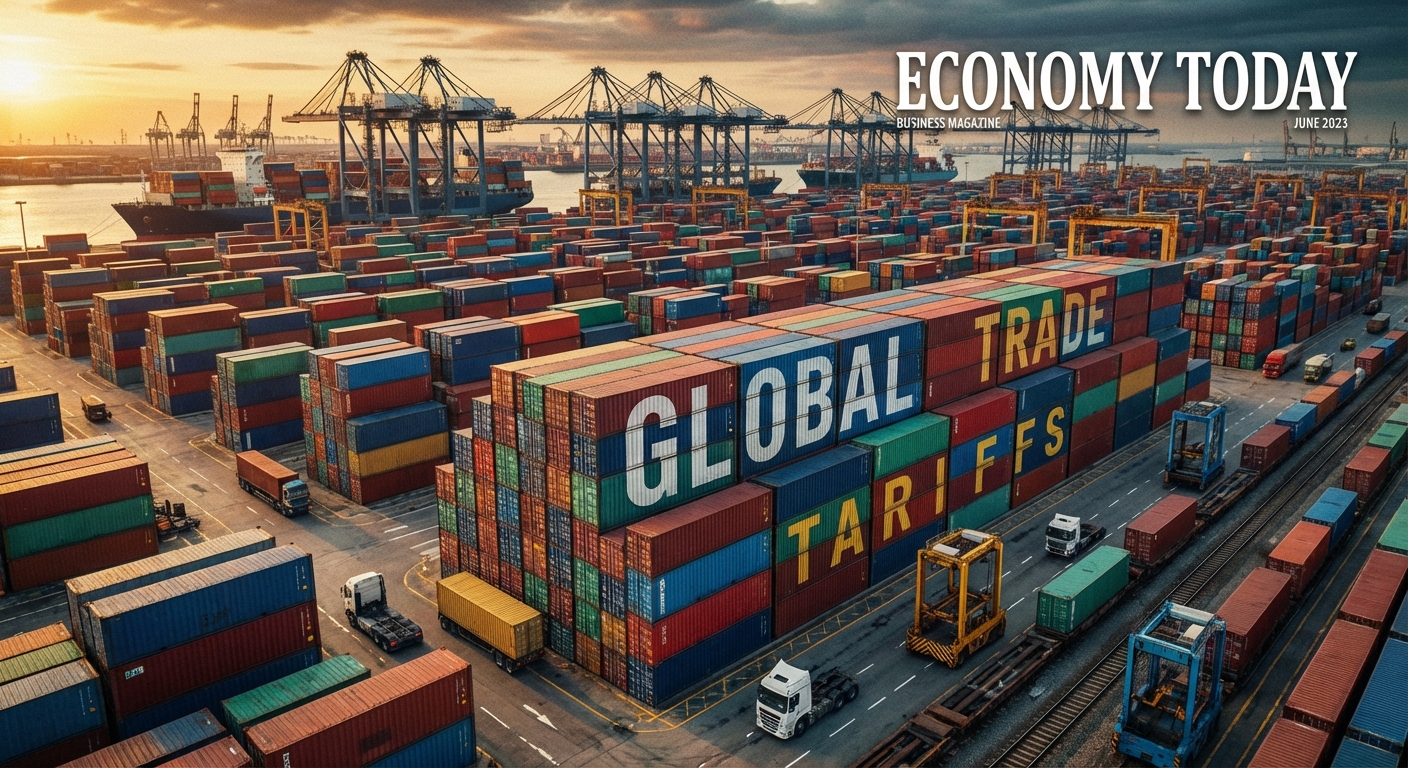
The United States now has a 50% tariff on all imported steel and aluminum. That’s not a typo. Fifty percent. On top of that, reciprocal tariffs ranging from 15% to 40% cover imports from most countries, with a 10% universal baseline for everyone else (except Canada and Mexico, which have their own special arrangement).
For anyone who buys, runs, or maintains heavy equipment, this is the single biggest cost driver nobody’s talking about honestly.
Where the steel goes
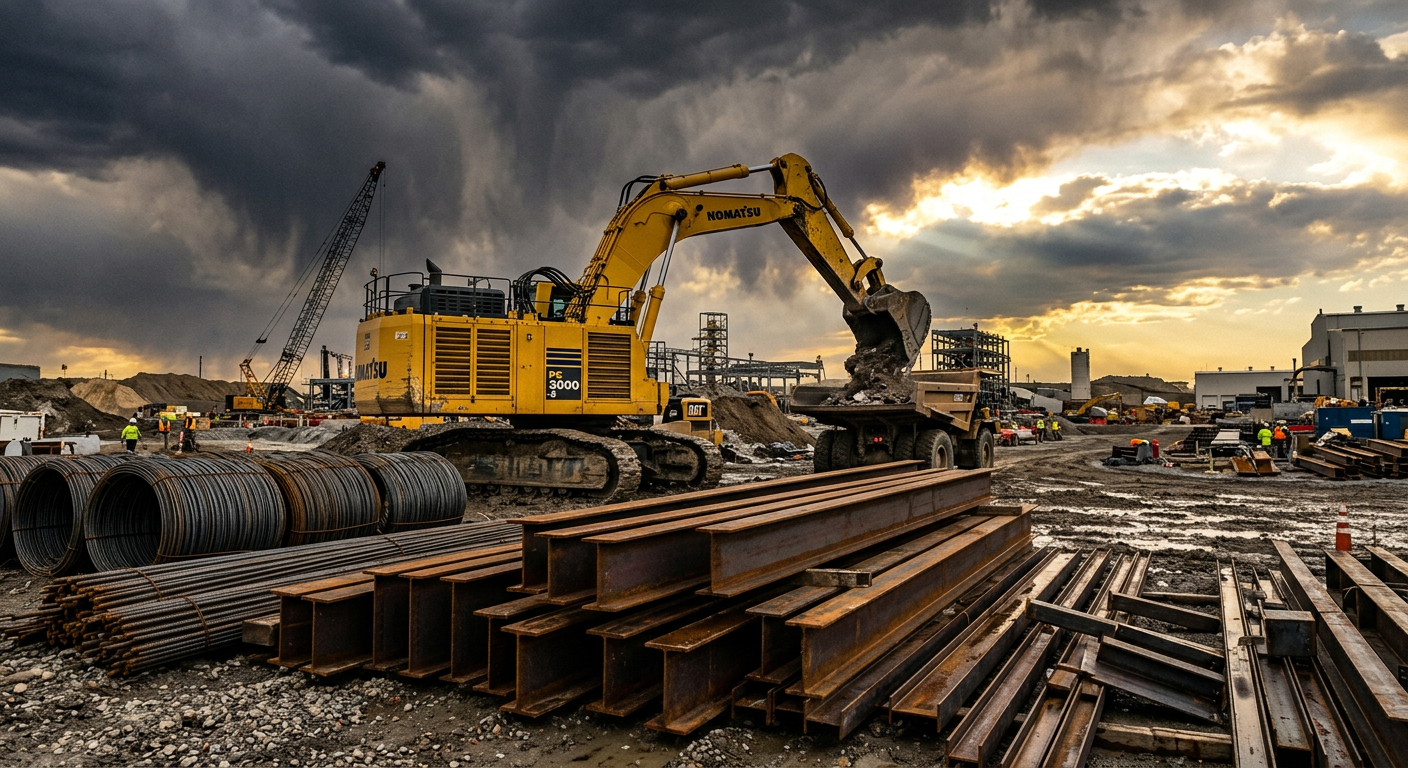
Here’s something that might surprise you: a typical mid-size excavator contains roughly 20 to 25 tons of steel. A compact track loader runs 4 to 6 tons. A motor grader can top 30 tons.
Editor’s Note: Tracking your true cost-per-hour is critical when equipment prices shift this fast. FieldFix helps operators log maintenance, fuel, and expenses against actual machine hours — so you’re bidding with real numbers, not guesses. Free for up to 3 machines.
Steel isn’t just the frame and boom. It’s the undercarriage. The tracks or track chains. The bucket. The hydraulic cylinders. The pins and bushings you replace every few hundred hours. The cutting edges. The teeth.
When steel costs 50% more at the border, that cost doesn’t vanish. It gets baked into every machine that rolls off the assembly line and every replacement part sitting on a dealer’s shelf.
The math on new iron
Let’s work through some real numbers.
The Association of Equipment Manufacturers (AEM) reported that the equipment manufacturing sector generated $902 billion in sales and indirect economic output in 2025, down from $905 billion in 2022. Direct employment dropped from 423,000 to 421,000 workers. So the industry is already shrinking slightly even before you account for the full impact of the current tariff schedule.
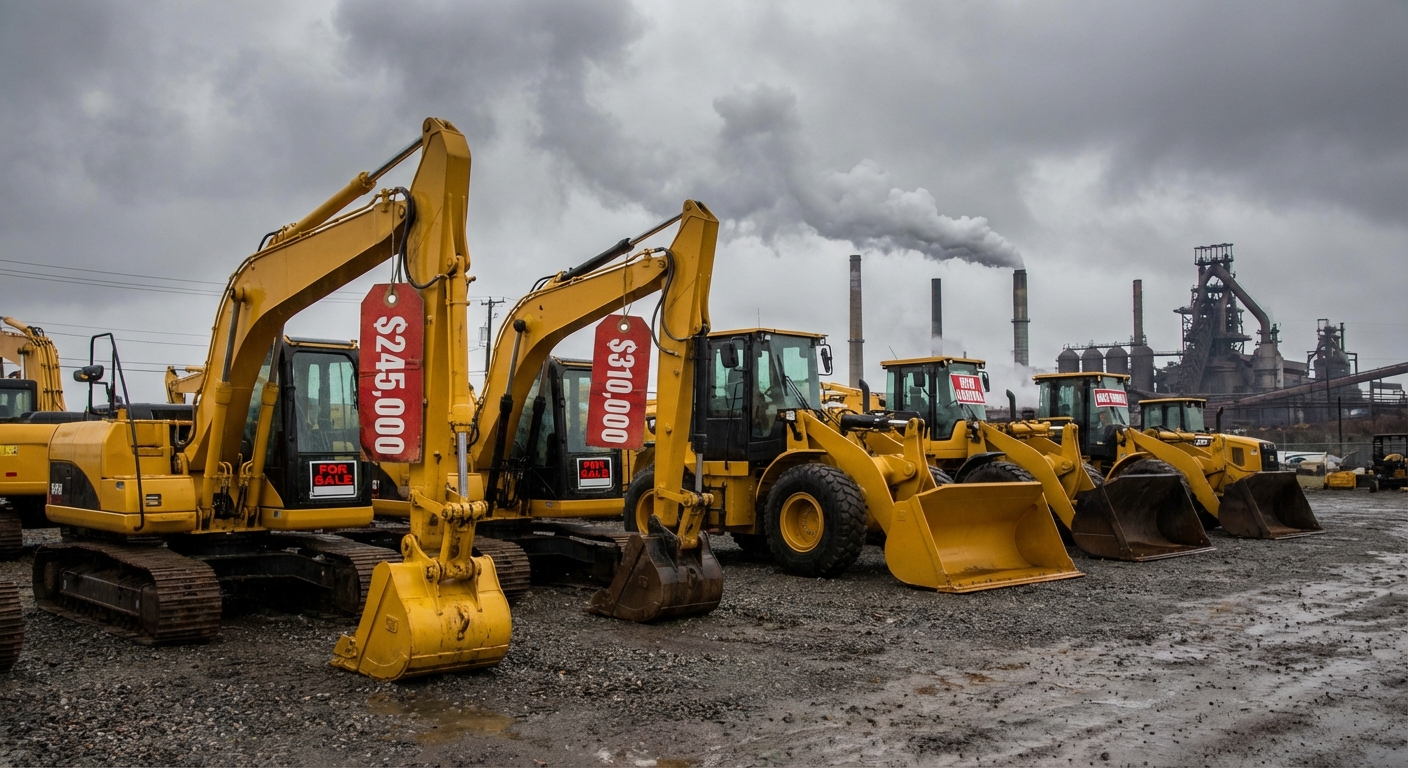
Take a compact track loader. In 2023, a new Cat 299 or Bobcat T76 listed around $75,000 to $85,000 depending on configuration. Today, comparable machines are running $90,000 to $105,000. That’s a 20% to 25% increase in roughly two years.
How much of that is tariffs specifically? It’s hard to isolate perfectly because OEMs don’t publish their raw material cost breakdowns. But industry analysts estimate that steel and aluminum cost increases driven by tariffs account for $8,000 to $15,000 of that price jump on a typical compact machine. On larger equipment — excavators in the 30-ton class, dozers, wheel loaders — the tariff-driven increase runs $25,000 to $50,000.
That’s not inflation. That’s not supply chain disruption (though that’s still a factor). That’s a direct policy cost passed straight to buyers.
Parts are getting hammered too
New machines are one thing. Most contractors don’t buy new iron every year. But everyone buys parts.
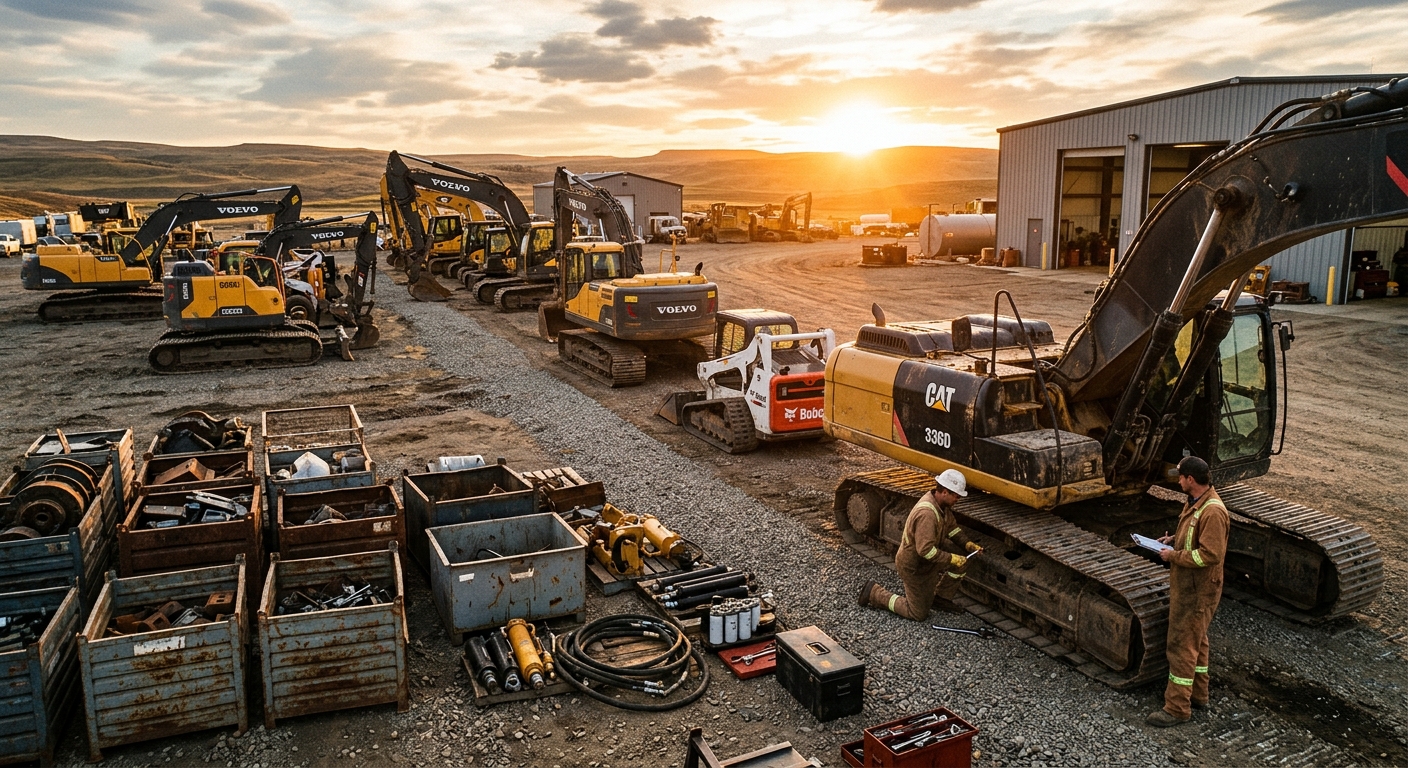
Undercarriage components — tracks, rollers, idlers, sprockets — are some of the most steel-intensive replacement parts in the industry. A full undercarriage swap on a mid-size excavator used to run $8,000 to $12,000. Contractors are now reporting quotes of $11,000 to $16,000 for the same work.
Cutting edges and bucket teeth have seen similar jumps. A set of teeth for a 20-ton excavator bucket that cost $400 two years ago now runs $550 to $600.
Here’s where it gets painful: these are wear items. You don’t get to skip them. You replace them on schedule or your productivity drops and your repair costs go up. So the tariff isn’t a one-time hit — it’s a recurring cost that eats into your margins on every single job.
What this means for your bids
Construction input prices jumped 0.7% month-over-month in January 2026, according to the Associated General Contractors of America (AGC). Nonresidential construction input prices were 2.9% higher year-over-year. On an annualized basis, that’s a 7.1% increase — which the AGC called “blistering.”
If you’re bidding jobs the same way you did in 2024, you’re losing money. Period.
The contractors who are staying profitable right now are the ones who’ve updated their cost-per-hour calculations to reflect actual 2026 numbers. Not the numbers from when they bought the machine. Not the numbers from last year’s parts invoices. The numbers from this month.
That means tracking:
- Actual parts costs on every repair, not estimated averages from two years ago
- Fuel costs at current rates, not seasonal averages
- Insurance premiums, which have also climbed
- Depreciation based on what machines actually sell for today, not what you paid
If your cost-per-hour on a compact track loader was $85 in 2024, it’s probably $95 to $105 now. If you haven’t adjusted your bids, you’ve been working for less than you think.
Who’s absorbing the cost (and who’s passing it on)
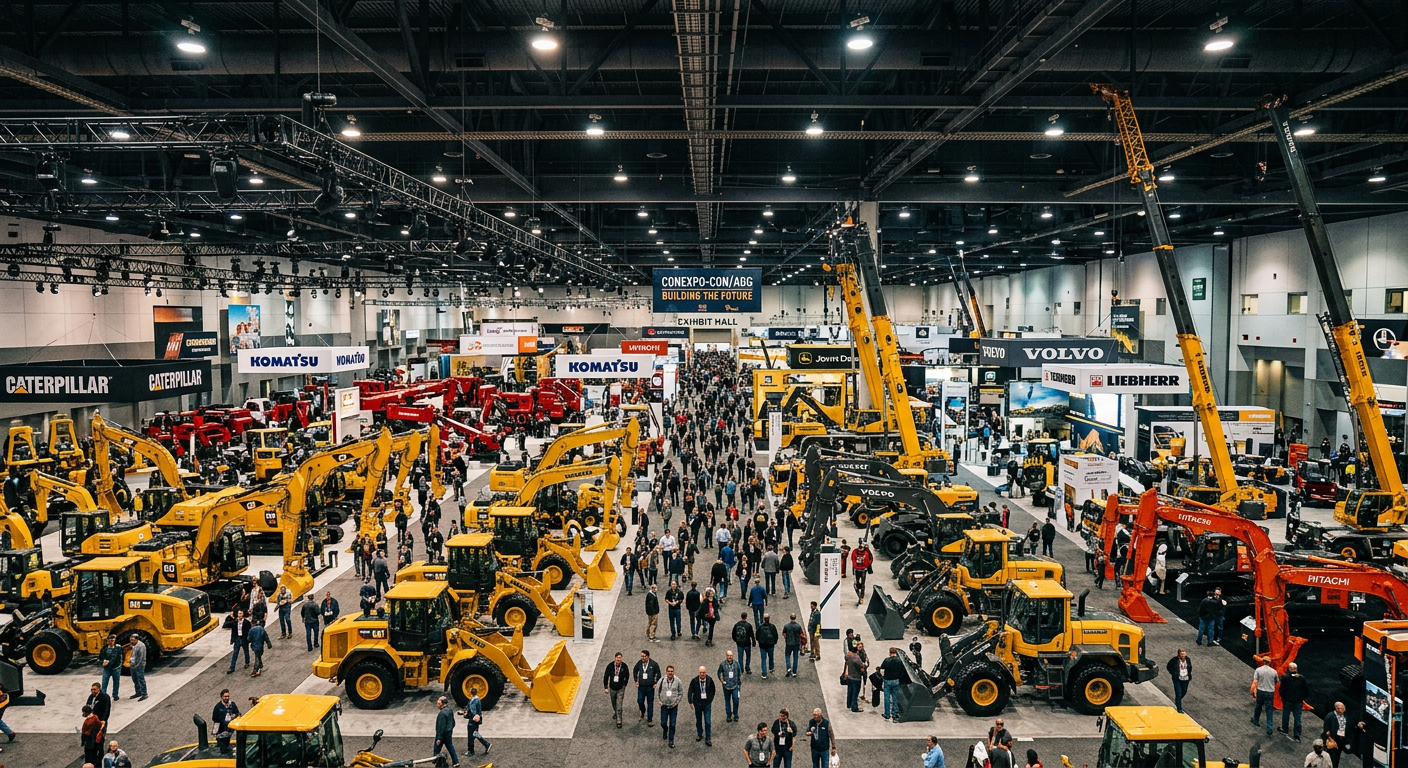
The big OEMs — Caterpillar, Deere, Volvo, Komatsu — are doing what big companies always do: passing costs downstream while protecting their margins. Cat’s Q4 2025 earnings showed stable margins despite rising input costs, which tells you everything about where those costs went.
Dealers are in a tighter spot. Many are eating some of the parts markup to keep customers from shopping aftermarket or sitting on aging inventory. But there’s a limit to how much margin a dealer can give up.
The aftermarket parts suppliers — the companies selling tracks, teeth, and hydraulic components that aren’t branded by the OEM — have mixed exposure. Some source domestically and are actually benefiting from tariffs making imported competitors more expensive. Others import from China, South Korea, or Turkey and are getting crushed.
The contractors at the end of the chain have the least pricing power. Residential and small commercial jobs are especially tight because customers are price-sensitive and have no idea (or concern) about your equipment costs.
The AEM’s position
The Association of Equipment Manufacturers has been pushing hard on this. Their position has two parts:
First, they want tariffs removed on imported components for companies that assemble equipment in the U.S. with substantial domestic content. The logic is straightforward — if a company builds machines in America with American labor, penalizing them for importing a hydraulic valve or electronic controller that isn’t made domestically just makes American-built equipment more expensive.
Second, they want targeted tariffs on foreign producers who get government subsidies — primarily Chinese manufacturers. This is the “level the playing field” argument, and it has broad bipartisan support.
Whether any of this actually changes policy is another question. The current administration has shown zero interest in rolling back tariffs. If anything, the trend is toward more duties, not fewer.
The Supreme Court wildcard
There’s one legal development worth watching. The Supreme Court struck down some tariffs earlier this year, only for the administration to respond with new 15% duties. This back-and-forth has created real uncertainty for anyone trying to plan major purchases.
If you’re in the market for a new machine, the honest answer is that nobody knows where prices will be in six months. They could stabilize if the legal challenges gain traction. They could jump again if new tariffs get layered on top of existing ones.
The safest bet: buy based on need, not on trying to time the market. If you need a machine to make money, buy the machine. Just make sure your bids reflect the real cost.
What smart operators are doing right now
The contractors I talk to who are navigating this well are doing a few things differently:
Rebuilding instead of replacing. A full engine and hydraulic rebuild on a compact track loader runs $15,000 to $25,000. A new machine is $90,000 to $105,000. If the frame is solid, the math is obvious.
Switching to domestic aftermarket parts where possible. Not for everything — some components don’t have good domestic alternatives. But for undercarriage, cutting edges, and hydraulic hoses, there are American-made options that used to be more expensive than imports and are now price-competitive or cheaper.
Tracking cost-per-hour religiously. This isn’t optional anymore. The margin for error on bids has gotten too thin to guess.
Locking in parts pricing. Some suppliers will hold pricing for 30 to 90 days on bulk orders. If you know you’ll need undercarriage work in the next quarter, ordering now at current prices beats waiting.
Adjusting bid structures. Some contractors are adding material escalation clauses to longer-term contracts. This used to be rare in the dirt world. It’s becoming standard.
The bigger picture
The global heavy equipment market is still projected to hit $242 billion by end of 2026, growing at 8.7% annually through 2033 according to Research and Markets. Infrastructure spending, data center construction, and energy projects are keeping demand high even as costs rise.
But that growth isn’t evenly distributed. The companies with access to capital, efficient operations, and accurate cost tracking will capture most of it. The operators running on gut instinct and outdated spreadsheets are going to get squeezed out.
CNH Industrial — the parent company of Case and New Holland — has already predicted flat construction equipment sales for 2026. That’s a company telling Wall Street not to expect growth. When a major OEM is that cautious in their public guidance, the ground-level reality is probably worse.
The bottom line
A 50% steel tariff isn’t abstract policy. It’s $10,000 more on your next machine. It’s $3,000 more on your next undercarriage job. It’s the difference between a profitable bid and one that loses money.
You can’t control trade policy. But you can control how accurately you track your costs, how aggressively you update your pricing, and how smart you are about when and how you buy equipment and parts.
The operators who treat 2026 like 2024 are going to have a rough year. The ones who adjust will be fine. That’s how it always works in this business — the market doesn’t care about your feelings, only your numbers.