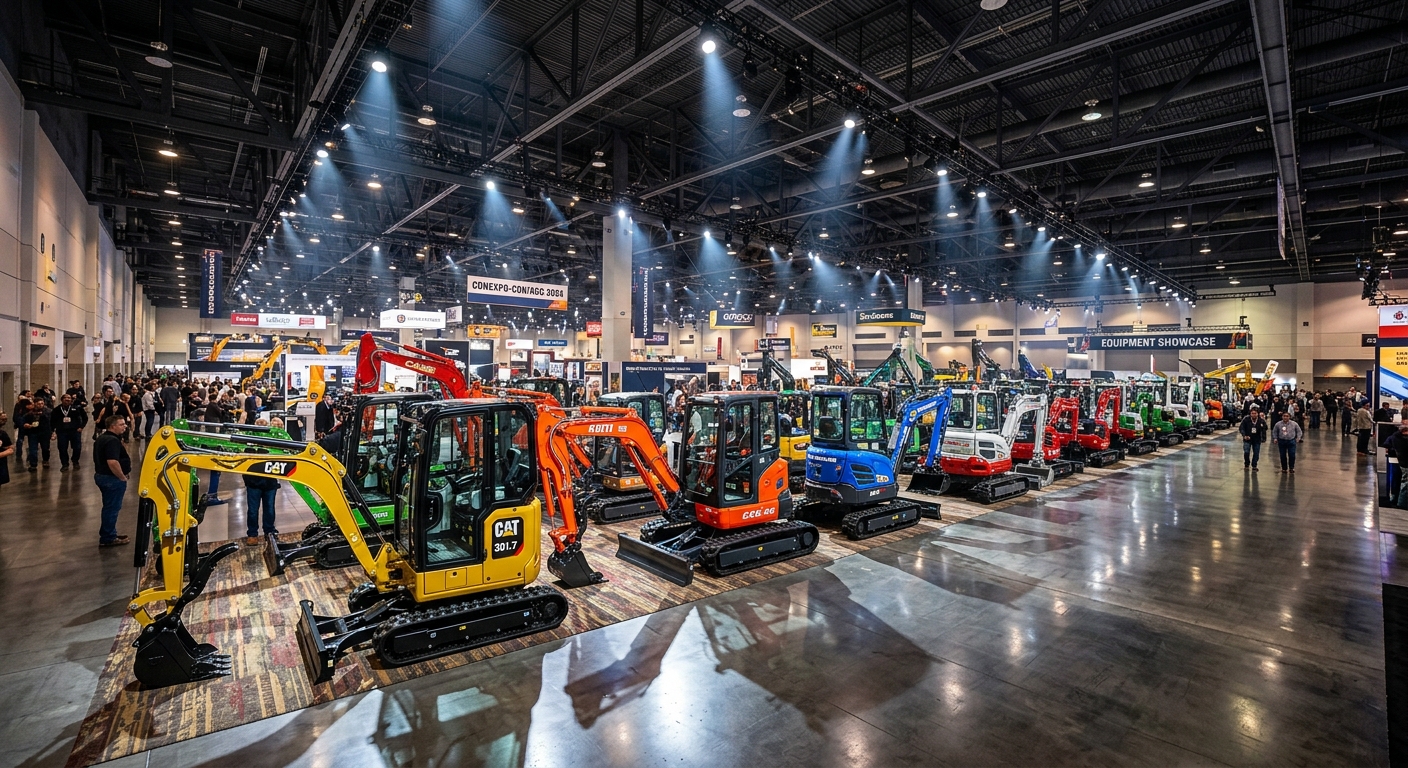

Compact Wheel Loaders Are Quietly Eating Skid Steer Work — And the Math Backs It Up
Skid steers and compact track loaders have owned the small-iron jobsite for decades. The compact wheel loader is changing that argument — and the contractors paying attention are quietly shifting fleet mix.
For most of the last twenty years, the small-iron conversation on a North American jobsite has been a two-horse race. Skid steer or compact track loader. Bobcat or Cat. Tires or tracks. Buy the one that fits the work, run it hard, and replace it before the warranty cliff.
That conversation is changing. Slowly, quietly, and in a way that does not get the trade-show coverage it deserves.
The compact wheel loader is winning hours back from the skid steer. Not everywhere. Not in every yard. But in enough places, on enough jobs, that contractors who run mixed fleets are starting to ask a different question: not which skid steer to buy next, but whether the next purchase should be a skid steer at all.
FieldFix Editor’s Note: The cost story on small loaders is hidden inside hours, fuel, tires, tracks, and aux hydraulic load — none of which show up on a spec sheet. FieldFix helps fleets see what each machine actually costs per hour, so the next purchase decision is based on real data, not which dealer called last.
The job has changed, and the machine should follow
Walk a residential site, a hardscape job, a snow contract, a landscape install, or a municipal yard today, and the work has shifted. There is more material handling than there was ten years ago. More pallet work, more bagged product, more loading and unloading of small trucks and trailers, more moving of stone, mulch, soil, and aggregate from staging pile to install point.
That kind of work rewards a different machine than the skid steer was originally designed for.
A skid steer was built to be a compact, agile, attachment-host that could turn on its own footprint and dig into a pile. It was never the most efficient way to move loose material across a yard. Anyone who has run one for a full day knows the cost: tire wear, scuffed turf, fuel burn, operator fatigue, and a load profile that drops off fast once you get more than a few hundred feet from the pile.
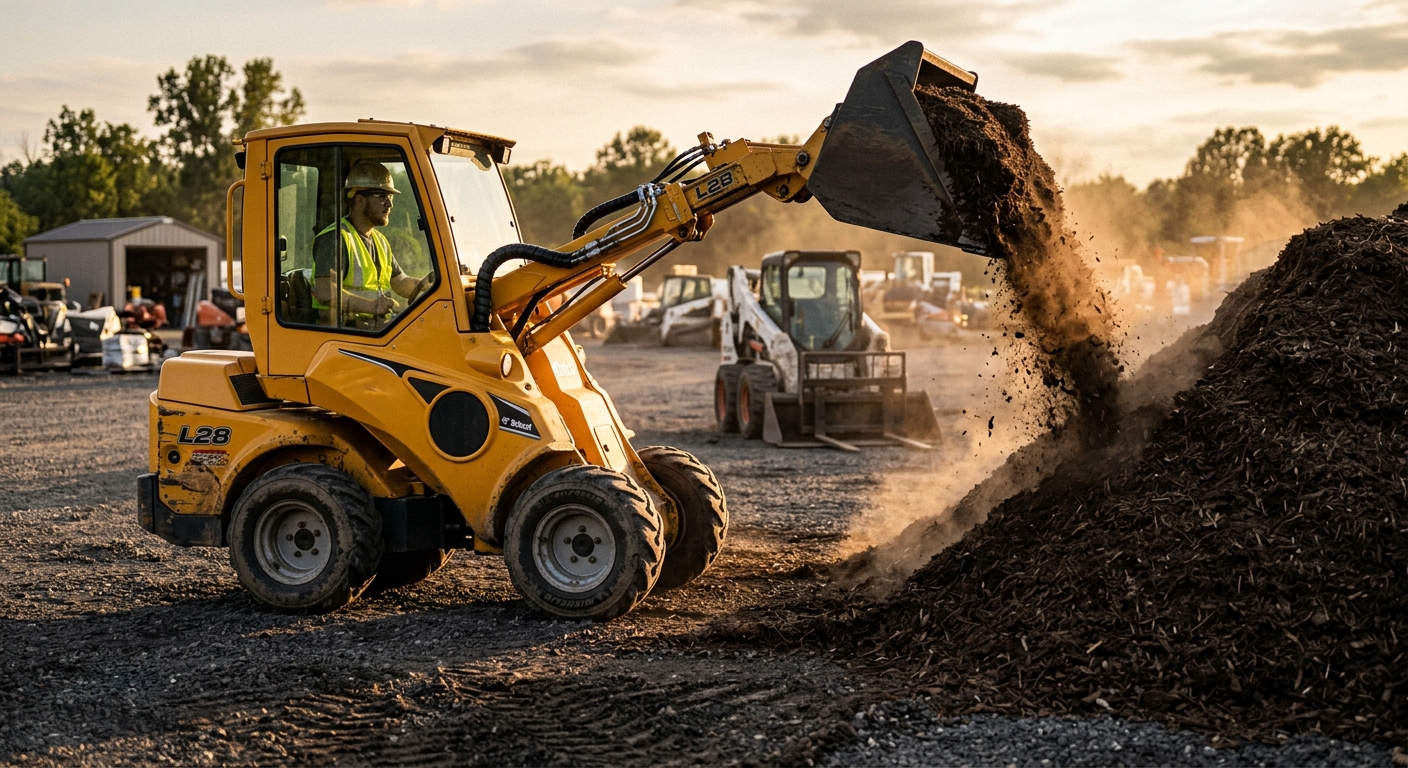
The compact wheel loader was built to do exactly that work. Higher dump height. Bigger bucket capacity for the same horsepower class. Faster travel speed. Better visibility. Smoother ride. Less ground disturbance per cycle. A purpose-built tool for a job that more and more contractors are billing for.
That does not mean the skid steer is going away. It means the work has split, and contractors who only own skid steers are quietly losing efficiency on a meaningful slice of their day.
What the cost story actually looks like
Spec sheets do not tell this story. Hour meters and repair logs do.
A skid steer running a full shift of material handling burns through tires. Solid rubber, foam-filled, or pneumatic — it does not matter. The skid-steer steering principle means every direction change scrubs rubber against the ground. On a hard surface, that is fast wear. On soft ground or turf, it is rutting, damage, and callback risk. Tire replacement on a hard-running skid steer is not a once-a-year expense. On the wrong job, it is a quarterly one.
Compact track loaders solve the ground-pressure problem, but they trade it for a track-undercarriage maintenance bill that most owners underestimate when they buy the machine. Track replacement, sprocket wear, idler wear, roller wear, and chain stretch are not theoretical. They are predictable. And the cost per hour of running tracks on hard surfaces or pavement is high enough that some contractors deliberately keep CTLs off paved or aggregate-heavy work to protect undercarriage life.
A compact wheel loader running the same material-handling shift typically uses a fraction of the rubber, idles less, travels faster between cycles, and burns less fuel per ton of material moved. The undercarriage is not the wear story. The pin and bushing wear on the loader linkage is the wear story, and that is well understood, predictable, and slow to develop on properly greased machines.
The contractors who track their hours honestly tend to land in the same place: a compact wheel loader on the right job costs less per ton moved than a skid steer or CTL doing the same work. The reverse is true for tight digging, attachment-heavy work, or anywhere the machine has to turn inside its own footprint. Different jobs, different tools.
The OEMs have noticed
The compact wheel loader is no longer a niche European import. Every major equipment maker now has a serious entry in the category, and the lineups have widened considerably over the last three to five years.
Caterpillar, John Deere, Volvo, Kubota, Wacker Neuson, Hyundai, and Avant all have compact wheel loaders aimed at North American contractors. The smaller end of the segment — articulated machines under two metric tons — has seen even more activity, with Avant, Multione, Schäffer, Giant, and other European platforms now showing up in U.S. dealer networks. The bigger end of the segment — machines in the three- to five-ton class — has become a serious competitor to mid-size skid steers and CTLs on material-handling, landscape, snow, and yard work.
Dealers will not always lead with these machines. The skid steer is still the easy sale. It is the machine the customer came in asking for, and it is what the dealer’s used market is built around. But the OEMs would not be expanding the compact wheel loader lineups if customers were not buying them. The volume is growing, especially in regions and segments where the work skews toward material handling rather than digging and demolition.
Where the compact wheel loader actually wins
The honest answer is that the compact wheel loader is not a universal replacement. It is a specific tool that wins on specific work.
It wins on landscape installs where material is moved long distances across finished or sensitive ground, and where turf scuffing on a skid steer would create rework. It wins on hardscape and paver work, where the wheel loader can stage pallets and bulk material faster and with less site damage than a CTL. It wins on snow contracts, where speed, visibility, and operator comfort across a long shift matter more than dig force. It wins on yard work at supply houses, nurseries, sand and gravel operations, and municipal facilities where the machine is essentially a long-shift material mover. It wins in compact agricultural and equestrian operations, where it has been the default tool in Europe for years.
It does not win on demolition. It does not win on grading or fine dirt work where a skid steer or CTL with a box blade or grading attachment is more controllable. It does not win on tight residential lots where the turning radius matters more than travel speed. It does not win on heavy attachment work — augers, brush cutters, stump grinders, planers, mulchers — where the hydraulic flow and machine weight of a skid steer or CTL are purpose-fit.
Contractors who buy a compact wheel loader expecting it to do everything a skid steer does end up disappointed. Contractors who buy one to do the work it is actually good at usually do not go back.
The attachment question
The skid steer’s biggest moat is the attachment ecosystem. Universal mount, thousands of attachments, decades of aftermarket support, and a price point on used attachments that no competing platform can match.
The compact wheel loader has been closing that gap, but it is not closed yet. Most modern compact wheel loaders are offered with skid steer-compatible quick-attach plates as a factory option or simple conversion, which lets the machine use much of the same attachment library. That has been a quiet game-changer. A contractor who already owns a fleet of skid steer attachments can drop them onto a compact wheel loader and run them without buying a new tool library.
Where the compatibility story falls apart is on hydraulic-intensive attachments. The hydraulic flow, pressure, and continuous-load capacity that a high-flow skid steer can deliver to a planer, a mulcher, or a heavy-duty brush cutter is hard to match in a compact wheel loader at the same price point. The largest compact wheel loaders can run many of these attachments, but the buyer pays for it in machine size and cost.
For light- and medium-duty attachment work — buckets, forks, grapples, brooms, blades, mixers, augers in soft ground — the compact wheel loader plus skid steer plate is a credible setup. For heavy-duty hydraulic attachments, the skid steer or CTL still has the better argument.
Operator comfort is doing more selling than dealers admit
The least-discussed reason compact wheel loaders keep showing up in fleets is operator preference.
A skid steer cab is a compromise. Side entry, limited visibility on certain sides depending on lift path, a ride that punishes the operator on rough ground, and a noise and vibration profile that wears people down on long shifts. CTL cabs are better but still inherit much of the skid steer’s ergonomic limits.
A compact wheel loader cab is a different machine. Front entry. Wide visibility. Smoother ride at travel speed. Lower noise. Climate control that works in a way the operator notices. Less neck and back fatigue at the end of a ten-hour shift. Those things do not show up on a spec sheet, but they show up in retention, in willingness of operators to volunteer for long shifts, and in callback rates on sensitive sites.
In a labor market where good operators are hard to find and harder to keep, the comfort gap is not a minor factor. Some of the most committed compact wheel loader buyers are contractors who watched their best people quietly start asking which machine they were going to run on a given day.
What contractors should actually do
The contractor takeaway here is not to rush out and replace a skid steer with a compact wheel loader. It is to look honestly at what the existing fleet is doing all day.
Pull the hour meters. Pull the fuel records. Pull the tire and track replacement history. Look at how much of the daily run time is digging, breaking out, attachment work, and tight maneuvering — versus how much is material handling, travel, loading, and yard work.
If most of the hours on a given machine are material handling, the math may already favor a compact wheel loader on the next purchase. If most of the hours are dig and attachment, the skid steer or CTL is still the right answer.
The honest answer for many fleets is mixed. One compact wheel loader and one or two skid steers or CTLs, sized correctly, will outperform a fleet of all skid steers on a wider mix of work. That is not a radical idea in Europe, where mixed compact fleets have been standard for years. It is starting to become normal here too.
The longer-term signal
The compact wheel loader story is part of a bigger shift in how contractors think about compact equipment. The era when every small machine was assumed to be a skid steer is fading. The category is fragmenting into more specialized tools — compact wheel loaders, articulated mini loaders, compact track loaders with high-flow hydraulics, mini excavators with thumbs, telehandlers — each of which is better than a one-size-fits-all skid steer at the work it is designed for.
That is a good development for contractors who are willing to think honestly about their fleet mix. It is a harder development for contractors who buy the same machine they always have because that is what the dealer has in stock.
The OEMs are not driving this change. The work is driving it. And the work is going to keep driving it as long as material handling, jobsite efficiency, operator comfort, and total cost per ton stay as important as they are right now.
The skid steer is not going away. It is still the most versatile compact machine ever built. But it is no longer the default answer to every small-iron question. The compact wheel loader is winning a slice of the conversation it never used to be in. The contractors paying attention to their own numbers are quietly buying accordingly.
The smart move for any fleet owner is not to pick a side. It is to make the call based on the actual hours, the actual cost per ton, and the actual work the machine has to do. The right answer is in the data. It just has not always been the answer the dealer was selling.