Rental Growth Is Turning Fleet Replacement Into a Margin Test
Rental demand is still growing in 2026, but the hard part is no longer proving customers want to rent. It is knowing which machines deserve replacement money and which ones are only staying busy on paper.
The rental story is still strong. That does not mean every rental fleet should get bigger.
The American Rental Association’s latest 2026 forecast puts combined U.S. construction and industrial equipment plus general tool rental revenue at $83.5 billion, up 3.6% for the year. That is higher than ARA’s earlier 2.8% projection. Canada is expected to grow 5% to $6.3 billion. The update, reported by For Construction Pros, points to large projects, customer uncertainty, financial flexibility, and the high cost of ownership as reasons contractors keep renting.
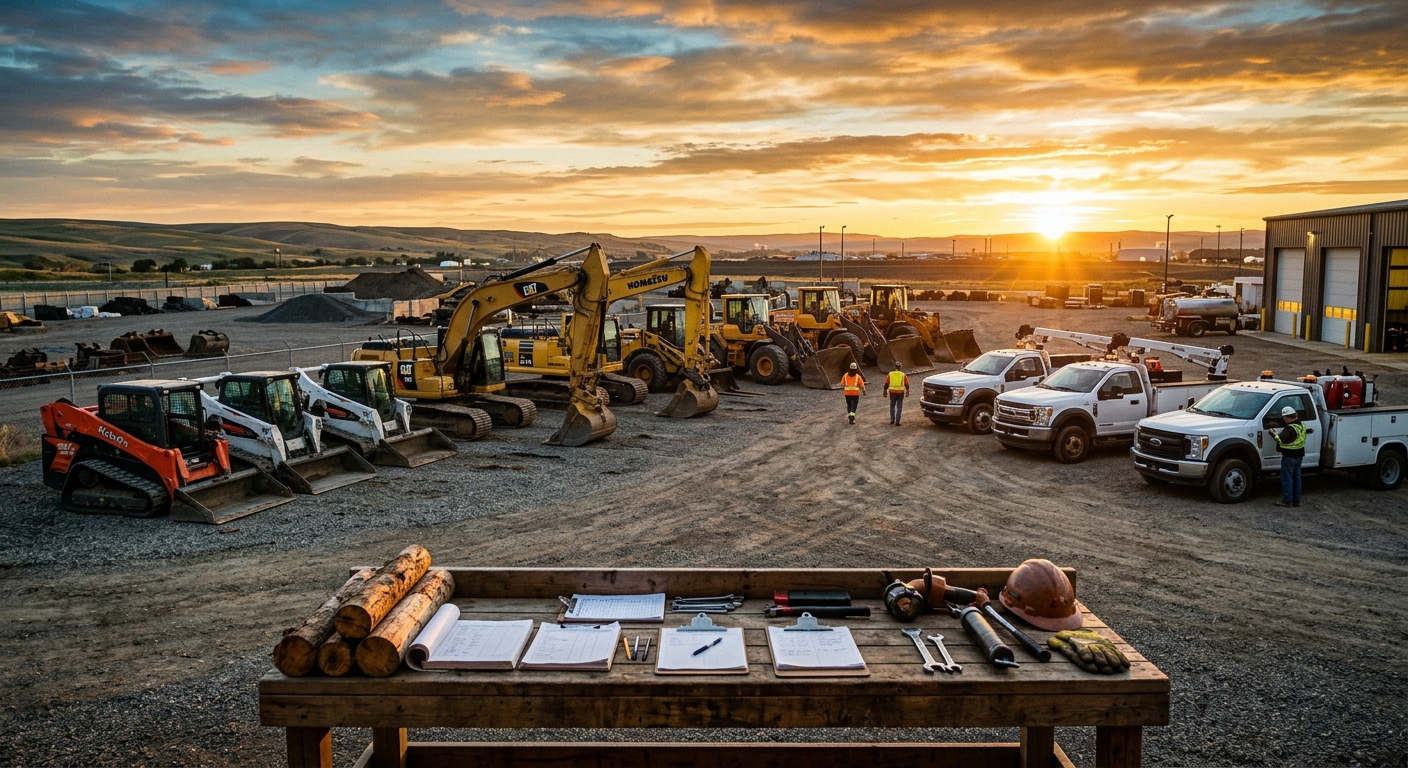
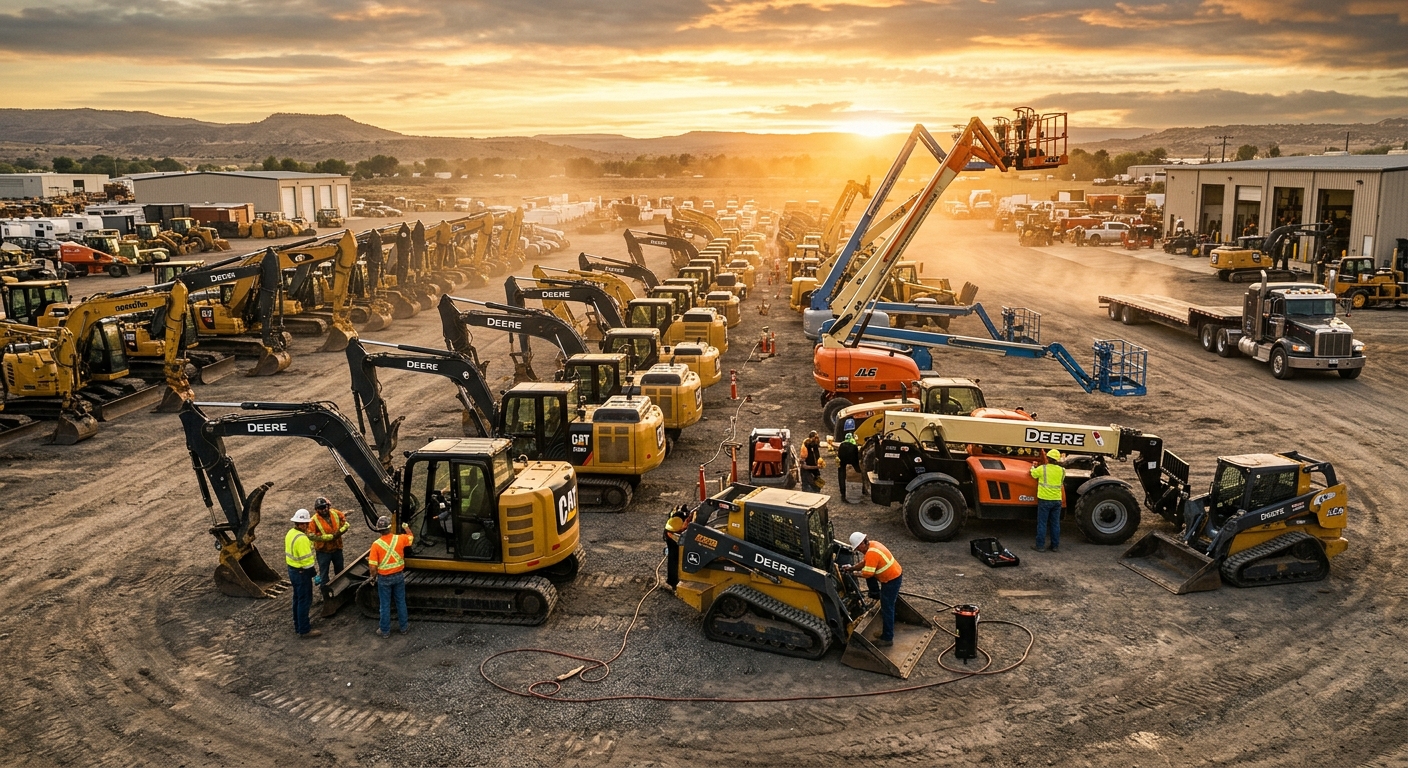
That tracks with what is happening on jobsites. Contractors still need iron, but many do not want another long payment schedule unless the work is durable. Interest costs, uneven private work, tariff questions, labor limits, and project timing all make rental more attractive. A contractor can rent a telehandler, excavator, compact track loader, pump, generator, or lift for a specific window instead of betting the balance sheet on work that may not repeat.
For rental companies, that is good news. It is also a trap. Growing revenue can hide tired fleet, weak rates, overworked mechanics, transport costs, damage problems, and machines that look busy but do not earn enough after service. In 2026, the smarter fight is not who owns the most machines. It is who replaces the right machines at the right time.
FieldFix Editor’s Note: Rental growth can make bad fleet decisions look better than they are. FieldFix helps equipment owners track service history, downtime, repair spend, and cost per hour by asset, so replacement decisions are based on machine-level numbers instead of gut feel.
Rental growth is not the same as easy profit
Market forecasts still point up. Global Market Insights estimates the global construction equipment rental market at $168.7 billion in 2026, with a path to $277.2 billion by 2035. Grand View Research puts the broader global rental market at $224.3 billion in 2026 and projects $339.0 billion by 2033. The exact numbers vary by research firm, but the direction is consistent: rental keeps taking more of the equipment wallet.
The reason is simple enough. New equipment is expensive. Contractors are cautious. Mega projects and infrastructure work need large temporary fleets. Smaller contractors want access to newer machines without owning every machine they might need twice a year. Rental also lets customers handle specialized scopes without buying oddball assets that later sit behind the shop.
But revenue growth does not automatically translate into margin growth. A rental yard can grow the top line while quietly giving away profit through emergency repairs, weak delivery pricing, poor turnaround, and fleet that stays out because nobody wants to admit it needs to go.
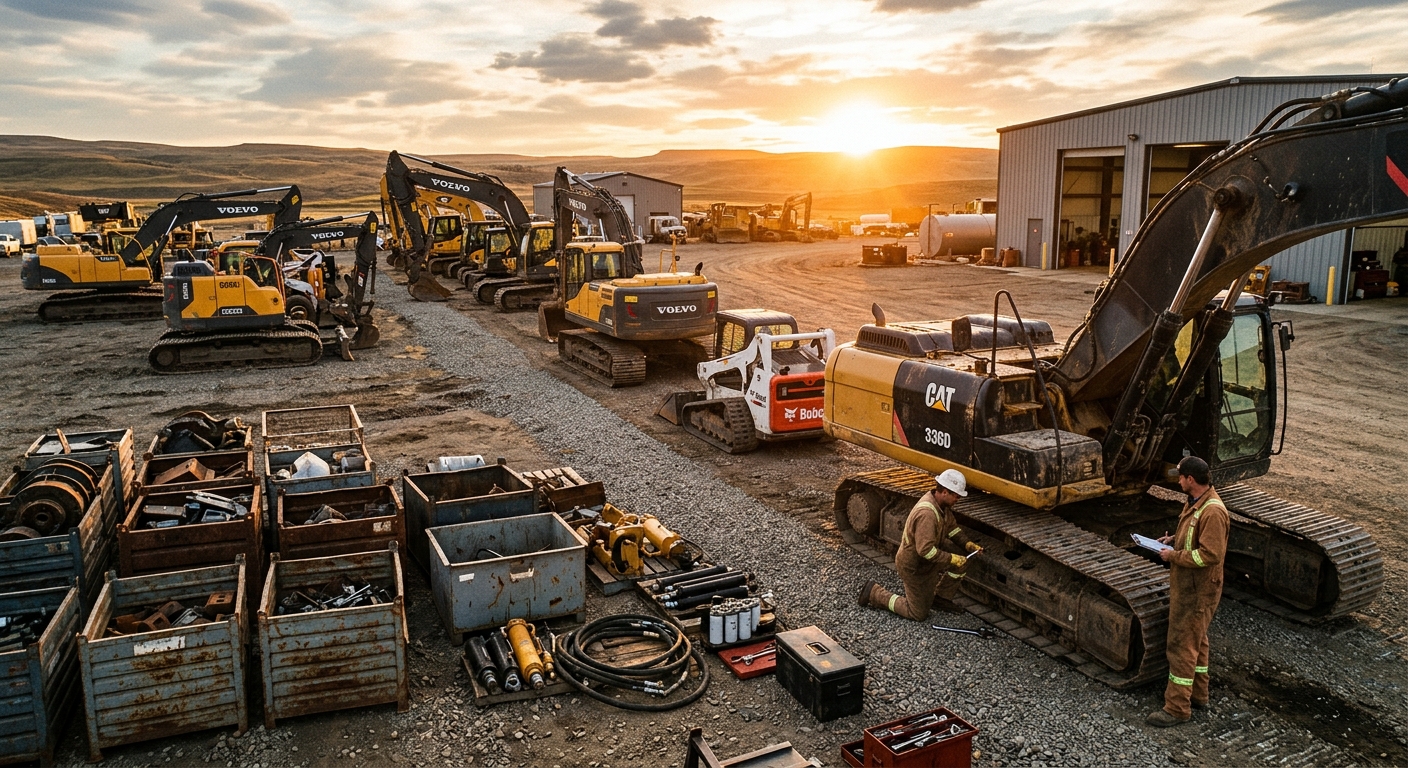
A machine can still rent. It can still show utilization. It can still have a decent rate on paper. But if it needs constant field calls, burns shop time, sits waiting on parts, or comes back with repeat failures, it may be dragging the fleet down while looking productive in a dashboard.
The best rental operators know this already. They do not just ask, “Is it rented?” They ask, “What did it cost to keep it rented?”
Utilization has to be paired with repair history
Utilization is useful, but it is incomplete by itself. Time utilization, dollar utilization, and financial utilization all tell part of the story. None of them replace repair history.
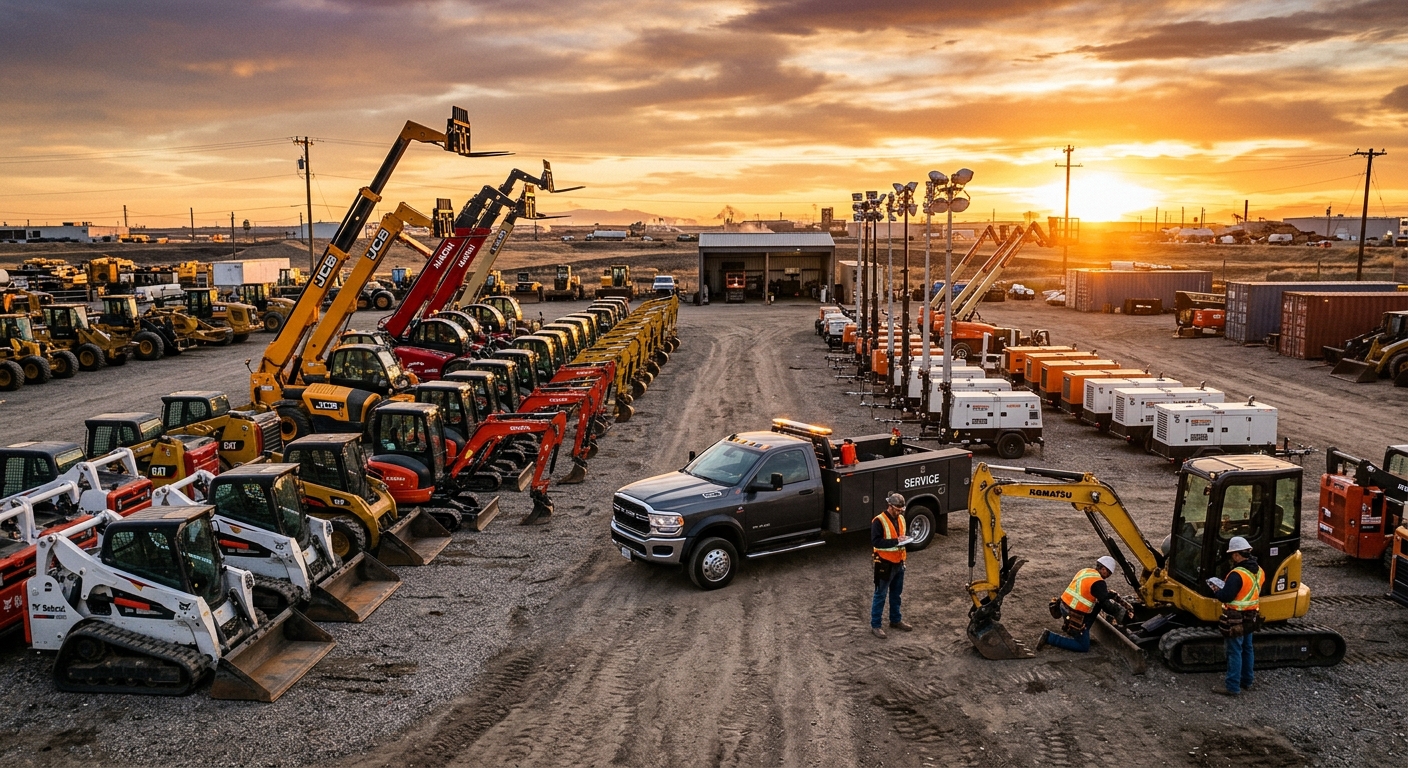
A compact track loader with high time utilization might look like a winner until the maintenance record shows undercarriage spend, repeated hydraulic leaks, and transport back to the shop every few weeks. A telehandler may have a strong rate and good demand but lose margin through tire damage, boom repairs, battery issues, and jobsite abuse. A generator may rent for months and still become a headache if fuel logistics, load bank testing, preventive maintenance, and emergency response are not priced correctly.
This is why replacement decisions need more than age and hours. Age matters. Hours matter. But they do not tell the whole story. Some machines age cleanly. Others become expensive early because of the application, operator behavior, attachment load, site conditions, or a weak maintenance history.
The question is not whether a machine is old. The question is whether its next rental cycle is likely to pay for the risk.
That sounds obvious, but it gets messy when demand is strong. If customers keep calling, rental companies feel pressure to keep everything available. Selling a worn-out machine can feel wrong when the phone is ringing. The problem is that the worst machines often consume the most service time exactly when the fleet needs technicians available for the best customers.
Replacement discipline protects the whole operation. It frees mechanics, lowers comeback risk, improves customer experience, and keeps the yard from becoming a collection of machines that only pencil out before the repair invoice lands.
Mega projects change the fleet mix
Large projects are one reason rental demand is holding up. Data centers, manufacturing plants, infrastructure work, utility upgrades, transmission projects, and large commercial jobs all create bursts of rental demand. They need earthmoving equipment, telehandlers, aerial lifts, light towers, pumps, generators, trench safety, compaction equipment, fuel tanks, and jobsite support gear.
The catch is that large projects move through phases. Early sitework may pull excavators, dozers, compactors, articulated trucks, trench rollers, and water handling. Vertical work shifts demand toward telehandlers, lifts, forklifts, compressors, welders, lighting, and temporary power. Electrical, mechanical, and commissioning work create a different support mix again.
A rental branch that buys around one phase can be stuck when the job changes. That is especially true for machines tied to one project type or one local contractor. The revenue looks real while the project is hot. The resale risk shows up later.
This is where replacement and buying discipline overlap. A rental company does not only need to know what customers want this month. It needs to know which assets can move to the next job, the next customer, and the next region if demand shifts.
General-purpose fleet still has value for that reason. Excavators, compact track loaders, telehandlers, compactors, pumps, generators, light towers, and common attachments can usually find another home. Specialized machines can be good business too, but only if the utilization plan is honest and the exit value is understood before purchase.
Rental companies that chase every hot project with permanent fleet will eventually own yesterday’s demand.
Used equipment values matter more when replacement gets tight
Replacement timing also depends on the used market. Selling too early can leave money on the table. Selling too late can turn a good machine into a shop problem with weaker resale value.
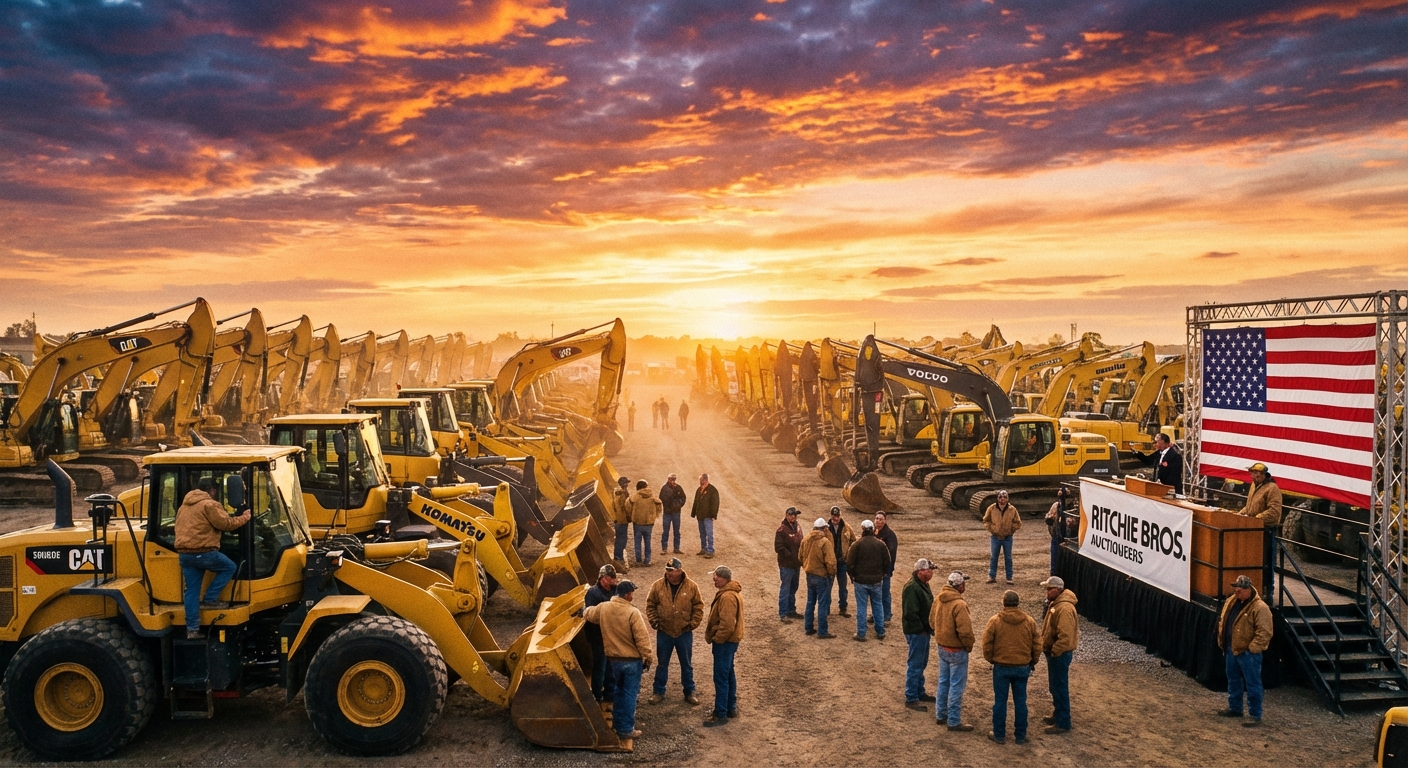
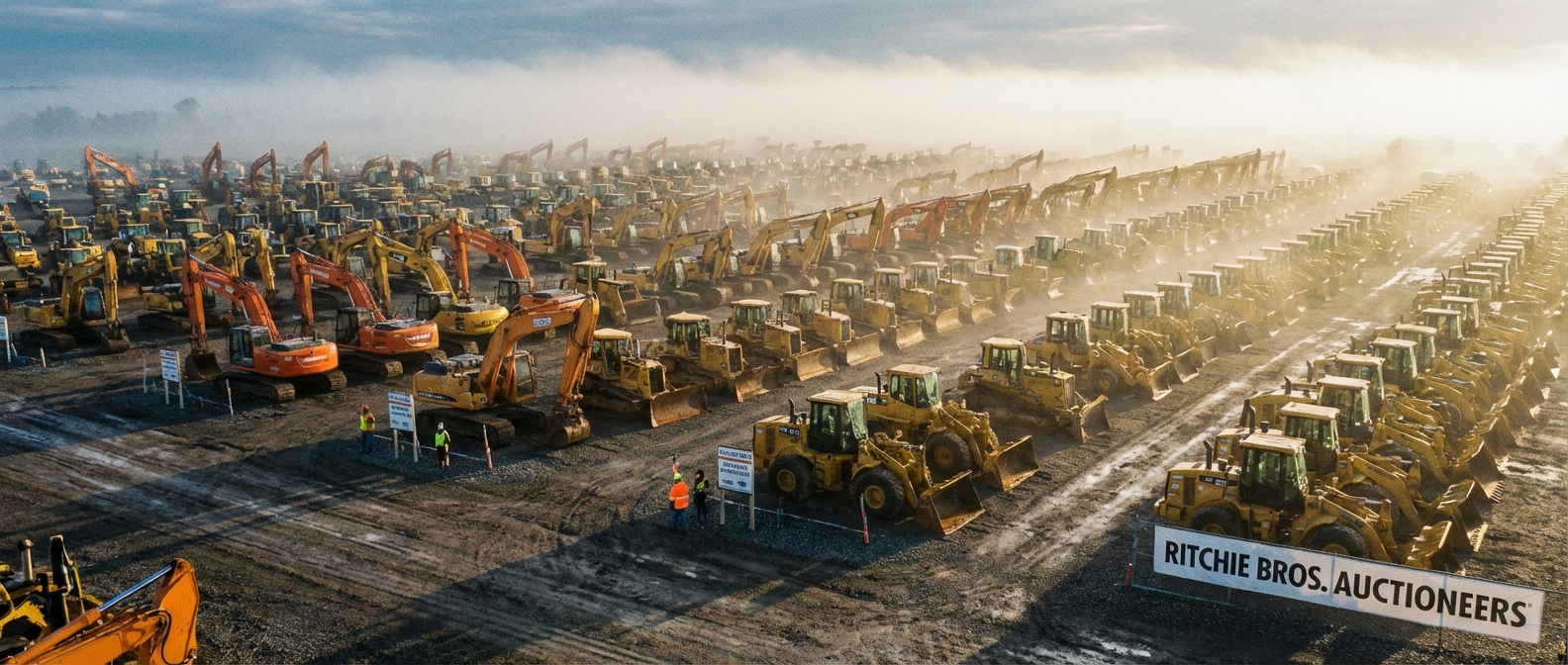
Rouse Services, now part of RB Global’s equipment data business, continues to publish market trend reporting based on auction and retail data. Its May 2026 market trends note said the company was reviewing Q1 2026 construction and transportation pricing and sales using Ritchie Bros. auction data and Rouse retail insights. That kind of market signal matters because replacement is not just an internal maintenance call. It is also a resale timing call.
The rental operator has to decide when the machine is most valuable to the next buyer. A clean, well-documented machine with a known service history can be easier to move than a higher-hour unit with a thin maintenance record and visible fatigue. The difference is not cosmetic. Buyers pay for confidence.
There is also a cash flow side. Replacement fleet requires capital. So does keeping old fleet alive. The bill just arrives in different forms. Newer equipment creates acquisition cost, finance cost, depreciation, insurance, and sometimes higher technology complexity. Older equipment creates repair risk, downtime, parts delays, customer frustration, and weaker availability.
Neither option is automatically right. The right answer depends on the machine.
Contractors are doing the same math
Rental companies are not the only ones under pressure. Contractors are making the same calculation from the other side.
When ownership costs rise, rental becomes more attractive. That is part of why ARA’s forecast matters. Contractors are choosing flexibility because project pipelines are uneven. A company may have strong backlog in one segment and weak visibility in another.
That pushes more contractors into rental for peak demand, specialized tasks, and uncertain scopes. It also raises expectations. A contractor renting instead of buying wants the machine to show up clean, work immediately, and get fixed or swapped fast if something goes wrong.
That is where worn fleet damages a rental brand. A customer may tolerate one problem. They will not tolerate repeated delays when the job is already tight. In a market where contractors are renting to reduce risk, the rental company cannot become the new risk.
The better rental companies will sell reliability, not just availability. The difference matters. Availability means the machine exists. Reliability means the customer trusts it enough to schedule work around it.
The service department decides how much fleet growth is real
Fleet growth without service capacity is not growth. It is a pile of future problems.
Every added machine creates inspection work, preventive maintenance, transport coordination, damage checks, parts demand, wash bay time, and customer support. If the shop is already overloaded, adding more fleet can make the whole business slower.
That does not mean rental companies should avoid growth. It means service capacity has to be part of the growth plan. More machines may require more technicians, better parts stocking, clearer inspection routines, better field service coverage, tighter damage documentation, and faster decisions about retiring problem assets.
Replacement discipline helps the service department by removing repeat offenders. It also helps sales, because reps can promise equipment with more confidence. It helps transport, because fewer breakdowns mean fewer emergency moves. It helps the customer, because fewer jobs get interrupted.
That is the quiet compounding effect of a cleaner fleet.
The winners will be boring on purpose
The rental market does not need more blind optimism. It needs better decisions.
The operators who do well in this cycle will know which machines are earning real margin, which ones are only busy, and which ones need to leave before the next repair turns into a bad month. They will use rental growth to improve fleet quality instead of using it as an excuse to keep every tired machine alive.
They will also be careful with expansion. A hot project, a busy branch, or a strong customer can justify more fleet. But the purchase still needs a second life. If the machine only makes sense for one temporary demand spike, the rental company is taking the same risk its customer is trying to avoid.
There is plenty of demand to chase. ARA’s forecast says the rental market is still growing. Global market reports say the same thing. Contractors still need flexible access to equipment, especially when owning costs are high and project visibility is uneven.
The harder question is who turns that demand into profit.
That answer will not come from the biggest fleet list. It will come from disciplined replacement, clean service records, honest utilization math, and the willingness to sell a machine while it still has value.
Rental growth is real. The margin belongs to the operators who do not confuse motion with money.
Sources: ARA forecast coverage via For Construction Pros, Global Market Insights construction equipment rental market, Grand View Research construction equipment rental market, Rouse Services market trends.