Heartland Equipment Services: Reinventing Field Maintenance for Modern Fleets
This Kansas City-based service company combines old-school mechanical expertise with modern fleet management technology to keep equipment working.
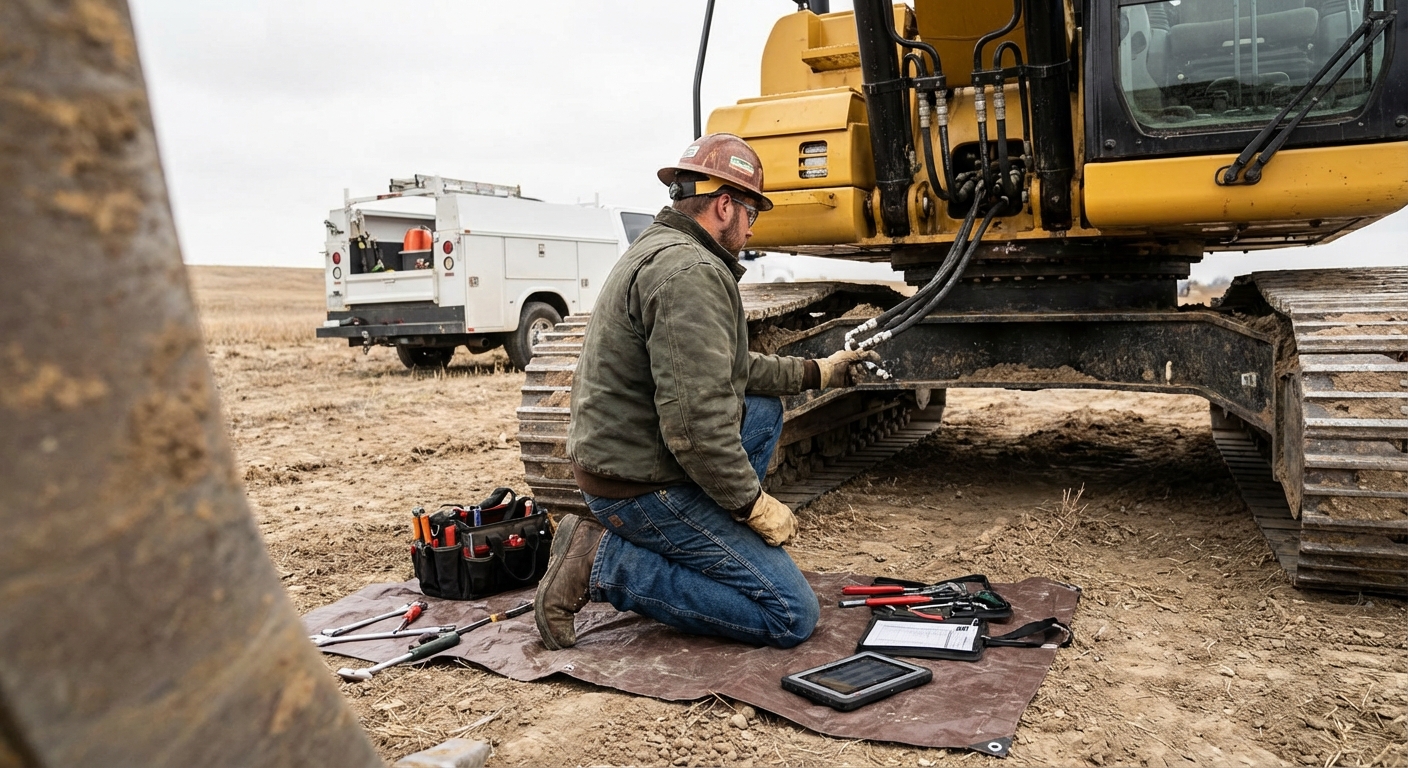
In an industry where “maintenance” often means waiting for something to break, Heartland Equipment Services has built a business around a different philosophy: systematic prevention delivers better outcomes than emergency response. This Kansas City-based service company has carved out a distinctive market position by combining comprehensive preventive maintenance programs with rapid emergency response capability.
Equipment Insider visited Heartland’s operations to understand how proactive maintenance strategies create value for equipment operators.
Company Background
Heartland Equipment Services was founded in 2015 by brothers Jason and Kevin Loomis, both former service managers at equipment dealerships who became frustrated with the limitations of dealer service models.
“Dealer service is fundamentally reactive,” Jason Loomis explains. “Customers call when equipment breaks, dealers respond to fix it. There’s no systematic approach to prevention, no ownership of equipment health across fleets. We saw opportunity in that gap.”
The brothers launched Heartland with a simple proposition: comprehensive maintenance management for contractors who want equipment that works without constant attention. Rather than competing with dealers on emergency repair, Heartland focuses on preventing emergencies through systematic maintenance.
Today, Heartland employs 45 technicians and support staff, operating from facilities in Kansas City, Wichita, and Omaha. The company manages maintenance for over 1,200 machines across its customer base.
Service Model
Heartland’s approach differs fundamentally from traditional equipment service:
Maintenance Ownership
Traditional service relationships are transactional—customers call for specific services, providers deliver those services. Heartland’s model is different:
“We don’t just do maintenance—we own it,” Kevin Loomis explains. “We track every machine, schedule every service, and take responsibility for equipment availability. Customers pay us to keep their equipment working, not to respond when it doesn’t.”
This ownership model transfers maintenance management burden from contractors to Heartland. Customers no longer track service intervals, schedule technicians, or manage maintenance logistics—Heartland handles everything.
Proactive Scheduling
Heartland maintains detailed records on every machine under contract, tracking:
- Operating hours and service intervals
- Historical maintenance and repairs
- Component age and remaining life
- Manufacturer recommendations and updates
- Site schedules and accessibility
This data enables proactive service scheduling optimized for both equipment needs and customer operations:
“We schedule maintenance during low-utilization periods when possible,” notes Operations Manager Lisa Park. “A scheduled service at 6 AM Saturday costs the customer nothing in productivity. An emergency breakdown Monday morning costs everything.”
Systematic Inspection
Every scheduled service includes comprehensive inspection beyond the immediate maintenance items. Technicians document:
- Developing issues requiring attention
- Safety concerns needing immediate address
- Wear patterns suggesting future needs
- Opportunities for optimization
“We catch problems early when they’re cheap to fix,” Park explains. “A hydraulic hose showing wear costs $50 to replace proactively. The same hose failing during operation costs the hose replacement plus cleanup, contamination mitigation, and downtime. Prevention always wins.”
Emergency Response
Despite emphasis on prevention, Heartland maintains emergency response capability for situations that arise despite maintenance:
- Four-hour response commitment in core territory
- 24/7 dispatch for urgent situations
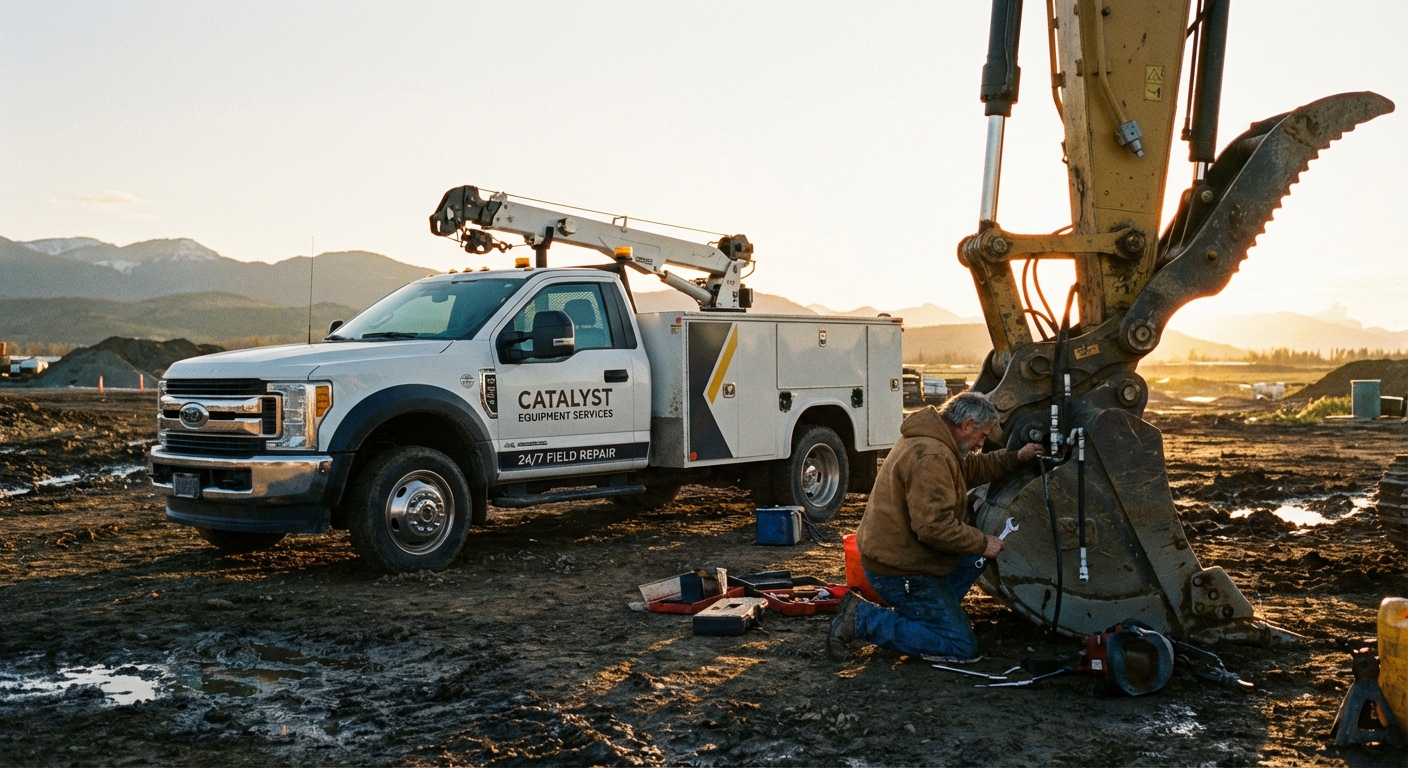
- Mobile service units equipped for field repair
- Towing and recovery coordination when needed
“Emergencies happen even with excellent maintenance,” Jason Loomis acknowledges. “When they do, customers need immediate response. We provide that capability as backup to our preventive programs.”
Technology Platform
Heartland has developed proprietary technology supporting its service model:
Equipment Database
Every machine under Heartland management is documented in a comprehensive database including:
- Equipment specifications and configuration
- Complete maintenance history
- Component tracking and life projections
- Location and accessibility information
- Customer preferences and requirements
“Our database is the foundation of proactive management,” notes Technology Director Michael Chen. “You can’t manage what you don’t know. We know everything about every machine.”
Scheduling Optimization
Algorithms optimize maintenance scheduling considering:
- Service intervals and requirements
- Technician availability and location
- Customer site schedules and access
- Travel efficiency across technician routes
- Parts availability and logistics
“Optimization ensures we’re efficient while meeting every service requirement,” Chen explains. “Customers get better service while we operate profitably.”
Customer Portal
Heartland’s customer portal provides real-time visibility:
- Equipment status and scheduled services
- Completed work documentation
- Upcoming maintenance requirements
- Cost tracking and reporting
- Issue alerts and recommendations
“Customers can see exactly what we’re doing and why,” Chen notes. “Transparency builds trust and helps customers plan around maintenance.”
Telematics Integration
Heartland integrates with equipment telematics systems to capture:
- Operating hours for service scheduling
- Fault codes for proactive response
- Utilization patterns for optimization
- Location data for service routing
“Telematics data makes our service smarter,” Chen explains. “Real-time hours mean we schedule based on actual usage, not estimates. Fault codes let us respond to developing issues before failures occur.”
Customer Segments
Heartland serves several distinct customer segments:
Fleet Operators
Contractors operating 10-50+ machines represent Heartland’s core customers. These operators need systematic maintenance management but lack internal capability to provide it.
“Fleet operators are stretched thin,” Jason Loomis observes. “They’re managing projects, employees, customers, and equipment. Maintenance management takes time they don’t have. We handle it so they can focus on their core business.”
Rental Companies
Regional rental companies outsource maintenance to Heartland, gaining access to maintenance management capabilities without building internal infrastructure.
“Rental companies need equipment available when customers call,” Park notes. “Our systematic approach minimizes unexpected downtime. Rental companies like predictability.”
Institutional Operators
Municipalities, utilities, and other institutional equipment operators value Heartland’s documentation and compliance capabilities. Detailed records support audits, procurement justification, and regulatory compliance.
Economic Model
Heartland’s pricing reflects comprehensive maintenance management rather than hourly service:
Subscription Programs
Most customers purchase maintenance on subscription basis—monthly fees covering all scheduled maintenance, inspections, and specified services. Subscriptions provide:
- Predictable budgeting for customers
- Stable revenue for Heartland
- Incentive alignment around prevention
“Subscriptions align our interests with customer interests,” Kevin Loomis explains. “We make money when equipment stays healthy, not when it breaks. That changes behavior.”
Value Demonstration
Heartland tracks and reports metrics demonstrating program value:
- Equipment availability and uptime
- Maintenance cost per hour
- Emergency incidents avoided
- Comparison to industry benchmarks
“We show customers exactly what they’re getting,” Park notes. “Numbers demonstrate that proactive management costs less than reactive firefighting.”
Competitive Differentiation
Heartland competes against dealer service departments, independent repair shops, and customer internal maintenance:
Versus Dealers
Equipment dealers focus on equipment sales with service as a support function. Heartland’s exclusive focus on service enables:
- Deeper maintenance expertise
- Multi-brand capability
- Service-first rather than sales-first culture
“Dealers want to sell equipment—service supports that goal,” Jason Loomis observes. “We want equipment to last longer and work better. Different objectives produce different outcomes.”
Versus Independent Shops
Independent repair shops typically operate reactively, responding to customer calls for specific work. Heartland’s systematic approach offers:
- Proactive management versus reactive response
- Comprehensive programs versus transactional services
- Technology-enabled efficiency versus manual processes
Versus Internal Maintenance
Some contractors maintain equipment internally. Heartland offers advantages including:
- Professional maintenance management systems
- Specialized technician training and certification
- Economies of scale in parts and supplies
- Reduced administrative burden
Looking Forward
Heartland sees expansion opportunity as equipment complexity increases and workforce challenges affect contractor maintenance capabilities:
“Equipment is getting more sophisticated, and qualified technicians are harder to find,” Kevin Loomis observes. “Contractors who once did maintenance internally increasingly can’t staff that function effectively. We fill that gap.”
Geographic expansion into adjacent markets is underway, replicating the model in areas where relationships and reputation can be established.
“We grow by demonstrating value,” Jason Loomis concludes. “Customers who see results refer others. That organic growth is sustainable.”
For related coverage, see our profile of Precision Equipment Services and our analysis of fleet management software.
Editor’s Note: Contractors interested in systematic maintenance management may find FieldFix useful for tracking equipment history, scheduling services, and documenting maintenance regardless of who performs the work. Learn more at fieldfix.pro.