OPINION: Nobody Wants to Wrench Anymore (And It's Our Fault)
The mechanic shortage isn't some mystery. We built it with low pay, terrible conditions, and an industry that treats its techs like they're replaceable. They aren't.
I had a hydraulic cylinder blow on my Takeuchi TL12 in the middle of a job last fall. Not catastrophic, but the machine was down. I called my dealer. Earliest they could look at it? Three weeks.
Three weeks.
I’ve got contracts to fill, customers waiting, and a $70,000 machine sitting in my yard leaking fluid because there’s nobody available to fix it. And this isn’t some rural dealer with two bays. This is a major dealership in the Cincinnati metro.
So I found a mobile mechanic through a buddy. Guy drove out, diagnosed it, sourced the cylinder, and had me running in four days. Cost me about the same as the dealer would’ve charged. I asked him why he left dealership work. His answer stuck with me: “I got tired of being treated like I was stupid by people who’ve never turned a wrench.”
That’s the mechanic shortage in one sentence.
We Pretend This Is a Mystery
Every industry conference I’ve been to in the last two years, someone gets on stage and talks about the “skills gap” or the “workforce crisis.” They throw around stats about how many techs are retiring and how few are coming up behind them. Then they suggest the solution is more marketing. Get kids excited about the trades! Post TikToks of mechanics doing cool stuff!
That’s not wrong, exactly. But it misses the point so badly it’s almost insulting.
Young people aren’t avoiding this trade because they don’t know about it. They’re avoiding it because they’ve watched their dads and uncles come home with blown-out backs, busted knuckles, and paychecks that don’t match the punishment. They’ve seen guys with 20 years of experience get passed over for shop foreman because some kid with a business degree walked in. They’ve watched dealerships charge customers $180 an hour for labor while paying the tech doing the work $28.
You don’t need a marketing campaign to fix that. You need to pay people what they’re worth.
The Pay Problem Is Real
Let’s talk numbers because I think a lot of equipment owners don’t realize how bad it is.
The average heavy equipment mechanic in the U.S. makes somewhere around $55,000 to $65,000 a year. That’s for a skilled trade that requires years of training, expensive tools you often buy yourself, and work that destroys your body. Meanwhile, a kid out of a coding bootcamp with six months of training can pull $75,000 remote, in sweatpants, without ever crawling under a machine in January.
I’m not knocking software developers. Good for them. But don’t act confused about why a 19-year-old looks at those two options and picks the one that doesn’t involve lying in mud troubleshooting a CAN bus fault while his fingers go numb.
Dealers are the worst offenders. I’ve talked to guys who worked at dealerships for 8-10 years, became the go-to diagnostic tech in the shop, and were still making $30 an hour. The dealer bills their time at $165-$185 an hour. Even accounting for overhead, that spread is obscene. And the techs know it. They can do math.
The ones with ambition leave and go mobile or start their own shops. The ones without ambition stay and stop caring. Neither outcome is good for the industry.
It’s Not Just the Money
Pay is the biggest factor, but it’s not the only one. The working conditions at a lot of shops are genuinely bad.
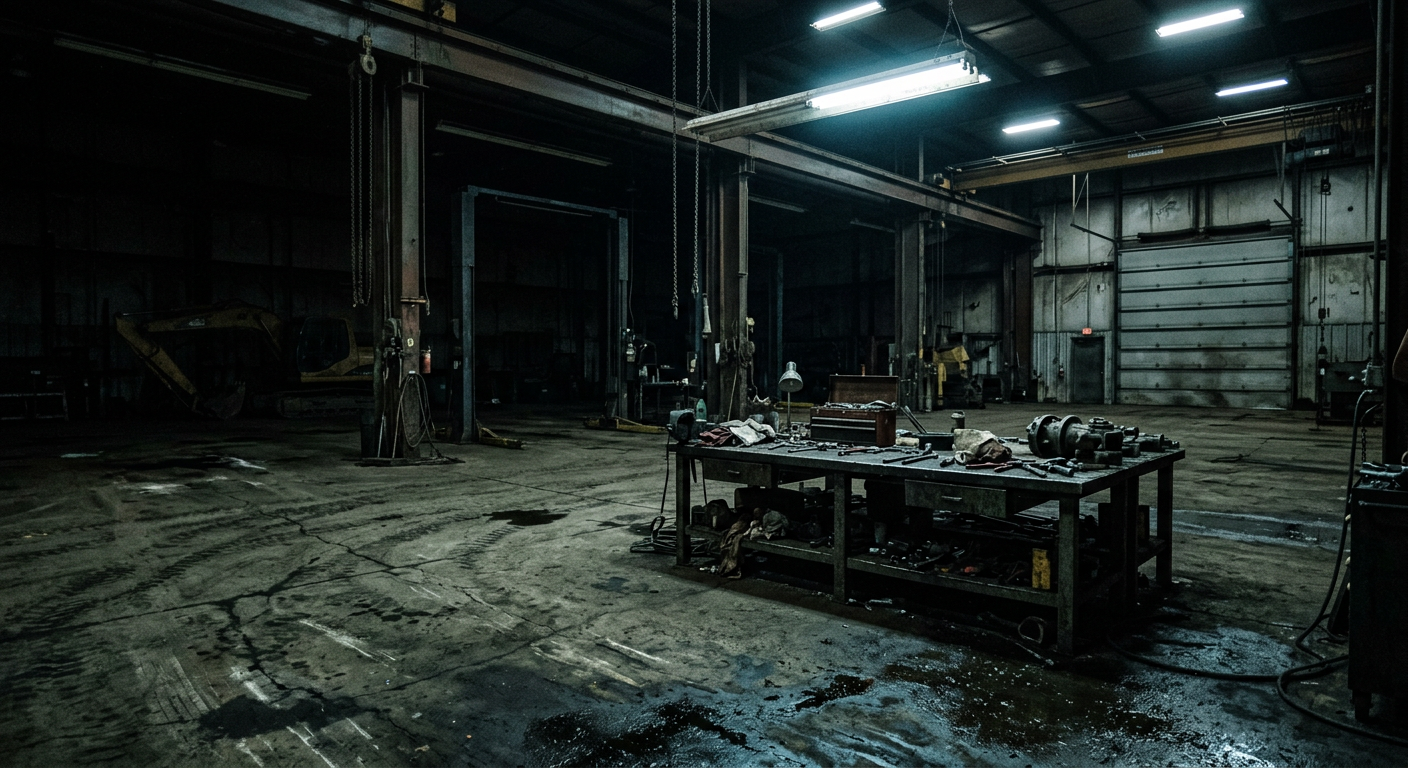
I visited a dealer service department last year to check on a machine they were working on. The shop was freezing. The overhead heaters were broken and had been broken for “a while” according to the tech. The floor was cracked concrete. The lighting was terrible. And these guys were expected to do precision diagnostic work on machines worth hundreds of thousands of dollars.
Compare that to how we treat equipment. Nobody would let their $400,000 excavator sit in a building with no heat and bad lighting. We’d call that neglect. But we’ll put the human being who fixes that excavator in those exact conditions and wonder why he quits.
Tools are another sore spot. A lot of shops expect techs to supply their own hand tools, and a quality tool set for heavy equipment work runs $15,000 to $30,000 or more. Some dealers offer tool allowances, but they’re usually a joke. $500 a year when you need a $2,000 diagnostic scanner. Thanks.
Then there’s the scheduling. Plenty of shops run mandatory overtime during busy seasons, which in construction means April through November. That’s eight months of forced 50-60 hour weeks. The pay bump helps, but the burnout is real. I’ve seen good techs walk away from the trade entirely because they wanted to see their kids on a Saturday.
The Respect Problem
This is the one nobody wants to talk about, but it might matter more than pay.
Mechanics in this industry get treated like they’re at the bottom of the food chain. Service writers talk down to them. Sales guys ignore them. And owners? Most equipment owners I know, myself included if I’m being honest, have been guilty of showing up to a shop and acting like our downtime is the mechanic’s personal failure.
I caught myself doing it once. My Bobcat was in for a turbo issue, it was taking longer than quoted, and I called the shop heated. The tech got on the phone and calmly explained that the turbo was fine but there was a boost leak in a spot that required pulling the cab, which added six hours. He was right. I was wrong. And instead of apologizing, I just said “okay” and hung up.
That interaction changed how I handle things. But most owners never have that moment. They just keep treating techs like obstacles between them and their machines.
The younger generation especially won’t tolerate disrespect at work. Call it soft if you want. I call it having options. When every trade is hiring and Amazon pays $20 an hour to drive a van with air conditioning, you better give people a reason to crawl under a dozer in August.
What Actually Fixes This
I’m not going to pretend I have all the answers, but here’s what I think would actually move the needle.
Pay more. Not 5% more. Significantly more. If your best diagnostic tech is making $32 an hour and you’re billing him out at $175, there’s room. Find it. A good tech who leaves costs you way more than the raise would’ve.
Fix the shops. Heat, cooling, lighting, clean floors, decent bathrooms. This stuff costs money. It’s worth it. You’re asking people to spend 2,000+ hours a year in that building. Make it somewhere they don’t dread walking into.
Buy the tools or split the cost. If you require specialty tools for the work, provide them. Asking a $55K-a-year employee to fund a $25K tool collection is insane when you think about it for more than ten seconds.
Create real career paths. Tech to lead tech to shop foreman to service manager shouldn’t take 25 years and a miracle. If your best path to advancement is “wait for someone to retire or die,” your retention will suffer.
Stop treating techs like they’re replaceable. Because right now, they absolutely are not. Every tech who leaves is a hole that takes months or years to fill. Act like it.
The Operator’s Role
I’ll put this on us too, the equipment owners and operators.
When your machine breaks down and the repair takes longer than you want, that’s not the mechanic’s fault. When the diagnosis changes after they open it up, that’s not incompetence. That’s how complex modern equipment works. These machines are rolling computer networks with hydraulics attached. Diagnosing them is genuinely hard.
Be patient. Be respectful. Pay your bills on time. And when a tech does good work, tell them. Tell their boss. Leave a review for the shop. That stuff matters more than you think.
I’ve started bringing coffee and lunch to my mobile mechanic when he’s out on a job site. Takes me five minutes and $15. The loyalty I’ve gotten back from that tiny gesture is worth ten times the cost. He prioritizes my calls now. That’s not manipulation. That’s just being a decent human being.
This Gets Worse Before It Gets Better
Here’s the uncomfortable truth: the mechanic shortage is going to get worse. The average age of heavy equipment techs keeps climbing. Fewer kids are entering trade programs. And the demand for skilled techs keeps growing because machines are getting more complex, not simpler.
The Tier 4 emissions stuff alone added a whole layer of systems that require specialized knowledge. DEF systems, DPF regens, EGR coolers. Now we’re heading into electric and hybrid equipment that needs high-voltage certification. The skill requirements are going up while the workforce is going down.
Something has to give. Either the industry starts treating mechanics like the skilled professionals they are, or we end up in a world where a broken machine means weeks of downtime because there’s simply nobody available to fix it.
For some of you reading this, that’s already your reality. It’s been mine more than once.
The Bottom Line
We built this shortage. Not overnight, but steadily, over decades of undervaluing the people who keep our iron running. Low pay, bad conditions, no respect, and zero career development. We treated mechanics like a cost to minimize instead of an asset to invest in.
The fix isn’t complicated. It’s just expensive and uncomfortable, which is why most of the industry would rather make another “Trades Are Cool” video than actually write bigger checks.
If you’re an operator reading this, go shake your mechanic’s hand and ask when his last raise was. If you’re a dealer, go walk through your shop and ask yourself if you’d want to work there. If you’re a shop owner, look at your pay scale and compare it to what you’re billing.
The answers are right in front of us. We just have to stop pretending they aren’t.
Alex Boyd is the owner of Brushworks Services Co., a forestry mulching and land clearing company based in Loveland, Ohio. He runs multiple crews and spends too much time thinking about equipment maintenance.