
OPINION: Stop Buying Attachments for Work You Haven't Sold
Too many contractors buy a grinder, planer, mulcher, or specialty attachment first and then go hunting for work to justify it. That backwards math traps cash in iron, creates weak sales pressure, and turns one slow month into a panic attack.

I have watched a lot of small equipment businesses talk themselves into bad attachment purchases.
Not because the attachment was junk.
Because the timing was stupid.
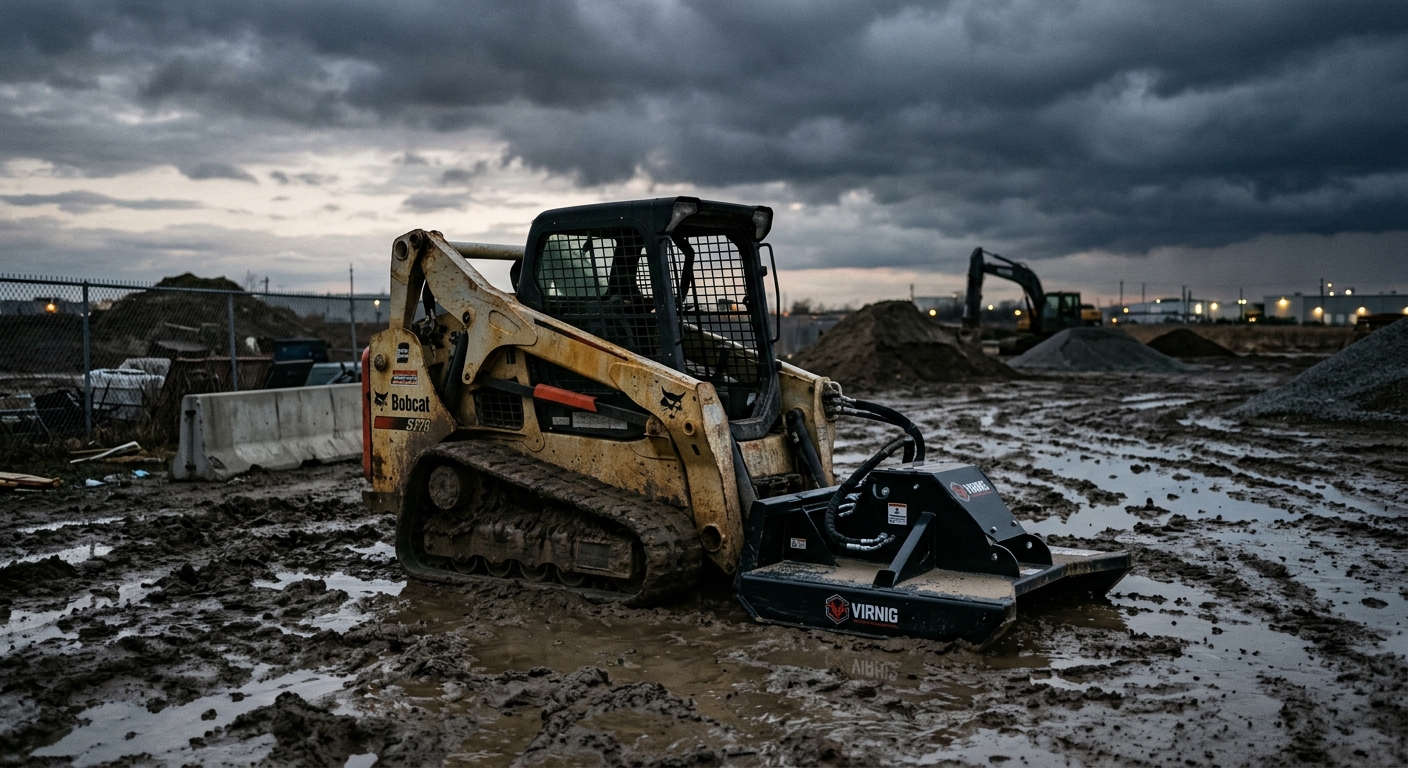
They buy the planer, the mulcher, the grinder, the flail, the brush cutter, the screening bucket, or the tiltrotator before they have steady demand for it. Then they spend the next six months trying to force the market to prove they were smart.
I run a forestry mulching company in Ohio. I like iron. I like attachments. I know how easy it is to watch a demo, hear a rep talk about margins, picture a new service line, and start building a fantasy around one piece of equipment. You start telling yourself the same story a lot of contractors tell.
“If I had this attachment, I could go after more work.”
But that is not the same as saying the work is already there, the customers are already asking, and the numbers already make sense.
A lot of operators are not buying proven demand. They are buying hope with hydraulic couplers.
Hope is a bad strategy.
Attachments make people feel bigger than they are
This is why the trap works.
An attachment feels cheaper than a whole machine, so people treat it like a low-risk move. A guy who would think hard about buying another skid steer will buy a $28,000 attachment, a second trailer, and a pile of support equipment with a lot less resistance because none of it looks massive by itself.
But that money still leaves your account. It still needs maintenance. It still needs transport. It still needs an operator who knows what he is doing. And it still needs enough sold work to justify the space it takes up in your yard and in your head.
I have seen contractors convince themselves they are being disciplined because they did not buy a whole new machine. In reality, they just bought a smaller version of the same problem.
The attachment is not the whole decision.
You buy a stump grinder because you want to add stump work. Fine. Now you need jobs that actually need stump work, enough of them in the same radius, enough margin to deal with tooth wear, enough scheduling discipline to keep the machine moving, and enough sales clarity that customers understand what you are charging for.
If you miss on any of that, the attachment turns into a reminder that your ambition got ahead of your business.
”We can sell it later” is usually a lie people tell themselves
This is another line I hear all the time.
“Worst case, I can always sell it.”
Maybe. But usually not for what you paid, not as fast as you hoped, and not in the moment you actually need the cash.
Used attachment values get soft in a hurry when the market gets weird or when the thing you bought serves a narrow use case. Everybody acts like resale is a safety net right up until they are the one listing it, answering dumb messages, and getting offered half of what they need.
I think small contractors lean way too hard on future resale to make present math feel less risky. It is the same brain disease that makes long financing terms feel safe. You are using a future escape hatch to excuse a current decision you have not really earned.
I would rather make the purchase hard to regret on the front end than easy to explain on the back end.
Capability is not demand
This is the part people mix up.
Owning the attachment means you can do the work. It does not mean the work exists at the volume you need.
That sounds obvious, but guys screw it up constantly.
One customer asks if you can do forestry mulching, so now you are shopping mulcher heads. One builder asks if you can do grading, so now you are pricing laser systems and specialty buckets. One municipality mentions shoulder mowing, so now you are online looking at boom attachments and acting like you just unlocked a whole division.
That is not market validation. That is curiosity.
It shows up repeatedly. It shows up from different customers. It shows up at margins that still look decent after fuel, labor, wear, hauling, downtime, and the normal chaos of field work. It shows up often enough that the attachment does not need a speech every month to justify its existence.
If demand is not doing that yet, the smart move is usually to rent, subcontract, or say no.
A lot of contractors hate that answer because renting feels temporary, subcontracting bruises their ego, and saying no makes them feel small.
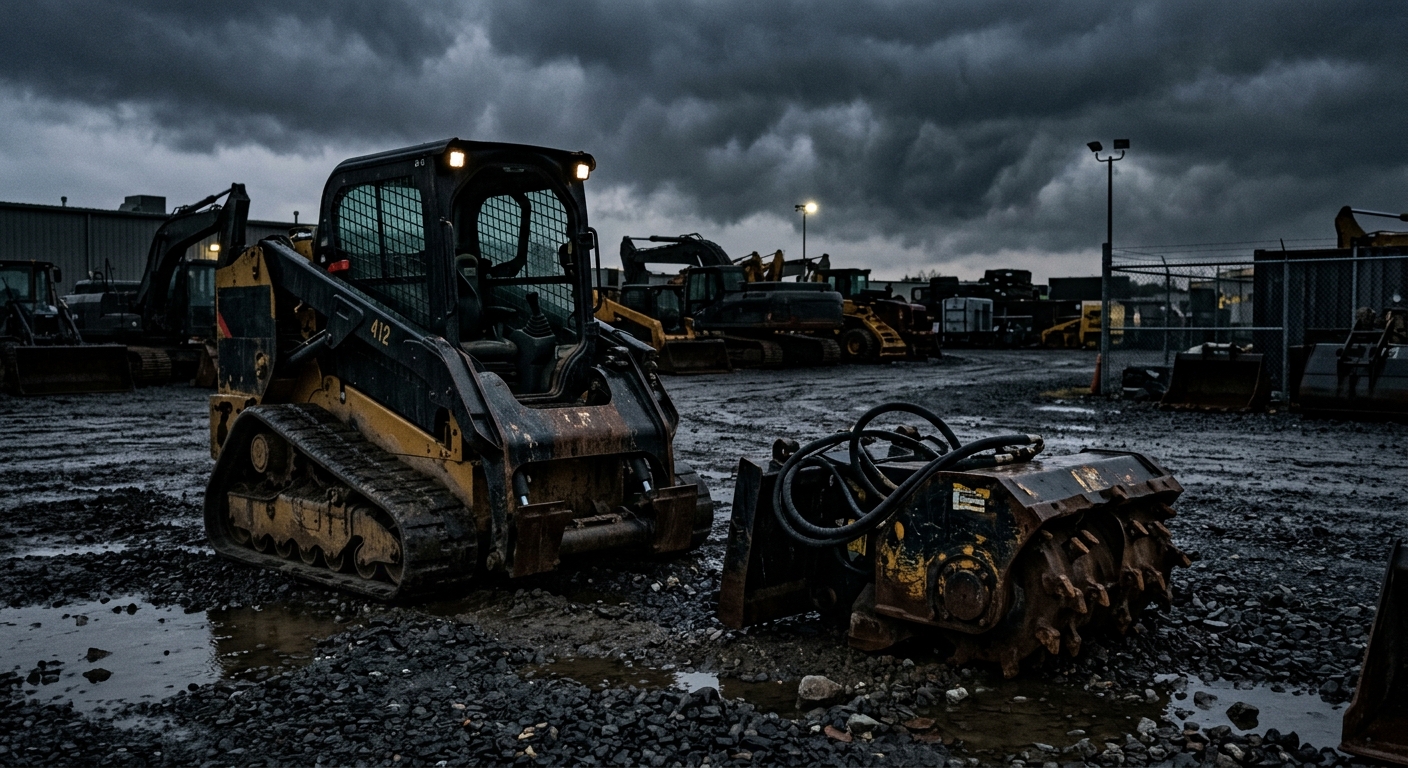
There is nothing impressive about owning a specialized tool that sits still.
I think boredom buys a lot of bad iron
A decent chunk of attachment buying is not strategy. It is boredom.
Work slows down a little. The usual jobs start feeling repetitive. The owner gets restless. He starts thinking a new service line will create momentum. So he buys something different because he wants the business to feel fresh again.
That is a terrible reason to spend money.
I know the feeling because I have had it. When you are trying to grow, everything starts to look like a lever. Some of that instinct is healthy. Some of it is just impatience wearing work boots.
I have caught myself more excited about what a new attachment represented than what it would actually produce. That should be a warning sign.
If the emotional payoff of the purchase is bigger than the practical case for the purchase, you are drifting into dangerous territory.
The hidden cost is not just the payment
Contractors usually do lazy math on attachments.
They look at purchase price or monthly payment. Maybe they factor in interest. That is about it.
That is kid math.
You have haul weight. Extra tie-down time. More maintenance items. More parts inventory. More training. More chances for operator error. More clutter in the yard. More scheduling complexity. More temptation to sell jobs that are outside your core lane just because now you own the tool.
That last one is sneaky and expensive.
I have seen people start chasing bad-fit jobs purely because they felt guilty that the attachment was not working enough. The equipment starts driving the sales strategy instead of the other way around.
That is how margins get weird.
You take a job an hour away that barely fits the tool. You spend too much time loading, unloading, explaining scope, and fighting site conditions. Then you call it a win because at least the attachment was working.
No. A machine moving is not the same as a business making money.
In my world, one wrong equipment decision can make you feel busy while quietly eating the guts out of your margins. That is the dangerous part. The pain is not always loud right away.
The first job is the most expensive liar
Somebody buys a specialty attachment, lands one decent job with it, and immediately starts talking like the decision was validated.
It was not.
The first job lies.
The first job is exciting. The customer is usually easy because you are eager. You overlook setup time because you are motivated. You discount the weird downtime because you are learning. You forgive a weak margin because you are telling yourself this is step one.
Then you start annualizing one good week into a whole business case.
That is stupid.
I want to know what the sixth job looks like. I want to know how long the gaps are between jobs. I want to know whether your guys still like using the thing after the novelty wears off. I want to know if the wear parts are nastier than you guessed. I want to know if your original rate still looks good after the easy work disappears.
A purchase decision should survive ordinary reality, not just the honeymoon period.
Rent first unless the market is punching you in the face
This is the simplest rule I can give operators.
If the market is not punching you in the face with repeatable demand, rent first.
That is not weakness. That is discipline.
Renting lets you test pricing, workflow, customer demand, transport headaches, maintenance assumptions, and operator fit without marrying the thing. You get real field data before you commit capital.
People act like renting is expensive. Owning the wrong thing for three years is worse.
If you rent an attachment three, four, or five times and keep losing work because availability is tight or margins are strong enough that the rental bill hardly matters, now we have a real conversation. Now you are not guessing. Now the purchase is responding to demand instead of trying to create it.
I would much rather buy late than buy early.
Buying late may cost a little upside.
Buying early can choke cash flow, distract the business, and lock you into a lane that was never really there.
The best operators I know stay boring on purpose
The sharpest operators are often boring buyers.
They do not buy every tool that opens a theoretical market. They stay close to the work they understand, the jobs they can sell repeatedly, and the equipment they can keep productive.
That does not mean they never expand. It means expansion has standards. They want to see real demand, know who will run it, and know how fast it pays back.
That is how adults buy iron.
What I would ask before buying any attachment
Before I buy an attachment now, I want honest answers to a few questions.
How many times in the last six months did I lose this exact kind of job?
Not sort of similar work. Not vague adjacent work. This exact kind.
How many current customers have asked for it without me leading them there?
What is the real billed-hour target to recover the cost?
Who is going to run it well enough that the work still looks professional?
What extra support costs show up with transport, wear parts, setup, storage, and training?
If work slows down, does this tool still make sense or does it become a guilt machine sitting by the fence?
And maybe the biggest question of all: am I buying this because the market wants it, or because I want to feel like the kind of company that offers it?
Identity spending is real in this industry.
People buy attachments to match the story they want to tell about their business. That is dangerous. Your company does not need a better story. It needs stronger margins.
Focus beats variety more often than people admit
A lot of small contractors think more service lines automatically mean more stability.
Sometimes the opposite is true.
Sometimes more service lines mean more confusion, more mediocre execution, and more half-fed equipment decisions.
I would rather be very good at a few profitable jobs than halfway credible at ten different things.
Customers trust a clear specialty more. Your crew gets sharper. Your pricing improves. Your scheduling gets cleaner. Your equipment purchases get easier because you are buying for a real operating model, not for random opportunity chasing.
I am not against diversification. I am against sloppy diversification.
The takeaway
If you have not sold the work repeatedly, you probably have not earned the attachment yet.
That is the blunt version.
Buy tools to serve demand that already has a pulse. Do not buy them to manufacture confidence, cure boredom, or cosplay as a bigger company.
Rent first. Subcontract when it makes sense. Let customers teach you what they consistently want before you hard-mount another expensive idea onto your business.
Attachments should make your operation tighter, not more fragile.
If you are staring at a specialty tool right now, ask yourself one hard question before you sign anything:
Did the market ask for this, or did my ego?