OPINION: Stop Buying Attachments for Work You Haven't Sold
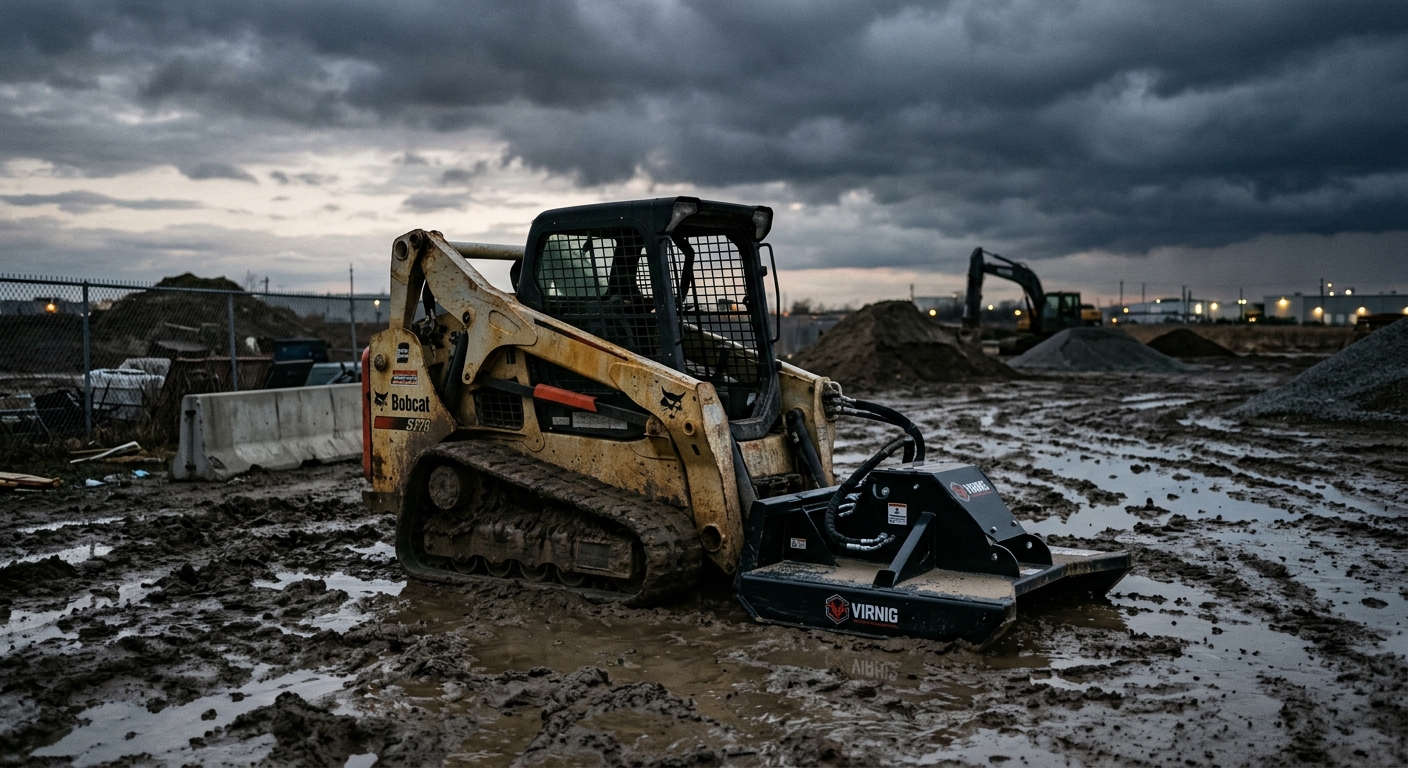
Too many contractors buy a grinder, planer, mulcher, or specialty bucket first and then go hunting for demand. That is not growth. It is trapped cash with a coupler on it.
I see this all the time.
A contractor gets bored with the kind of work he already knows how to sell, sees a cool attachment online, and convinces himself the attachment is the business plan.
That is backwards.
The attachment is supposed to support demand you already have. It is not supposed to create demand by magic.
I run a forestry mulching company in Ohio. We use attachments that can make real money, and we use some that can turn into very expensive lawn art if the schedule dries up. I like iron. I like tools. I understand the itch. A new attachment feels like progress. It feels like you are expanding. It feels like the next level.
Sometimes it is.
A lot of times it is just another payment hanging off the front of a machine that already had enough jobs to do.
the fantasy starts with one customer asking
Most attachment mistakes start with one conversation.
A customer asks, “Do you guys do stump grinding too?”
Or milling.
Or planing.
Or screening.
Or rock crushing.
Or brush cutting in a tighter footprint.
The owner says no, goes home irritated, opens Marketplace or calls a dealer, and starts rationalizing.
“I already have the skid steer.”
“I could add this service pretty easily.”
“There is probably a lot of demand for this around here.”
“If I get one good job a month, it pays for itself.”
That last sentence has buried a lot of money.
One customer asking is not market validation. It is one customer asking.
You need a pattern, not a moment.
buying capability is not the same as building demand
This is the part a lot of operators miss.
Owning the attachment means you now have capability. That is all.
It does not mean people know you offer it. It does not mean your sales process can move it. It does not mean your crew knows how to price it, schedule it, maintain it, or keep it busy enough to justify what it cost.
I think contractors confuse possibility with pipeline.
They say, “We can do this now.”
Fine. Who is already lined up to buy it?
How many of those jobs exist in your market every month?
What are they paying?
How many competitors are already doing it better than you?
What does it cost when the attachment sits for three weeks because your regular work is more urgent and your new specialty line never got traction?
Nobody asks enough of those questions because buying feels productive. Selling is harder. Marketing it is harder. Learning where the work actually comes from is harder.
So people buy first and think later.
That is how cash gets trapped.
attachments lie to you because they are cheaper than whole machines
A lot of bad decisions happen because an attachment does not feel as scary as buying a new machine.
A contractor will pause over a $140,000 machine and then casually spend $28,000 on a specialty head, $9,000 on support equipment, and another chunk on hoses, couplers, teeth, trailers, and setup because each bite feels smaller.
That math is still real.
The attachment may be cheaper than a machine, but it still has to earn a return.
And attachments have a nasty way of bringing hidden costs with them.
Maybe your current loader does not have enough hydraulic flow to run it the way it should. So now you are into another machine upgrade sooner than planned.
Maybe your operator can run it, but not well enough to do clean work at a profitable pace. So now you are paying for a learning curve on customer jobs.
Maybe the wear parts are worse than you expected. Maybe setup time kills the margins. Maybe it takes up trailer space and forces another trip. Maybe you need a different insurance rider. Maybe the attachment can do the work, but your current client base does not value that work enough to pay what it costs.
That is how a “simple add-on” turns into a chain reaction.
i have watched this happen with mulching, grading, and niche dirt work
This is not theoretical.
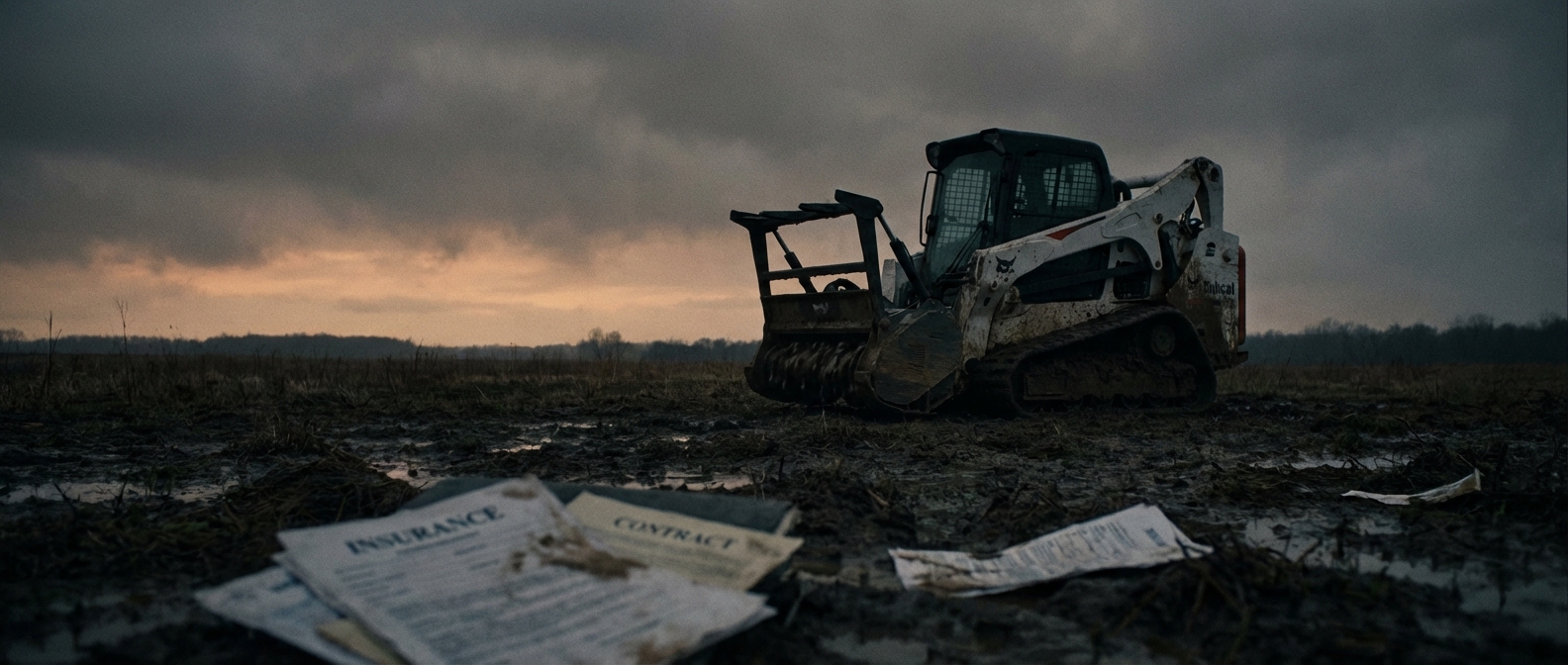
I have seen guys buy a mulcher because they had a few overgrown properties come through. They thought they were adding a premium service. What they actually added was a payment, higher wear-part bills, tougher maintenance, and a service that needed a very specific kind of lead to make sense.
If you are not already good at selling land clearing, a mulcher will not save you. It will just make your mistakes louder and more expensive.
Same thing with grading attachments. Somebody watches a few videos, buys a laser-capable setup, and thinks they are now in the fine grading business. Then they find out customers with real grading work care about finish quality, speed, and consistency, not the fact that you bought the attachment last month.
The market does not care what you own. It cares what you can deliver.
I have also seen small operators buy specialty buckets or compact screening setups because they imagined a nice upsell path on existing jobs. That can work. But when it does work, it is usually because they already had repeat customers asking for that exact thing and enough volume to keep the tool moving.
The guys who make it work are usually boring about it. They have numbers. They have a plan. They already know where the next ten jobs are likely coming from.
The guys who get burned are usually chasing a feeling.
your regular work usually deserves the money more
This is my bigger argument.
Most operators do not have an attachment problem. They have a discipline problem.
They are underpricing core work, ignoring follow-up, letting maintenance slide, or running without good systems. Then instead of tightening up the business they already have, they buy a new thing and hope it creates momentum.
That is one of the dumbest uses of capital in this industry.
If your quoting process is sloppy, fix that first.
If your website stinks and your phones are not converting leads, fix that first.
If your current machines are down too often because you keep pushing service, fix that first.
If your schedule is chaotic and you are leaving hours on the table from poor routing or poor planning, fix that first.
A lot of businesses would make more money getting 15 percent better at what they already sell than adding one sexy service they barely understand.
People hate hearing that because optimization is boring and attachments are fun.
Fun does not always pay.
the real test is repeatability
Here is the question I like now.
Can I see a clean path to this attachment being used enough, at high enough margins, by the same type of customer, over and over?
Not once.
Over and over.
If the answer is no, I get skeptical fast.
One good month proves almost nothing. Everybody in this business can point to one weird stretch where the stars lined up and a niche service looked like genius.
What matters is whether the work repeats without you having to reinvent the wheel every time.
Can your sales process consistently uncover it?
Can your marketing explain it clearly?
Can your crew execute it without drama?
Can you price it without guessing?
Can you keep it busy without neglecting the work that already pays the bills?
If not, you are not building a service line. You are experimenting with expensive metal.
There is nothing wrong with experimenting. Just call it what it is and size the risk accordingly.
rent first if you have any doubt
I think more contractors should rent specialty attachments before buying them.
Not because renting is always cheaper. It usually is not if volume is real.
Renting is useful because it forces honesty.
If you rent a planer three times in two months and each rental turns into a clean, profitable job with customers asking when you can come back, now we are learning something.
If you rent a screening bucket twice and realize setup is slower than expected, cleanup is messy, and customers do not want to pay what it actually takes, that lesson just saved you a pile of money.
Renting gives you market data without marrying the attachment.
A lot of people skip that step because ownership strokes the ego. Rental feels temporary. Temporary can be smart.
I would rather pay more per day for a while than own something permanently that I only need occasionally.
dealers are not going to save you from a bad idea
This should be obvious, but apparently it still needs said.
The dealer’s job is to sell equipment. If they think you are good for the note and they have inventory to move, they are not going to sit you down and say, “Alex, I think you are solving the wrong problem here.”
Some reps are thoughtful. Some really do try to guide customers well. But none of them are carrying your payroll.
You are.
So when a rep says, “We have had a lot of interest in these,” that means almost nothing to me. Interest is not utilization. Dealer excitement is not demand in your customer base.
The attachment has to fit your market, your machines, your crew, and your sales engine. If one of those is weak, the whole idea gets shakier fast.
the best attachments usually follow proven work
When attachment purchases go well, the story is usually pretty simple.
The contractor already has demand.
Customers already ask for the work.
The company already understands how to price it.
The attachment either improves margins, speeds up delivery, or lets the company stop subcontracting something it was already losing money on.
That is a different situation.
If I am paying somebody else to handle a piece of work every month, and I know the volume, the margins, and the operational headache involved, then bringing that capability in-house starts making sense.
Same if we are regularly turning down work we know fits our customer base and we have enough evidence that the demand is not random.
That is a business case.
“I think I can probably find some jobs for it” is not a business case.
That is wishful thinking with grease points.
what i think operators should do instead
Before you buy the next specialty attachment, make yourself prove three things.
First, show repeat demand. Not curiosity. Not a few phone calls. Actual repeated demand from the kind of customer you already serve or can reach cheaply.
Second, show margin after all the ugly stuff gets counted. Wear parts, setup time, hauling, training, downtime, financing, support equipment, and the opportunity cost of tying up a machine that could be doing something else.
Third, show operational fit. Can your current crew, schedule, and machines absorb this without turning the rest of the business into a mess?
If you cannot prove those three things, keep renting or keep subcontracting until you can.
That may sound conservative. Good. A lot of people in this industry could use a little more conservative thinking before they finance another attachment because they got excited after watching a demo.
the takeaway
Attachments should follow work. Work should not be forced to chase attachments.
If you already have repeat demand, solid margins, and a clear operational reason to bring something in-house, buy it and go make money.
If you are hoping the attachment itself will create the market, slow down.
Sell the work first.
Then buy the iron.
In that order.