
Data Centers Are Rewriting the Equipment Demand Map
AI infrastructure is pulling more than electricians and concrete crews. It is changing demand for earthmoving, rental fleets, power generation, service capacity, and jobsite support equipment.
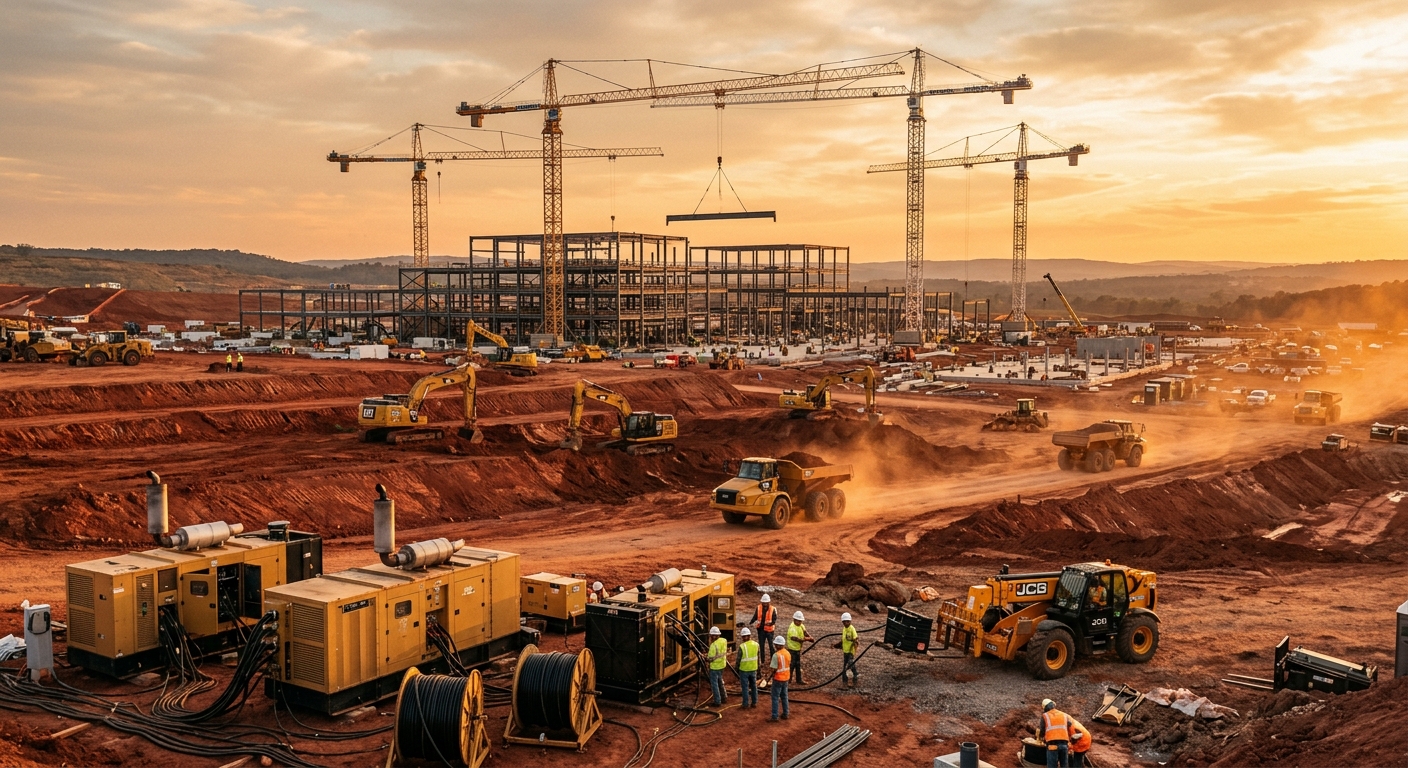
Data center construction is no longer a side story for the equipment business. It is pulling machines, technicians, generators, cranes, trucks, electricians, concrete crews, and service capacity into a narrower set of fast-moving markets.
That matters because the rest of construction is not moving in one clean direction. Residential work is still soft in many places. Smaller commercial jobs are uneven. Public infrastructure is healthy, but local contractors are not all feeling the same tailwind. Data centers sit in the middle of that split. They are big enough to change regional demand, but concentrated enough to fool equipment owners who read the boom as a broad recovery.
The latest construction data shows the split clearly. Dodge Construction Network said total construction starts jumped 34.1% in May to a seasonally adjusted annual rate of $1.78 trillion, with total starts up 12.7% year to date. The same report showed residential starts down 4.9% year to date, while nonbuilding starts were up 32.9%. Construction Dive’s coverage of the Dodge report tied the strength to infrastructure and data center work.
Planning data points the same way. Dodge’s May Momentum Index rose 5.9% to 275.7, with commercial planning up 6.9% and institutional planning up 3.1%. Dodge said planning activity broadened beyond data centers, but data centers remain one reason the top-line numbers look stronger than a lot of contractors feel.
FieldFix Editor’s Note: Data center work can make a fleet look busy while hiding what each machine is really costing. FieldFix helps owners track service history, downtime, repair spend, and cost per hour by asset, so growth decisions are based on machine-level numbers instead of project excitement.
The demand is concentrated
The data center buildout is creating strong demand in specific regions and equipment categories. Northern Virginia, Ohio, Texas, Georgia, Arizona, Indiana, Iowa, Louisiana, and parts of the Carolinas are all seeing some version of this pressure. The jobs are huge, power-hungry, schedule-driven, and often close to utility upgrades or new transmission work.
That creates a different kind of equipment market than a normal commercial cycle.
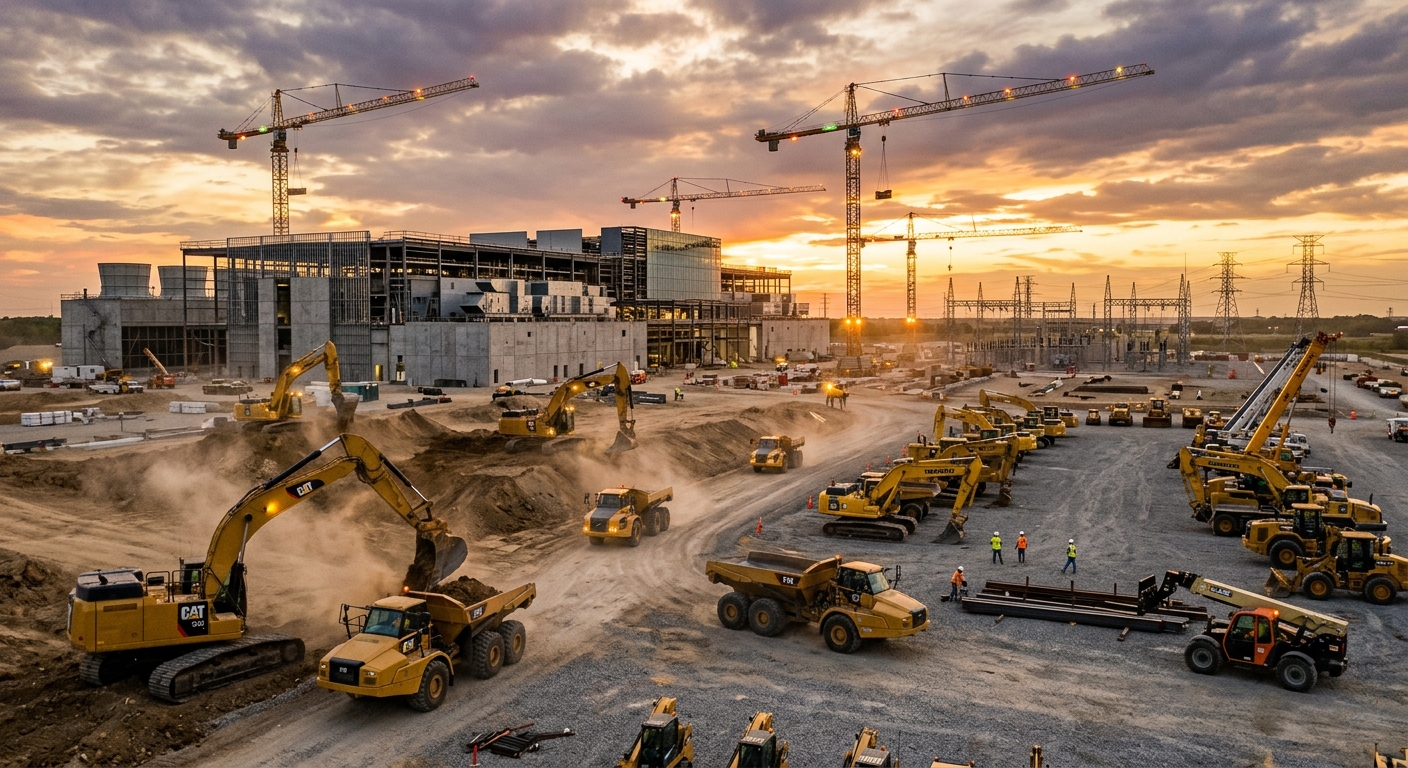
A warehouse boom can spread across many sites and many contractors. A housing boom can lift compact equipment, concrete, trucking, grading, landscaping, and utility work across a broad base. Data centers are more concentrated. They can create a sharp local pull for excavators, dozers, articulated trucks, compactors, telehandlers, cranes, generators, light towers, pumps, trenching equipment, and support fleet. Then the job changes phase, and the demand mix shifts.
For equipment dealers and rental companies, that makes the opportunity real but tricky. A branch close to a major campus can see heavy activity. A branch 90 miles away may not. A dealer with power generation, service trucks, and parts support may see a different business than a dealer that mostly moves compact earthmoving equipment. A rental yard with telehandlers, pumps, fuel tanks, generators, mats, and jobsite support gear may be better positioned than one that only adds skid steers and mini excavators.
The mistake is treating data center construction like a rising tide. It is more like a set of very strong currents. Great if you are in the right lane. Expensive if you buy fleet for demand that never reaches your yard.
Power is now part of the equipment story
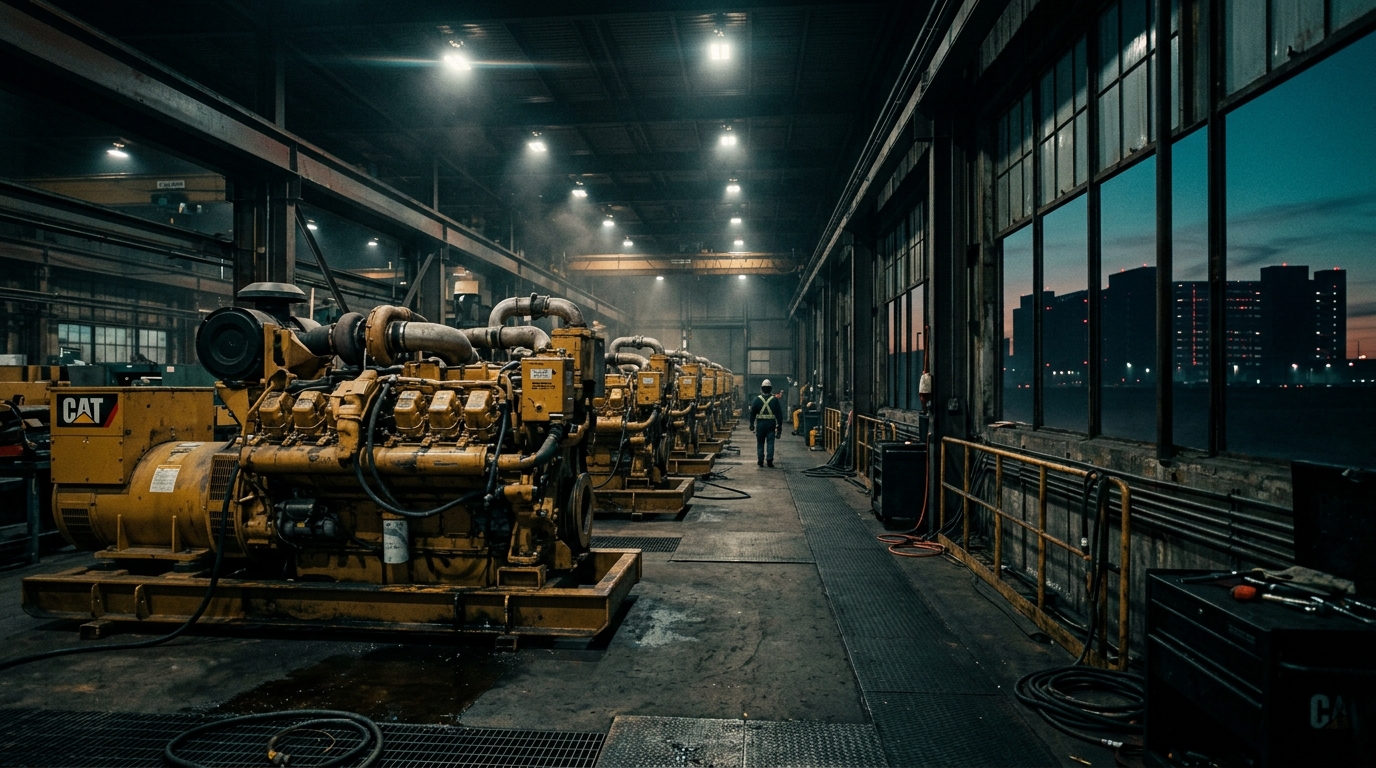
The most obvious shift is power generation. Data centers need power, backup power, cooling, substations, switchgear, fuel systems, and constant uptime planning. That pulls engine manufacturers, generator suppliers, rental power providers, electrical contractors, and service technicians deeper into the construction cycle.
Caterpillar’s first-quarter results show how large that pull has become. The company reported sales and revenues of $17.4 billion in Q1 2026, up 22% from the prior year, according to its quarterly results release. Its Power & Energy segment reported $7.031 billion in sales, up 22% from $5.783 billion a year earlier. Caterpillar’s release also breaks out Power Generation sales by application at $2.817 billion for the quarter.
That does not mean every generator order is tied to data centers. It does show that power equipment has become a larger part of the infrastructure conversation.
For contractors, this changes jobsite planning. Temporary power is no longer a small line item handled after mobilization. On large projects, power touches sequencing, safety, site logistics, commissioning, fuel management, rental coordination, service response, and weather risk. A down generator can slow testing, controls work, pumps, temporary cooling, welders, site security, and communications.
Rental companies that understand power will have an edge. That means more than owning generators. It means knowing load requirements, fuel burn, cable runs, maintenance intervals, emissions rules, backup planning, and field service response.
Earthmoving still gets the first call
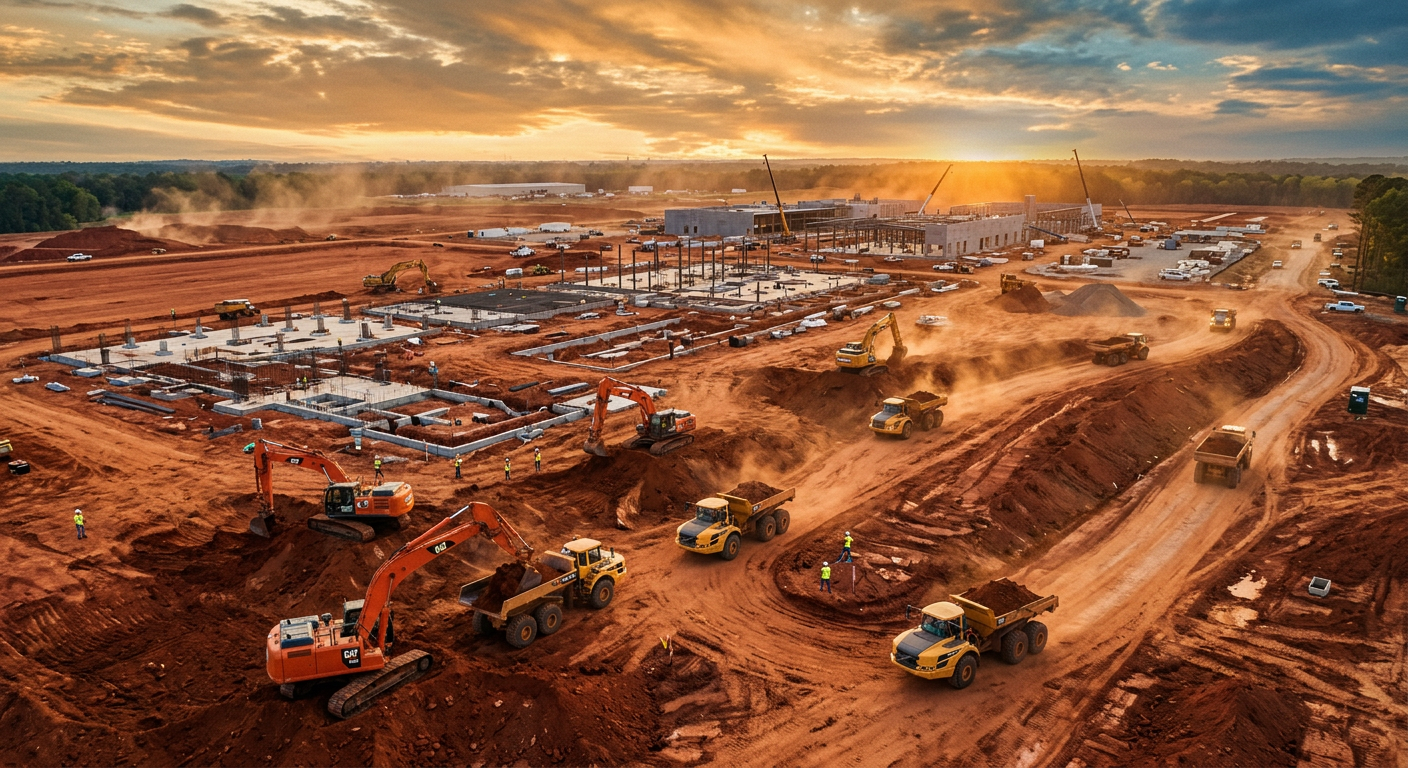
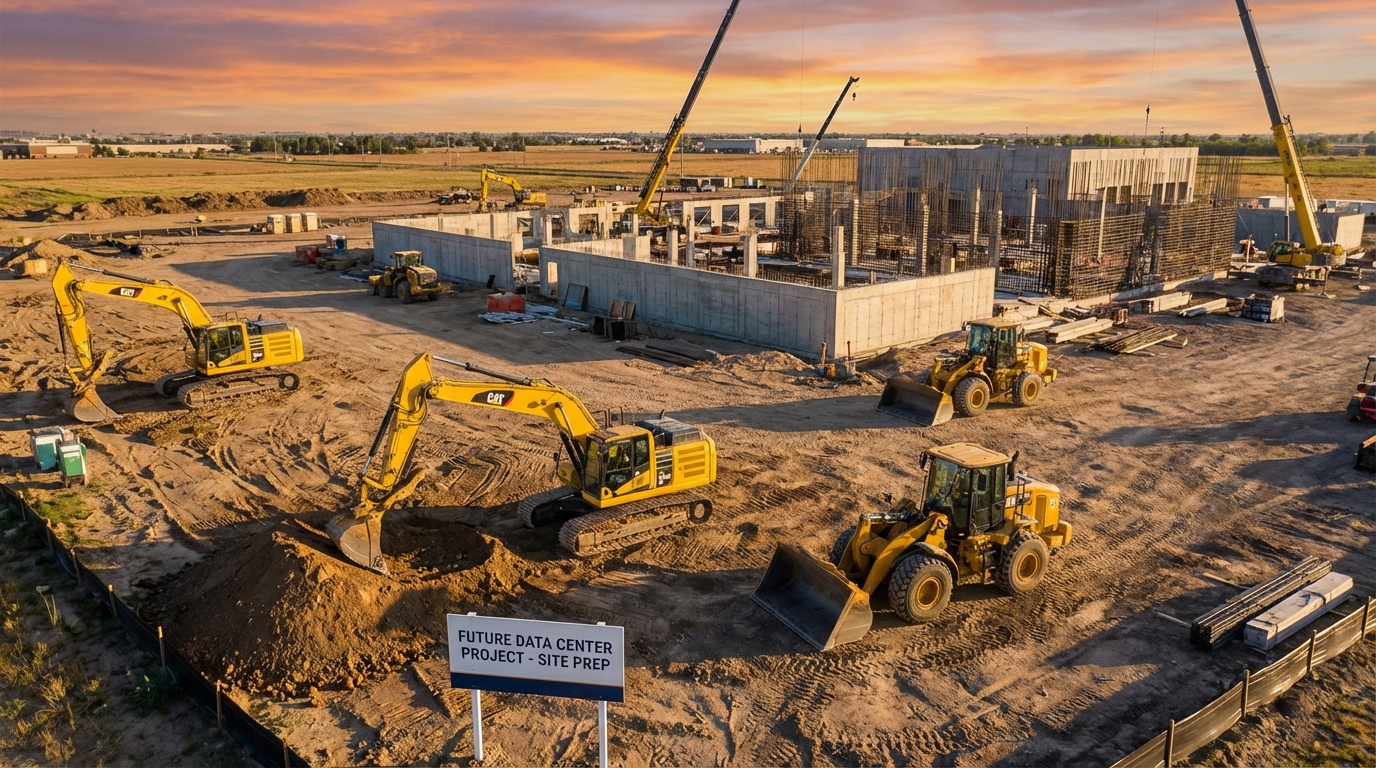
Data center projects may end with servers and cooling equipment, but they start with dirt. Site preparation can be enormous. Large campuses need clearing, mass excavation, grading, drainage, roads, utilities, retention ponds, laydown yards, duct banks, pads, foundations, fencing, and long access routes.
That work is good for heavy iron. Excavators, dozers, motor graders, loaders, articulated trucks, scrapers, rollers, compactors, and water trucks can all be pulled into the early phases. Compact equipment follows for cleanup, utility work, pad prep, and punch-list activity.
But the timing matters. Sitework demand can be intense early and then fade as the project moves into vertical construction, electrical, mechanical, and commissioning phases. A contractor that buys iron for one campus has to know what comes next. So does the rental company stocking machines around that project.
The safest equipment bet is usually fleet that can move across work types. Excavators, compact track loaders, telehandlers, trench rollers, pumps, generators, light towers, and support attachments can often find another home after a project phase ends.
That is where some operators get caught. A data center project can make one equipment category look scarce for six months. Scarcity can turn into oversupply quickly if every rental yard and contractor reacts at once.
Rental fleets need phase discipline
Data center construction is good for rental because the projects are large, complex, and schedule sensitive. Contractors often need equipment for specific windows without wanting to own every asset required by a temporary surge.
That sounds like easy money. It is not.
The phase discipline has to be tight. Early sitework may need earthmoving, compactors, water trucks, pumps, and support equipment. Structural and building envelope work can pull telehandlers, aerial lifts, forklifts, cranes, welders, compressors, and jobsite power. Electrical and mechanical phases need lifts, carts, specialty tools, temporary power, cable handling, lighting, climate support, and clean material movement. Commissioning creates its own support needs.
If a rental company reads the whole project as one demand category, it will misplace fleet. The better question is more specific: what phase is the project entering, what trades are mobilizing, what equipment will be released soon, and what support gear will become scarce next?
That requires communication with contractors. A rental rep who knows the schedule can move assets before the request becomes urgent.
Service capacity is part of this too. Data center projects do not reward slow field service. Contractors on tight schedules will remember which suppliers answered the phone, delivered clean machines, fixed failures quickly, and had backup units ready.
In a hot local market, availability gets attention. Reliability keeps the customer.
Backlog can hide margin risk
Associated Builders and Contractors reported that contractor backlog rose again in April, helped by data center work, according to its May release. Backlog is useful, but it is not profit. It is work under contract that still has to be staffed, supplied, financed, managed, and delivered.
That distinction matters for equipment owners.
Large jobs can create pressure to say yes before the numbers are clean. A contractor may need more machines to keep schedule. A rental company may need more fleet to serve a customer. A dealer may see a chance to move equipment into a fast-growing region. All of that can make sense. It can also create margin problems if the cost of support is underestimated.
Data center jobs are demanding. Delivery windows can be tight. Site access can be controlled. Security requirements can slow movement. Fuel, service, and replacement units may need better coordination. Some sites run long hours. Some machines spend a lot of time idling or moving short distances. Attachments, tires, tracks, batteries, cooling systems, hydraulic lines, and DEF systems can take a beating.
That means the machine-level math matters. A rented telehandler that stays busy is not automatically profitable if it burns service time, gets damaged, sits waiting for access, or needs repeated field calls. A generator with a strong rental rate can still lose margin if fuel logistics, maintenance, transport, and emergency response are priced badly. A contractor-owned excavator can look like it is earning its keep while repair costs creep up under the job number.
Busy equipment is better than parked equipment. But busy equipment can still be bad business.
Dealers should watch support
Dealers in data center regions have a strong sales story, but the support story may be more important. Contractors working on large campuses need parts, technicians, preventive maintenance, rental backups, and quick answers.
The dealer that wins is not always the one with the lowest purchase price. It is the one that keeps the machine working when the project is burning through schedule. That puts pressure on technician staffing, parts inventory, service trucks, warranty handling, and communication between sales and service.
There is a used equipment angle too. Busy but cautious contractors may look for late-model used machines instead of new units, especially if the job length does not justify a long payment schedule.
The hard part is separating durable demand from temporary heat. A region can have three huge projects and still not justify overexpansion.
Contractors need an exit plan before buying iron
For contractors, the data center wave is tempting. The projects are large. The schedules are serious. The equipment hours can be real. But buying around one project is risky unless the fleet has a second life.
Before buying, contractors should map each machine to work after the current job. If the excavator, dozer, loader, telehandler, generator, or compact machine can move into normal backlog, the purchase may make sense. If it only works because one data center project is hot, rental may be the better answer.
The same thinking applies to attachments and support equipment. A contractor can talk itself into buying brooms, forks, trenchers, light towers, tanks, and pumps because the current job needs them. Some of those assets will keep earning. Some will sit behind the shop when the job changes.
There is labor to consider too. A machine without an operator, mechanic, or service plan is not capacity. It is a payment. Data center work can absorb people as quickly as equipment.
The real opportunity is disciplined growth
Data center construction is one of the strongest forces in the equipment market right now. It is supporting construction starts, lifting planning activity, and pulling power generation into the center of the equipment conversation.
The opportunity is not the same everywhere. That is the point.
The winners will be the companies that understand the local project pipeline, match fleet to project phases, price service honestly, and keep clean machine-level records. They will know which assets are earning, which ones are just busy, and which ones need to leave the fleet before the next repair eats the margin.
Data centers are changing the equipment demand map. They are not replacing the rest of the map. For owners, dealers, and rental operators, that difference is where the money is.