
The Spring Attachment Audit Most Operators Skip — and the Money It Quietly Costs Them
Most operators inspect the carrier and call it done. The attachment is where the money actually leaks out — through worn teeth, tired bearings, soft hoses, and a mounting interface nobody photographs at the end of the season. A real spring audit takes a few hours and saves a few thousand dollars.
The first warm week always shakes a few things loose.
Crews that sat through a slow late winter suddenly have backlog. Phones start ringing. The trailer goes back on the truck. Most operators spend that first week climbing back into the carrier, checking fluids, walking around the machine, and feeling pretty good about being ready.
Then the attachment fails three days in.
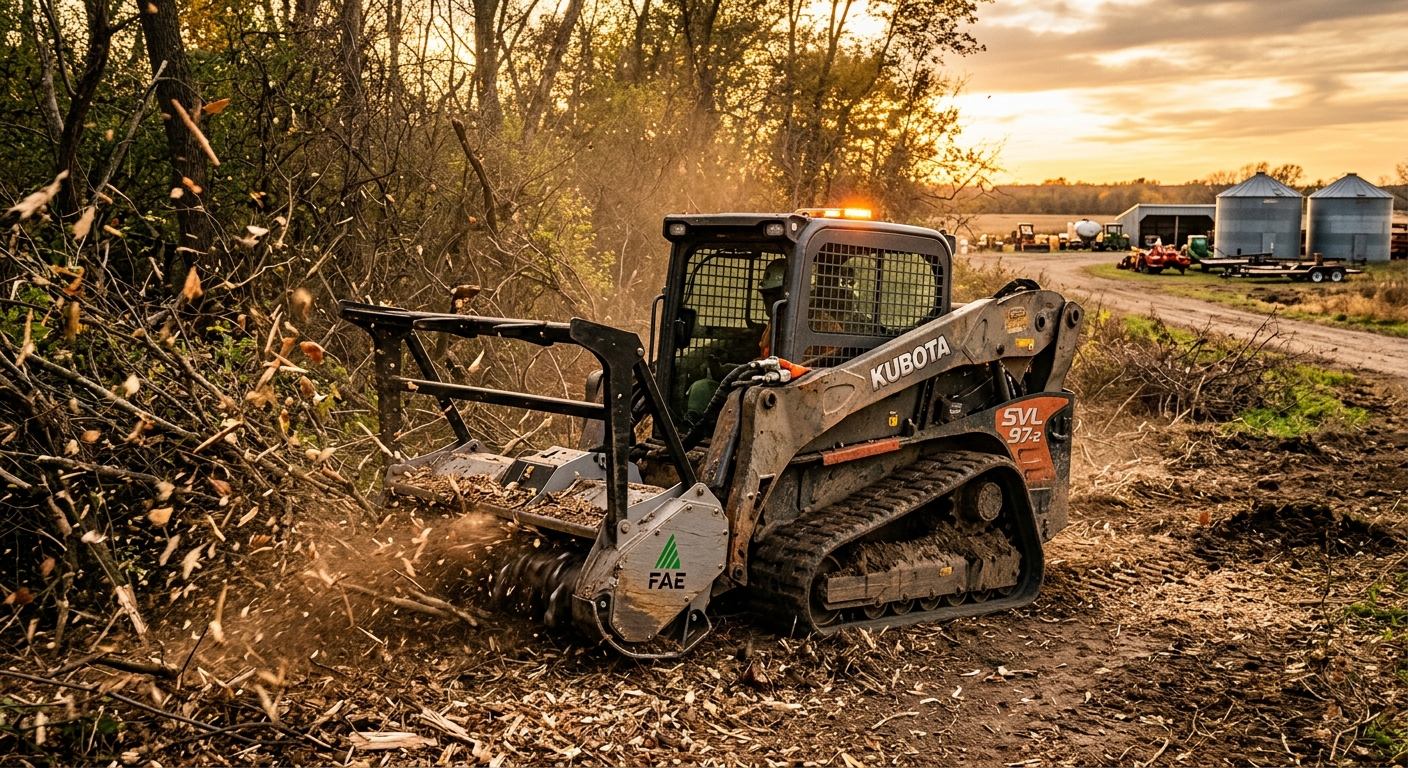
The mulcher head locks up. A skid plate cracks. A hose blows on the side that nobody could see while it was sitting on the rack all winter. The teeth that looked fine in February shred a fresh stack of stumps and turn into chewed nubs by Wednesday. The job that was going to fund the truck payment is suddenly a service call, a parts run, and a half-day of downtime.
This pattern is so common at the start of the season it almost qualifies as a tradition. It is also one of the most expensive habits in this industry.
FieldFix Editor’s Note: Attachments are where service history goes to die. Hours run on the carrier. Costs run on the carrier. Repair logs sit on the carrier. Meanwhile the mulcher, mower, grapple, breaker, or auger keeps wearing without a paper trail. FieldFix gives equipment owners a clean way to track service, costs, parts, and downtime for both the carrier and every attachment that hangs off it.
The carrier always wins the spring inspection
There is a reason this happens.
The carrier is the visible asset. The skid steer, the compact track loader, the excavator, the tractor, the wheel loader. That is the machine the operator has been climbing into for years. It is the machine the bank financed. It is the machine that gets washed at the end of the day, the machine that gets a fresh coat of touch-up paint before a trade-in talk, the machine the dealer service writer asks about.
Attachments do not get the same treatment.
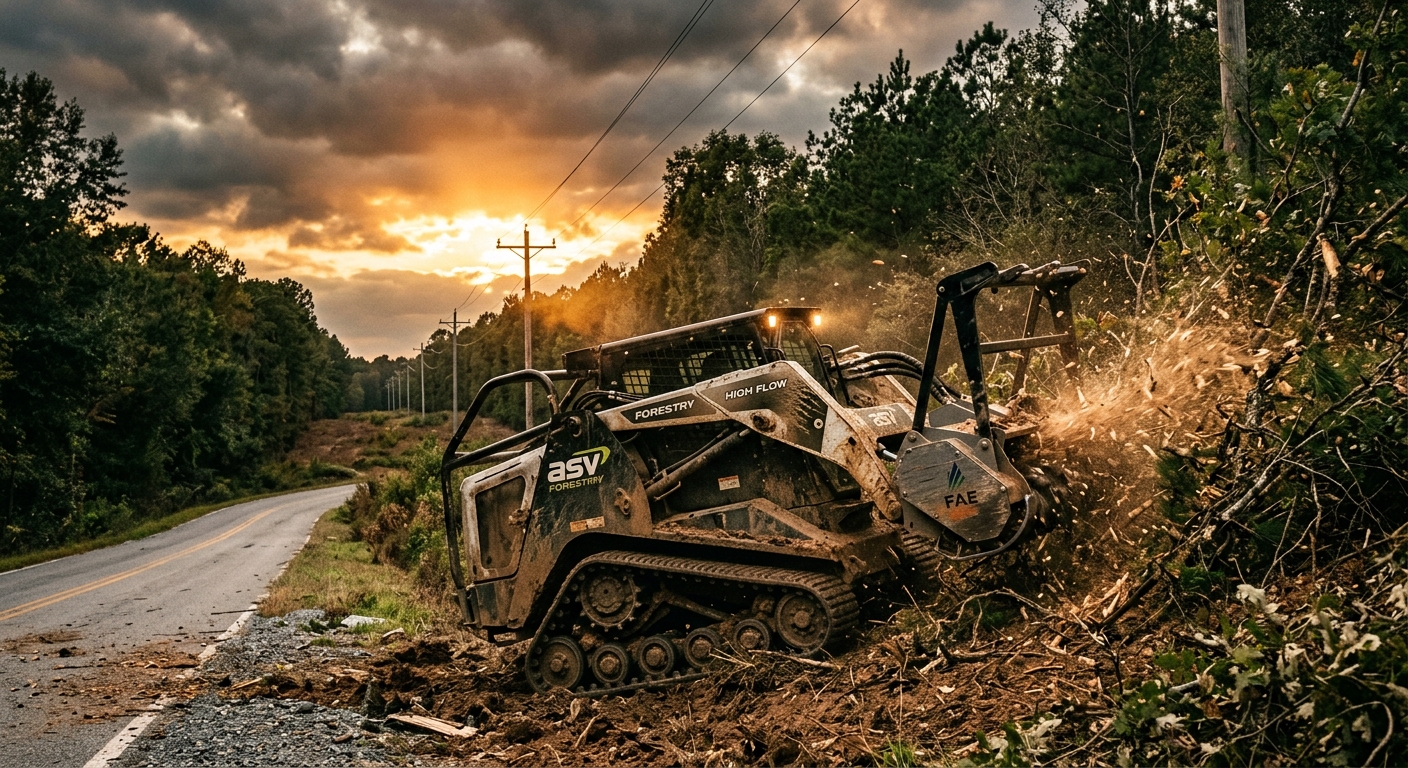
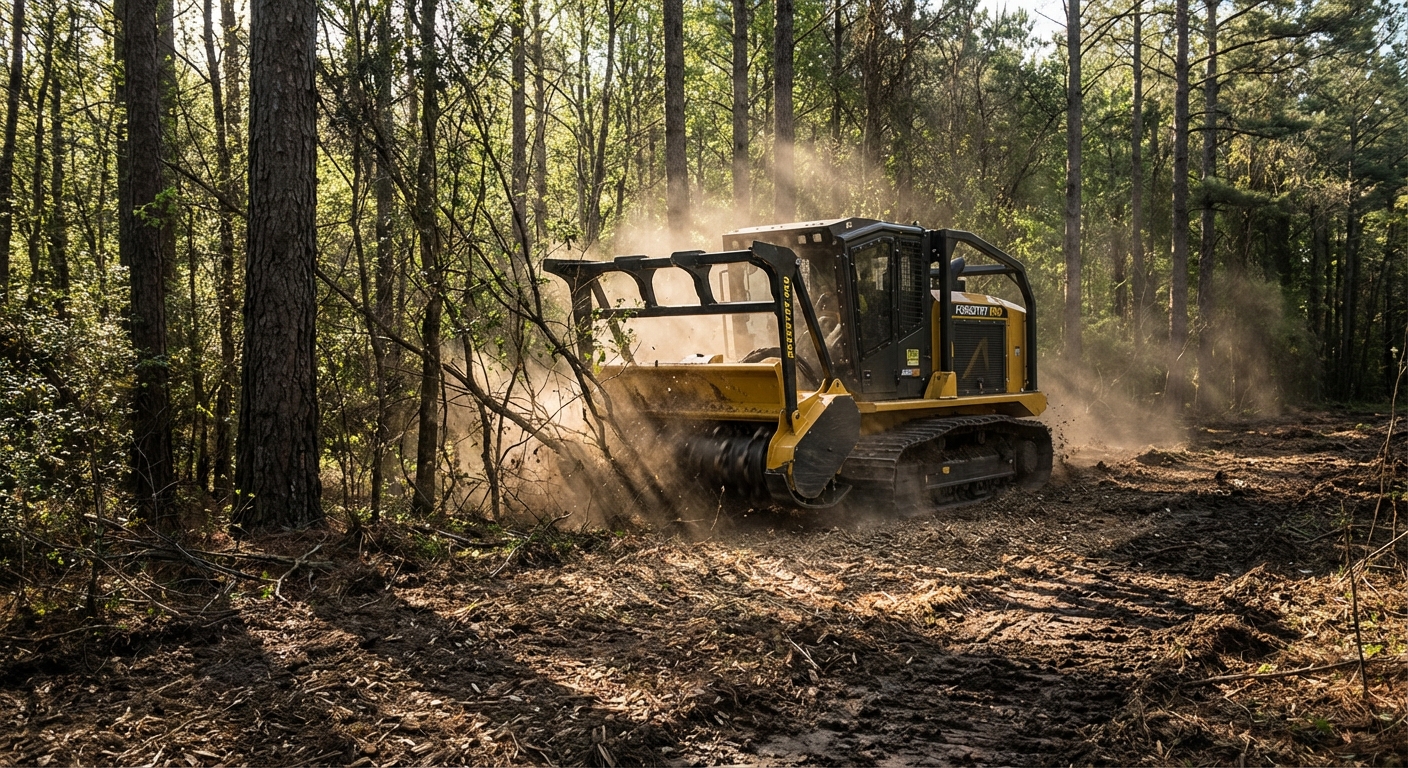
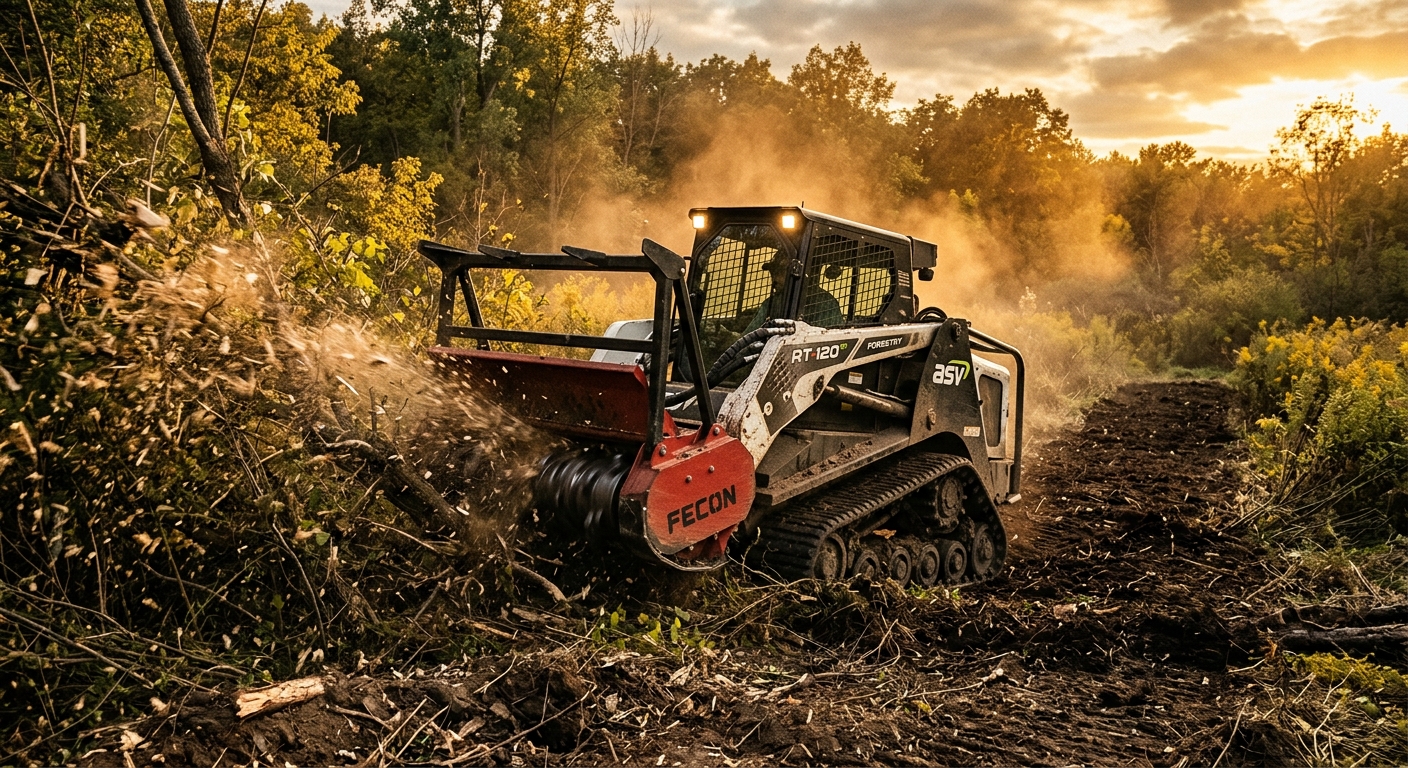
A mulcher head, a forestry disc, a stump grinder, a hydraulic breaker, a brush cutter, a grapple, a snow pusher, a cold planer, a vibratory roller — each one is a piece of equipment in its own right. Most of them cost more than a used pickup. A new high-flow forestry mulcher head can run thirty thousand to over fifty thousand dollars before you even talk about teeth and tooling. A drum mulcher with the right setup can be more.
Yet most spring inspections still treat that attachment as if it were a shovel hanging on the wall.
That is the problem.
You cannot inspect a forty-thousand-dollar machine by looking at it from twenty feet away. You especially cannot inspect it that way after it has spent three to five months sitting outside, frozen, thawed, frozen again, with whatever grease and grime was on it in November still caked into the bearings.
What a real attachment audit actually covers
A serious spring attachment audit is not complicated. It is just thorough. The goal is to look at every wear point, every fastener, every hose, every bearing, and every interface where the attachment connects to the carrier — and to do it before the first invoice of the season, not after the first failure.
A useful structure is to walk the attachment in five layers.
First, the cutting or wear surfaces. For mulchers and brush cutters, that means teeth, knives, hammers, and the drum or rotor itself. Teeth that look acceptable from a distance often have rounded carbide or chipped tips that destroy productivity once they hit hardwood. Replace anything questionable now. Tooth replacement during scheduled downtime is a different cost than tooth replacement halfway through a job, with a customer waiting and a half-finished pile.
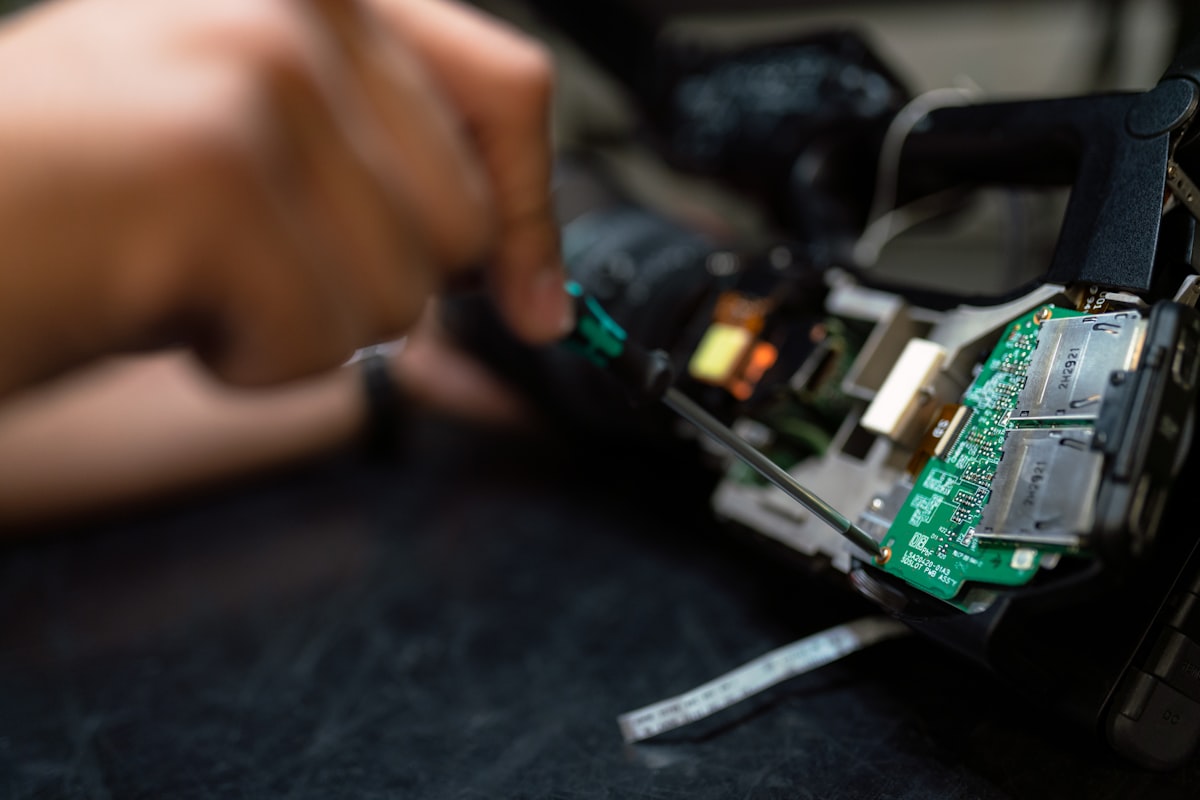
Second, the rotational and pivoting components. Bearings, bushings, pivot pins, drum shafts. Every grease zerk gets fresh grease, and every bearing gets a real look — listening, feeling for play, looking for seal damage and lost lube. A drum bearing that limped through November is not going to magically be fine in April. The rust pattern alone tells you whether moisture has been migrating through the seal.
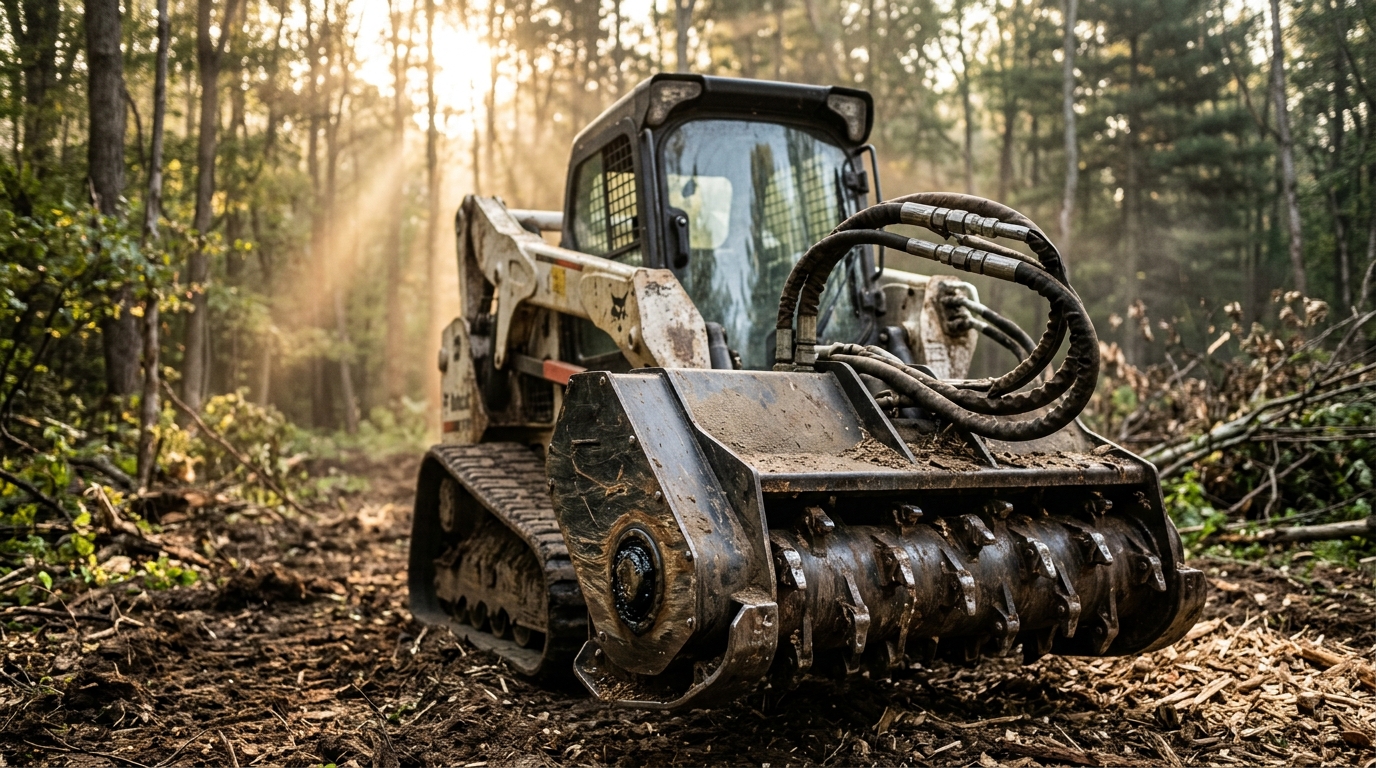
Third, the hydraulic system. Hoses, fittings, couplers, motors. Hoses are the silent margin killers. They look fine until they do not. A hose that has been flexed thousands of times and then sat for four months in cold storage is not the same hose that came out of the box. Pay particular attention to bend radius areas, anywhere a hose runs near a sharp metal edge, and any quick coupler that has been on and off the carrier multiple times. Replace anything with cracking, soft spots, or external wear.
Fourth, the structural and protective components. Skid plates, push bars, deflectors, hood pieces, hose guards, debris guards. Cracked welds get tagged for repair before the attachment goes back to work. Anything missing gets ordered before the season picks up. Operators tend to put off cosmetic repairs as if they were optional. They are not. A missing hose guard is a future hose failure waiting on the right rock.
Fifth, the carrier interface. The mounting plate, the quick attach pins, the hydraulic couplers, the auxiliary connections. This is the part of the attachment that wears against the carrier. It is also the part of the system that fails in ways that are easy to misdiagnose. A mounting plate with worn alignment edges will let an attachment shift slightly under load, which translates into uneven cuts, increased vibration, and accelerated wear on the carrier’s quick attach itself. The interface costs almost nothing to inspect and can prevent a much larger repair down the road.
The math nobody runs on attachment downtime
Most operators do not track downtime cost on attachments at all.
They track parts. They might remember the cost of a tooth set or a new bearing. They almost never track what the failure cost in lost revenue, lost crew hours, customer disappointment, and the next job that gets pushed because the schedule slipped.
The math is unkind.
A single mid-day mulcher failure on a typical land-clearing job easily costs the operator several thousand dollars by the time the lost hours, parts run, mechanic time, and rescheduling churn are added up. If that failure was preventable with a one-hour spring inspection, the return on that hour of audit time is absurd.
Run the simple version of it. Pick any attachment in the fleet. Estimate the all-in cost of one full day of downtime — crew, fuel, schedule disruption, customer goodwill, and any callouts. That number is what every spring audit is competing against. The audit almost always wins.
This is the same reason large fleets log every component. They are not doing it because they love spreadsheets. They are doing it because the math gets ugly fast when you have ten attachments, three carriers, and no idea which mulcher cost forty hours of downtime last fall.
The hidden seasonal failure pattern
Talk to any decent shop or attachment dealer in late April and they will tell you the same thing. Their phone lights up the second week of warm weather, and most of those calls are not for routine work. They are for failures that started in storage and finished on the first job.
A few common ones to watch for, because they show up every spring without fail.
Hydraulic seal failures from temperature cycling. Cold storage shrinks seals, warm operation expands them. After a rough winter the seals never quite recover, and the leak shows up under load.
Bearing failures from contaminated grease. Grease that absorbed moisture during storage breaks down, washes out, and leaves the bearing dry exactly when it gets loaded.
Tooth and tooling fatigue. Carbide that was on the edge of replacement in November will not survive the first job in April. Operators squeeze one more job out of worn tooling and end up with broken teeth, holder damage, and extra wear on the drum itself.
Hose failures from rodent damage. This sounds like a joke until it costs you a day. Equipment stored outside gets visited, and spring is when those nibbles turn into leaks.
Mounting plate cracks. Anything that took a hit late in the previous season and got “noticed but ignored” tends to fail at the start of the new one.
None of these are mysterious. All of them are catchable. Almost none of them get caught by a basic walk-around at the start of the season.
Why operators talk themselves out of doing the audit
The mental gymnastics here are familiar.
It is not just laziness. It is workload pressure. The phone is ringing, the schedule is filling, and the operator wants to be on a job, not in the shop with a flashlight and a torque wrench. Spring is also when cash flow is worst. The temptation to defer maintenance, push a borderline part another month, or skip a service step is real.
There is also a confidence trap. Operators who have been running the same gear for years convince themselves they know its condition by feel. Sometimes that is true. Often it is not. Familiarity is not the same as inspection. Hours since last failure is not the same as hours of life remaining.
The other story operators tell themselves is that the dealer will catch anything serious during a regular service. That is an optimistic read on how dealer service departments actually work right now. Service writers are pricing carriers, not auditing the attachment that came in chained to the trailer. Unless the operator specifically asks for an attachment inspection, and pays for it, it usually does not happen.
The fix is not to outsource the audit. It is to own it.
Build the audit into the season, not around it
The cleanest way to make a spring attachment audit happen every year is to put it on the calendar like any other revenue-impacting task.
A few practical ways to do that.
Pick a window before the season actually starts. The audit cannot be the thing that gets squeezed when the first job comes in. Block a half day or a full day per attachment, depending on complexity, and treat it like a job.
Standardize a checklist. The exact format matters less than the fact that it exists and that it gets used the same way every spring. Five layers — wear surfaces, rotational components, hydraulics, structure, and carrier interface — is enough.
Document the condition. Photos of every wear point, condition notes, and the date of inspection. That documentation becomes the baseline that next year’s audit is measured against. Without a record, every audit is a one-time event with no pattern recognition.
Tag what you defer. If something is acceptable for now but borderline, it gets logged with a flag and a planned replacement window. Otherwise it disappears from memory and reappears as a failure.
Track parts and labor by attachment, not just by carrier. This is where most operators break down. The shop receipt goes into a folder, the part gets installed, and there is no record that the mulcher specifically chewed through three hose sets last season. If those numbers were obvious, the decision to repair, rebuild, or replace would be a math problem instead of a guess.
The numbers worth tracking
The point of running a real spring audit and tracking the results over time is to convert attachment ownership from a vibes-based decision into a numbers-based one.
A handful of metrics matter.
Hours per attachment. Most carriers have a hour meter. Most attachments do not. If the attachment runs whenever the carrier runs, that is a starting point, but it is not exact. Operators with multiple attachments per carrier need a way to allocate hours by attachment. Even a rough log beats no log.
Cost per hour by attachment. Total spend on parts, service, and downtime divided by attachment hours. This is the number that tells you whether a cheap attachment is actually cheap, or whether a premium attachment is actually paying for itself in reduced cost per hour.
Mean time between failures. How long does this attachment typically run before something breaks? When the number starts shrinking, that is a signal — either operator habits are changing, the attachment is approaching end of life, or a specific component pattern is emerging.
Wear part replacement intervals. Teeth, blades, knives, hammers — the consumables. Knowing exactly how many job hours a tooth set lasts allows for ordering ahead, batching replacements, and avoiding the mid-job parts run.
Downtime hours. Not just repair time, but the full hours the attachment was unavailable. This is where the real money lives.
These numbers are not exotic. Big fleets track them as a matter of course. Small operators rarely do, which is exactly why they cannot tell you whether their best attachment is actually their best attachment, or just their newest one.
What this audit actually buys
A real spring attachment audit is not glamorous work. It is one or two days in the shop, a checklist, a flashlight, a torque wrench, fresh grease, a bag of replacement teeth, and a willingness to find ugly stuff before the customer does.
In return, the audit buys three things that operators will recognize.
It buys uptime in the part of the season where uptime matters the most. The first six weeks of the spring season set the tone for the year. Failures during that window cost more than failures in the middle of summer because backlog pressure is highest and customer patience is lowest.
It buys data. Every audit is a snapshot of where the attachment is in its life. Stack a few snapshots and a real picture starts to emerge. That picture is what allows for honest decisions about repair, rebuild, or replace.
It buys credibility. Operators who can talk about their attachments by hours, cost per hour, downtime, and wear pattern come across very differently to customers, dealers, and lenders than operators who cannot.
None of this is new. Most of it is the kind of advice that makes industry veterans roll their eyes because it sounds obvious. But the proof is in the failure pattern. Every spring, the same shops fix the same problems for the same operators on the same gear. The fix is not more parts. The fix is the audit those operators keep skipping.
The honest summary
The carrier wins the spring inspection because it is visible, financed, and emotionally familiar. The attachment loses the spring inspection because it is treated like a tool instead of a machine.
The cost of that habit shows up in the second week of warm weather, every year, when the phone is ringing and a hose blows on a Friday afternoon. That cost does not need to be paid. It just needs to be inspected away during a slow week in April.
A spring attachment audit will not solve every problem in this industry. But it will, very reliably, prevent the dumbest version of an avoidable failure during the most expensive part of the year. That is a fair trade for a day in the shop.